Eve's Needle Cactus
Austrocylindropuntia subulata
Family · Cactaceae
How to grow Austrocylindropuntia subulata: full sun, bone-dry watering, cutting propagation, spine handling, and why it is a restricted weed in Australia.
Austrocylindropuntia subulata
Plant profile
- WateringVery littleWater every 21 days
- Light exposurePartial sun
- Hardiness zoneUSDA 9–11
Growth
- Family
- Cactaceae
- Life cycle
- Perennial
- Growth speed
- 3/10
- Mature size
- 300–500 cm
- Flowering
- Rare in cultivation
- Propagation
- Cutting
- Seed
DormancyRests through cool, dry winters
Time to maturityBranches into a shrub over several years
Soil & climate
- Soil types
- Sandy, fast-draining cactus mix
- Drought tolerance
- Yes
Light & Placement
- Origin
- Andes of Peru and Bolivia
- Where to place it
- Brightest south-facing window (young plants only)
- Full sun xeriscape bed
- Living fence or boundary hedge
- Clay or terracotta with drainage holes
Safety
- Toxicity
- Not ASPCA-listed; spines are the hazard
- Pet safe
- No
Invasive speciesRestricted invasive weed in Australia, South Africa
Data fromAustrocylindropuntia subulata (MuehlenpfAustrocylindropuntia subulata (Eve's neeAustrocylindropuntia subulata 'Cristata'
Where it grows
World distribution
Eve's Needle Cactus is native to 2 countries: Bolivia and Peru.GBIF records 5,746 documented identifications across 51 countries, with the largest concentrations in Spain, Peru, and Kenya.
- Bolivia
- Peru
Yellow to orange dots: concentration of documented identifications per country. Green countries: sourced native range. Source: GBIFNative range from POWO (Kew).
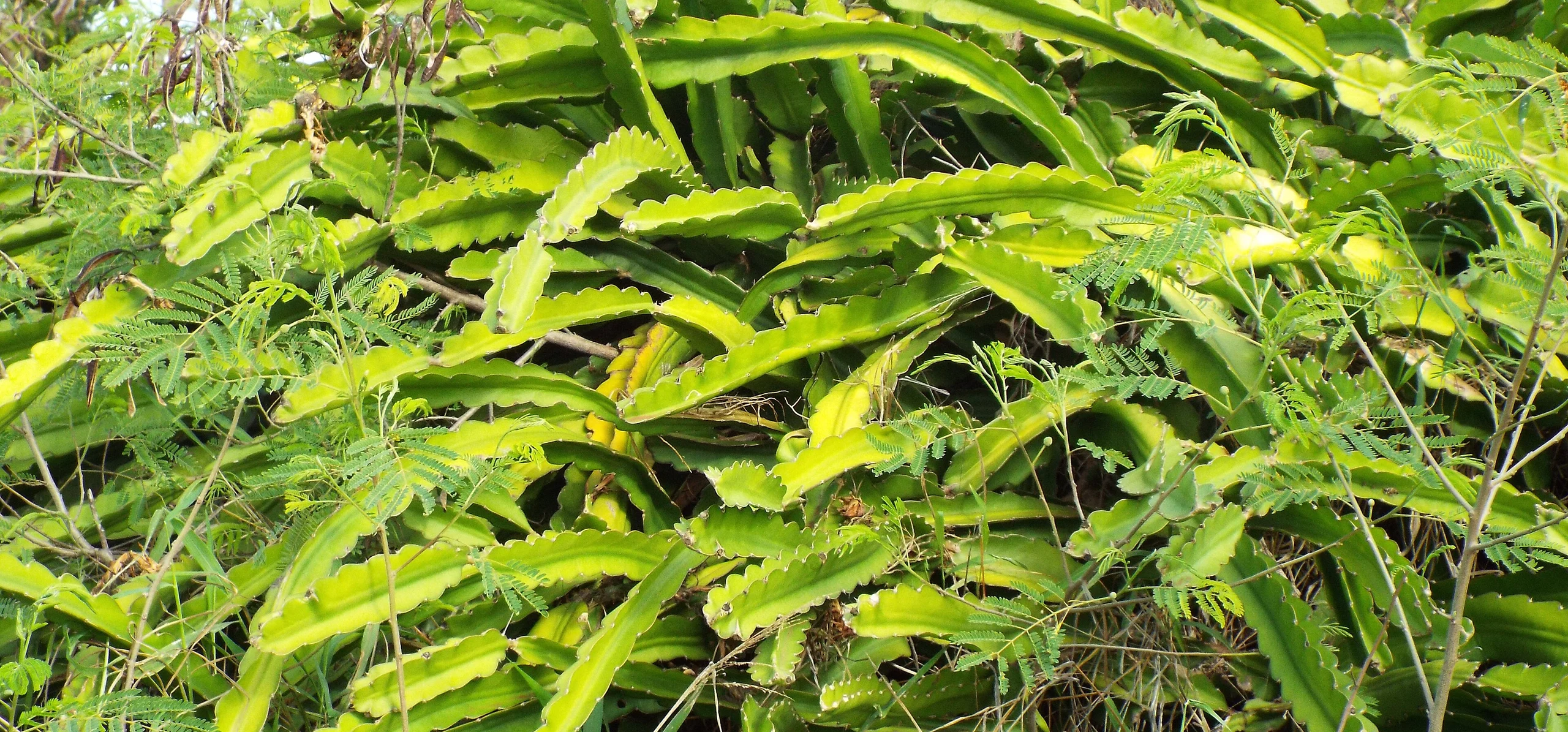
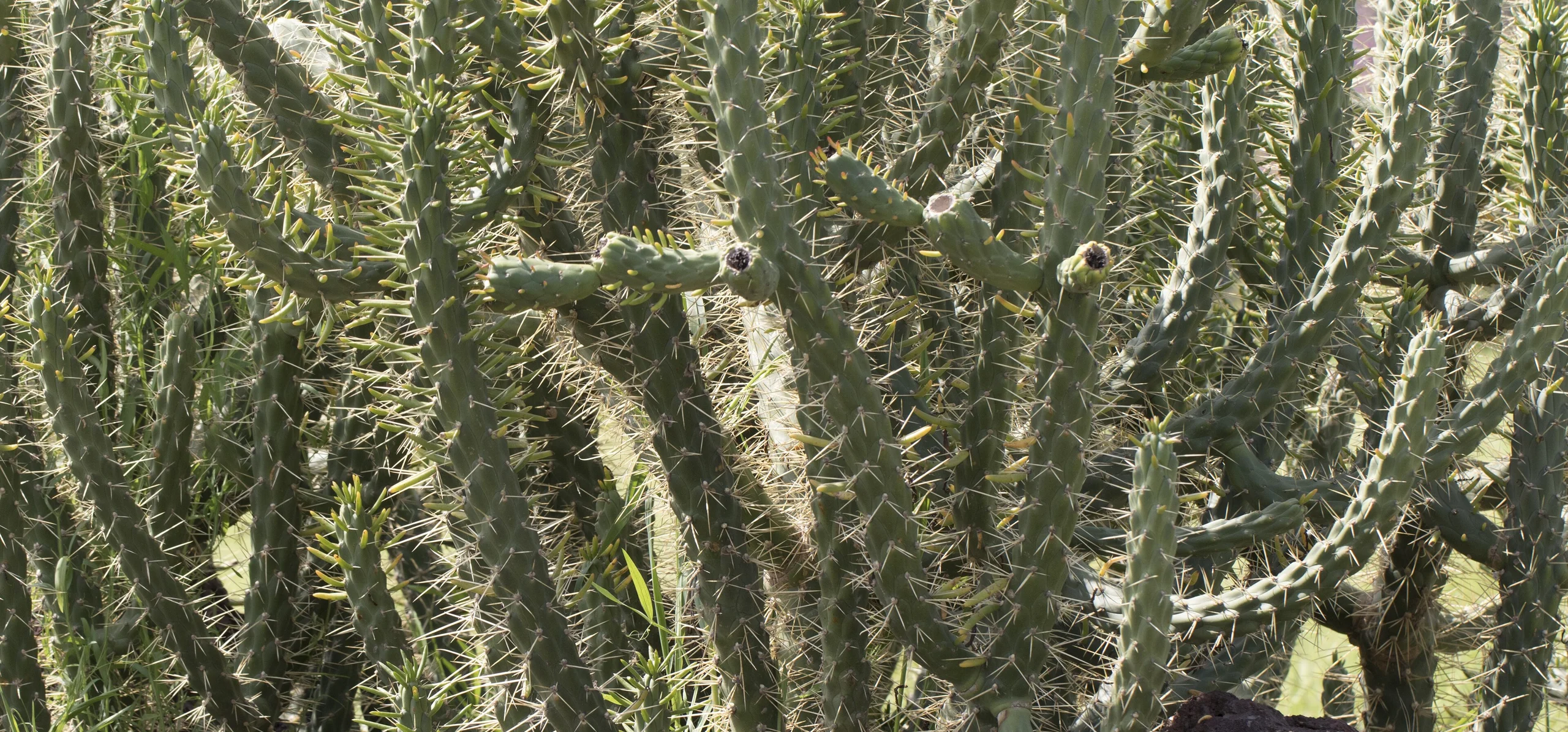
Austrocylindropuntia subulata arrives from a nursery looking like a leafless green cane bristling with needles, and within a few weeks of good light it does something most beginners do not expect: small awl-shaped leaves push out along the new growth and stay put for a season instead of dropping off like the fleeting leaves of a prickly pear. That persistence is where the species name subulata, awl-shaped, comes from, and it is the fastest way to tell this plant apart from a young Opuntia at a garden center. Treat it like the desert shrub it is: full sun, a gritty mix that drains in minutes, and water only when the pot has gone bone dry. Left in a container it stays a manageable clump for years; planted in open ground in a frost-free or nearly frost-free climate, it eventually thickens into the same living fence that Andean farmers have used for generations.
Origin and growth habit
The species grows wild across the high Andes of Peru and Bolivia, at elevations that push past 3,000 meters, where winters are cool and dry and summers bring modest, spaced-out rain. In habitat it thickens from a single rooted cutting into a shrub or small tree 3 to 4 meters tall, sometimes reaching 5 meters, built from jointed, cylindrical branches up to 50 centimeters long and 4 to 5 centimeters across. Farmers in the region have long planted rows of it as a living fence, its interlocking spiny stems keeping livestock out of fields more reliably than wire, and the long, stiff spines were once pulled and used as sewing needles, which is where the common name Eve's Needle comes from.
Choosing a healthy plant, and the crested form
Garden centers sell two very different-looking plants under this name. The straight species grows upright canes that eventually branch into a tree-like shrub, while the mutation sold as Austrocylindropuntia subulata 'Cristata' fans out into a wavy, brain-like crest that stays low and mounding, usually under 60 centimeters. Both need the same care, but the crested form almost never produces flowering side branches and is chosen purely for its shape. Whichever one you pick, check that the stems are firm and uniformly green, look for shriveling or a yellow-brown base, both point to rot that has already started below the soil line, and avoid any pot sitting in a saucer of standing water at the shop.
Light and placement
This is a full sun plant. Outdoors it wants at least six hours of direct light; indoors as a young specimen, the brightest south-facing window you have is the minimum, and most plants kept indoors year-round stay pale and stretched compared with one that spends summer outside. A stem grown in too little light elongates thinly between spine clusters, a visible signal to move it somewhere brighter well before it topples under its own weight. In climates with frost-free or nearly frost-free winters it can live outdoors permanently in a sunny, open bed; everywhere else, treat it as a patio plant that comes back inside once nights drop toward freezing.

Watering and soil
Water only after the soil has dried out completely, then soak until water runs from the drainage holes and let the pot drain fully before it goes back on a saucer. In the growing months that usually means roughly once every three to four weeks; in winter, when growth stops almost entirely, cut back to a token watering every six to eight weeks or less. The soil itself needs to be sandy and fast-draining, a cactus or succulent mix cut with extra coarse sand or pumice does the job, and a plain clay or terracotta pot helps by wicking moisture out of the root zone between waterings, which matters more for preventing rot than any watering schedule does.
Propagation from cuttings
Cuttings root far faster and more reliably than seed. Cut a healthy segment with clean shears at a joint, then set it somewhere warm, dry and out of direct sun for five to seven days so the cut end calluses over into a dry, sealed scar. Push the callused end an inch or two into barely damp cactus mix, and resist the urge to water again for another week or two, moist soil against a fresh wound is the single most common cause of a cutting rotting before it roots. Once new growth appears at the tip, usually within four to eight weeks in warm weather, treat it as an established plant and resume normal watering.
Handling the spines and pruning
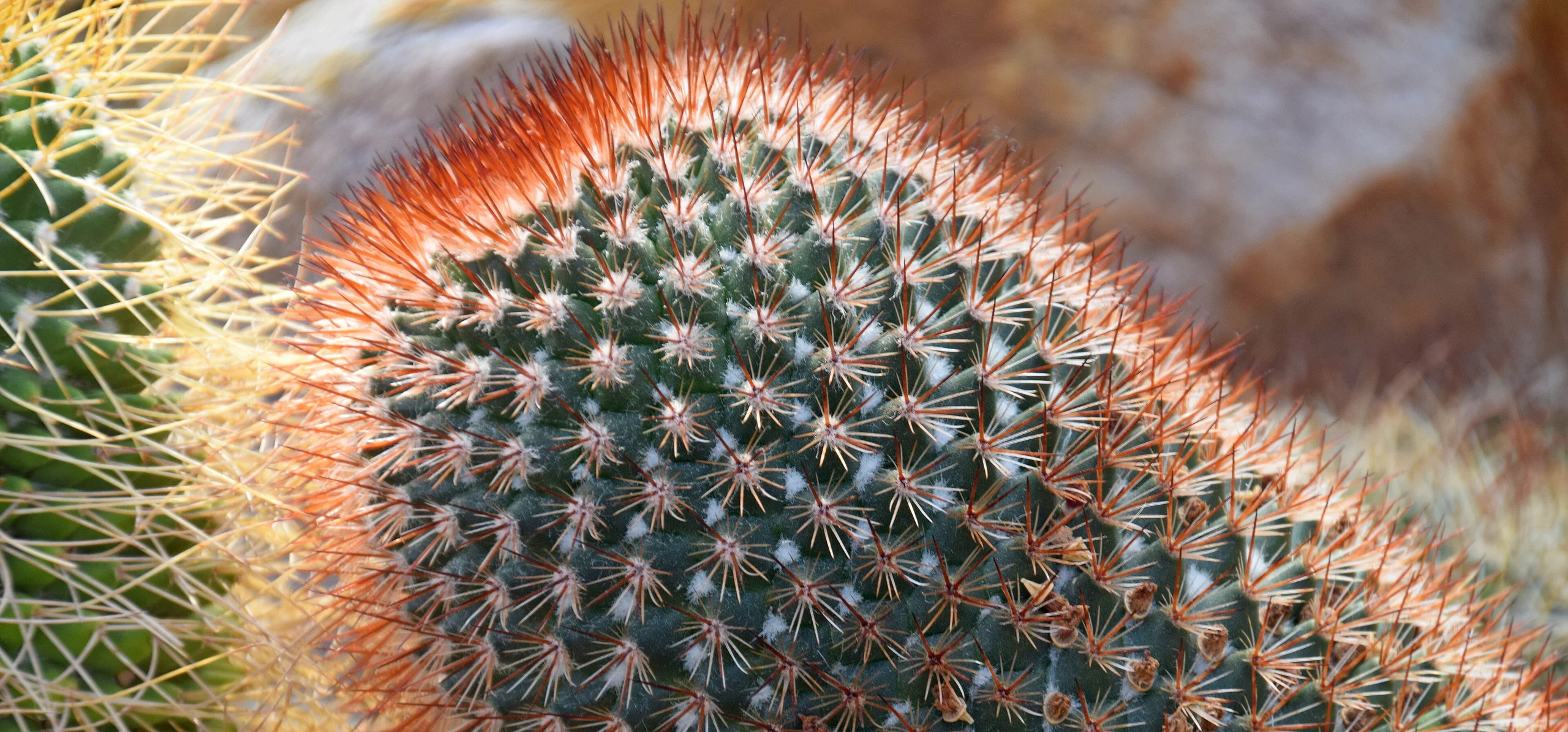
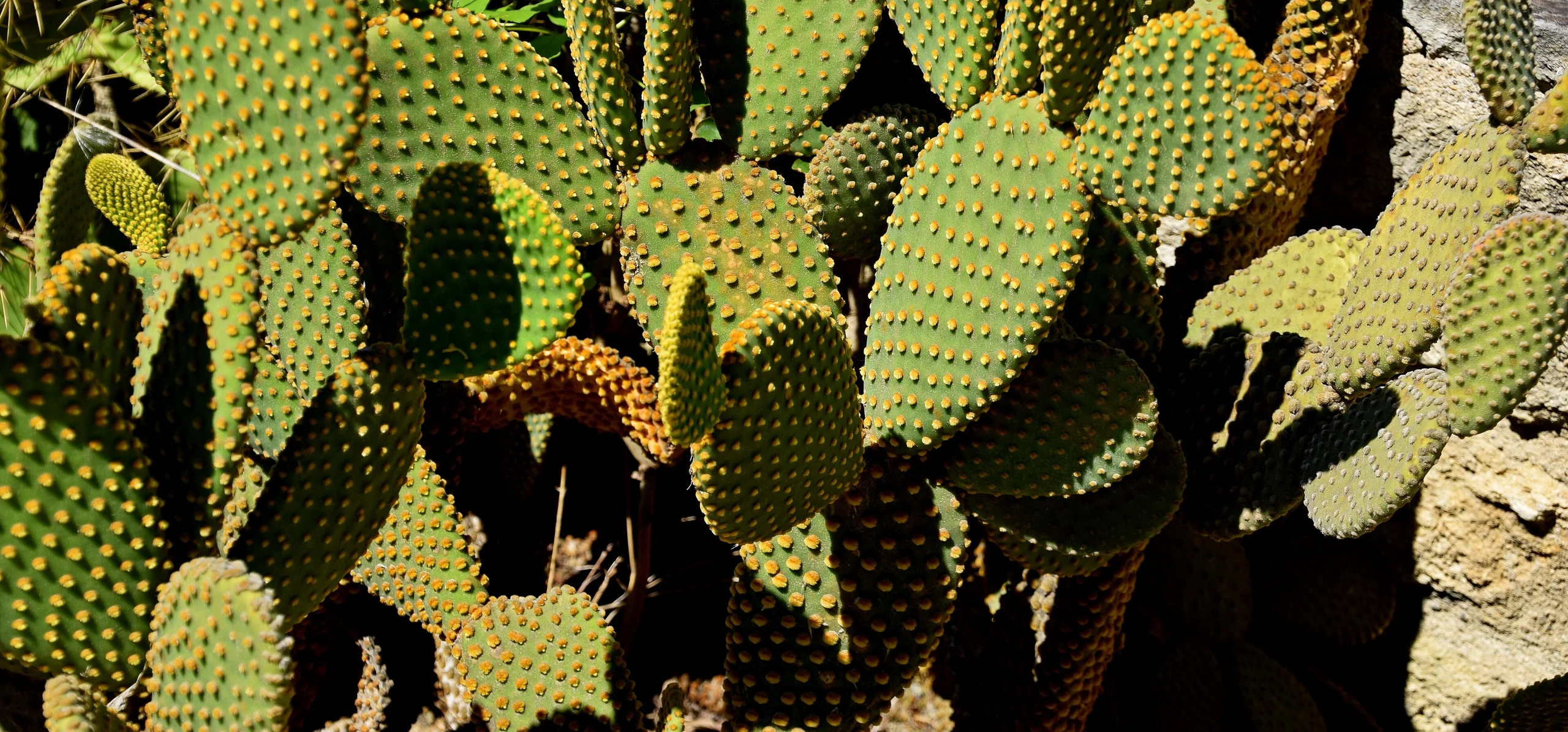
Every areole carries several long, rigid spines plus a ring of fine, barbed glochids that detach on contact and work their way into skin far more easily than the long spines do. Handle the plant with leather gloves and a folded strip of newspaper or a section of old hose to cradle a stem rather than gripping it directly, and keep a roll of tape nearby, pressed and peeled against skin, it lifts out glochids that tweezers miss. Pruning is straightforward: cut back any stem that has grown leggy or lopsided at a joint with clean shears, and the plant branches readily from just below the cut. Because a fallen or broken segment can root wherever it lands, keep cuttings away from areas where a new plant popping up would be unwelcome, and dispose of trimmed stems rather than leaving them on open ground.
Common problems
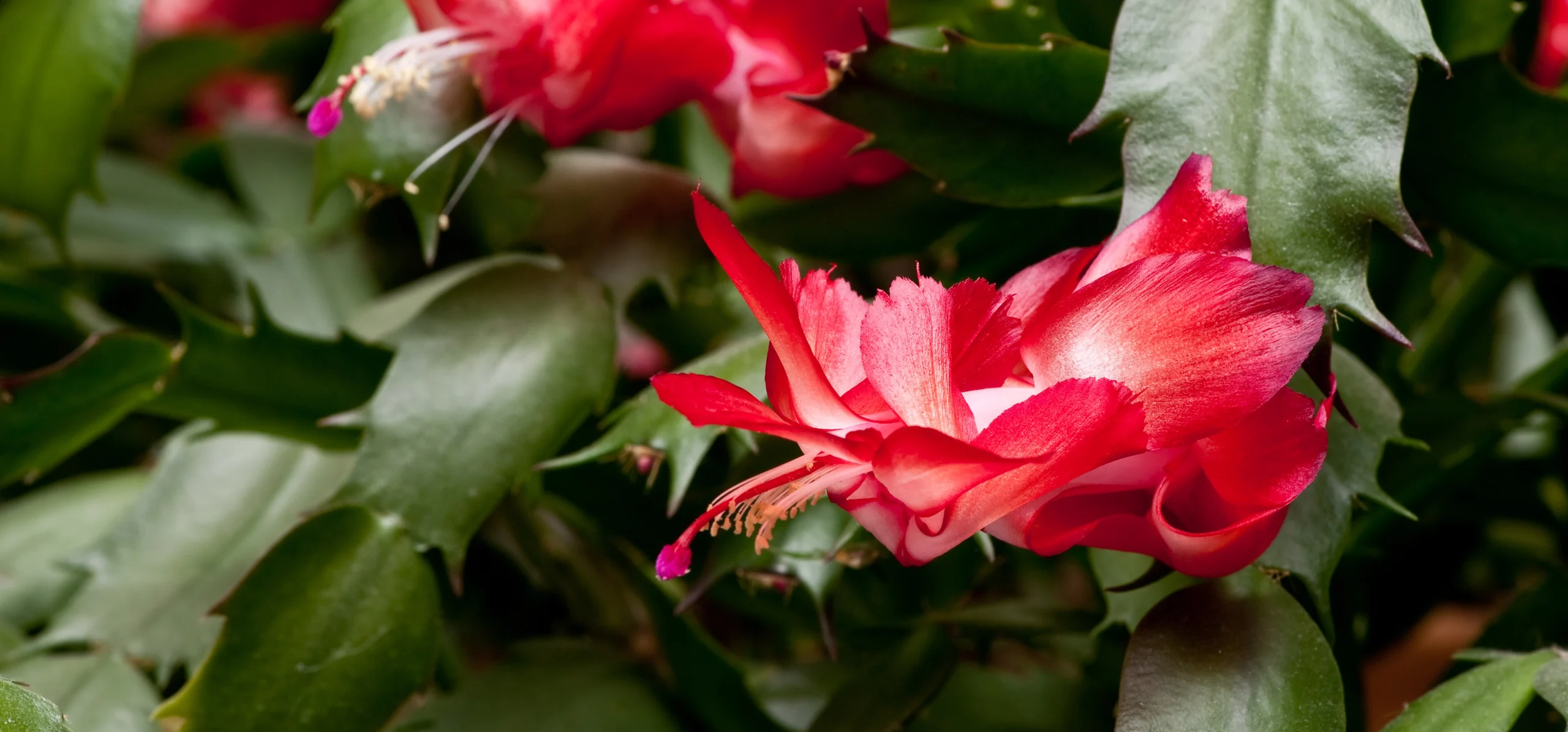
Overwatering is the main way this cactus dies indoors: a stem that turns soft, translucent or dark at the base while the rest still looks fine is already rotting from the roots up, and the only fix is cutting back to firm, healthy tissue and starting over as a cutting. Mealybugs and scale are the most frequent pests, showing up as white cottony tufts or small waxy bumps tucked into the joints between segments, wipe them off with a cotton swab dipped in rubbing alcohol and recheck weekly until they are gone. Flowering is rare in cultivation, especially in containers, plants grown in the ground in a warm, sunny climate are far more likely to eventually produce the orange to burgundy-red blooms this species is capable of, followed by spiny red fruit.
Toxicity and where it is restricted
Austrocylindropuntia subulata does not appear on the ASPCA's toxic or non-toxic plant lists, so no chemical toxicity claim can be made either way; the real risk to pets and children is entirely mechanical, from the long spines and the barbed glochids that break off and embed in skin, paws or a curious mouth. The species has also become a serious weed outside its native range: in Australia it is a restricted invasive plant, illegal to sell, trade or give away without a permit under Queensland's biosecurity law, and it is recorded as invasive in parts of South Africa, East Africa and southern Europe as well, where a dropped segment can root and spread the same way it does when planted deliberately as a fence. Before planting it outdoors, check whether your region treats it as a weed.
Test your plant knowledge
Tap a card to flip it and reveal the answer.
Austrocylindropuntia subulata is native to the high Andes of Peru and Bolivia. Tap to reveal ✓ True
This cactus should be watered on a fixed weekly schedule all year round. Tap to reveal ✕ False
The small leaves on new stems drop off within days, like on most other cacti. Tap to reveal ✕ False
The ASPCA lists Austrocylindropuntia subulata as toxic to cats and dogs. Tap to reveal ✕ False
In parts of Australia, this cactus is a restricted plant that cannot legally be sold or given away without a permit. Tap to reveal ✓ True
Sources
References consulted for this guide
- Austrocylindropuntia subulata (Muehlenpf.) Backeb., GBIF Backbone Taxonomygbif.org
- Austrocylindropuntia subulata (Muehlenpf.) Backeb., Plants of the World Online (Kew)powo.science.kew.org
- Austrocylindropuntia subulata (Eve's needle cactus), CABI Compendiumcabi.org
- Austrocylindropuntia subulata 'Cristata', NC State Extension Gardener Plant Toolboxplants.ces.ncsu.edu
- Reference entity : Wikipédiaen.wikipedia.org