Pincushion Cactus
Mammillaria spinosissima
Family · Cactaceae
Mammillaria spinosissima needs a cold, dry winter rest to flower, a gritty mix, and offsets for propagation. Notes on the 'Un Pico' form and mealybugs.
Mammillaria spinosissima
Plant profile
- WateringVery littleWater every 14 days
- Light exposureFull sun
Growth
- Family
- Cactaceae
- Life cycle
- Perennial
- Growth speed
- 1/10
- Mature size
- 10–30 cm
- Spread
- 5–10 cm
- Flowering
- Carmine-pink flowers in a ring near the crown
- Propagation
- Offsets
- Seed
Dormancycold, dry winter dormancy
Time to maturity5 to 10 years
Soil & climate
- Soil types
- gritty cactus mix, loam or sand, well-drained
- Drought tolerance
- Yes
Light & Placement
- Origin
- Mexico (Durango to Morelos and Guerrero)
- Where to place it
- sunny south-facing windowsill
- unheated bright greenhouse
- full sun in frost-free climates
- unglazed terracotta
Safety
- Toxicity
- Not listed by the ASPCA
- Pet safe
- No
Where it grows
World distribution
Pincushion Cactus is native to a single country: Mexico.GBIF records 237 documented identifications across 5 countries, with the largest concentrations in Mexico, Belgium, and Jamaica.
- Mexico
Yellow to orange dots: concentration of documented identifications per country. Green countries: sourced native range. Source: GBIFNative range from POWO (Kew).
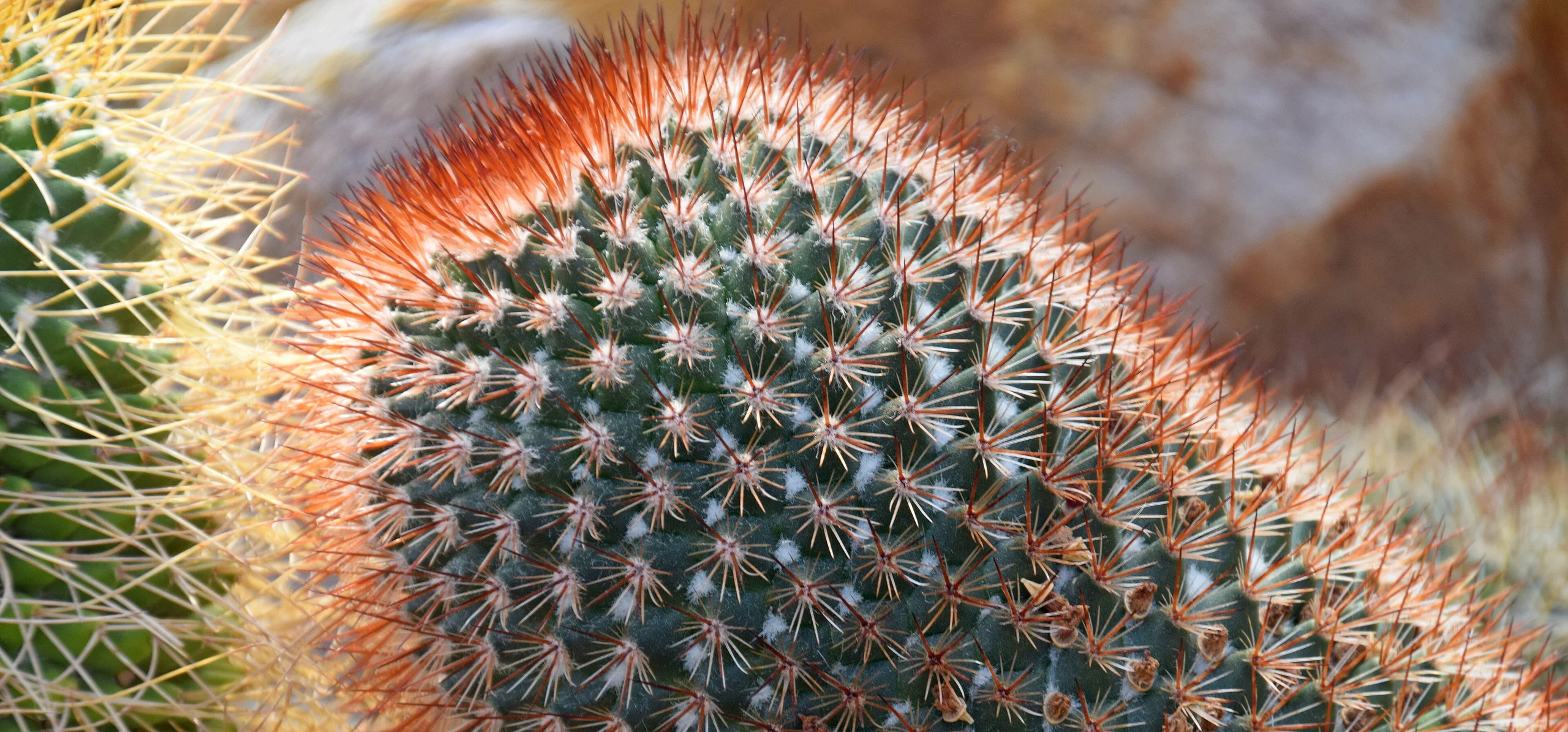
Mammillaria spinosissima is a small, densely spined cactus from the mountains of central Mexico, usually grown as a single cylindrical stem that thickens with age before pushing out offsets around its base. The species name, spinosissima, means roughly "the spiniest," a fair description of the stiff red-brown or white spines that cover the whole plant and give it the common name spiny pincushion cactus. It flowers reliably in spring, but only after a properly cold, dry winter rest: skip that and you keep a healthy-looking plant that never produces its ring of carmine-pink flowers. The nursery-bred 'Un Pico' form, carrying a single spine per areole instead of a dense cluster, is grown the same way and is the version most widely sold outside specialist collections.
Origin and habitat
Kew's Plants of the World Online lists the native range of Mammillaria spinosissima as Mexico, from Durango south to Morelos and Guerrero, where it grows in desert and dry shrubland. That range covers a band of dry, rocky, high-elevation country with hot summers, mild but genuinely cool winters, and rainfall concentrated in a short summer season. A pot-grown plant does best when its year echoes that pattern: warm and moist enough to grow through spring and summer, then cold and bone dry through the winter months, rather than kept in a steady, lukewarm, evenly damp state all year.
Light and placement
The RHS rates this species for full sun, and a plant grown outdoors or in a greenhouse with strong, direct light stays compact, with tight rows of areoles and well-colored spines. Indoors, the brightest south-facing windowsill you have is the right spot; a plant kept in filtered or partial light through a glasshouse roof still grows well but tends to stretch and pale slightly compared with one in open sun. Wherever it sits, turn the pot every few weeks so growth stays even on all sides instead of leaning hard toward the glass.
Soil and potting
Pot it in a standard cactus compost, or a loam or sand mix, so long as it drains freely; heavy, moisture-retentive compost is the fastest way to rot the roots of a plant built for scree and dry shrubland. A shallow, unglazed terracotta pot only slightly larger than the root ball suits this species better than a deep, oversized one, since the extra soil volume in a big pot simply stays wet for longer after each watering. Repot in spring, right as growth resumes, and brush loose old compost from the roots rather than tearing it away.


Watering through the seasons
Water moderately while the plant is actively growing, letting the compost dry out fully between waterings, and feed every two or three weeks with a dilute, balanced liquid feed during that same period. As days shorten in autumn, taper off both water and feed, and keep the compost almost dry through winter: a light misting at most, only if the stem starts to look visibly deflated. Watering on a fixed weekly schedule regardless of season is the single most common way this species is killed, since a wet root ball combined with cold winter air rots the base of the stem within weeks.
The winter rest that produces the flower ring
Mammillaria flowers form in a ring near the top of the stem, and for this species that ring of small, funnel-shaped, carmine-pink flowers only appears reliably after a cold, dry dormancy the previous winter. The RHS gives this species a hardiness rating of H2, meaning it tolerates a minimum of around 1 to 5 degrees Celsius but not an actual freeze, so the goal is a bright spot that stays cool, not warm, through winter rather than a heated room. A plant wintered on a warm windowsill with occasional watering will usually survive, but it tends to skip flowering the following spring, or produce only a scattering of blooms instead of the full ring collectors grow this genus for.
Propagating from offsets
Once a stem reaches a few years of age, small offsets, sometimes called pups, form around its base, and these are the easiest way to make new plants. Twist or cut an offset free once it has its own faint ridge of roots or at least a firm, calloused base, set it aside somewhere dry and shaded for two or three days so the cut surface calluses over, then press it into the surface of a gritty, barely damp mix without burying the body of the offset. The RHS also lists seed, sown at 19 to 24 degrees Celsius in early spring, as a propagation method, but seedlings take years to reach flowering size, so offsets are the faster route to a plant that blooms soon after rooting.
The 'Un Pico' form
Mammillaria spinosissima 'Un Pico', listed by the RHS as a named cultivar of this species, differs from the wild type in one clear way: each areole carries a single spine instead of the dense cluster of central and radial spines typical of the species. The result is a cleaner, more geometric-looking stem, with the tubercles themselves doing more of the visual work than the spines. It is grown, potted, watered, and rested through winter exactly as the species is; the only real difference is cosmetic, and it still needs the same cold, dry winter to produce its ring of flowers the following spring.
Mealybugs and whether it is safe around pets
The RHS lists mealybugs as the main pest to watch for on this species, usually tucked into the tight spaces between tubercles near the crown, where they show up as small tufts of white, waxy fluff. A cotton swab dipped in rubbing alcohol removes small colonies directly; for a heavier infestation, an isolated plant and repeated treatment over several weeks keeps the pest from spreading to neighboring cacti. Mammillaria spinosissima does not currently appear in the ASPCA's database of toxic and non-toxic plants, so no toxicity determination for cats, dogs, or horses is available for this particular species.
Test your plant knowledge
Tap a card to flip it and reveal the answer.
Mammillaria spinosissima needs a cold, dry winter rest to flower reliably the following spring. Tap to reveal ✓ True
This cactus should be watered on the same weekly schedule all through winter. Tap to reveal ✕ False
The 'Un Pico' form has a single spine per areole instead of a dense cluster. Tap to reveal ✓ True
Mammillaria spinosissima is listed as toxic to cats and dogs by the ASPCA. Tap to reveal ✕ False
New plants are most easily grown by removing and rooting offsets from the base of the stem. Tap to reveal ✓ True
Sources
References consulted for this guide
- GBIF - Mammillaria spinosissima Lem.gbif.org
- Plants of the World Online (Kew) - Mammillaria spinosissimapowo.science.kew.org
- RHS - Mammillaria spinosissima (spiny pincushion cactus)rhs.org.uk
- RHS - Mammillaria spinosissima 'Un Pico'rhs.org.uk
- Reference entity : Wikipédiaen.wikipedia.org