Christmas Cactus
Schlumbergera truncata
Family · Cactaceae
Schlumbergera truncata is a rainforest epiphyte, not a desert cactus: why it needs shade and humidity, and why cool autumn nights decide if it blooms.
Schlumbergera truncata
Plant profile
- WateringModerateWater every 9 days
- Light exposureIndirect light
- Ideal temperature10–27 °C
Growth
- Family
- Cactaceae
- Life cycle
- Perennial
- Growth speed
- 3/10
- Mature size
- Arching, segmented stems that spread and trail over the pot rim as the plant matures
- Propagation
- Cutting
FloweringRed, pink, orange or white blooms around Thanksgiving, triggered by short days and cool nights
DormancyNo true dormancy; needs cool nights and long uninterrupted darkness in autumn to set flower buds
Time to maturityNo fixed age at maturity; well-rooted cuttings typically flower within a couple of growing seasons
Soil & climate
- Soil pH
- pH 5–6
- Drought tolerance
- No
Soil typesPotting soil cut with perlite, roughly 60 to 80 percent soil to 20 to 40 percent perlite, Loose, organic, well-draining mix rather than a straight desert cactus mix
Light & Placement
- Origin
- SE Brazil, coastal mountain forests (POWO)
- Where to place it
- East-facing window with bright indirect light
- A few feet back from a south or west window
- Shaded patio or under tree canopy in mild, frost-free climates
- Small pot; flowers more reliably when mildly pot-bound, repot only every two to three years
Safety
- Toxicity
- CatsSafe
- DogsSafe
- HorsesSafe
Data fromSchlumbergera truncata (Haw.) Moran, GBISchlumbergera truncata (Haw.) Moran, PlaChristmas Cactus, Toxic and Non-Toxic PlThanksgiving and Christmas Cacti, Home &Cactus from the Rainforest: Christmas Ca
Where it grows
World distribution
Christmas Cactus is native to a single country: Brazil.GBIF records 498 documented identifications across 27 countries, with the largest concentrations in Brazil, United States, and Colombia.
- Brazil
Yellow to orange dots: concentration of documented identifications per country. Green countries: sourced native range. Source: GBIFNative range from POWO (Kew).
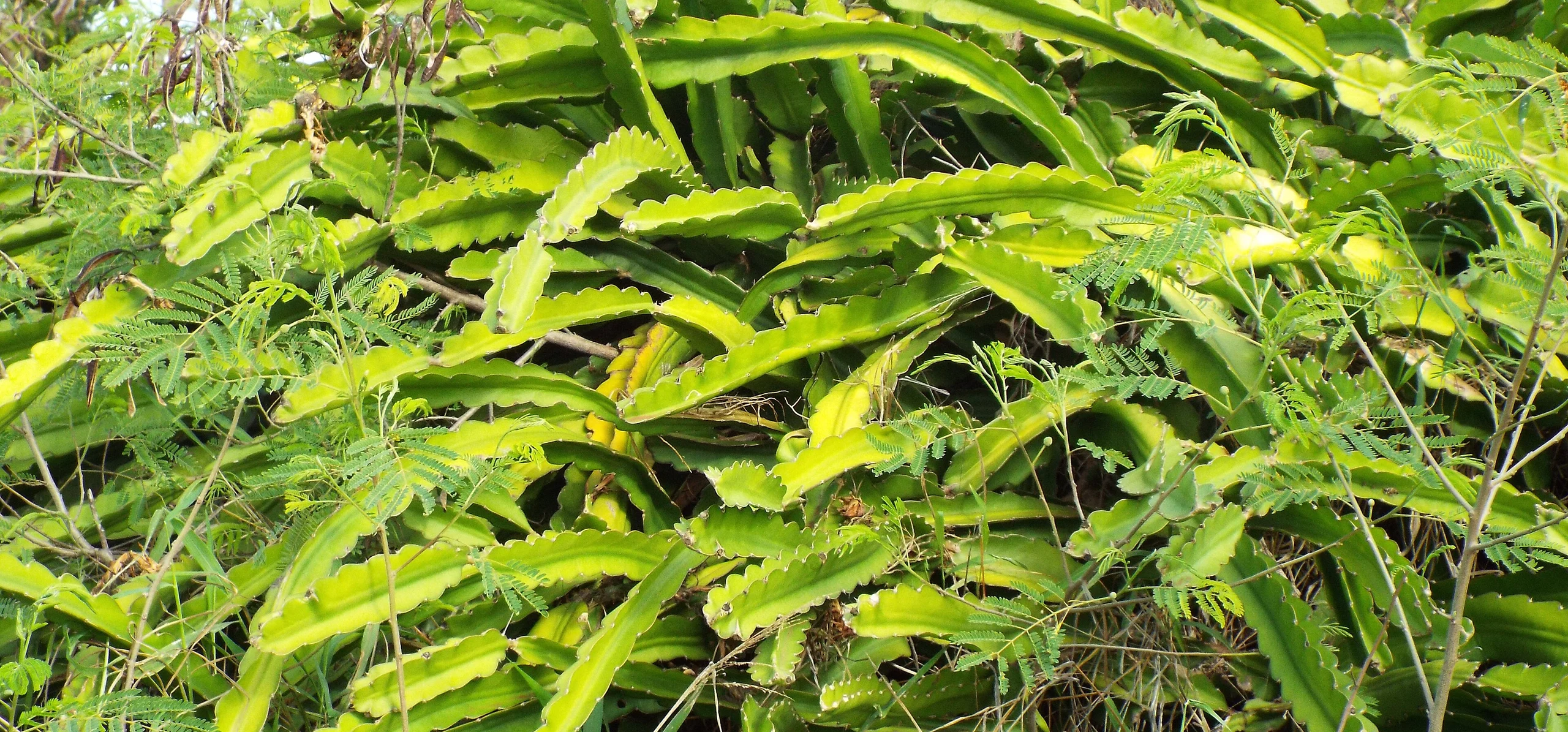
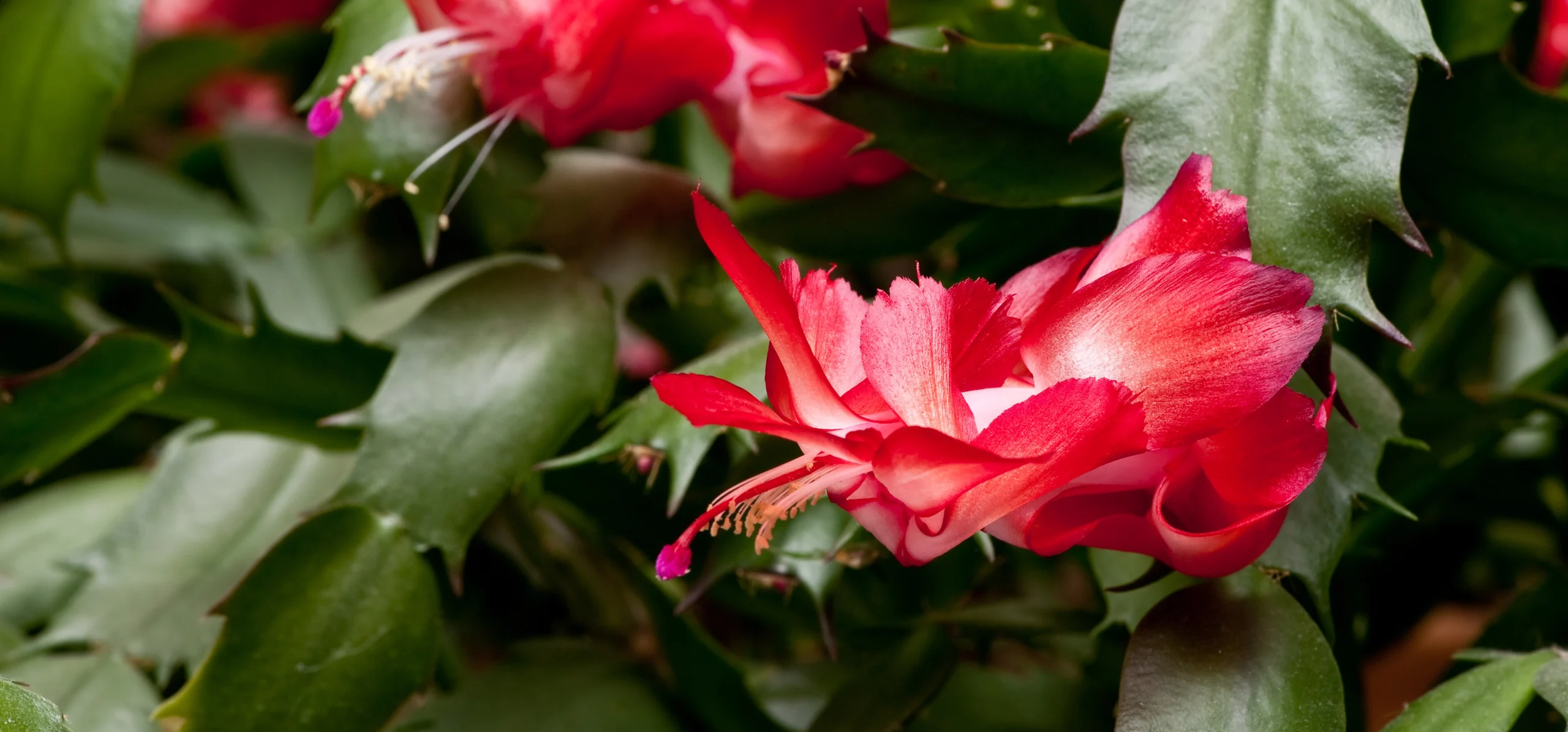
The flattened, notched segments of Schlumbergera truncata look like a desert cactus until you notice where the species actually grows: wedged into leaf litter in the fork of a tree branch, in the shaded, humid canopy of a mountain forest, not baking on open ground. Each segment, botanically a cladode rather than a leaf, does the plant's photosynthesis, which is why the whole thing keeps growing and flowering without a single true leaf. That forest origin rewrites the usual cactus rules: this species wants more water, more humidity and less direct sun than a barrel or columnar cactus, and it only sets flower buds on a trigger of cool nights and long, uninterrupted darkness rather than on a fixed date. Get that autumn cycle right and the reward is a flush of red, pink, orange or white flowers that opens over several weeks around Thanksgiving.
A forest epiphyte, not a desert cactus
GBIF's accepted classification places Schlumbergera truncata in the cactus family Cactaceae, order Caryophyllales, alongside desert species it barely resembles in habit. POWO records its native range as SE Brazil, and field accounts describe it growing as an epiphyte or lithophyte on mossy branches and rock crevices in the coastal mountain forests there, at altitude where conditions stay cool, shaded and humid year round. Those forests can see up to 17 inches of rain a month during the growing season, which is the reference point for how much moisture this plant actually wants, closer to a tropical houseplant than to a saguaro.
Light and placement
Bright, indirect light suits it best: an east-facing window, or a spot a few feet back from south or west glass. Strong, unshaded summer sun bleaches the segments to a pale, yellowish green and can scorch the tips, while too little light leaves growth thin and reluctant to flower. Full sun through autumn and winter, when it is weaker, is tolerated and even helpful for triggering bloom, which is the opposite of how most people treat a cactus. Keep it away from cold window glass in winter and away from heating vents, both of which stress the plant at exactly the time it is trying to set buds.
Watering and humidity
Unlike a drought-tolerant desert cactus, Schlumbergera truncata should dry out only partially, not completely, between waterings; let the top inch of mix dry, then water thoroughly and let it drain. Once flower buds have formed, keeping the mix evenly moist matters even more, since a pot allowed to dry out is one of the more common ways an otherwise healthy plant sheds its buds before they open. Average room humidity is workable, but this species comes from consistently humid forest air, and a pebble tray or occasional misting helps the segments plump rather than wrinkle, particularly in a dry, centrally heated room in winter.


Short days and cool nights: getting it to bloom
Flowering is triggered, not scheduled: the plant needs roughly fourteen hours of continuous, uninterrupted darkness a night, paired with cool nights around 60 to 68°F (15 to 20°C), sustained for six weeks or so starting in mid-September for a Thanksgiving-time bloom. A closet, an unused room, or simply a spot away from every lamp and streetlight works; even a brief flash of light during the dark period can cancel the signal and delay or prevent budding. Once buds are visible, the darkness requirement is over and the plant can move back to its normal bright spot, though temperatures above 90°F (32°C) at that stage can still abort the show.
Bud drop and other flowering problems
A plant that sets a full crop of buds and then drops most of them unopened is reacting to change, not disease. The usual triggers are a sudden move to a new spot, a swing in temperature, a draft from a door or heater, uneven watering, or too heavy a bud set for the plant to support. Once flowering starts, treat the plant as fixed in place: same window, same watering rhythm, same room temperature, until the display is over. An occasional single dropped bud from an otherwise heavy crop is normal thinning, not a symptom to chase.
Soil, potting and feeding
A well-draining, slightly acidic mix suits the epiphytic roots best, in the pH 5.0 to 6.0 range; a potting soil cut with perlite, at roughly 60 to 80 percent potting soil to 20 to 40 percent perlite, reproduces the loose, organic material this plant would root into on a branch. It also flowers more reliably when mildly pot-bound, so size up only every two to three years rather than annually, and always in spring after flowering has finished. During the active growing months, feed monthly with a half-strength balanced soluble fertiliser, and stop by late summer so the plant is not pushing soft new growth right when it should be settling into the cool, dark cycle that sets buds.
Propagation from stem segments
New plants come from stem cuttings, not seed. Twist off a length of three to five joined segments in late spring or early summer, let the cut end callus over for a day or two in open air, then insert the base into slightly moist potting mix. Covering the pot loosely with plastic holds humidity around the cutting while it roots, which typically takes three to eight weeks; a gentle tug that meets resistance is the sign roots have taken. Several cuttings potted together around the rim of one container fill in faster than a single stem grown alone.
Thanksgiving cactus, Christmas cactus, and pet safety
Schlumbergera truncata is more accurately the Thanksgiving cactus: its stem segments end in two to four pointed, saw-toothed projections, its flowers sit closer to horizontal, and its anthers carry yellow pollen. The plant usually sold and grown as the true Christmas cactus is a related hybrid, Schlumbergera x buckleyi, which has rounded, scalloped segment margins, flowers that hang more symmetrically below horizontal, and purplish-brown anthers; it also tends to bloom a few weeks later, closer to December. The two are frequently mislabeled in shops and passed down through families under whichever name a relative used, so segment shape is the reliable way to tell them apart. On safety, the ASPCA lists Christmas cactus as non-toxic to cats, dogs and horses, making either plant a reasonably low-risk choice around pets that like to chew foliage.
Test your plant knowledge
Tap a card to flip it and reveal the answer.
Schlumbergera truncata is a desert cactus that thrives in full sun and dry, sandy soil. Tap to reveal ✕ False
To set flower buds in autumn, this cactus needs long nights of uninterrupted darkness combined with cool temperatures. Tap to reveal ✓ True
Sudden changes in light, temperature, drafts, or a drying pot are common causes of buds dropping before they open. Tap to reveal ✓ True
New plants are usually started from seed rather than from stem segment cuttings. Tap to reveal ✕ False
The ASPCA lists Christmas cactus as non-toxic to cats, dogs and horses. Tap to reveal ✓ True
Sources
References consulted for this guide
- Schlumbergera truncata (Haw.) Moran, GBIF Backbone Taxonomygbif.org
- Schlumbergera truncata (Haw.) Moran, Plants of the World Online, Kew Sciencepowo.science.kew.org
- Christmas Cactus, Toxic and Non-Toxic Plants, ASPCA Animal Poison Controlaspca.org
- Thanksgiving and Christmas Cacti, Home & Garden Information Center, Clemson Cooperative Extensionhgic.clemson.edu
- Cactus from the Rainforest: Christmas Cactus, The Real Dirt, UC ANRucanr.edu
- Reference entity : Wikipédiaen.wikipedia.org