Bunny Ears Cactus
Opuntia microdasys
Family · Cactaceae
Opuntia microdasys care: full sun, dry soil between waterings, a cool winter rest near 50°F, and why its fine glochids demand more caution than true spines.
Opuntia microdasys
Plant profile
- WateringVery littleWater every 21 days
- Light exposureFull sun
- Ideal temperature7–29 °C
Growth
- Family
- Cactaceae
- Life cycle
- Perennial
- Growth speed
- 2/10
- Mature size
- 30–100 cm
- Spread
- 30–100 cm
- Flowering
- Bright yellow flowers along upper pad edges, late spring to summer
- Propagation
- Cutting
Dormancycool, dry winter rest around 45 to 55°F (7 to 13°C)
Time to maturity10 to 20 years to ultimate size
Soil & climate
- Soil types
- gritty, fast-draining cactus mix, loam, sand
- Drought tolerance
- Yes
Light & Placement
- Origin
- Mexico
- Where to place it
- sunniest south or west-facing windowsill
- sheltered full sun; frost-free climates or a greenhouse where winters are cold
- shallow, wide pot with drainage holes
Safety
- Toxicity
- CatsSafe
- DogsSafe
- HorsesSafe
Data fromGBIFPlants of the World Online (Kew)RHSASPCAClemson HGIC
Where it grows
World distribution
Bunny Ears Cactus is native to a single country: Mexico.GBIF records 2,772 documented identifications across 47 countries, with the largest concentrations in Mexico, United States, and Spain.
- Mexico
Yellow to orange dots: concentration of documented identifications per country. Green countries: sourced native range. Source: GBIFNative range from POWO (Kew).
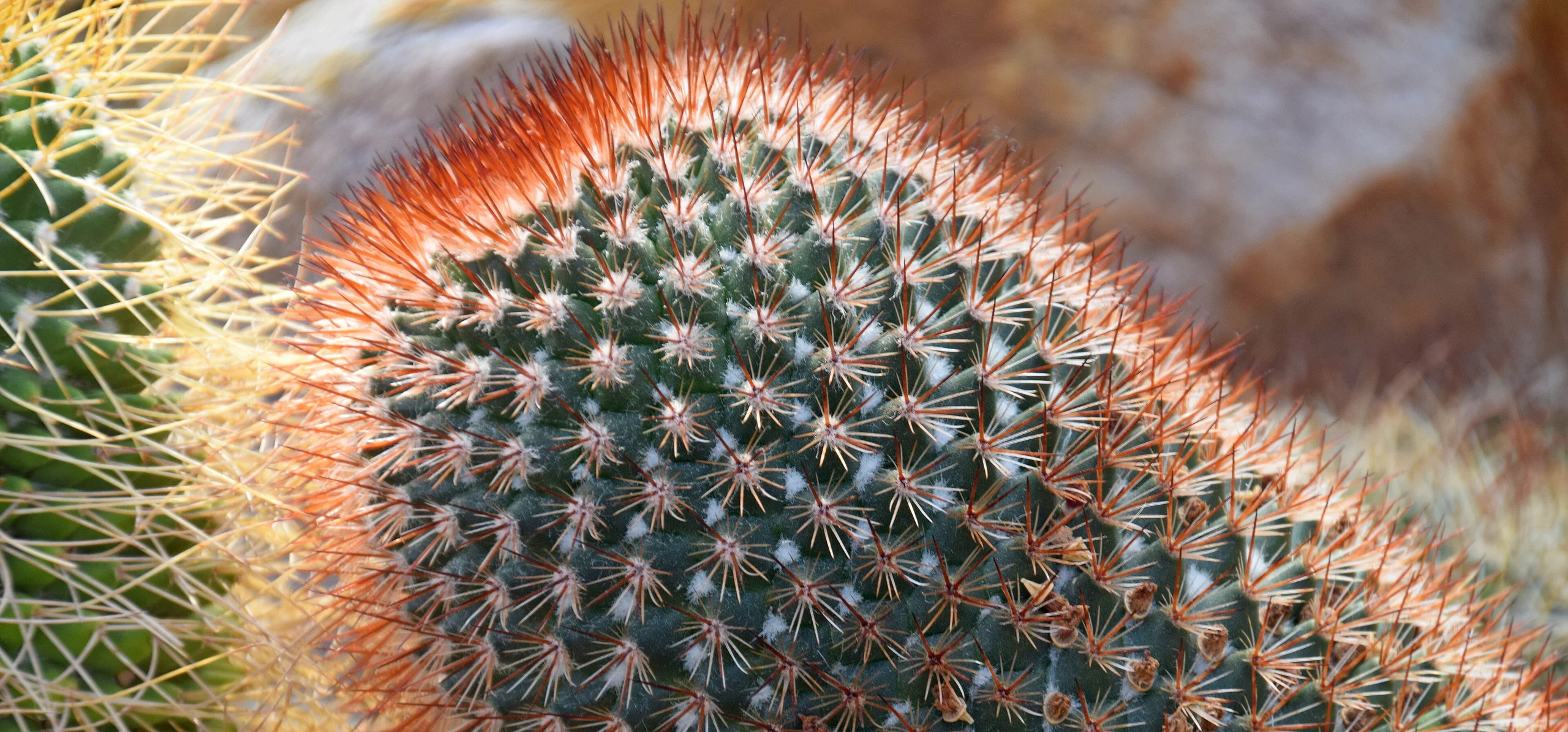
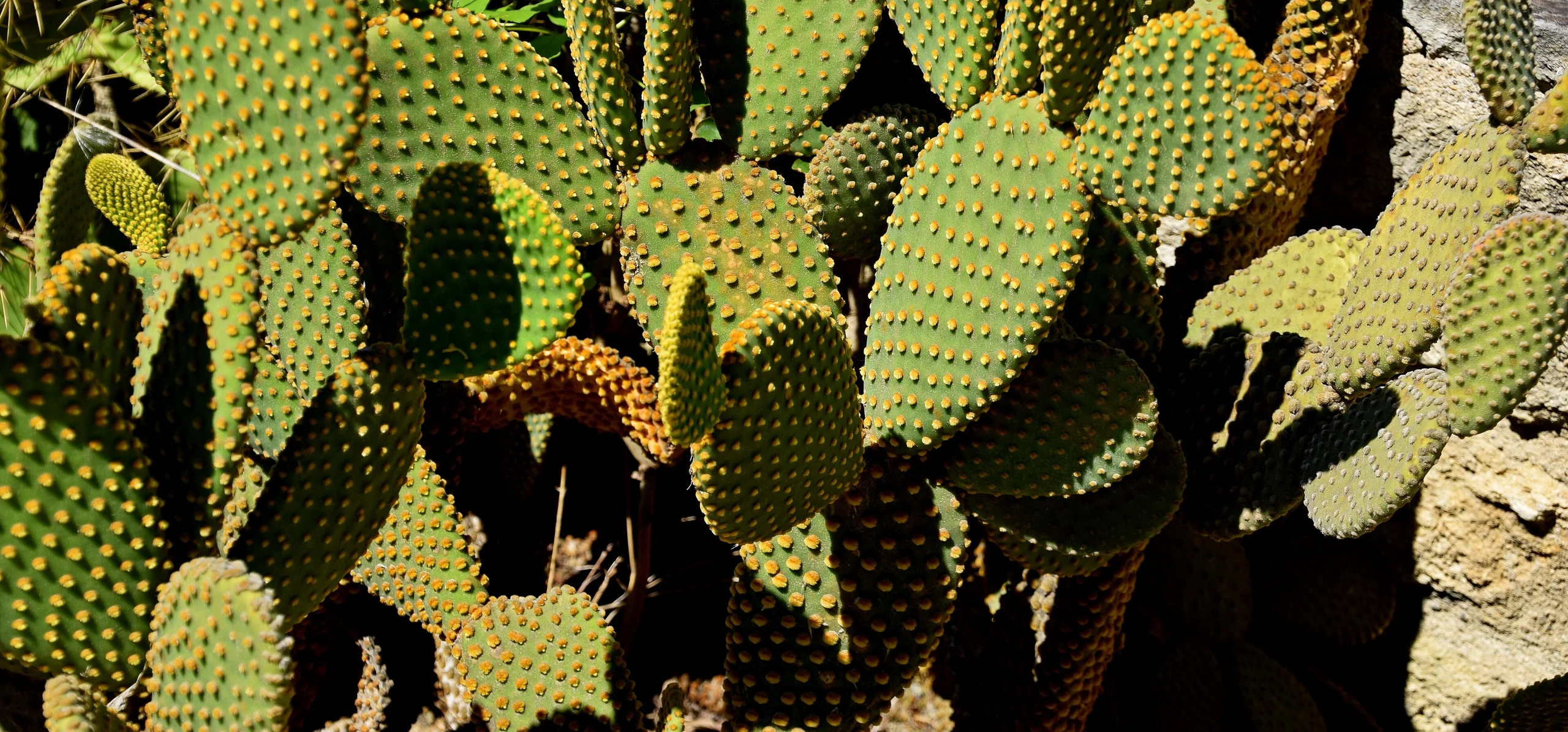
Opuntia microdasys is one of the few prickly pears sold with no true spines at all: its flat, paddle-shaped pads are covered instead in dense, felted tufts of tiny golden or white glochids, hairlike barbed bristles that detach at the lightest touch and are far harder to remove from skin than a single spine would be. That softened look is exactly what makes it a popular houseplant, and exactly what catches new owners off guard the first time they brush against one. Grown right, it stays a slow, sculptural clump of paddles for years; grown wet and shaded, it stretches, pales and rots at the base.
Where it grows in the wild
Kew's Plants of the World Online places the native range of Opuntia microdasys in Mexico, where it grows as a succulent subshrub in desert and dry shrubland habitat. It belongs to the cactus family Cactaceae, in the order Caryophyllales, alongside the other prickly pears and chollas that share the same reduced, water-storing pads in place of ordinary leaves. Almost everything sold in nurseries outside Mexico is a pot-grown descendant of that dry, sun-baked habitat, which is the reason it resents damp soil and dim rooms far more than most houseplants do.
Glochids: the real hazard, not the spines
Look closely at a pad and the felted dots covering its surface are actually clusters of dozens of glochids, each one barbed like a fishhook under magnification. They come away in the skin at a light brush, and because they are pale and fine they are easy to miss until the area starts to itch or burn hours later. Remove them with tweezers or by pressing and lifting household tape or a layer of white glue over the spot, never by pinching with bare fingers, which just drives more of them in. Handle the plant itself with tongs, a folded strip of newspaper or thick leather gloves rather than bare hands, especially when repotting or taking cuttings.
Light and placement
The RHS rates Opuntia microdasys for full sun with a south or west-facing aspect, and indoors that translates to the brightest windowsill in the house, with several hours of direct sun a day. A plant kept in low light does not simply grow slowly, it leans toward the light source, produces thin, pale new pads instead of thick felted ones, and loses the compact clump shape that makes it worth growing. If the only bright spot is a stretch of open floor near a south window in summer, that is a better home for it than a shelf a few feet back from the glass.

Watering through the year
Clemson Cooperative Extension's guidance for indoor arid cacti is to water during the growing season, roughly March to September, the way you would a typical houseplant that prefers to dry out between waterings, then cut back hard once temperatures drop. Through winter, water sparingly, just enough to keep the pads from visibly shriveling, which in practice often means a light watering only every few weeks. The extension guidance is explicit on the one rule that matters most: a cactus like this must never be left standing in water, since a saucer that stays wet for even a day or two is enough to start rot at the base of the lowest pads.
Soil, potting and feeding
The RHS lists loam and sand as the appropriate soil types, well-drained, and Clemson's extension sheet recommends a peat-based potting mix cut with very coarse sand or grit, or a ready-made cactus and succulent blend, in either case with a pot that has real drainage holes rather than a decorative cachepot with none. A shallow, wide pot suits the plant's clumping habit better than a tall narrow one, since the root system stays fairly shallow while new pads branch outward. Feed lightly with a dilute cactus fertilizer during the growing season only; stop entirely once cooler weather signals the start of the winter rest, since fertilizer applied during dormancy just sits in the soil unused.
Propagation from pads
New plants come from individual pads, twisted or cut free at a joint with tongs rather than bare hands. Set the cut pad somewhere warm and out of direct sun for three or four days so the wound calluses over into a dry, sealed scar; planting a fresh, uncalloused cut straight into damp mix is the single most common way home growers lose a cutting to rot. Once calloused, stand the pad upright an inch or two into gritty mix, water lightly, and hold off on regular watering until it resists a gentle tug, usually within a few weeks in warm weather, which signals that roots have formed.
Flowering and common mistakes
On a mature, well-lit plant, bright yellow flowers open along the upper edges of older pads, usually in late spring or summer, each one lasting only a day or two before closing for good. The two mistakes that account for most failed plants are watering on a fixed schedule through winter regardless of how dry the mix already is, which is what actually kills the roots rather than cold air, and keeping the plant on a desk or shelf that only gets bright, indirect light rather than direct sun, which produces the pale, stretched growth described above. Handling the plant without tools is the other recurring one, since even a confident grip on what looks like a smooth pad reliably ends in a handful of embedded glochids.
Test your plant knowledge
Tap a card to flip it and reveal the answer.
Opuntia microdasys pads are covered in true spines rather than fine glochids. Tap to reveal ✕ False
Opuntia microdasys is native to Mexico. Tap to reveal ✓ True
According to the ASPCA, this cactus is non-toxic to dogs, cats and horses. Tap to reveal ✓ True
This cactus tolerates constantly moist soil and a saucer left full of water. Tap to reveal ✕ False
A cool, dry rest around 45 to 55°F in winter helps this cactus grow and flower well the following season. Tap to reveal ✓ True
Sources
References consulted for this guide
- GBIF - Opuntia microdasysgbif.org
- Plants of the World Online (Kew) - Opuntia microdasyspowo.science.kew.org
- RHS - Opuntia microdasysrhs.org.uk
- ASPCA - Toxic and Non-Toxic Plants: Tree Cactusaspca.org
- Clemson HGIC - Indoor Cactihgic.clemson.edu
- Reference entity : Wikipédiaen.wikipedia.org