Dragon Fruit
Selenicereus undatus
Family · Cactaceae
Dragon fruit is a climbing cactus that needs a trellis, more water than a desert species, and often a helping hand to pollinate its one-night flowers.
Selenicereus undatus
Plant profile
- WateringHighWater every 7 days
- Light exposureFull sun
- Ideal temperature18–25 °C
- Hardiness zoneUSDA 10–11
Growth
- Family
- Cactaceae
- Life cycle
- Perennial
- Growth speed
- 6/10
- Mature size
- 100–610 cm
- Spread
- 100–1000 cm
- Propagation
- Seed
- Cutting
FloweringEnormous white flowers open for a single night in summer and often need hand pollination (UF/IFAS)
DormancyNo true dormancy; a dry period in winter and early spring helps trigger flowering
Time to maturityRooted cuttings can flower and fruit in about 6 to 9 months under strong light; seed-grown plants take up to 7 years
Soil & climate
- Drought tolerance
- No
Soil typesWell-drained sandy soil or loam enriched with organic matter (UF/IFAS), Cactus potting mix for container culture (NC State Extension)
Light & Placement
- Where to place it
- Brightest window available
- Heated greenhouse or sunroom in cool climates
- Full sun, with about 30% shade for the first 3 to 4 months after planting
- Large, sturdy container with a built-in post or trellis for climbing
OriginMexico to Honduras (POWO); naturalized and considered invasive in parts of Florida (UF/IFAS, NC State Extension)
Safety
- Toxicity
- CatsSafe
- DogsSafe
- HorsesSafe
Invasive speciesNaturalized and considered invasive in parts of central and southern Florida; not a risk in climates with hard frost (UF/IFAS, NC State Extension)
Data fromSelenicereus undatus (Haw.) D.R.Hunt, GBSelenicereus undatus (Haw.) D.R.Hunt, PlNight Blooming Cereus, Toxic and Non-ToxPitaya (Dragonfruit) Growing in the FlorSelenicereus undatus, NC State Extension
Where it grows
World distribution
Dragon Fruit is native to 4 countries: El Salvador, Guatemala, Honduras, and Mexico.GBIF records 4,429 documented identifications across 98 countries, with the largest concentrations in United States, Mexico, and Taiwan.
- El Salvador
- Guatemala
- Honduras
- Mexico
Yellow to orange dots: concentration of documented identifications per country. Green countries: sourced native range. Source: GBIFNative range from POWO (Kew).
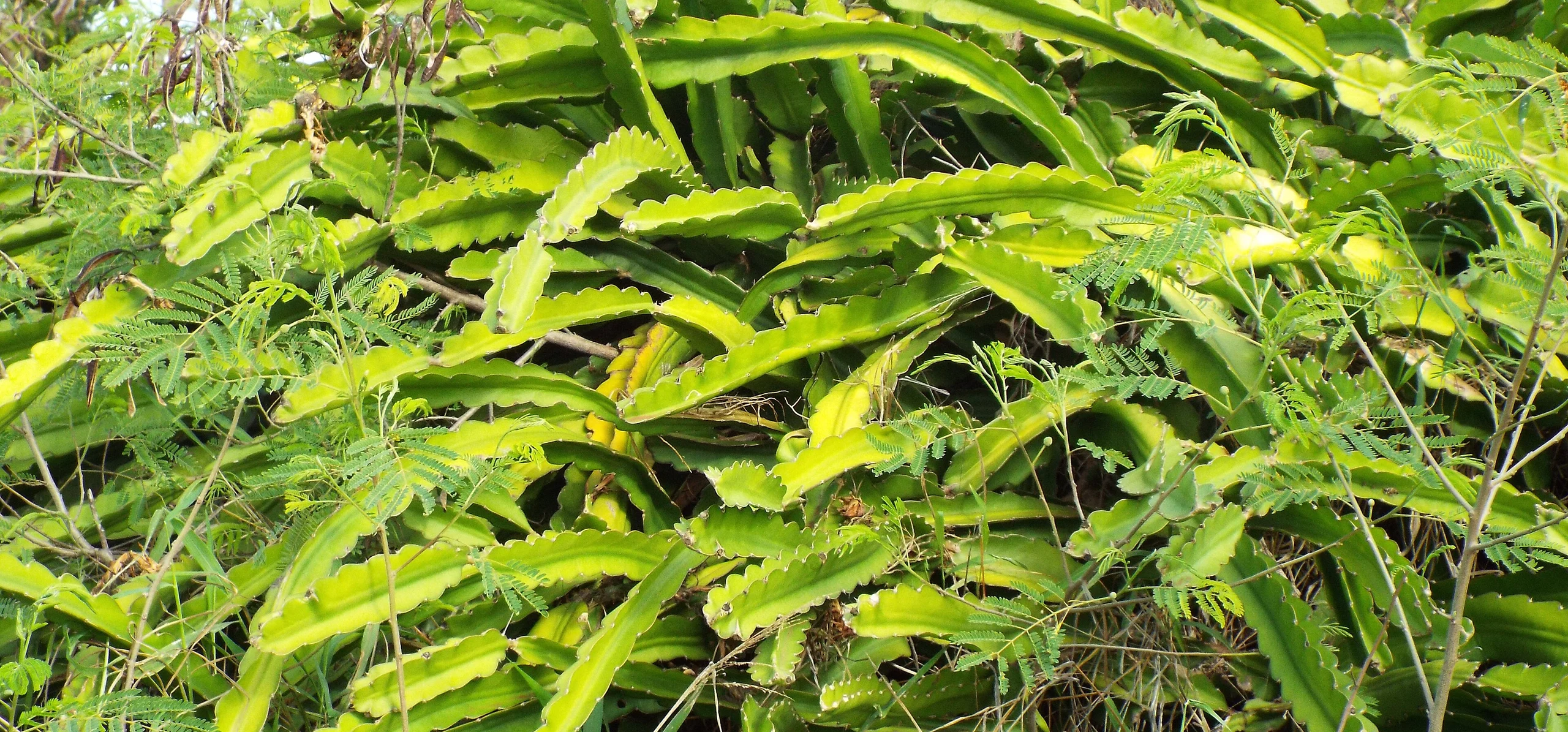
A dragon fruit plant almost always starts life as a cutting rather than a seed, and that choice explains most of what happens next: a rooted stem segment can flower and fruit within about six to nine months under strong light, while a seed-grown plant can take up to seven years and still produce fruit that does not match its parent. What arrives is Selenicereus undatus, a climbing, epiphytic cactus that scrambles up trees and rock faces in the wild rather than standing free, which is why it needs a post or trellis as much as it needs a pot. Its flattened, three-ribbed stems do the plant's photosynthesizing, throw out aerial roots wherever they touch a support, and can add roughly an inch of new growth a day once established. The reward, eventually, is a flower that opens for a single night and is gone by morning, so most of the plant's early years are really about getting it tall, supported, and mature enough to bloom at all.
From Hylocereus to Selenicereus undatus
For decades this plant was catalogued as Hylocereus undatus, and nurseries, seed packets, and most gardening writing still use that name. GBIF's current backbone taxonomy treats it as a synonym: a molecular study found the genus Hylocereus nested inside the older genus Selenicereus, so the accepted name became Selenicereus undatus (Haw.) D.R.Hunt, in the cactus family Cactaceae, order Caryophyllales. Nothing about the plant changed, only its filing cabinet, so keep buying it as dragon fruit or Hylocereus undatus and just recognize the newer name if you see it on a label or in a database. USDA's own records list it under a string of older common names too: night-blooming cereus, strawberry pear, belle-of-the-night, and queen-of-the-night, on top of dragon fruit and pitaya.
A climbing cactus that needs a post or trellis
In the ground, stems can run 20 feet or more, climbing by aerial roots that grip bark or masonry the way ivy grips a wall, and a plant left without support collapses into a heavy, tangled heap instead of growing upright. A single sturdy post, several feet tall, with a tyre, ring, or small platform at the top for the stems to cascade over once they reach it, works far better than a thin stake: a mature plant carries real weight, and a trellis that cannot take it will fail under the plant rather than the plant failing to grow. In a pot, build the same post into the container from the start, since retrofitting support around an established plant means fighting brittle, spine-covered stems that do not like being bent.
Light, and where sunburn actually happens
An established dragon fruit wants full or nearly full sun for the best growth and the most flowers, and a plant kept too shaded grows long, thin stems and rarely blooms. The exception is timing: a freshly rooted cutting, or a plant just moved into a new spot, benefits from roughly 30 percent shade for its first three or four months, since young, pale tissue scorches fast in direct sun before it has hardened off. That window is when most sunburn happens, not later: a stem that has toughened up in bright light rarely blisters, but the same stem moved straight from a shaded nursery bench into midday sun shows yellow, then brown, patches within days.


Watering: more than a desert cactus, less than a houseplant
Despite the spines, dragon fruit is not a plant that wants to dry out for weeks between waterings the way a barrel cactus does; horticultural references describe it as having a fairly high water requirement for a cactus. Water once the top few inches of mix have dried, then soak thoroughly and let it drain, since waterlogged, constantly wet soil invites the stem and fruit rots this species is prone to. The one deliberate exception is winter: letting the plant run drier through the cool season, then resuming regular watering as flower buds appear and through harvest, is part of what encourages a strong bloom instead of steady vegetative growth with no flowers.
Minimum temperature and pot culture in cool climates
Growth is best between about 65 and 77°F (18 to 25°C), and the plant tolerates heat well into the high 90s without much complaint, but prolonged exposure below freezing, 31°F (-2°C), causes real damage, even though a brief light frost is usually shrugged off. That single fact decides how most people outside the plant's comfortable zones, roughly USDA 10 to 11, have to grow it: as a container plant that spends summer outdoors in full sun and comes into an unheated porch, bright room, or heated greenhouse before the first frost, rather than as a permanent garden fixture. A large, sturdy pot with the trellis built in makes that seasonal move realistic, since a plant that size cannot easily be dug up and repotted every autumn.
Night-blooming flowers that often need a hand
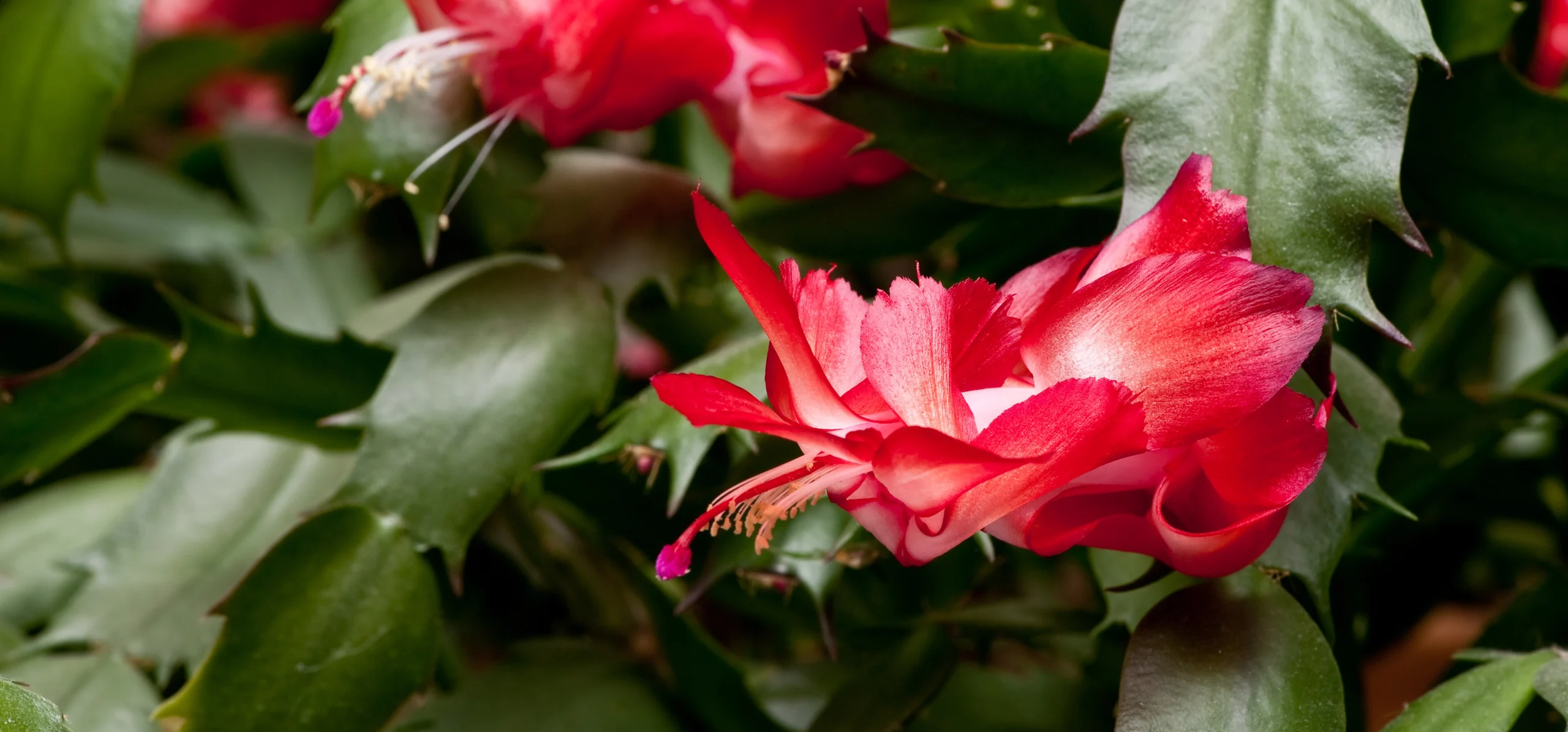
Flowers are enormous for a houseplant, sometimes 14 inches (36 cm) long and 9 inches (23 cm) across, white and heavily scented, and they open after dark and close again by morning, which is why they are so often missed entirely by anyone not watching for them. In the wild, moths and bats do the pollinating overnight, but many cultivated clones are self-incompatible: a flower pollinated only with its own pollen sets little or no fruit, even after a spectacular bloom. Growing two or three genetically different plants side by side solves this, or hand-pollinating: late at night or at first light, transfer pollen from the flower's own stamens, or from a second plant's flower, onto the sticky, star-shaped stigma with a small brush or a fingertip. A flower that closes unpollinated simply withers within a day or two, and there is no second chance until the next bud opens, often weeks later.
Propagation: cuttings beat seed almost every time
A cutting is not just faster, it is also the only way to reproduce a specific variety true to type, since seedlings are genetically variable and can take up to seven years to fruit for the first time. Take a stem segment 6 to 15 inches (15 to 38 cm) long, let the cut end callus in a dry, shaded spot for about a week, then set it a couple of inches deep in a well-drained mix; rooted cuttings can grow roughly an inch (3 cm) a day once established and have been recorded fruiting in as little as six to nine months under strong field light. In a pot, with less light and a smaller root run than a field planting, expect that timeline to stretch, but the cutting route still reaches first flowers far sooner than starting from seed.
Pests, diseases, and the mistakes that stall a dragon fruit
Outdoors, mites, thrips, ants, scale, mealybugs, and slugs are the recorded pests, alongside wildlife such as raccoons and birds that go after ripe fruit before it is picked; indoors, mealybugs and scale hiding in the joints between stem segments are the ones to watch for. Stem and fruit canker and various rots are the main disease risks, and both are worse on a plant kept too wet or too crowded for air to move around the stems, which is why pruning to open up the plant and let it dry quickly after rain or watering matters as much as any spray. The recurring mistakes are mostly about mismatched expectations: treating it like a low-water desert cactus and underwatering it, skipping the trellis until the plant is already sprawling, and assuming a heavy flower show guarantees fruit when a self-incompatible clone actually needs a second plant or a hand-pollinating gardener to finish the job. On the safety side, the ASPCA lists this plant, under the name Night Blooming Cereus, as non-toxic to dogs, cats, and horses, which at least removes one worry for anyone growing it around curious pets.
Test your plant knowledge
Tap a card to flip it and reveal the answer.
Dragon fruit is a desert-growing cactus that thrives on the same dry, infrequent watering as a barrel cactus. Tap to reveal ✕ False
The accepted scientific name is now Selenicereus undatus, even though the plant is still traded almost everywhere as Hylocereus undatus. Tap to reveal ✓ True
Because many dragon fruit clones are self-incompatible, hand pollination or a second genetically different plant is often needed to get fruit. Tap to reveal ✓ True
Growing dragon fruit from seed is the fastest way to get a plant that fruits true to its parent. Tap to reveal ✕ False
The ASPCA lists dragon fruit, under the name Night Blooming Cereus, as non-toxic to cats, dogs, and horses. Tap to reveal ✓ True
Sources
References consulted for this guide
- Selenicereus undatus (Haw.) D.R.Hunt, GBIF Backbone Taxonomygbif.org
- Selenicereus undatus (Haw.) D.R.Hunt, Plants of the World Online, Kew Sciencepowo.science.kew.org
- Night Blooming Cereus, Toxic and Non-Toxic Plants, ASPCA Animal Poison Controlaspca.org
- Pitaya (Dragonfruit) Growing in the Florida Home Landscape, UF/IFAS Extension (HS303)ask.ifas.ufl.edu
- Selenicereus undatus, NC State Extension Gardener Plant Toolboxplants.ces.ncsu.edu
- Reference entity : Wikipédiaen.wikipedia.org