Trumpet Vine
Campsis radicans
Family · Bignoniaceae
Trumpet vine self-clings by aerial rootlets, resists blooming in rich soil, and suckers hard from its roots: prune it, site it, and keep the sap off your skin.
Campsis radicans
Plant profile
- WateringModerateWater every 10 days
- Light exposureFull sun
- Hardiness zoneUSDA 4–10
Growth
- Family
- Bignoniaceae
- Life cycle
- Perennial
- Growth speed
- 9/10
- Mature size
- 900–1200 cm
- Spread
- 120–300 cm
- Propagation
- Seed
- Cutting
- Division
- Layering
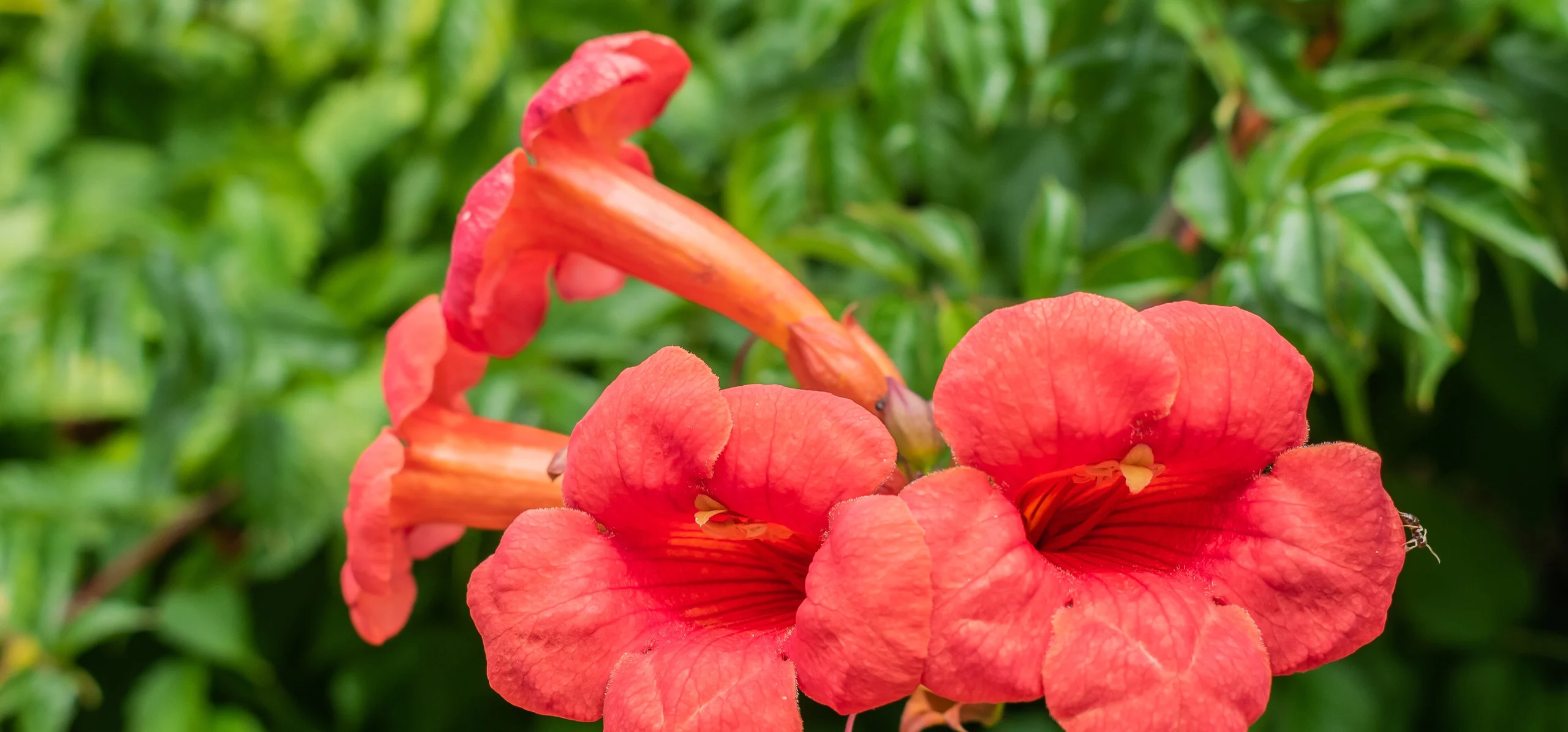
FloweringOrange-red trumpet-shaped flowers, early summer to fall, best in lean soil and full sun
Dormancydeciduous, bare in winter
Time to maturitycan take several seasons after planting to flower heavily, especially in rich or recently disturbed soil
Soil & climate
- Soil types
- clay, sand, loam, poor or compacted soils
- Drought tolerance
- Yes
Light & Placement
- Origin
- Central and eastern United States
- Where to place it
- freestanding pergola or arbor
- chain-link or sturdy fence
- dead tree or stump
Safety
- Toxicity
- HumansToxic
Invasive speciessuckers aggressively from the roots, roots wherever a stem touches soil, and self-seeds from its pods; regarded as a weed even within its native range and can escape cultivation further north
Data fromGBIF Backbone Taxonomy: Campsis radicansPlants of the World Online (Kew): CampsiNC State Extension Gardener Plant ToolboUniversity of Arkansas Cooperative ExtenMissouri Botanical Garden Plant Finder:
Where it grows
World distribution
Trumpet Vine is native to a single country: United States.GBIF records 55,528 documented identifications across 82 countries, with the largest concentrations in United States, France, and Canada.
- United States
Yellow to orange dots: concentration of documented identifications per country. Green countries: sourced native range. Source: GBIFNative range from POWO (Kew).
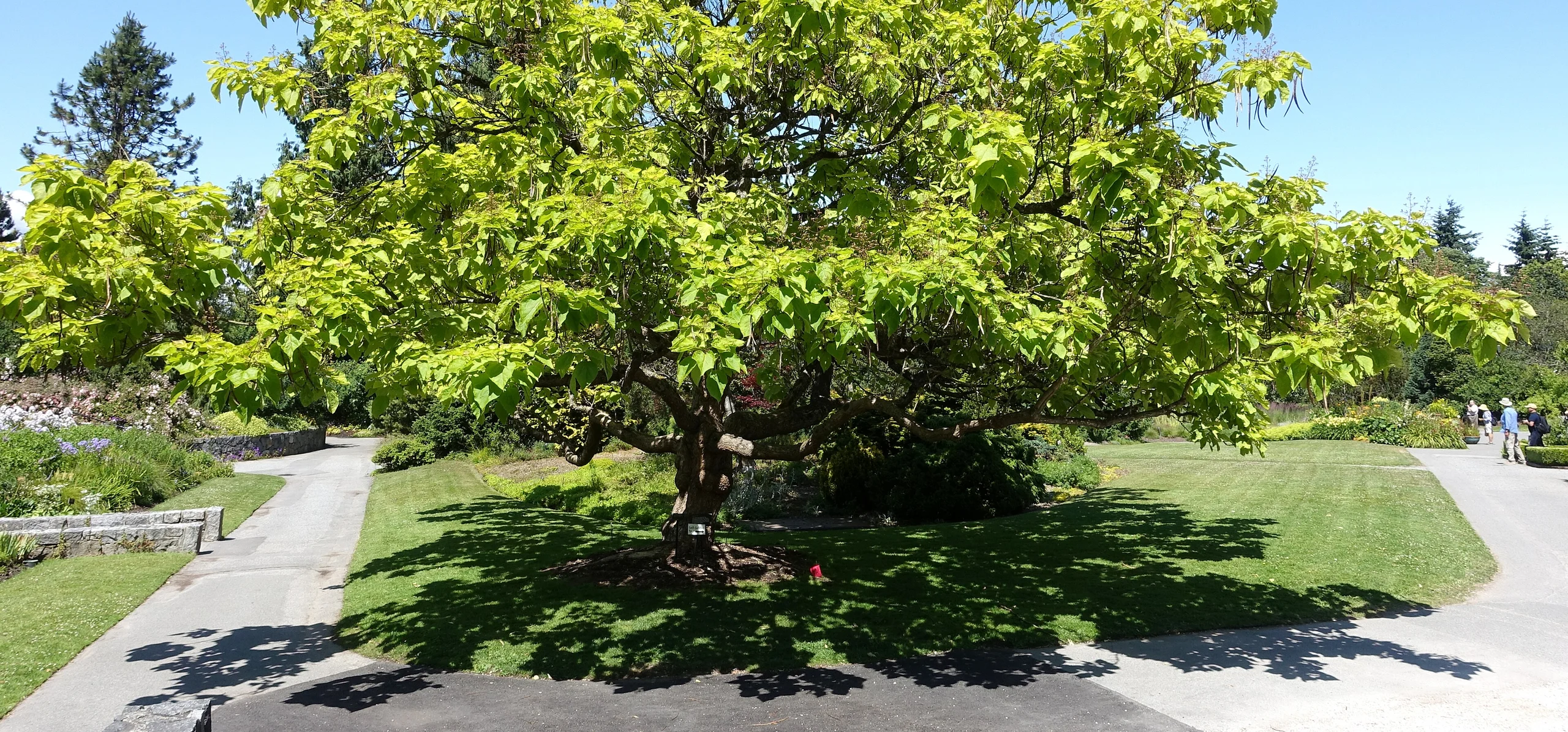
A trumpet vine planted against a bare fence three summers ago is now a wall of green with clusters of orange-red trumpets hanging off it, and the same fence post has three new shoots coming up through the lawn ten feet away. That is the whole story of Campsis radicans in one image: an almost indestructible, self-clinging climber that rewards you with hummingbirds and color, and asks nothing in return except that you commit to controlling where it runs. Plant it where its roots and seed pods can spread without becoming your neighbor's problem, on a structure strong enough to carry real weight, and give it years before you judge whether it will flower.
Origin and Native Range
Campsis radicans is native to the central and eastern United States, from the Appalachian woodlands and river bottoms out toward the Great Plains. It has been in cultivation in Europe since the 17th century and now turns up well outside that native range, both as a garden plant and, in some regions further north such as parts of New England, as an escapee that behaves like a weed rather than the native it technically is further south. The common names it has picked up locally, cow-itch vine, devil's shoestring, hellvine, say more about how gardeners actually experience it than any marketing name like trumpet vine ever will.
A Vigorous, Self-Clinging Climber
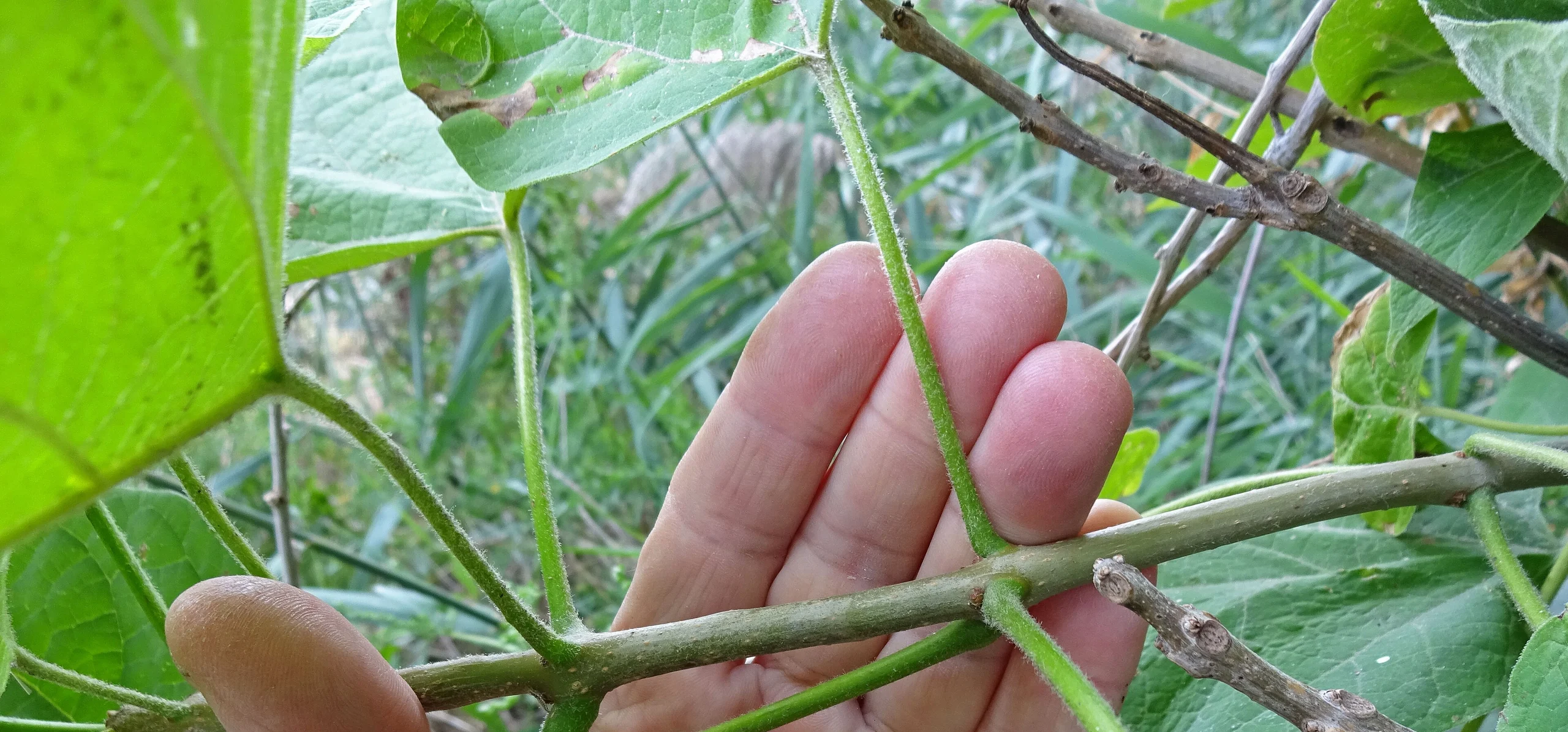
Unlike a wisteria or a climbing rose, trumpet vine does not need to be tied in. It climbs by aerial rootlets that grip directly onto brick, bark, wood siding or masonry, the same mechanism English ivy uses, and once those rootlets have set they are genuinely difficult to remove without damaging the surface underneath. That makes it excellent on a freestanding pergola, a chain-link fence or a dead tree stump you no longer care about, and a poor choice on a house wall with wood siding, vinyl or anything you want to repaint or repair later. Given a structure to hold onto, new stems can put on five to ten feet of growth in a single season and cover an eight-by-eight trellis within about three years.
Sun, Soil and Siting
Full sun for at least six hours a day is what pushes this vine into heavy bloom; in partial shade it will still cover a structure with foliage but flowers thin out fast. It is not fussy about soil texture and grows in clay, sand or loam across a wide pH range, tolerating compaction, poor fertility and heat better than most flowering vines. That tolerance for lean ground is not incidental, it is the condition the plant actually prefers, which is the opposite of how most flowering plants are treated.
Water deeply and regularly through the first one to two seasons while roots establish, then let it largely fend for itself; established plants are drought-tolerant and rarely need supplemental water outside a prolonged dry spell.
How often to water your Trumpet Vine
Why Your Trumpet Vine Won't Flower
This is the single most common complaint about the species, and the cause is almost always the opposite of what people expect: the plant is being treated too well. Rich, well-fertilized, evenly moist soil pushes Campsis radicans into pure vegetative growth, producing dense foliage and long runners at the expense of buds, exactly the growing conditions gardeners instinctively provide and exactly what suppresses flowering here. The fix is to stop feeding it, let the soil dry out somewhat between waterings, and be patient with a young plant, since a vine that has only recently been moved or is still establishing its root system often will not bloom heavily until it has settled in. If a mature vine in full sun still refuses to flower after you have cut off fertilizer, some growers deliberately sever a few roots with a spade a couple of feet from the base to stress it into blooming; do this sparingly, not as a routine practice.
Pruning Hard and Controlling the Suckers
Trumpet vine flowers on new wood, so a hard prune in late winter or early spring, before growth resumes, will not cost you the coming season's blooms and is in fact the main tool for keeping the plant a manageable size rather than a smothering mass. Cut back the previous year's growth to a framework of main stems each year on a trained specimen.
The harder problem is underground. Established plants send up root suckers well beyond the base, root wherever a trailing stem touches soil, and self-seed from the long, bean-like seed pods that follow the flowers, so a single vine can colonize a surprisingly wide area over a few years, including through cracks in paving or under a shed. Mow or cut new sprouts to the ground the moment they appear rather than letting them establish, dig out root sections where you can, and expect that any chemical control on unwanted sprouts needs to be applied carefully since the roots are still connected to the plant you want to keep. There is no one-season fix once suckering is established, only consistent yearly removal.
Hummingbirds and Other Visitors
The trumpet-shaped, orange to red flowers that bloom from early summer into fall are shaped almost exactly for a hummingbird's bill, and the species is widely planted in North America specifically to draw them, along with the occasional bumblebee working its way into the throat of the flower. In practice, how many hummingbirds actually show up varies a lot by region and by what else is blooming nearby; a vine in full, generous bloom will not automatically guarantee a feeder's worth of hummingbird traffic, but it remains one of the more reliable summer-long nectar sources you can put on a wall.
Skin Irritation and Where Not to Plant It
Handle this plant with the same caution you would give poison ivy's milder cousin. The sap and leaves of Campsis radicans can cause redness, swelling and itching on contact, which is exactly where the nickname cow-itch vine comes from, and the reaction shows up most often after heavy pruning or clearing when skin has prolonged contact with cut stems and sap. Wear gloves and long sleeves when cutting it back, and wash exposed skin afterward. It is not on the ASPCA's toxic plant lists for dogs, cats or horses, so ingestion is not the primary concern here; contact irritation is.
Site it away from anywhere people brush past regularly, such as a garden path or a child's play area, and well clear of any wall or fence you are not prepared to have permanently gripped by rootlets. Given how far and how persistently it suckers, the most common mistake is planting one specimen too close to a lawn edge, a neighbor's boundary, or a septic or foundation line, and spending the next decade mowing down volunteers that keep coming back from roots you can never fully dig out.


Test your plant knowledge
Tap a card to flip it and reveal the answer.
Trumpet vine needs to be tied to a wire or trellis because it climbs by twining stems. Tap to reveal ✕ False
Rich, well-fertilized soil tends to produce lush foliage but fewer flowers on trumpet vine. Tap to reveal ✓ True
Trumpet vine flowers on new wood, so a hard prune in late winter will not remove the coming season's blooms. Tap to reveal ✓ True
The sap and leaves of trumpet vine can irritate skin on contact, which is where the nickname cow-itch vine comes from. Tap to reveal ✓ True
Trumpet vine spreads only by seed and never regrows from cut or disturbed roots. Tap to reveal ✕ False
Sources
References consulted for this guide
- GBIF Backbone Taxonomy: Campsis radicans (L.) Bureaugbif.org
- Plants of the World Online (Kew): Campsis radicans (L.) Bureaupowo.science.kew.org
- NC State Extension Gardener Plant Toolbox: Campsis radicansplants.ces.ncsu.edu
- University of Arkansas Cooperative Extension: Trumpet Creeperuaex.uada.edu
- Missouri Botanical Garden Plant Finder: Campsis radicansmissouribotanicalgarden.org
- Reference entity : Wikipédiaen.wikipedia.org