Southern Catalpa
Catalpa bignonioides
Family · Bignoniaceae
Southern catalpa grows fast into a 9-18 m tree with brittle wood and 38 cm seed pods: how to site it, pollard the golden form, and live with the catalpa worm.
Catalpa bignonioides
Plant profile
- WateringLittleWater every 10 days
- Light exposurePartial sun
- Hardiness zoneUSDA 5–9
Growth
- Family
- Bignoniaceae
- Life cycle
- Perennial
- Growth speed
- 8/10
- Mature size
- 900–1800 cm
- Spread
- 600–1200 cm
- Flowering
- Showy white panicles spotted purple and yellow, early to late summer
- Propagation
- Seed
- Cutting
Dormancydeciduous, bare in winter
Time to maturityflowers within about 6-8 years from seed
Soil & climate
- Soil types
- clay, loam, sand
- Drought tolerance
- Yes
Light & Placement
- Origin
- Southeastern United States, from east Texas to south Georgia
- Where to place it
- open lawn
- large garden or park
- roadside
- sheltered spot away from strong wind
Safety
- Toxicity
- Not listed by the ASPCA as toxic or non-toxic to pets
- Pet safe
- Yes
Invasive speciesself-sows readily from dropped pods and can naturalize outside its native range; deadhead or rake up pods to limit spread
Data fromGBIF Backbone Taxonomy: Catalpa bignonioPlants of the World Online (Kew): CatalpMissouri Botanical Garden Plant Finder: NC State Extension Gardener Plant ToolboRHS: Catalpa bignonioides 'Aurea' (golde
Where it grows
World distribution
Southern Catalpa is native to a single country: United States.GBIF records 13,004 documented identifications across 63 countries, with the largest concentrations in United States, Germany, and Portugal.
- United States
Yellow to orange dots: concentration of documented identifications per country. Green countries: sourced native range. Source: GBIFNative range from POWO (Kew).
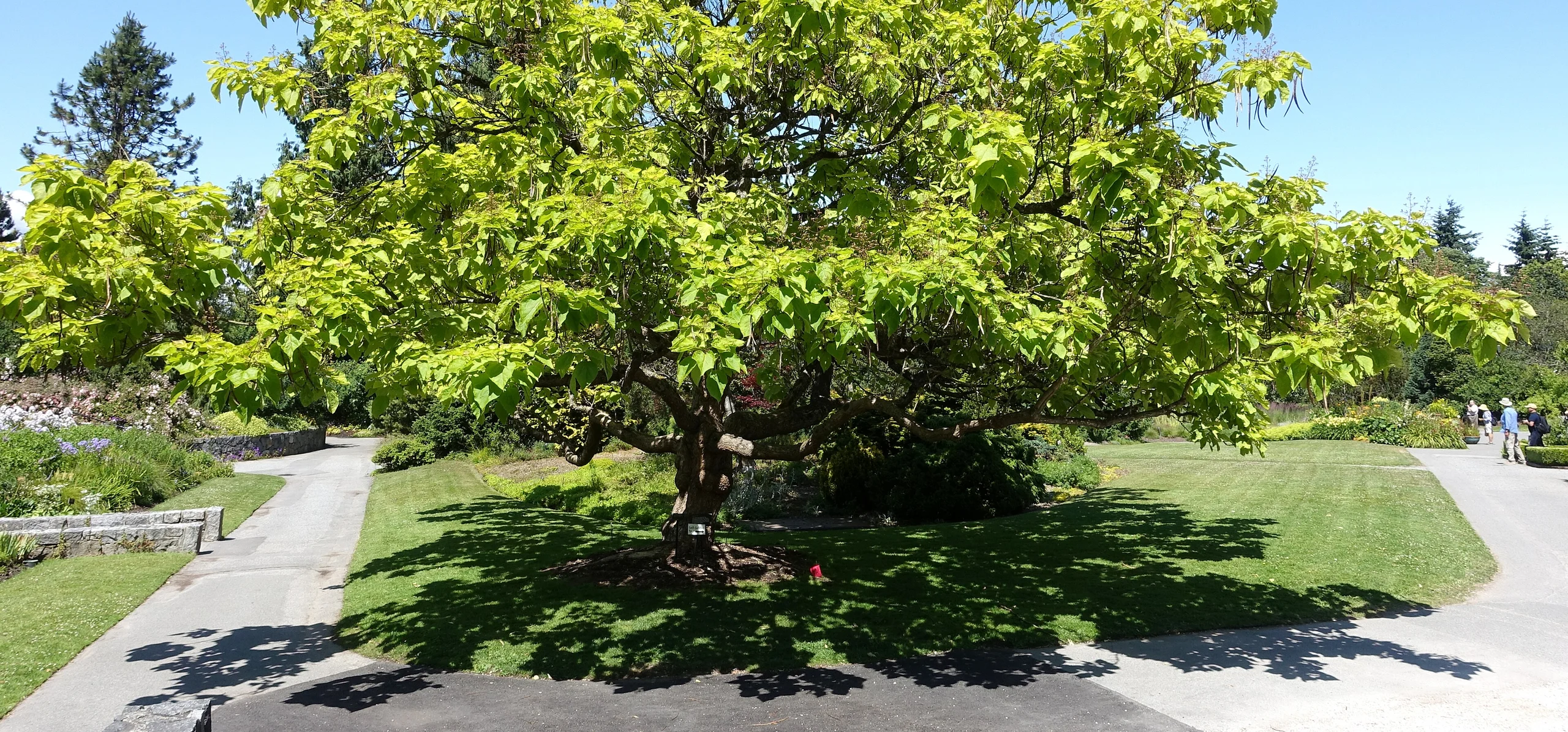
A Southern catalpa (Catalpa bignonioides) bought as a small sapling in a pot does not stay small: expect a broad, rounded tree 9 to 18 meters tall with a crown nearly as wide within a couple of decades, so where you plant it matters more than almost anything else you will do for it. In early to midsummer it opens large panicles of white, orchid-like flowers spotted purple and yellow, then carries enormous heart-shaped leaves through summer before dropping bean-like seed pods up to 38 cm long that gave it the old nickname cigar tree. The wood is soft and breaks easily in wind, so this is not a tree for an exposed corner, and the golden-leaved 'Aurea' form is usually kept small on purpose by hard pruning rather than left to reach full size.
Origin and Native Range
Catalpa bignonioides is native to a comparatively narrow part of the southeastern United States. Plants of the World Online (Kew) gives its native range as E. Texas to S. Georgia, and it has since been planted so widely as a street and specimen tree across temperate regions, and self-sows so readily, that it is often mistaken for native further north. Its close relative, the northern catalpa (Catalpa speciosa), comes from a different, more interior native range and flowers slightly earlier; the two are easy to confuse once both are established outside their home ranges.
Siting a Tree This Size
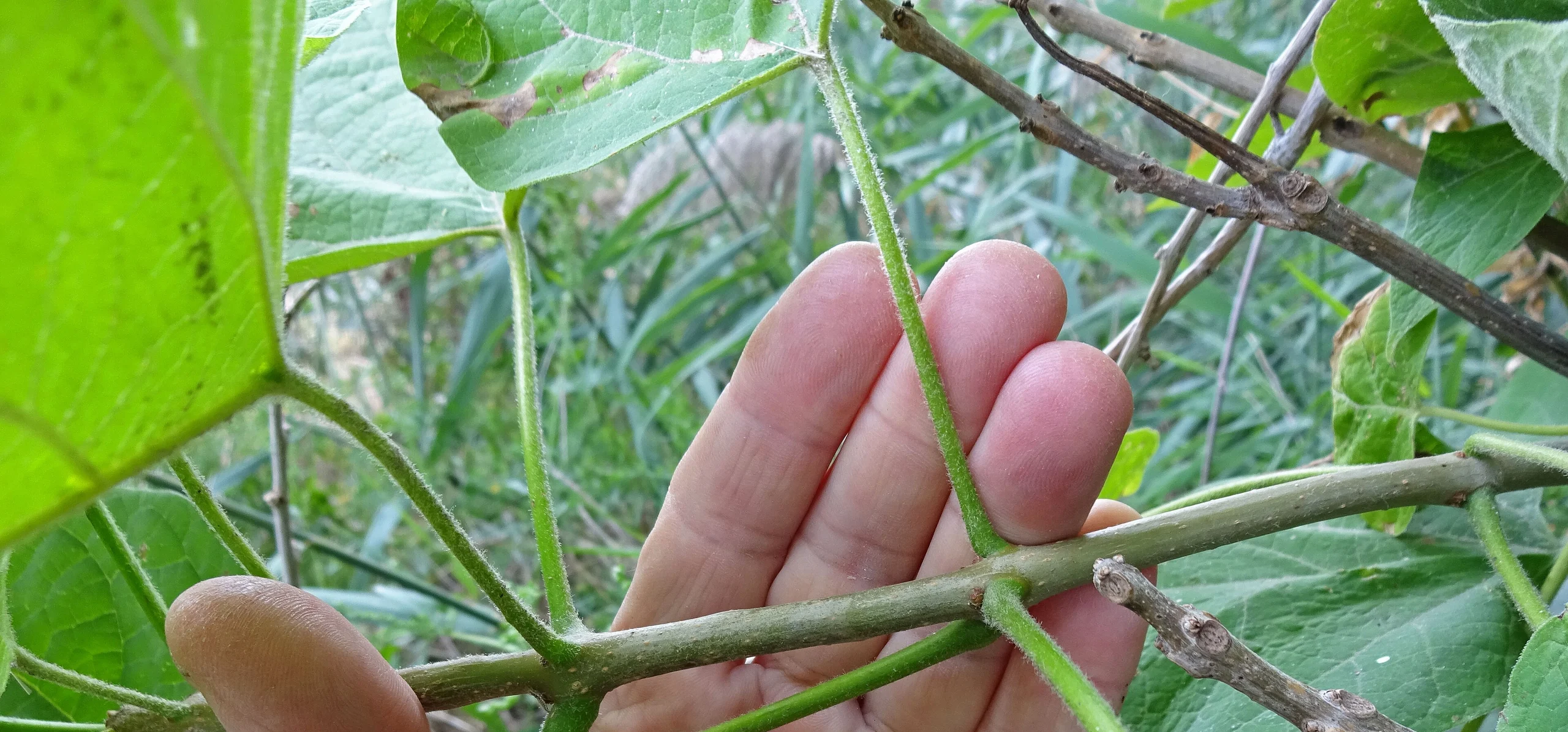
Give it room before you give it anything else: a mature crown 6 to 12 meters wide needs distance from the house, from power lines, and from paved paths that will end up littered with fallen twigs, flowers and pods. The root system is extensive and useful for holding a slope, but it is not one to plant close to a foundation, a septic field or a narrow border. Because the wood is brittle, avoid open, wind-exposed sites; a location with some shelter from neighboring trees or a building reduces the odds of limbs coming down in a storm. Keep it away from patios and parking as well, both for the mess and because falling branches from an older tree can be genuinely heavy.
Sun, Soil and Planting
Full sun gives the heaviest flowering and, on golden-leaved forms, the brightest color; the species also tolerates part shade, though flowering thins out as light drops. It is remarkably unfussy about soil: clay, loam or sand, acidic to alkaline, and it handles both dry spells and seasonal flooding better than most shade trees its size. Plant in average to moist, reasonably drained ground, water deeply and regularly through the first one to two growing seasons while roots establish, then taper off; once settled in, an in-ground tree rarely needs supplemental watering outside a real drought.
How often to water your Southern Catalpa
Growing the Golden Form as a Pollard
Left alone, Catalpa bignonioides 'Aurea' grows into the same large tree as the species, just with yellow-gold foliage that fades toward lime green as leaves age and toward green entirely in shade. Most gardeners never let it get that big. The RHS recommends pollarding or coppicing it in late winter or early spring, cutting the previous year's growth back hard to a low framework; the tree responds with vigorous new shoots and noticeably larger leaves in a more intense gold, kept at eye level on a manageable, shrub-sized plant instead of a small tree. A pollarded catalpa needs richer soil and more feeding and watering than one left to grow naturally, since it is replacing a whole season's canopy from scratch every year. Full sun is what makes the gold worth the extra pruning.
Flowers and the Cigar-Like Seed Pods
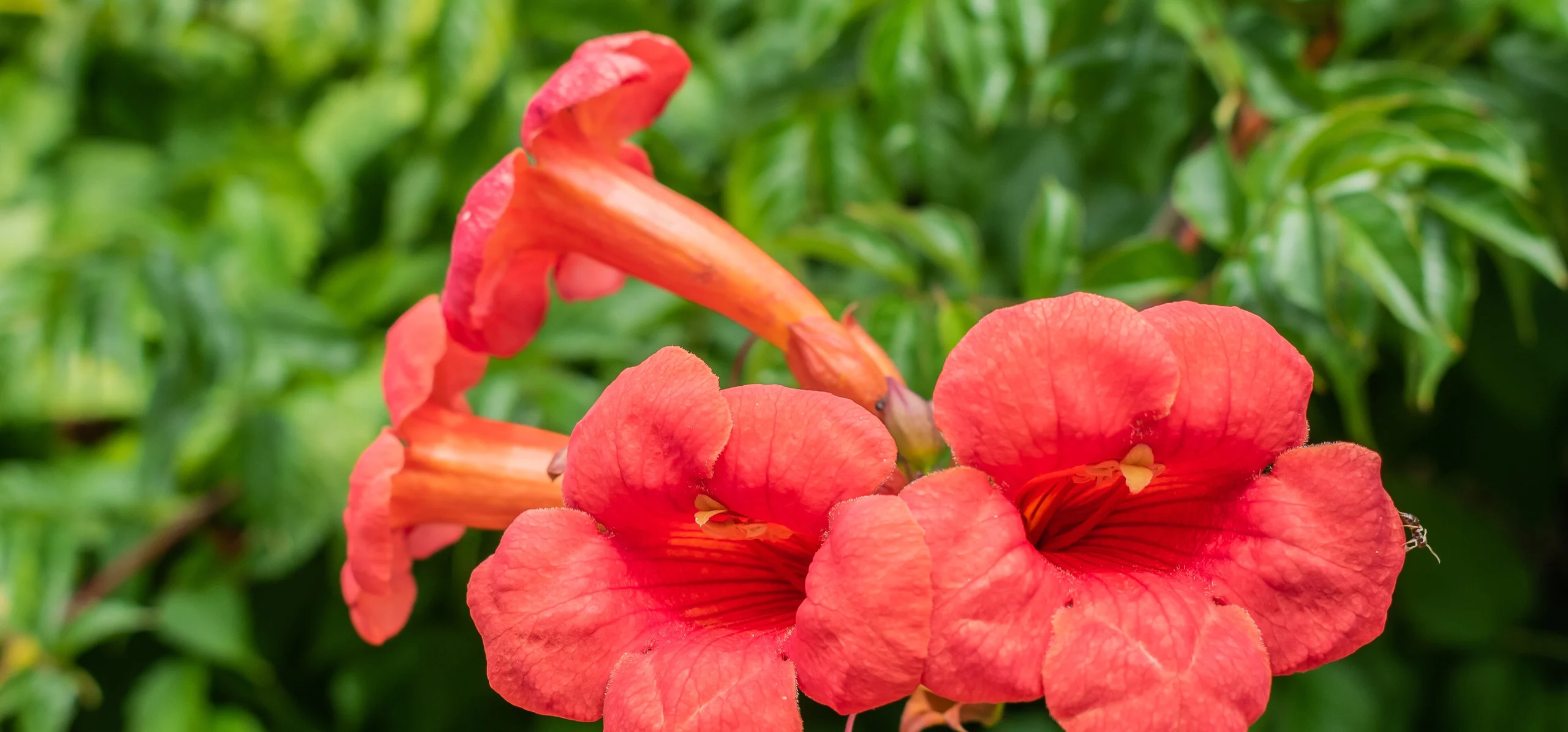
Flowers open in loose, upright panicles 15 to 30 cm long, each individual bloom bell-shaped, white, and marked with two rows of yellow ridges and a scatter of purple spots inside the throat; bloom comes in early to late summer, later in the season than the northern catalpa. What follows is more distinctive than the flowers: narrow, bean-like capsules that lengthen through the season to as much as 38 cm, hanging in clusters and giving the tree its cigar tree nickname. Pods ripen to dark brown by autumn and split open lengthwise to release flat, winged seeds between October and December. The tree self-sows readily wherever pods land on open ground, so rake up what you do not want germinating the following spring, especially near lawns and beds.
The Catalpa Worm
The big, hornworm-like caterpillar you may find stripping leaves in summer is the larva of the catalpa sphinx moth (Ceratomia catalpae), a species that feeds on nothing but catalpa. A heavy outbreak can defoliate a branch or even most of the canopy in a matter of days, but an otherwise healthy tree pushes out new leaves and recovers within the same season. In the southern United States these caterpillars, known locally as catalpa worms or catawba worms, are prized by anglers as bait for bass and catfish; they are picked by hand, frozen for later use, and a productive tree is sometimes watched over as carefully for its worms as for its shade.
Pests, Diseases and Brittle Wood
Beyond the sphinx moth caterpillars, Catalpa bignonioides is largely trouble-free: occasional verticillium wilt, powdery mildew, twig blight or leaf spot show up but rarely threaten a mature tree. The real structural weakness is the wood itself, which is soft and prone to splitting at narrow, V-shaped branch unions. Train a young tree to a single central leader and remove tight forks early, while branches are small and the cuts heal quickly; on an older tree, expect occasional twig drop after wind and inspect the crown after any serious storm for hanging or cracked limbs.
Common Mistakes
The most common mistake is planting a full-size catalpa where only a small tree will fit, close to a patio, driveway or foundation, and then living with decades of dropped pods, flowers and twigs underfoot. The second is buying 'Aurea' expecting a compact golden shrub and then being surprised when it grows into a 12-meter tree because nobody pruned it; if the goal is dense, bright foliage on a manageable plant, plan on cutting it back hard every spring from the start. The third is siting any catalpa in a wind-exposed spot, where the same brittle wood that makes it fast and cheap to grow also makes it the first tree to lose limbs in a summer storm.


Test your plant knowledge
Tap a card to flip it and reveal the answer.
The seed pods of Catalpa bignonioides can grow up to about 38 cm (15 in) long, giving the tree its old nickname 'cigar tree'. Tap to reveal ✓ True
Catalpa bignonioides is native to Europe. Tap to reveal ✕ False
The caterpillars of the catalpa sphinx moth are prized by anglers in the southern United States as fishing bait. Tap to reveal ✓ True
Catalpa bignonioides has exceptionally strong wood that rarely loses branches in storms. Tap to reveal ✕ False
The golden-leaved 'Aurea' cultivar is usually kept compact by pollarding or coppicing it hard each spring. Tap to reveal ✓ True
Sources
References consulted for this guide
- GBIF Backbone Taxonomy: Catalpa bignonioides Waltergbif.org
- Plants of the World Online (Kew): Catalpa bignonioides Walterpowo.science.kew.org
- Missouri Botanical Garden Plant Finder: Catalpa bignonioidesmissouribotanicalgarden.org
- NC State Extension Gardener Plant Toolbox: Catalpa bignonioidesplants.ces.ncsu.edu
- RHS: Catalpa bignonioides 'Aurea' (golden Indian bean tree)rhs.org.uk
- Reference entity : Wikipédiaen.wikipedia.org