Common Hackberry
Celtis occidentalis
Family · Cannabaceae
Common hackberry survives drought, wind, urban pollution and alkaline clay from USDA zone 3 to 9, but soft wood, fruit litter and root suckers need planning.
Celtis occidentalis
Plant profile
- WateringLittleWater every 10 days
- Light exposurePartial sun
- Ideal temperature-40–38 °C
- Hardiness zoneUSDA 3–9
Growth
- Family
- Cannabaceae
- Life cycle
- Perennial
- Growth speed
- 7/10
- Mature size
- 1200–2200 cm
- Spread
- 1000–1800 cm
- Propagation
- Seed
- Grafting
FloweringInconspicuous spring flowers; small dark purple drupes ripen in autumn and often persist into winter
Dormancydeciduous, dormant in winter
Time to maturitycorky, warty bark develops with age; full mature form reached over several decades
Soil & climate
- Soil types
- clay, loam, sand, rocky
- Saline soil
- Tolerated
- Drought tolerance
- Yes
Light & Placement
- Origin
- Central and eastern Canada to west-central and eastern United States
- Where to place it
- street tree
- shade tree
- windbreak and shelterbelt
- reclamation and parks plantings
Safety
- Toxicity
- Not listed by the ASPCA for cats, dogs or horses
- Pet safe
- No
Data fromGBIF Backbone Taxonomy: Celtis occidentaPlants of the World Online (Kew): CeltisNC State Extension Gardener Plant ToolboUniversity of Illinois Extension Hort AnUF/IFAS Extension: Celtis laevigata (Sug
Where it grows
World distribution
Common Hackberry is native to 2 countries: Canada and United States.GBIF records 35,126 documented identifications across 47 countries, with the largest concentrations in United States, Canada, and Hungary.
- Canada
- United States
Yellow to orange dots: concentration of documented identifications per country. Green countries: sourced native range. Source: GBIFNative range from POWO (Kew).
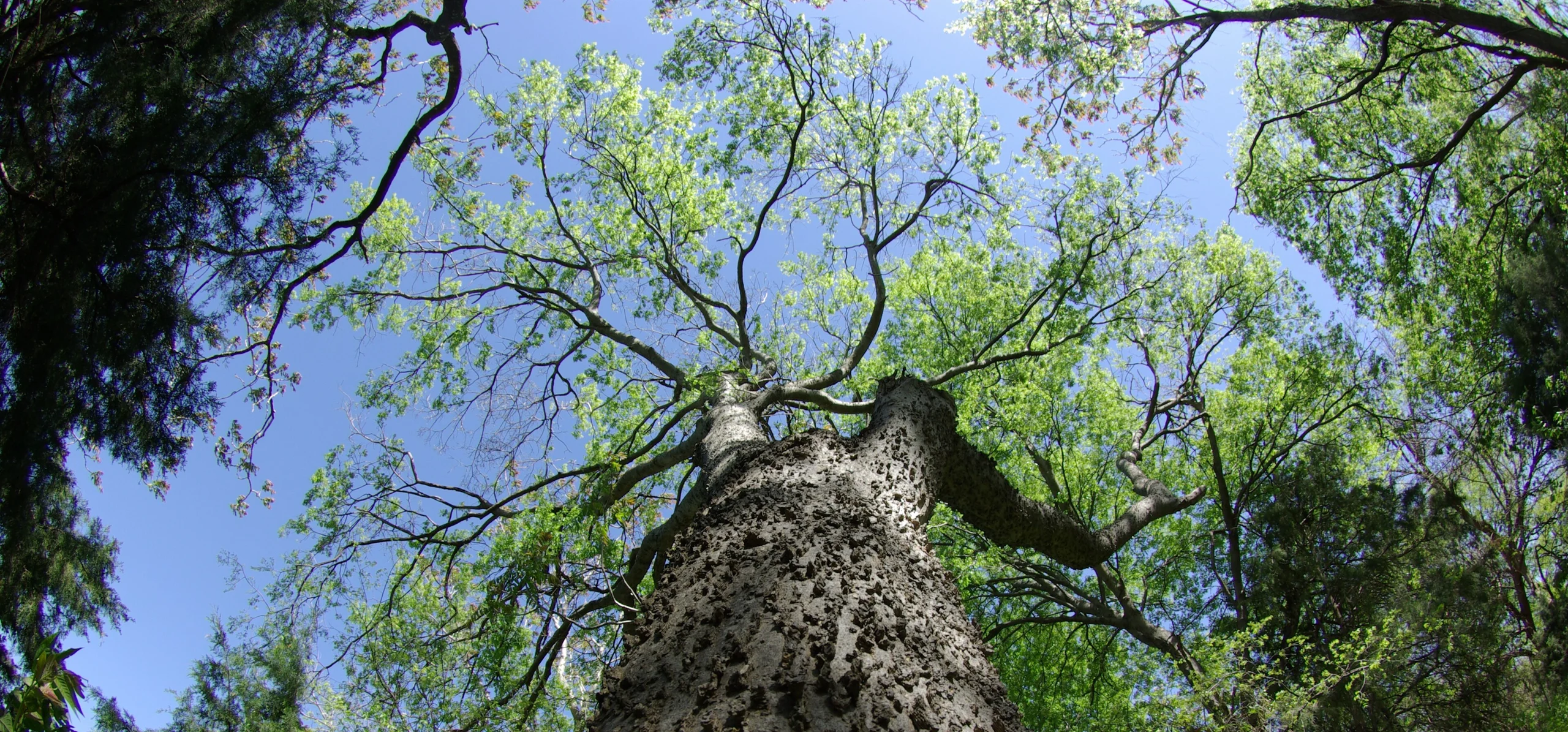
A common hackberry bought bare-root or already growing at the edge of a yard is usually there because nothing else would take the site: a dry slope, a windy fence line, a patch of alkaline clay that kills maples and dogwoods outright. Celtis occidentalis is a 12 to 22 metre deciduous tree with elm-like, coarsely toothed leaves and, once it reaches ten or fifteen years old, distinctive bark broken into corky, warty ridges that no other common street tree shares. Small dark purple drupes ripen in early autumn and rarely last past November once robins, cedar waxwings and other birds start stripping them. It is not a refined ornamental; it is planted because it survives conditions that would kill almost anything else, and understanding that trade-off is most of what you need to grow one well.
Recognizing a Hackberry: Bark, Leaves and Berries
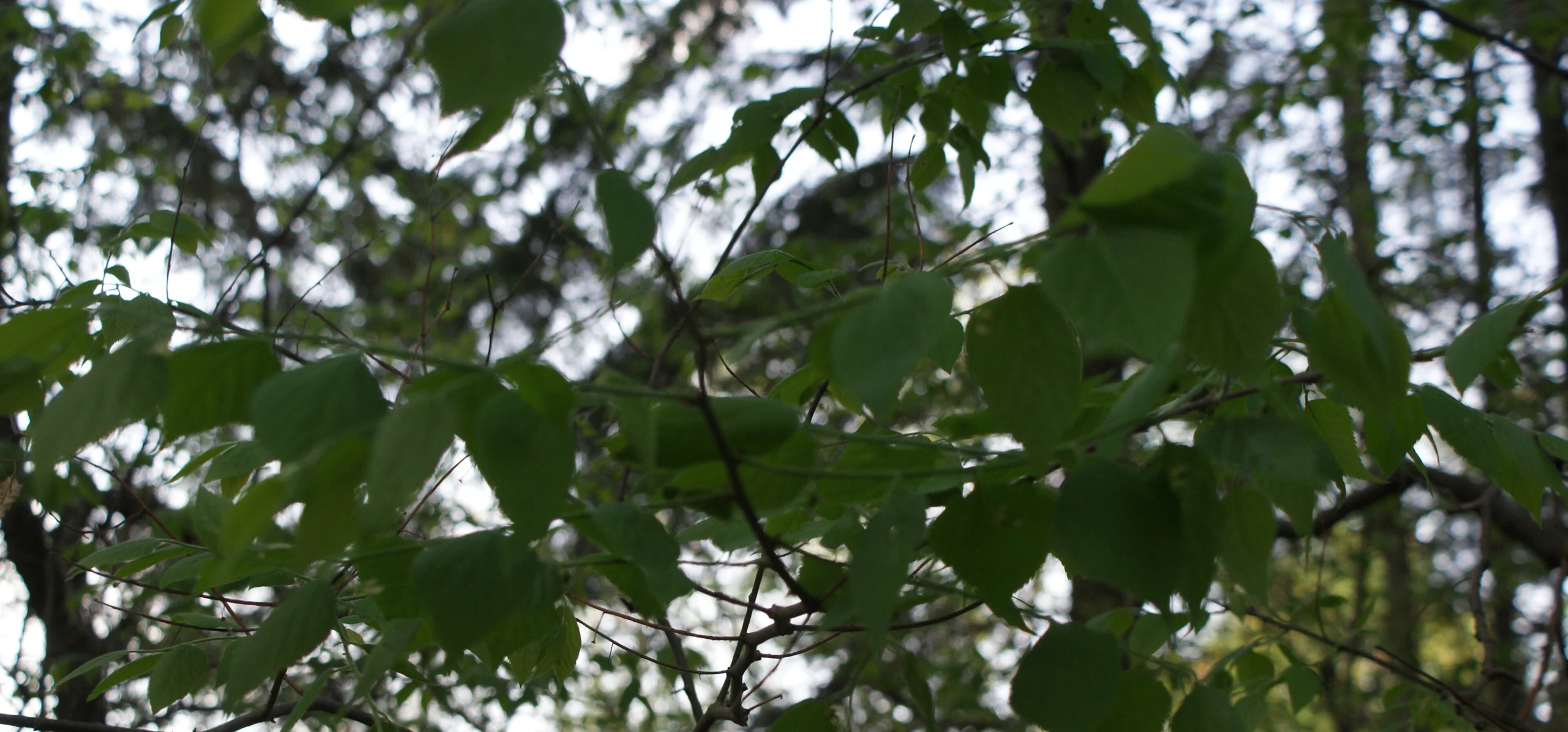
Young hackberry bark is smooth and grey, easy to mistake for an elm or a young sugarberry, but on an established tree the trunk develops the warty, corky ridges that are the surest field mark of the species; nothing else planted as a street tree looks quite like it. The leaves are roughly 5 to 12 cm long, ovate with a long pointed tip, coarsely toothed from the middle of the leaf to the tip, and set asymmetrically at the base, one side of the blade noticeably longer than the other where it meets the stalk. Crushed foliage has almost no scent, another point of difference from elm. Spring flowers are small and greenish, easy to miss; the fruit that follows is a pea-sized drupe, green through summer and turning dark purple to nearly black by September over a thin, sweet flesh and a hard stone.
Why It Gets Planted: Drought, Wind and Alkaline Soil
Extension sources rate common hackberry hardy from USDA zone 3 into zone 9, tolerant of wind, and adaptable to clay, loam, sand and shallow rocky ground at almost any soil pH from acidic to alkaline. That combination, plus real tolerance for urban pollution, road salt and compacted soil, is why it turns up as a street tree, a component of shelterbelt windbreak plantings across the northern plains, and a reclamation species on disturbed ground where fussier trees fail. It is also immune to Dutch elm disease, the other reason it was planted so widely through the twentieth century: where American elm died out along a street or in a park, hackberry was one of the trees used to replace it, offering a broadly similar vase-shaped silhouette without the vulnerability.


Where Hackberry Falls Short
The same toughness comes with real drawbacks. Extension sources describe the wood as heavy but comparatively soft and weak, prone to decay once a branch is wounded or a cavity opens, so storm damage and included bark at branch unions are worth watching on an older tree near a house or driveway. The berries and flaking bark scale drop steadily through winter, a genuine cleanup job over paving or a patio rather than a minor nuisance. Around the base of an established tree, root suckers and volunteer seedlings from the abundant, bird-dispersed fruit turn up in beds and lawn edges for years and need pulling while young, before the taproot sets.
Planting and Establishing a Young Tree
Plant bare-root or container stock in full sun once the ground has thawed in spring, or in fall in milder zones. Hackberry tolerates the move better than taprooted trees like sweetgum, since nursery stock is normally already container-grown or root-pruned. Soil preparation matters less than site selection: this is one of the few shade trees that genuinely does not need amending for pH or texture, since clay, sandy and rocky sites are all tolerated as sold. Water deeply and regularly through the first one to two growing seasons while roots establish; after that, an established hackberry gets by on rainfall alone through all but the most extreme droughts, and overwatering an adult tree causes more problems, including edema and root rot, than underwatering it does.
Soil, Water and Pruning
Feeding is rarely necessary on a tree this adapted to poor ground; a stressed, chlorotic hackberry is unusual and worth investigating as a site problem rather than treating with routine fertilizer. Pruning should stay minimal and be done in late winter while the tree is dormant, removing crossing branches, deadwood and any codominant leaders competing with the central trunk while the structure is visible without leaves. Because the wood is soft and slow to seal wounds, avoid heavy cuts on a mature tree and prioritize training a young one into a single strong leader early, since correcting poor branch structure later is much harder on a species already prone to included bark and breakage.
Cosmetic Problems: Nipple Galls and Witches' Broom
Two problems alarm new owners out of proportion to the damage they do. Hackberry nipple gall, caused by a tiny psyllid in the genus Pachypsylla that lays eggs on new leaves in spring, produces small raised bumps on almost every leaf of almost every hackberry by midsummer; it looks like disease but extension sources describe it as a cosmetic problem with no measurable effect on tree health, and spraying is not normally recommended. Witches' broom is a stranger sight: dense, tangled clusters of twigs, most visible in winter once leaves drop, caused by the combined action of an eriophyid mite that lives only on hackberry and a powdery mildew fungus that colonizes the deformed buds the mite creates. It disfigures the silhouette but does not kill the tree, and pruning out individual brooms is cosmetic maintenance rather than a health necessity.
Birds, Butterflies and the Berries
Hackberry earns its keep as a wildlife tree. The persistent autumn and winter drupes feed robins, cedar waxwings, mockingbirds and a long list of other birds once softer fruit has gone, and the foliage hosts hackberry emperor and question mark butterfly larvae among others, so a mature tree in a yard reliably brings both. The fruit itself is edible for people too, a thin, sweet, slightly dry flesh over a large stone, traditionally eaten fresh off the tree or used in preserves, though there is little flesh per fruit to make it worth growing for the harvest alone.
Toxicity and a Line Between Hackberry and Sugarberry
Common hackberry does not appear on the ASPCA's toxic or non-toxic plant lists for cats, dogs or horses, so treat its status as undocumented rather than confirmed safe, and rake up heavy fruit drop where a dog is inclined to eat plant material by the mouthful. In the field, the species most often confused with it is sugarberry, Celtis laevigata, sharing much of its range across the southeastern and south-central United States: sugarberry has narrower leaves with mostly smooth margins and noticeably smoother, less warty grey bark, while common hackberry keeps its coarsely toothed leaf and rougher, warty trunk at any age.
Test your plant knowledge
Tap a card to flip it and reveal the answer.
Common hackberry's bark develops warty, corky ridges as the tree matures. Tap to reveal ✓ True
Common hackberry is highly susceptible to Dutch elm disease, like American elm. Tap to reveal ✕ False
Hackberry nipple galls seriously weaken or kill the tree they infest. Tap to reveal ✕ False
Common hackberry tolerates a wide range of soils, from clay to alkaline ground. Tap to reveal ✓ True
The ASPCA lists common hackberry as toxic to cats and dogs. Tap to reveal ✕ False
Sources
References consulted for this guide
- GBIF Backbone Taxonomy: Celtis occidentalis L.gbif.org
- Plants of the World Online (Kew): Celtis occidentalis L.powo.science.kew.org
- NC State Extension Gardener Plant Toolbox: Celtis occidentalisplants.ces.ncsu.edu
- University of Illinois Extension Hort Answers: Common Hackberryweb.extension.illinois.edu
- UF/IFAS Extension: Celtis laevigata (Sugarberry) fact sheet ST138ask.ifas.ufl.edu
- Reference entity : Wikipédiaen.wikipedia.org