Florida Clematis
Clematis florida
Family · Ranunculaceae
Clematis florida is borderline hardy and best grown in a large pot where winters bite. Covers pruning group 2, wilt, trellis support and layering.
Clematis florida
Plant profile
- WateringModerateWater every 5 days
- Light exposureFull sun
Growth
- Family
- Ranunculaceae
- Life cycle
- Perennial
- Growth speed
- 6/10
- Mature size
- 150–250 cm
- Spread
- 100–150 cm
- Flowering
- Midsummer into early autumn, with a second flush after the first if lightly pruned
- Propagation
- Cutting
- Layering
Dormancyloses its leaves and rests over winter; new shoots break from the woody base or overwintered stems in spring
Time to maturityflowers in its first year on new growth; fills a trellis or obelisk over two to three seasons
Soil & climate
- Soil types
- chalk, loam, sand
- Drought tolerance
- No
Light & Placement
- Origin
- Native to southern China
- Where to place it
- unheated greenhouse or bright shed for overwintering a potted plant
- south- or west-facing wall, fence or obelisk in full sun
- trellis with the root zone shaded by mulch or a low companion plant
- large container with a permanent trellis, root zone shaded, moved under cover before hard frost
Safety
- Toxicity
- CatsToxic
- DogsToxic
- HorsesToxic
Data fromClematis florida Thunb., GBIF Backbone TPlants of the World Online (Kew): ClematASPCA: Clematis toxicity to cats, dogs aRHS: Clematis wilt, causes, symptoms andRHS: Clematis florida 'Sieboldii'
Where it grows
World distribution
Florida Clematis is native to a single country: China.GBIF records 768 documented identifications across 28 countries, with the largest concentrations in China, Japan, and United States.
- China
Yellow to orange dots: concentration of documented identifications per country. Green countries: sourced native range. Source: GBIFNative range from POWO (Kew).
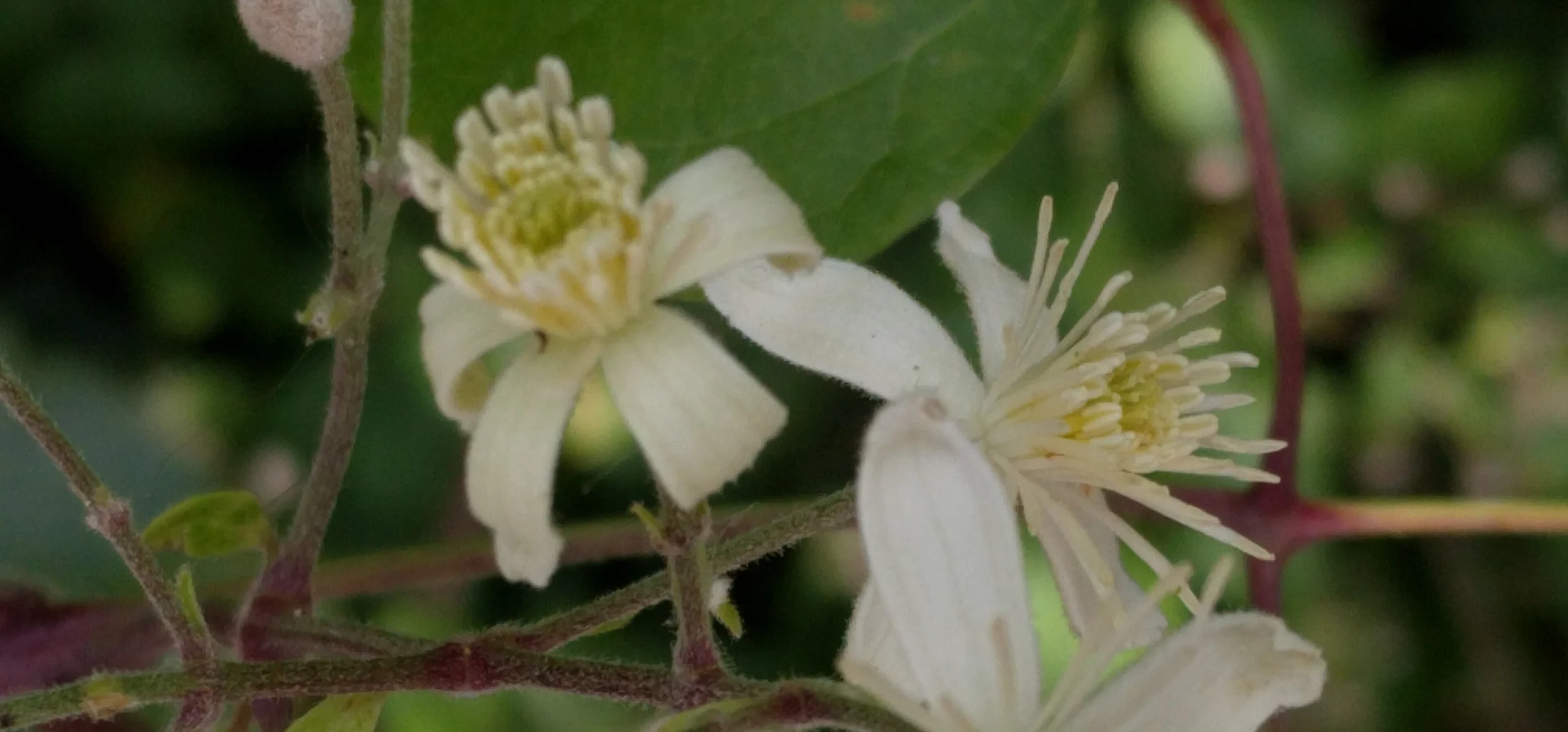
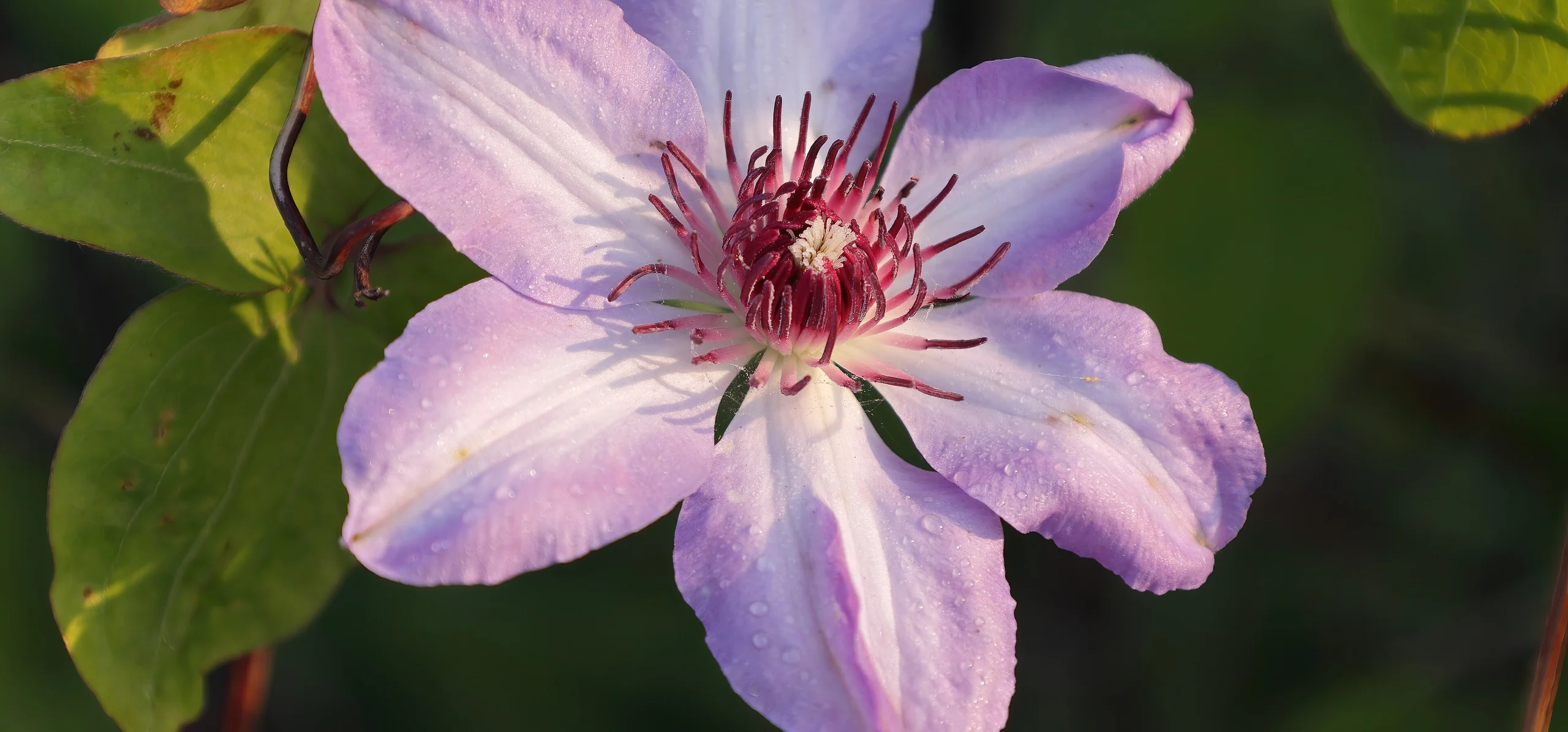
The clematis sold as 'Sieboldii' and 'Alba Plena' are not a separate family of plants, they are forms of one Chinese species, Clematis florida, native to southern China according to Kew's Plants of the World Online. What sets it apart from the blue and purple Jackmanii-type hybrids filling most garden centers is the flower's center: a dense boss of narrow, deep purple-red staminodes standing up inside broad sepals that open creamy white and fade to a soft lilac-pink with age, giving the bloom a passionflower-like look no montana or viticella type shares. Both popular forms are also more tender and slower to settle in than the hardy hybrids sold beside them, which is the first thing to plan around before choosing where it will grow.
A Chinese Species Behind the Doubles Sold as 'Sieboldii' and 'Alba Plena'
What reads as extra petals in 'Sieboldii' is a ring of staminodes, sterile, petal-like stamens that replace the pollen-bearing stamens found in the plainer, four-sepaled wild species. 'Sieboldii' carries this doubled center on nodding, outward-facing flowers from midsummer into early autumn; 'Alba Plena' takes the doubling further into a fully packed white pompon with no visible center at all. Because both are selections of a single species rather than complex modern hybrids, they share its native constitution: a woody-based climber that is happiest with more warmth and shelter than the average garden clematis.
Borderline Hardy: Pot Culture Where Winters Bite
The RHS rates 'Sieboldii' H3, hardy in coastal and relatively mild parts of the UK but at risk in a severe or early sudden frost. Anywhere colder, or anywhere winter arrives as a hard, early freeze rather than a slow cooldown, the safer route is a large pot rather than open ground. Grow it in a container big enough to carry a permanent trellis or obelisk, and before the first hard frost move the whole pot into an unheated greenhouse, cold frame or bright shed, frost-free but not warm, since warmth without light draws the stems into weak, pale growth. Bring it back outside once night frosts have passed and resume feeding as new growth starts.


Head in the Sun, Feet in the Shade
Full sun is what the RHS lists for 'Sieboldii', ideally against a south- or west-facing wall or fence where the vine gets direct light most of the day. University extension advice for the genus adds one qualifier: the root zone wants the opposite treatment, kept cool, shaded and evenly moist rather than baking under the same sun as the foliage above it. In a border, a low perennial or a flat stone over the root area does the job; in a pot, a shallow-rooted companion plant or simply standing the pot in a taller neighbor's shade achieves the same effect without shading the flowers.
Soil and Watering
The RHS lists chalk, loam and sand-based soils for 'Sieboldii', moist but free-draining, with a neutral to alkaline reaction rather than the acidic mixes favored by camellias or blueberries. In a pot, a soil-based compost cut with grit drains fast enough to avoid waterlogging while holding moisture between waterings. Water often enough that the compost never dries out fully, since roots that dry to the point of wilting recover slowly if at all; check a potted plant daily in hot weather. A balanced liquid feed every couple of weeks through the growing season supports the repeat flowering both 'Sieboldii' and 'Alba Plena' are grown for.
Supporting It on a Trellis
Clematis climbs by wrapping its leaf stalks, not by twining stems or clinging pads, so it needs something thin enough to grip, wire, netting, twiggy pea-sticks or a trellis with a narrow-gauge grid, not a bare wall or thick post. Because 'Sieboldii' flowers nod and face outward or down rather than straight up, a support that lets the plant arch slightly over an edge, at the top of an obelisk or along the top rail of a fence, shows the flowers off better than one that pins every stem flat against a wall. Tie in new growth loosely every couple of weeks in spring, before soft young stems tangle into a mat that is hard to sort out later without snapping them.
Pruning Group Two: Light Touch, Twice a Year
Clematis florida forms are pruning group two, the same group as the large-flowered hybrids that bloom on short shoots grown from the previous year's wood. On a young plant, the RHS recommends cutting back hard to a strong pair of buds about 30 cm above soil level at planting, to build a framework of low branching rather than one bare climbing stem. Once established, avoid a hard cut back in late winter, that wood carries the first flush of flowers. Instead, do a light tidy in February, removing dead or damaged growth and cutting back to a healthy bud, then after the first flush of flowers in early summer, cut some stems back to a strong side shoot just below the spent blooms to encourage a second flush later in the season.
Clematis Wilt: Spotting It Early
Clematis wilt is caused by the fungus Calophoma clematidina, which survives in soil on dead plant debris and infects leaves and young stems that get splashed with spores from the ground. The warning signs are blackened leaf stalks and shriveling leaves followed by sudden, rapid collapse of a stem that was healthy days before; slicing open an affected stem shows blackened tissue inside, which distinguishes true wilt from ordinary drought stress. Large-flowered hybrids are the most vulnerable group, but any clematis growing in poorly drained, waterlogged soil is at higher risk. There is no fungicide for it: cut affected stems back to clean, healthy tissue below the blackening, destroy the cuttings rather than composting them, and disinfect pruning tools between cuts. Planting a little deeper than the nursery pot, so a few buds sit below soil level, gives the plant a reserve of buds to regrow from even if wilt takes the top growth.
Propagation by Layering and Cuttings
Layering is the easier route to a genetically identical plant and the one most home growers succeed with on the first try: bend a flexible, non-flowering stem down to the ground in spring or early summer, nick the underside lightly where it will touch the soil, pin that section down with a peg or a stone and cover it with a couple of centimeters of compost, leaving the growing tip free. Left attached to the parent plant, it roots over one growing season and can be severed and moved the following spring. Softwood or semi-ripe internodal cuttings taken in early summer work too, but clematis cuttings root unevenly and need close humidity control, a heated propagator or a covered pot kept out of direct sun, so layering is the more forgiving choice for a single plant grown outdoors or in a pot.
Toxicity and Handling
The ASPCA lists clematis as toxic to cats, dogs and horses, with an irritant glycoside called protoanemonin as the toxic principle and salivation, vomiting and diarrhea as the clinical signs of ingestion. Keep a potted plant out of reach of a chewing puppy or a cat that likes fresh foliage, and site an in-ground plant away from a spot grazing horses can reach. Wash hands after pruning or propagating, since the same compound can irritate skin and eyes on contact well before any animal or person swallows enough to feel ill.
Test your plant knowledge
Tap a card to flip it and reveal the answer.
'Sieboldii' and 'Alba Plena' belong to two different clematis species. Tap to reveal ✕ False
Clematis florida is reliably hardy through cold-winter regions and never needs winter protection. Tap to reveal ✕ False
Clematis florida is pruned as group two, meaning old wood should not be cut back hard in late winter. Tap to reveal ✓ True
A wilted clematis stem with black staining inside, when cut open, is likely drought stress rather than clematis wilt. Tap to reveal ✕ False
The ASPCA lists clematis as toxic to cats, dogs and horses. Tap to reveal ✓ True
Sources
References consulted for this guide
- Clematis florida Thunb., GBIF Backbone Taxonomygbif.org
- Plants of the World Online (Kew): Clematis florida Thunb.powo.science.kew.org
- ASPCA: Clematis toxicity to cats, dogs and horsesaspca.org
- RHS: Clematis wilt, causes, symptoms and controlrhs.org.uk
- RHS: Clematis florida 'Sieboldii'rhs.org.uk
- Reference entity : Wikipédiaen.wikipedia.org