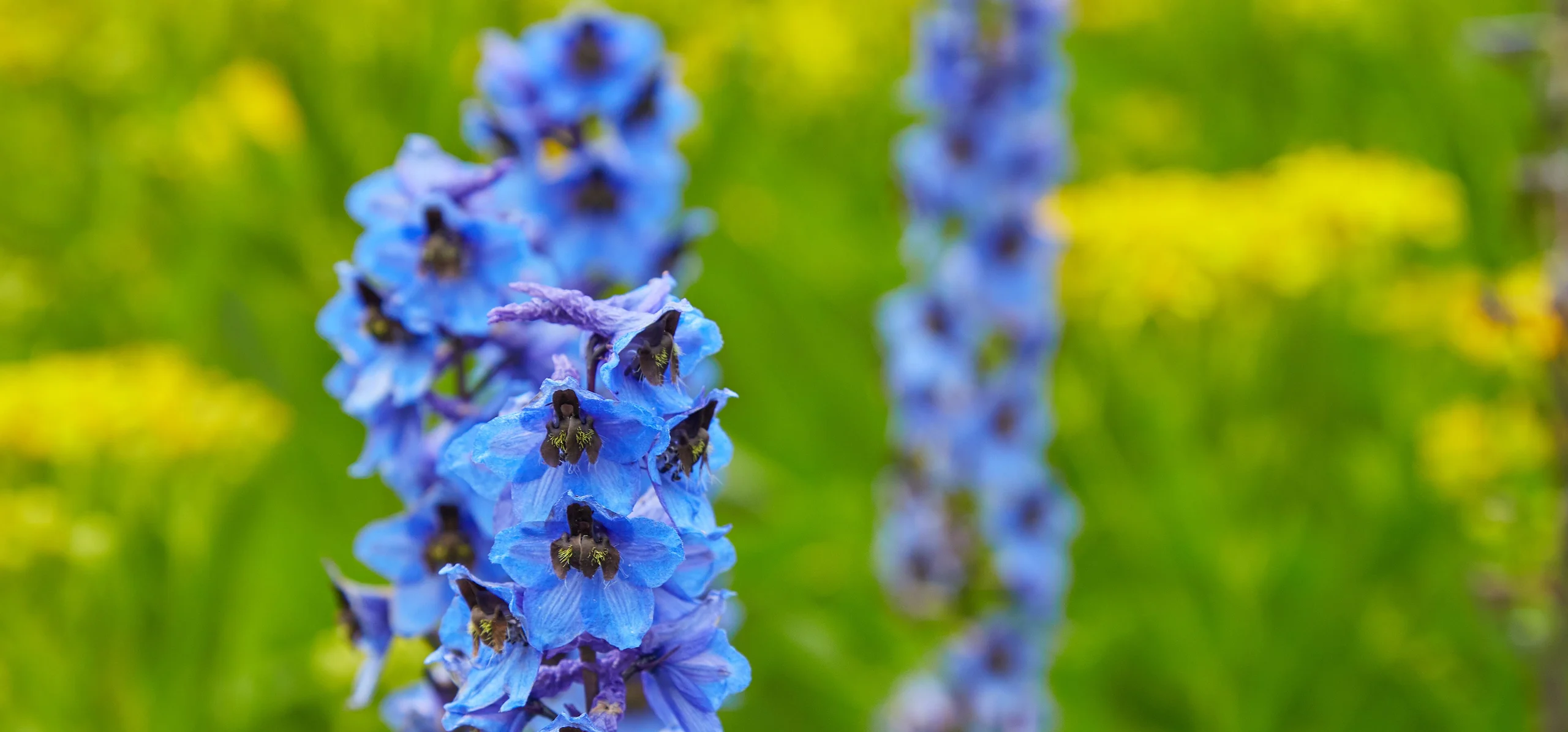
Alpine Delphinium
Delphinium elatum
Family · Ranunculaceae
Delphinium elatum throws 1.5-2.5 m flower spires in full sun and rich soil, but needs staking, thinning and prompt deadheading to stay upright and rebloom.
Delphinium elatum
Plant profile
- WateringHighWater every 5 days
- Light exposureFull sun
Growth
- Family
- Ranunculaceae
- Life cycle
- Perennial
- Growth speed
- 6/10
- Mature size
- 150–250 cm
- Spread
- 50–100 cm
- Flowering
- Early to midsummer, often again in early autumn if deadheaded promptly
- Propagation
- Seed
- Cutting
- Division
Dormancydies back to a basal crown after the first hard frost; new shoots emerge from the crown in spring
Time to maturitydivisions and rooted basal cuttings flower the same season; seedlings take about 18 months
Soil & climate
- Soil types
- chalk, clay, loam, sand
- Saline soil
- Not tolerated
- Drought tolerance
- No
Light & Placement
- Origin
- Mountain grasslands of southern and central Europe to Siberia and Mongolia
- Where to place it
- sheltered south, west or east-facing border
- cutting garden bed
- cottage garden border
- large loam-based container with added grit, staked and sheltered from wind
Safety
- Toxicity
- CatsToxic
- DogsToxic
- HorsesToxic
- HumansToxic
Data fromGBIF Backbone Taxonomy: Delphinium elatuPOWO (Kew): Delphinium elatum L.RHS: Delphinium elatum (alpine delphiniuRHS: How to grow perennial delphiniums, ASPCA: Toxic and Non-toxic Plants, Larks
Where it grows
World distribution
Alpine Delphinium is native to 14 countries: Austria, Belarus, China, Croatia, Czechia, France, Kazakhstan, and Kyrgyzstan….GBIF records 10,236 documented identifications across 48 countries, with the largest concentrations in Russia, Switzerland, and France.
- Austria
- Belarus
- China
- Croatia
- Czechia
- France
- Kazakhstan
- Kyrgyzstan
- Mongolia
- Poland
- Romania
- Russia
- Switzerland
- Ukraine
Yellow to orange dots: concentration of documented identifications per country. Green countries: sourced native range. Source: GBIFNative range from POWO (Kew).
A young Delphinium elatum looks nothing like the towering spire it becomes by midsummer: a low rosette of deeply lobed leaves that, given full sun and rich soil, sends up a flowering stem that can outgrow a garden fence in eight to ten weeks. The plant lives or dies on three things, a sheltered sunny spot, soil that drains but never dries out completely, and a stake set early enough to catch the stem before wind does. Skip any one of these and the raceme snaps at the base the first stormy evening after it opens. Get them right and a single crown throws multiple spikes packed with 25 to 100 florets each, for years.
An Alpine Meadow Plant, Bred for the Border
GBIF and POWO both place the wild species across the mountain grasslands, woodland margins and river valleys of southern and central Europe through to Siberia and Mongolia, the origin of the common name alpine delphinium. It has been in cultivation since at least 1578, and almost everything sold today as Delphinium elatum is a hybrid or cultivar within the Elatum Group (New Millennium, Pacific Giant and similar strains), selected for denser spikes and a wider colour range than the species ever produced in the wild. The genus name comes from the Greek delphis, dolphin, a reference to the dolphin-like shape of the unopened flower bud, not the open bloom most gardeners recognise.
Choosing a Strain for the Border
Elatum Group hybrids carry the tallest, densest spikes and are the ones sold as cut-flower quality; Belladonna and Pacific hybrids branch more and stay shorter, which matters if wind exposure rules out staking a 2 m spike. Named cultivars in shades of true blue, violet and white are propagated by division or cuttings to keep their colour true, seed-raised plants segregate and rarely match the parent exactly. For a first delphinium in an average border, a named Elatum cultivar in a sheltered spot outperforms mixed seed strains, which vary wildly in height and vigour within the same packet.


Site, Sun and Soil
Full sun is non-negotiable, RHS trial data for the species lists a south, west or east-facing aspect and rates it hardy to about -15 to -10 degrees C (RHS H5) once established. The plant tolerates chalk, clay, loam and sand alike, and copes with acid, neutral or alkaline soil, the one condition it will not forgive is standing water over winter, when the crown rots before spring growth even starts. Work in garden compost before planting to build the fertile, humus-rich ground the roots need, and choose a spot with some shelter from prevailing wind, an open, exposed border turns staking from a formality into a daily battle.
Planting, Thinning and Staking
Plant divisions or young pot-grown crowns in spring, setting the crown at soil level so water cannot pool against it. Once new shoots reach about 7 cm, thin a young plant to two or three of the strongest and an established clump to five to seven, crowded shoots compete for light and produce thin, floppy spikes instead of a few strong ones. Any stem heading past 1.2 m needs support before it needs it: push three twiggy branches or a metal grid support around the clump while shoots are still short, then tie individual spikes loosely to canes with soft twine as they rise, a stake added after a spike has already leaned rarely straightens it back out.
Watering and Feeding
Established plants want consistently damp, never soggy, soil through the growing season, the top few centimetres can dry between waterings but the root zone should not. Newly planted crowns need regular watering through their first summer while roots establish; container-grown plants dry out fastest and need checking daily in hot weather. Ground-planted delphiniums rarely need feeding beyond an annual mulch of compost, but a plant in a pot benefits from a high-potassium liquid feed, the kind sold for tomatoes, every couple of weeks once flower buds show.
Deadheading for a Second Flush
The moment the lowest florets on a spike fade, cut that spike back to a small side shoot rather than waiting for the whole raceme to finish, this single habit is what separates a delphinium that blooms once from one that reblooms in early autumn. On plants that will not send a second flush, cutting the spent spike right down to the basal foliage redirects the crown's energy into building next year's shoots instead of ripening seed. Once autumn frost blackens the foliage, cut all top growth down to ground level, leaving old stems standing through winter does nothing for hardiness and gives slugs somewhere to overwinter.
Propagation: Division, Cuttings and Seed
Division in spring is the fastest route to a flowering-size plant, lift a mature clump, split it into two to four pieces with a sharp spade, discard the old woody centre, and replant, the divisions typically flower the same year. Basal softwood cuttings, pencil-thick shoots 8 to 10 cm long taken in late spring before they hollow out, root within about ten days at 15 degrees C in free-draining cuttings compost. Seed sown at 13 degrees C germinates within two weeks but takes roughly 18 months to reach flowering size, and delphinium seed loses viability fast, order or collect fresh seed rather than using anything more than a year old.
Pests, Disease and Handling
Slugs and snails are the most damaging threat this species faces, a single night can strip a spring rosette down to stubs before the flowering stem ever forms, so protect new growth the moment it emerges. Delphinium leaf miner, aphids and tortrix or delphinium moth caterpillars show up through the season but rarely at slug-level severity. Powdery mildew builds on stressed or crowded plants in still, humid weather, good airflow between clumps matters more than any spray. Watch too for delphinium black blotch, a bacterial disease that leaves black-edged patches on leaves and stems, and for crown rot, which follows waterlogged winter soil and usually kills the plant outright rather than just the top growth. Every part of the plant is toxic to dogs, cats and horses per the ASPCA, and RHS advises wearing gloves when handling it, the foliage can irritate skin, so treat it as a plant to admire rather than touch bare-handed.
Test your plant knowledge
Tap a card to flip it and reveal the answer.
Delphinium elatum needs full sun and soil that drains but stays consistently moist through summer. Tap to reveal ✓ True
Spikes taller than about 1.2 m rarely need staking if planted in fertile soil. Tap to reveal ✕ False
Cutting a spent flower spike back to a small side shoot, rather than leaving it to finish, can trigger a second flush in early autumn. Tap to reveal ✓ True
The fastest way to get a flowering-size Delphinium elatum is to sow seed in spring. Tap to reveal ✕ False
The ASPCA lists Delphinium as toxic to dogs, cats and horses. Tap to reveal ✓ True
Sources
References consulted for this guide
- GBIF Backbone Taxonomy: Delphinium elatum L.gbif.org
- POWO (Kew): Delphinium elatum L.powo.science.kew.org
- RHS: Delphinium elatum (alpine delphinium) plant detailsrhs.org.uk
- RHS: How to grow perennial delphiniums, growing guiderhs.org.uk
- ASPCA: Toxic and Non-toxic Plants, Larkspur (Delphinium)aspca.org
- Reference entity : Wikipédiaen.wikipedia.org