Gerbera Daisy
Gerbera jamesonii
Family · Asteraceae
Gerbera jamesonii rots if its crown is buried and stops flowering without bright, cool conditions. Covers watering from below, deadheading and common pests.
Gerbera jamesonii
Plant profile
- WateringModerateWater every 5 days
- Light exposurePartial sun
- Ideal temperature5–20 °C
- Hardiness zoneUSDA 8–10
Growth
- Family
- Asteraceae
- Life cycle
- Perennial
- Growth speed
- 6/10
- Mature size
- 30–46 cm
- Spread
- 23–30 cm
- Flowering
- Summer to fall outdoors; a well-lit pot plant can flower for months at a time
- Propagation
- Seed
- Division
Dormancyno true winter dormancy; grown as an annual, or lifted and kept cool and barely watered under cover, outside zones 8-10
Time to maturityflowers within a single growing season from seed or a rooted division
Soil & climate
- Soil types
- loam
- Drought tolerance
- No
Light & Placement
- Origin
- Northeastern South Africa (Northern Province) to Eswatini
- Where to place it
- bright windowsill out of scorching midday sun
- cool, well-lit porch or sunroom
- full-sun bed with afternoon shade in hot climates
- raised, free-draining border
- nursery pot as sold, about 4-6 in across
- wide, free-draining container for a garden-grown plant
Safety
- Toxicity
- CatsSafe
- DogsSafe
- HorsesSafe
Invasive speciesnot documented as invasive; widely sold as a bedding, pot and cut-flower plant
Data fromGerbera jamesonii Adlam, GBIF Backbone TPOWO: Gerbera jamesonii AdlamRHS: How to grow gerberas, growing guideMissouri Botanical Garden Plant Finder: ASPCA: Gerber Daisy toxicity to pets
Where it grows
World distribution
Gerbera Daisy is native to 2 countries: Eswatini and South Africa.GBIF records 1,107 documented identifications across 64 countries, with the largest concentrations in South Africa, United States, and Brazil.
- Eswatini
- South Africa
Yellow to orange dots: concentration of documented identifications per country. Green countries: sourced native range. Source: GBIFNative range from POWO (Kew).
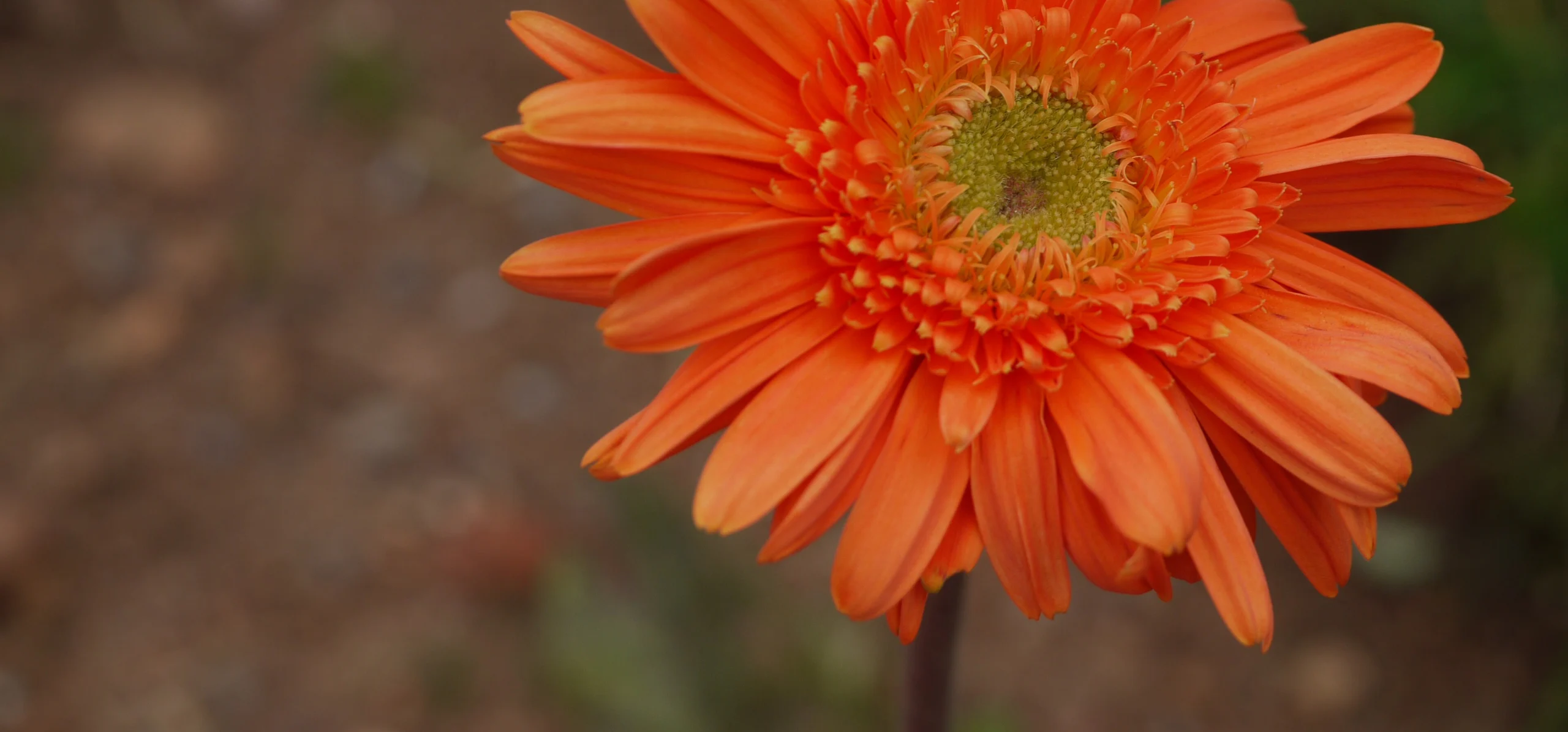
The gerbera daisy sold as a blooming pot plant on a supermarket shelf and the long stems arriving in a cut flower bouquet are the same species, Gerbera jamesonii, a daisy native to northeastern South Africa and Eswatini that has been bred since the 1880s into single, semi-double and fully double forms in red, orange, yellow, pink and white. The one detail that decides whether a potted gerbera survives its first repotting is depth: the crown, where the leaf rosette meets the roots, needs to sit level with or slightly above the compost surface, never buried under it. Bright light and a cool room keep the flowers coming; a shaded windowsill or an overheated living room stops a gerbera budding far more often than any feeding problem. Once the crown-rot habit is broken, the rest of its care is straightforward.
The Crown Must Stay Above the Soil
Gerbera jamesonii is a stemless, clump-forming perennial: the naked flower stalks rise straight out of a basal rosette of lobed, spoon-shaped leaves, and the point where that rosette meets the roots is the crown. Set the crown level with or slightly proud of the compost surface when potting up a nursery-bought plant, the way you would a strawberry runner, rather than burying it the way you would a shrub. The RHS lists crown and root rot as the main hazard of overwatering and waterlogged compost in gerberas, and a buried crown sitting in damp soil is exactly the condition that starts it. The Missouri Botanical Garden also notes the species develops a deep root system that resents disturbance, so a plant settled at the right depth is best left there rather than repotted again out of habit.
Light and a Cool Room, Not a Hot One
Outdoors, gerbera daisies want full sun, with a little afternoon shade where summer days get properly hot, according to the RHS. Indoors the same plant wants the brightest spot available short of the glass itself, since direct midday sun magnified through a window can scorch leaves. Temperature matters as much as light: the RHS puts the flowering range at 10 to 20°C (50 to 68°F), and a gerbera kept warmer than that, in a centrally heated living room, tends to put its energy into leaves instead of buds. Below 5°C (41°F) the plant is at risk outright, so a cool porch, unheated sunroom or bright windowsill suits it better than the warmest corner of the house.


Watering From Below
Because the crown rots so readily, the RHS recommends watering container-grown gerberas from beneath rather than from a can: stand the pot in a saucer or tray of water until the compost feels damp through the drainage holes, then let it drain and dry a little before watering again rather than keeping it constantly wet. The Missouri Botanical Garden rates the species' water need as medium rather than high, and outdoor plants in raised, free-draining beds cope with the same dry-between-waterings rhythm. When you do water from above, aim at the compost and keep the crown and leaf rosette dry; foliage that stays wet overnight also invites the fungal problems covered further down.
Why the Flowers Stop Coming
Three things account for almost every gerbera that stops flowering. Too little light is the most common cause indoors: a rosette pushed to the back of a room produces leaves rather than buds. Heat is the second, temperatures well above the 10-20°C flowering range the RHS gives push the plant into a kind of summer stall, which is why a bed with only morning sun often outperforms one baking in full afternoon exposure. The third is simply an exhausted plant: a florist gift pot is typically sold already in peak bloom on a forcing schedule, and once that flush works through its stored energy, flowering slows unless the plant is moved into fresh compost or, outdoors, divided every couple of years so it is not blooming on an old, tired clump.
Deadheading: Twist the Stem Out
A spent gerbera flower is not snipped off partway up the stalk the way a rose might be; the whole flowering stem is removed down at the crown. Grip the stalk low, near where it emerges from the rosette, and twist gently while pulling rather than cutting midway up; a stem that is ready to come away releases cleanly at the crown, leaving no stub behind to rot. Growers harvesting gerbera stems for cut flowers use the same twist-and-pull motion at the base rather than shears. Removing the whole stalk this way keeps a plant sending up a steady run of new stems through the season instead of a scatter of half-finished ones.
A Tender Perennial Outdoors, Except With Garvinea
The species itself is reliably perennial outdoors only in USDA zones 8 to 10, according to the Missouri Botanical Garden; gardeners further north grow it as a summer annual, or lift it and overwinter it under cover, cool and barely watered. The Garvinea series, a range of garden cultivars bred specifically for hardier outdoor planting, extends that range somewhat, but the RHS still recommends moving even these hardy types to a frost-free spot, or covering them with a thick, loose mulch, once winter turns cold and wet, since it is the combination of cold and damp that kills gerberas outdoors, not cold on its own. Outside a genuinely mild-winter climate, treat any gerbera left in open ground through winter as an experiment, not a certainty.
Powdery Mildew, Whitefly and Leaf Miner
Powdery mildew shows up as a pale, dusty coating on leaves in still, damp air; the RHS attributes it to poor ventilation, so spacing plants out and keeping foliage dry when watering prevents it better than any spray. Whitefly clusters on leaf undersides and lifts off in a small pale cloud when disturbed, feeding on sap and leaving sticky honeydew that sooty mold grows on; checking under the leaves regularly catches an infestation before it spreads. Leaf miner larvae tunnel visible pale trails through the leaf tissue, a pest the Missouri Botanical Garden lists among gerbera's occasional insect visitors alongside thrips, spider mites and aphids; picking off and destroying mined leaves as soon as the trails appear removes the larvae before they complete another generation. Gray mold and anthracnose round out the fungal problems the Garden notes for the species, both again linked to wet foliage and poor air movement rather than the soil.
Cut Flowers and Pets
Gerbera stems are hollow, and an air bubble trapped at a stale cut end is a common reason a vase stem wilts overnight even in clean water; a fresh, angled cut made just before the stem goes into water, with any leaves that would sit below the waterline stripped off, helps it take up water properly. Change the water every couple of days rather than just topping it up, since bacterial growth in standing water shortens vase life faster than almost anything else. Pet owners can relax about a knocked-over vase or a curious cat chewing a leaf: the ASPCA lists Gerbera daisy as non-toxic to cats, dogs and horses, one of the few common cut flowers that carries no warning.
Test your plant knowledge
Tap a card to flip it and reveal the answer.
Planting a gerbera daisy with its crown buried below the soil surface makes crown and root rot more likely. Tap to reveal ✓ True
A gerbera daisy kept in a warm, centrally heated living room will flower just as well as one kept in a cooler, brighter spot. Tap to reveal ✕ False
Gerbera jamesonii is reliably hardy outdoors as far north as USDA zone 5 without any winter protection. Tap to reveal ✕ False
The ASPCA lists Gerbera daisy as non-toxic to cats, dogs and horses. Tap to reveal ✓ True
Watering a potted gerbera daisy from overhead, wetting the leaves and crown each time, is the method recommended to prevent rot. Tap to reveal ✕ False
Sources
References consulted for this guide
- Gerbera jamesonii Adlam, GBIF Backbone Taxonomygbif.org
- POWO: Gerbera jamesonii Adlampowo.science.kew.org
- RHS: How to grow gerberas, growing guiderhs.org.uk
- Missouri Botanical Garden Plant Finder: Gerbera jamesoniimissouribotanicalgarden.org
- ASPCA: Gerber Daisy toxicity to petsaspca.org
- Reference entity : Wikipédiaen.wikipedia.org