Jerusalem Artichoke
Helianthus tuberosus
Family · Asteraceae
Jerusalem artichoke tubers spread fast and don't store well once dug. Planting depth, spacing, watering, and how to stop a six-foot stand taking over a bed.
Helianthus tuberosus
Plant profile
- WateringModerateWater every 7 days
- Light exposureFull sun
- Hardiness zoneUSDA 3–9
Growth
- Family
- Asteraceae
- Life cycle
- Perennial
- Growth speed
- 8/10
- Mature size
- 180–300 cm
- Spread
- 90–150 cm
- Flowering
- Late summer, bright yellow flowers from August to September
- Propagation
- Seed
- Cutting
Dormancydies back to underground tubers after the first hard frost
Time to maturity1-2 years to full size
Soil & climate
- Soil pH
- pH 7–7.5
- Soil types
- chalk, clay, loam, sand
- Drought tolerance
- No
Light & Placement
- Where to place it
- vegetable bed
- sunny border with a sunk root barrier
- allotment plot
- fence line planting
- large container, at least 45 cm wide and deep, one to two tubers
OriginCentral and eastern Canada into the United States, naturalized across temperate North America and Europe
Safety
- Toxicity
- Not evaluated by the ASPCA; toxicity undetermined
- Pet safe
- No
Data fromHelianthus tuberosus L., GBIF Backbone THelianthus tuberosus L. | Plants of the RHS: Helianthus tuberosus (Jerusalem artRHS: How to grow Jerusalem artichokesNC State Extension: Helianthus tuberosus
Where it grows
World distribution
Jerusalem Artichoke is native to 2 countries: Canada and United States.GBIF records 55,807 documented identifications across 88 countries, with the largest concentrations in Germany, United States, and France.
- Canada
- United States
Yellow to orange dots: concentration of documented identifications per country. Green countries: sourced native range. Source: GBIFNative range from POWO (Kew).
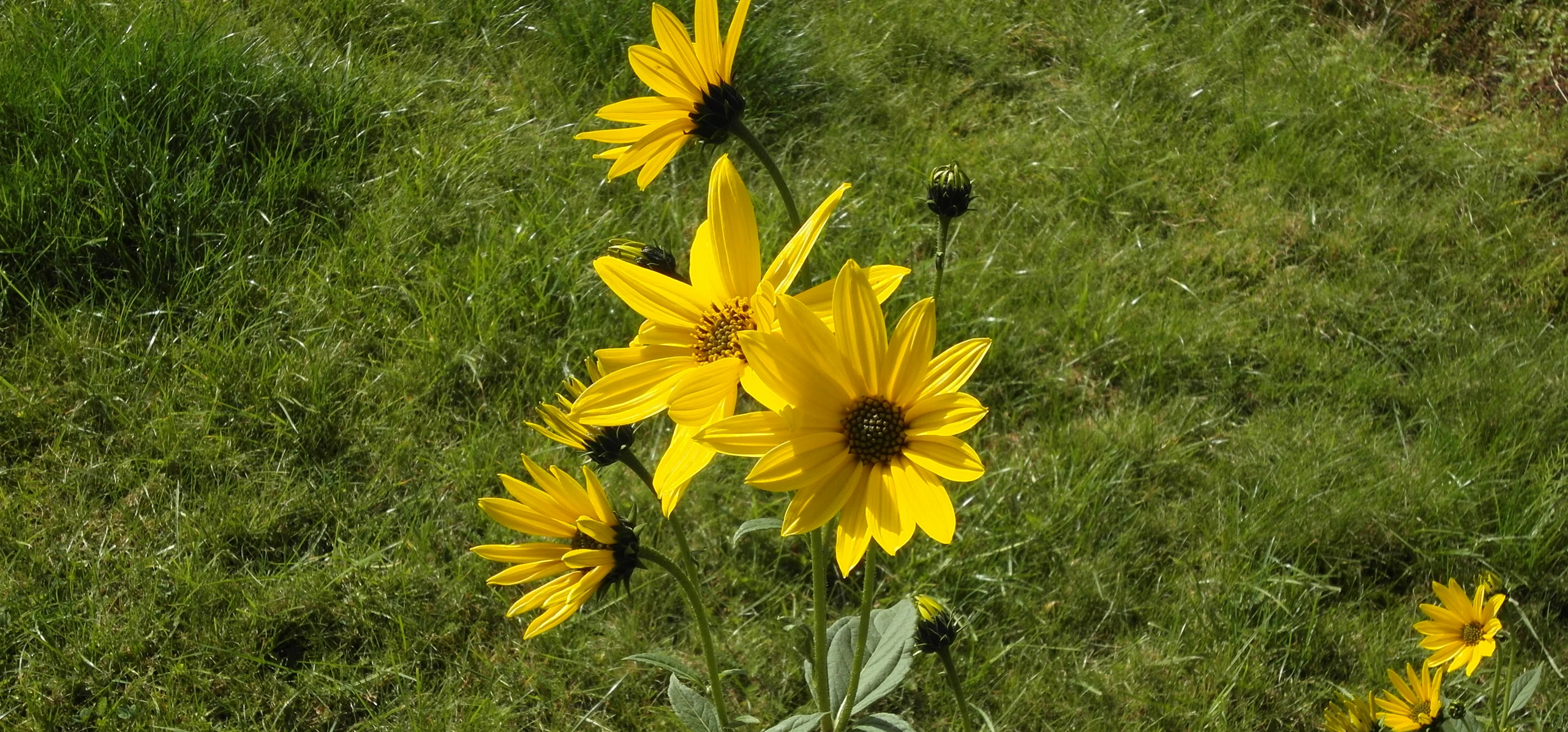
A patch of Helianthus tuberosus looks like an unusually tall sunflower until autumn, when digging around the base turns up a cluster of knobby, potato-sized tubers with a nutty, faintly sweet flavor. The plant is a genuine perennial: once tubers are in the ground, a handful missed at harvest is enough to bring the whole stand back next spring, whether you want it to or not. Full sun, ordinary garden soil and very little attention will get you a 1.8 to 3 m stand of yellow, late-summer flowers and a fall crop of tubers. The harder decision is how much permanent ground you are willing to give it.
Not an Artichoke, and Not from Jerusalem
Despite the name, this plant has nothing to do with the globe artichoke, Cynara cardunculus, or the city of Jerusalem. It is a true sunflower, in the daisy family Asteraceae, and GBIF's accepted taxonomy places it in the same genus as the common annual sunflower, Helianthus annuus. One long-standing theory traces "Jerusalem" to a corruption of girasole, the Italian word for sunflower; the tuber's faint resemblance to a globe artichoke's heart in flavor did the rest. Plants of the World Online lists its native range as central and eastern Canada into the United States, and NC State Extension notes its original range ran through prairies and plains from Texas and Arkansas to Ohio, long before it was spread as a food crop across the rest of temperate North America and Europe.
Choosing a Planting Site
Give it full sun, at least six hours of direct light a day. Soil matters less than for most vegetables: the RHS lists chalk, clay, loam and sand as tolerated soil types, and NC State Extension records it thriving from acid to alkaline soils, with a pH of 7 to 7.5 as the sweet spot. The one condition it dislikes is standing water; heavy, poorly drained ground that stays wet through winter rots the tubers before spring arrives. Because a colony is close to permanent once established, pick the site with year two and year three in mind, not just the first season. A spot at the back of a vegetable bed, along a fence line, or inside a sunk root barrier works better than the middle of a mixed border.
Planting the Tubers
Plant seed tubers, the same knobby pieces you would eat, from late winter into mid-spring once the soil is workable. The RHS recommends a planting depth of 10 to 15 cm and spacing of about 30 cm between tubers, in rows or a staggered grid. Each piece needs at least one healthy eye or bud, exactly like a seed potato. In containers, use a pot at least 45 cm wide and deep and limit it to one or two tubers; anything smaller cannot support the root mass a mature plant builds up by autumn.


Watering and Feeding Through the Season
Newly planted tubers need steady moisture to break dormancy and root in; a mulch layer helps even out the gaps between waterings. Once shoots are up, water during dry spells rather than on a fixed schedule, and pay closest attention in late summer and early autumn, when the tubers are doing most of their bulking up underground. Before planting, fork in a bucketful of well-rotted compost or manure per square meter, then leave it alone for the rest of the season. Too much nitrogen midseason produces tall, soft growth that is more prone to lodging in wind, without adding much to the eventual harvest.
Keeping a Six-Foot Sunflower in Bounds
This is the trait every source agrees on. NC State Extension warns that any tiny piece of tuber left in the soil will sprout a new plant, and the RHS includes Helianthus tuberosus among its potentially invasive garden plants. Stems commonly reach 1.8 to 3 m, and a full-grown stand in an exposed, windy spot benefits from staking or a sheltered wall to stop it lodging. The only reliable way to keep the colony from spreading is a physical barrier sunk 45 to 60 cm into the ground around the planting area, combined with a thorough dig at harvest to lift every tuber you can find. Removing flower heads in late summer, before they set seed, closes off the plant's other route to spreading.
Harvesting and Storing the Tubers
Leave the plant to die back after the first hard frost, then start digging. The RHS puts harvest from late autumn through winter, and a single healthy plant typically yields ten or more tubers. Unlike potatoes, Jerusalem artichokes do not store well once out of the ground; their thin skins dry out and shrivel within a couple of weeks at room temperature. The RHS advises leaving the crop in the soil and lifting tubers as needed through winter instead of digging the whole patch at once. Where the ground freezes hard, a thick mulch keeps the soil workable enough to dig on milder days.
Pests, Diseases and Toxicity to Pets
Slugs and snails are the main pest, nibbling both young shoots and exposed tubers. The RHS also flags sclerotinia, a fungal rot, as an occasional problem in wet, crowded stands, and NC State Extension adds rust, leaf fungal spots and powdery mildew, usually worse where airflow is poor. None of these tend to threaten an established colony seriously; thinning stems and clearing old growth in autumn does more good than any spray. The ASPCA does not carry a listing for Helianthus tuberosus, so its toxicity to cats, dogs or horses has not been formally evaluated; the tuber itself is a long-established human food crop with no toxicity concerns for people.
Test your plant knowledge
Tap a card to flip it and reveal the answer.
Jerusalem artichoke tubers are planted much like seed potatoes. Tap to reveal ✓ True
Jerusalem artichoke is a close relative of the globe artichoke. Tap to reveal ✕ False
A single tuber fragment left in the soil can grow into a whole new plant next year. Tap to reveal ✓ True
Once dug, Jerusalem artichoke tubers keep for months at room temperature. Tap to reveal ✕ False
The ASPCA lists Jerusalem artichoke as toxic to dogs and cats. Tap to reveal ✕ False
Sources
References consulted for this guide
- Helianthus tuberosus L., GBIF Backbone Taxonomygbif.org
- Helianthus tuberosus L. | Plants of the World Online | Kew Sciencepowo.science.kew.org
- RHS: Helianthus tuberosus (Jerusalem artichoke)rhs.org.uk
- RHS: How to grow Jerusalem artichokesrhs.org.uk
- NC State Extension: Helianthus tuberosusplants.ces.ncsu.edu
- Reference entity : Wikipédiaen.wikipedia.org