Orpine
Hylotelephium telephium
Family · Crassulaceae
Orpine grows in poor, well-drained soil in full sun and shrugs off drought once rooted in. Covers siting, feeding, the Chelsea Chop, division and pests.
Hylotelephium telephium
Plant profile
- WateringLittleWater every 14 days
- Light exposureFull sun
- Hardiness zoneUSDA 3–9
Growth
- Family
- Crassulaceae
- Life cycle
- Perennial
- Growth speed
- 4/10
- Mature size
- 50–100 cm
- Spread
- 10–50 cm
- Flowering
- Late summer to early autumn, August to October
- Propagation
- Division
- Cutting
Dormancydies back to a woody rootstock at ground level in autumn, resprouts in spring
Time to maturity2-5 years to full size
Soil & climate
- Soil pH
- pH 6–8
- Soil types
- sandy, rocky, chalk, loam
- Drought tolerance
- Yes
Light & Placement
- Origin
- Europe to Russian Far East and N. China
- Where to place it
- sunny border
- rock garden
- gravel garden
- cottage garden edge
- large container with a gritty, well-drained mix
Safety
- Toxicity
- Not listed by the ASPCA; toxicity to pets undetermined
- Pet safe
- No
Invasive speciesleaves and stem fragments root readily where they touch soil, so trimmings can start new plants unintentionally
Data fromHylotelephium telephium, GBIF Backbone TPOWO: Hylotelephium telephium (L.) H.OhbRHS: Hylotelephium telephium (orpine)RHS: How to grow hylotelephiumNC State Extension: Hylotelephium teleph
Where it grows
World distribution
Orpine is native to 20 countries: Austria, Belarus, Belgium, China, Croatia, Czechia, Estonia, and France….GBIF records 112,290 documented identifications across 52 countries, with the largest concentrations in France, Sweden, and United Kingdom.
- Austria
- Belarus
- Belgium
- China
- Croatia
- Czechia
- Estonia
- France
- Germany
- Greece
- Italy
- Kazakhstan
Show 8 more countriesShow fewer countries
- Netherlands
- Poland
- Romania
- Russia
- Spain
- Switzerland
- Ukraine
- United Kingdom
Yellow to orange dots: concentration of documented identifications per country. Green countries: sourced native range. Source: GBIFNative range from POWO (Kew).
What You're Growing: Orpine's Habit and Names
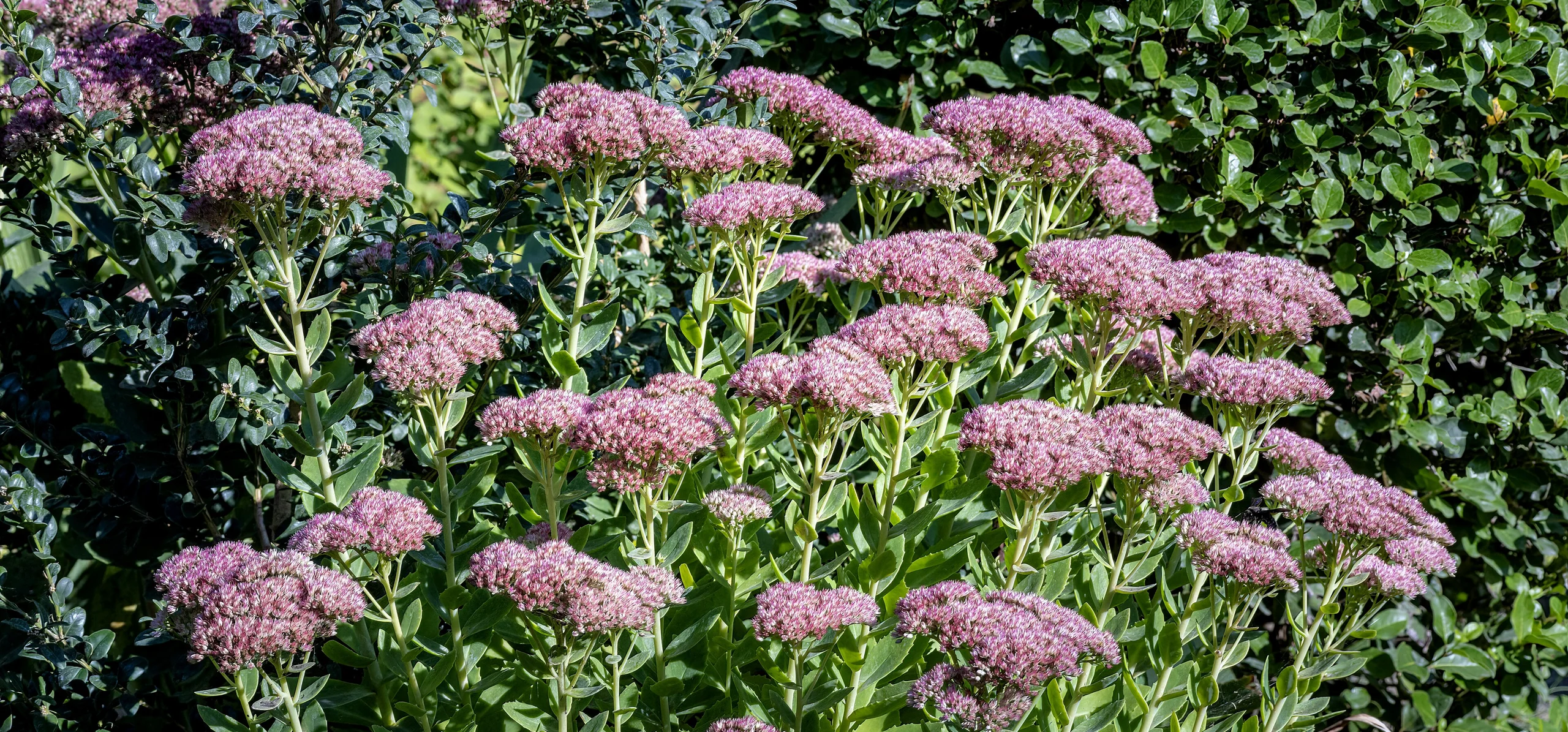
If a nursery tag or a passed-along clump came labelled Sedum telephium, you have the same plant now classed as Hylotelephium telephium, one of several taller, upright sedums reassigned to their own genus alongside Hylotelephium spectabile. It grows as an upright, mostly unbranched clump of fleshy, pale green stems set with flat, coarsely-toothed, grey-green leaves, and from midsummer it tops out in dense, rounded flower heads that open dusty pink to purplish-red and age to a rusty burgundy that holds its shape through the first frosts. You will also see it sold or described as orpine, witch's moneybags, livelong or life-everlasting, folk names that all point at the same tough, water-storing perennial.
Sun and Site Selection
Orpine wants full sun, at least six hours of direct light a day, to keep its stems compact and its flower heads dense. Too much shade produces the opposite of what you want: weak, lax stems that stretch toward the light and open few flowers, or none at all, according to the RHS growing guide for the genus. It will survive in a shadier corner, but a border or gravel bed that gets sun most of the day is what turns it into the dome-shaped clump gardeners plant it for. Give it open air around the base too, a spot squeezed against a wall or crowded by taller neighbours holds humidity in the foliage and invites the powdery mildew described below.
Soil That Won't Rot the Crown
This is a plant of thin, stony ground, not a rich border. NC State Extension describes its preferred soil as sandy and shallow-rocky, with a neutral to alkaline pH of roughly 6.0 to 8.0, and the RHS lists chalk, loam and sand as all suitable so long as drainage is sharp. On heavy clay, plant on a slight mound or work coarse grit into the top 20 cm before setting the crown in, standing winter wet is what kills orpine, far more often than cold does. Skip rich compost at planting time: fertile, moisture-retentive soil produces soft, floppy stems that split open under the weight of their own flower heads.


Watering and Drought Tolerance
New divisions and young plants need regular water for several weeks while roots take hold, check the top 5 cm of soil and water when it has dried out. Once established, orpine is genuinely drought tolerant, its fleshy stems and roots store water the way most Crassulaceae do, and NC State Extension and the RHS growing guide both describe mature plants needing supplemental water only during extended dry spells. Container-grown plants are the exception: their roots cannot reach down for reserve moisture the way an in-ground clump can, so pots need checking through summer even once the plant is well rooted in.
Feeding and the Chelsea Chop
Orpine needs almost no feeding. The RHS growing guide warns that extra nutrients, nitrogen especially, push out lush, floppy growth that flowers poorly and is more prone to disease, so a single light feed in spring, if any, is enough. For a shorter, bushier plant that stands up on its own through autumn storms, use the Chelsea Chop: cut the current season's new stems back by about half in late May. Left uncut, mature clumps tend to open outward and flop under the weight of their flower heads by late summer. Leave the spent flower heads standing through winter, their rusty seed heads hold their shape under frost and add structure to a bare border, then cut the dead stems down to the crown once new growth appears in spring.
Dividing and Propagating Orpine
Division is the fastest way to increase orpine and the surest way to keep a named cultivar's leaf colour true, since seedlings can vary. Lift a clump in spring, split it into sections that each carry several shoots and a portion of root, and replant immediately at the same depth. Stem cuttings taken in summer root easily in a gritty mix. Handle trimmings with a little care: like most Crassulaceae, orpine regenerates readily from a single leaf or a stem fragment left in contact with damp soil, useful if you want more plants from a prune, but it also means dropped cuttings can root themselves where you did not plan for them.
Pests, Disease and Pet Safety
NC State Extension lists slugs, scale, mealybugs, aphids, weevils and occasional nematodes as the pests most likely to bother orpine, none of them usually serious enough to need more than picking off or a strong jet of water. The bigger risks are fungal and bacterial crown and root rot in soil that stays wet, and, per NC State, susceptibility to Southern blight in warm, humid climates; powdery mildew can appear on foliage that is crowded or kept too dry at the root, per the RHS growing guide. Deer will browse the foliage occasionally but tend to leave it for less succulent neighbours.
Orpine does not appear on the ASPCA's toxic or non-toxic plant lists for dogs, cats or horses under any of its common or scientific names, so its safety for pets is genuinely undetermined rather than confirmed as safe. Treat an unlisted plant the way you would a toxic one around animals that chew on foliage: keep it out of reach of a pet that grazes on houseplants or garden beds, and contact a vet or the ASPCA Animal Poison Control Center if a pet eats a significant amount.
Test your plant knowledge
Tap a card to flip it and reveal the answer.
Orpine is a hardy perennial that dies back to the ground in winter and resprouts from its rootstock in spring. Tap to reveal ✓ True
Orpine performs best in rich, consistently moist soil. Tap to reveal ✕ False
Once established, orpine needs watering only during extended dry spells. Tap to reveal ✓ True
Cutting new stems back by half in late May, the Chelsea Chop, makes orpine grow taller and flop less. Tap to reveal ✓ True
The ASPCA lists orpine as toxic to cats and dogs. Tap to reveal ✕ False
Sources
References consulted for this guide
- Hylotelephium telephium, GBIF Backbone Taxonomygbif.org
- POWO: Hylotelephium telephium (L.) H.Ohbapowo.science.kew.org
- RHS: Hylotelephium telephium (orpine)rhs.org.uk
- RHS: How to grow hylotelephiumrhs.org.uk
- NC State Extension: Hylotelephium telephiumplants.ces.ncsu.edu
- Reference entity : Wikipédiaen.wikipedia.org