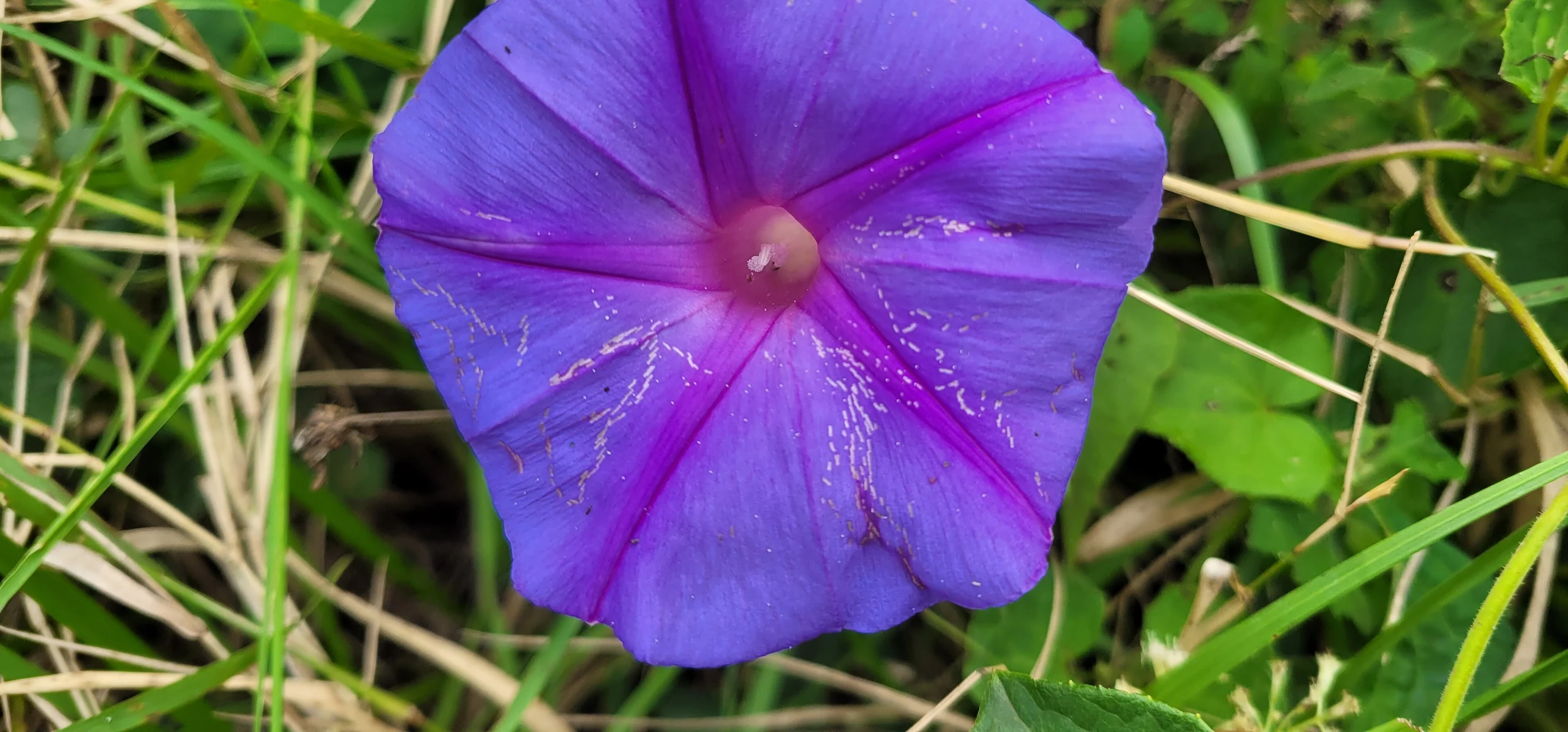
Common Morning Glory
Ipomoea purpurea
Family · Convolvulaceae
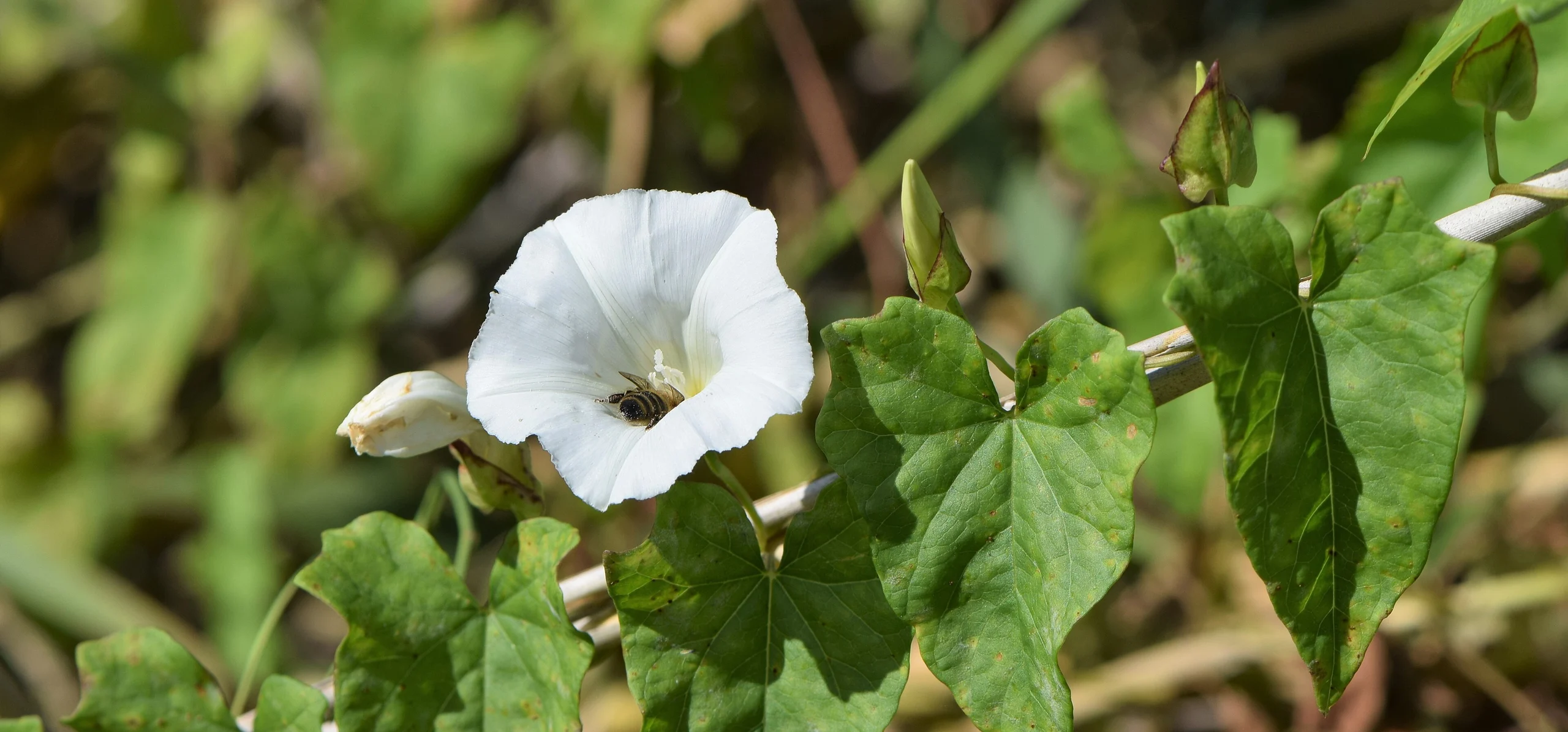
Common morning glory flowers open at dawn and close by afternoon, climbs by twining rather than tendrils, and self-seeds freely once summers turn warm.
Ipomoea purpurea
Plant profile
- WateringModerateWater every 7 days
- Light exposureFull sun
Growth
- Family
- Convolvulaceae
- Life cycle
- Annual
- Growth speed
- 8/10
- Mature size
- 183–305 cm
- Spread
- 91–183 cm
- Flowering
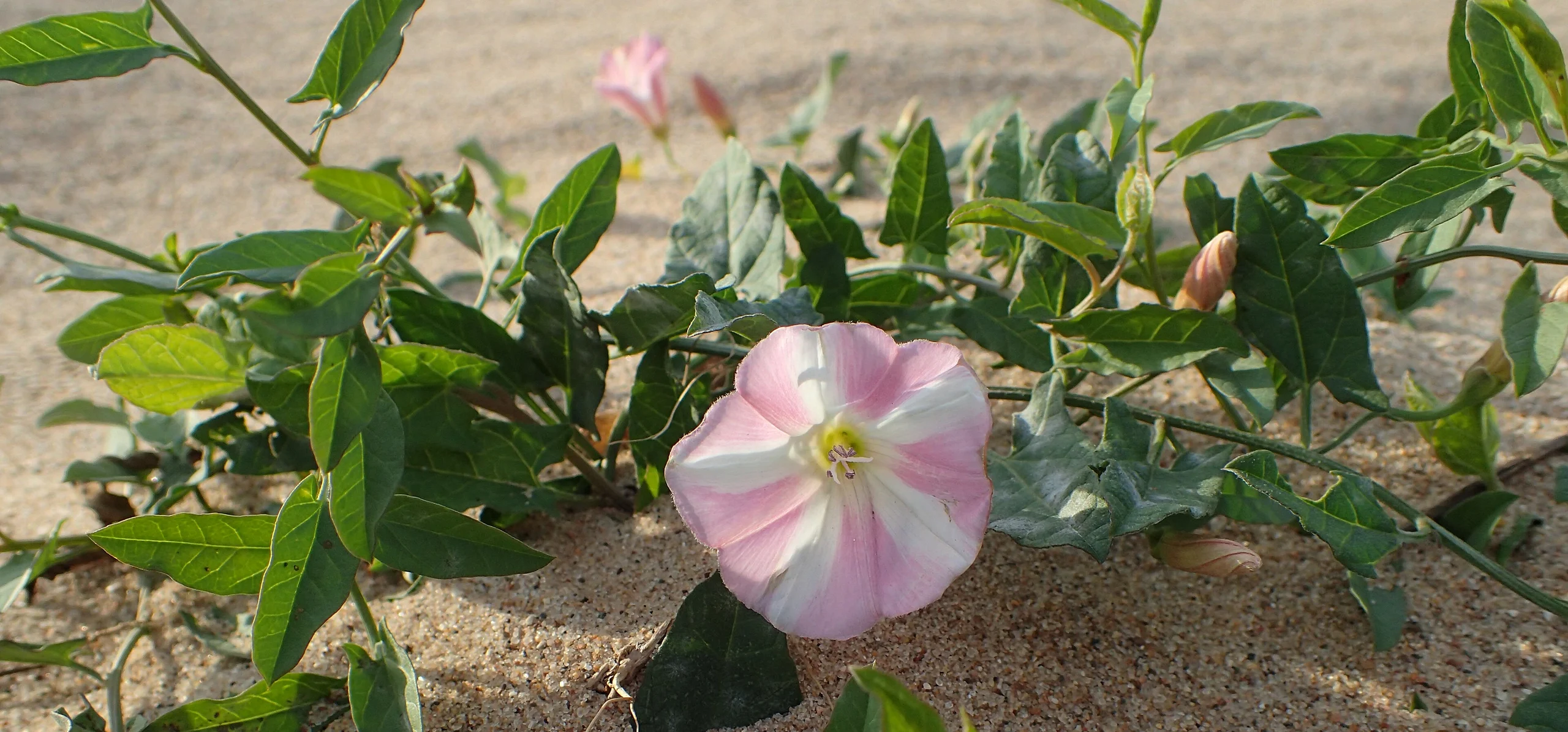
- Purple, blue or white funnel flowers, summer to fall, open mornings only
- Propagation
- Seed
Dormancynone, frost-tender
Time to maturityOne growing season from spring-sown seed to flower
Soil
- Soil pH
- pH 6–8
- Soil types
- clay, loam, sand, well-drained soil
Light & Placement
- Origin
- Tropical and subtropical America
- Where to place it
- bright windowsill for starting seed before planting out
- fence or wire in full sun
- sunny wall sheltered from wind
- large container with a tall stake or trellis
Safety
- Toxicity
- CatsToxic
- DogsToxic
- HorsesToxic
Invasive speciesNaturalized weed of cropland and roadsides in warm regions
Data fromGBIF Backbone Taxonomy: Ipomoea purpureaPlants of the World Online (Kew): IpomoeASPCA: Morning GloryNC State Extension: Ipomoea purpureaRHS: Ipomoea purpurea
Where it grows
World distribution
Common Morning Glory is native to 18 countries: Argentina, Bolivia, Brazil, Chile, Colombia, Costa Rica, Ecuador, and El Salvador….GBIF records 37,356 documented identifications across 142 countries, with the largest concentrations in United States, Mexico, and Spain.
- Argentina
- Bolivia
- Brazil
- Chile
- Colombia
- Costa Rica
- Ecuador
- El Salvador
- Guatemala
- Jamaica
- Mexico
- Nicaragua
Show 6 more countriesShow fewer countries
- Panama
- Paraguay
- Peru
- United States
- Uruguay
- Venezuela
Yellow to orange dots: concentration of documented identifications per country. Green countries: sourced native range. Source: GBIFNative range from POWO (Kew).
Ipomoea purpurea earns its common name honestly: each flower opens at first light, is fully unfurled by mid-morning, then closes for good by early afternoon, so a vine in bloom is a different sight at 7am than at 2pm. A single seed-grown plant given a fence, string or narrow trellis can cover two or three square meters of vertical surface in one season, so the real question before planting is whether you have a spot for that much climbing growth, not whether the plant will survive. Where summers run long and hot it self-seeds so readily that gardeners in the warmer parts of its range end up managing it as a returning volunteer rather than something replanted every spring.
Light and a Support to Climb
Full sun, at least six hours of direct light, keeps the vine flowering through the season rather than putting its energy into leaf; in shade it still grows but blooms thin and late, if at all. Because it climbs by twining stems rather than tendrils or holdfasts, it needs something no thicker than a pencil to wrap around: a taut string, wire or narrow trellis works far better than a wide lattice panel or a bare wall. A west or south-facing spot sheltered from wind suits it best, since a young vine's stems are brittle enough to snap in a gust before they thicken. A support 1.8 to 3 meters (6 to 10 feet) tall gives the vine room to run its full course in a single summer.
Soil and Planting
It tolerates clay, loam and sandy soil about equally; the one requirement that actually matters is drainage, since standing water at the roots for more than a day or two brings on rot faster than any cold snap. A pH from about 6.0 to 8.0, mildly acid through mildly alkaline, suits it. Sow directly once the soil has warmed after the last frost, spacing seeds 15 to 30cm (6 to 12 in) apart along the base of the support; closer spacing fills a trellis faster but crowds the twining stems into a tangle that is harder to keep off nearby plants.
Watering
This is a medium water plant, not a thirsty one: established vines want roughly the equivalent of an inch (2.5cm) of rain a week, more in real heat, less where the bed holds moisture well. Seedlings are the exception, since morning glory roots shallowly at first and a dry week at that stage can kill a bed of them outright; keep the top layer of soil consistently damp until the first true leaves appear. Once the vine is climbing well up its support, let the top few centimeters of soil dry between waterings. Pale, yellowing lower leaves on an established plant point to overwatering rather than underwatering.


Feeding
Skip a regular fertilizing routine. A vine planted in rich, heavily amended soil or fed nitrogen through the season responds with a wall of leaf and comparatively few flowers, the same tradeoff gardeners see when they overfeed a tomato into leafy growth at the expense of fruit. If the bed is genuinely poor, one light application of a balanced fertilizer at planting is enough; after that, let the flowering tell you whether more is needed, and if it is blooming well, leave it alone.
Growing from Seed
Nearly everyone grows this vine from seed, and the hard, water-resistant seed coat is the one obstacle worth planning around: left untreated, seed can take several weeks to germinate unevenly. Nick the coat with a nail file or soak seed in warm water for 24 hours before sowing, and germination drops to five to seven days at a soil temperature around 20 to 24 degrees C (68 to 75 degrees F). Sow where the vine is meant to grow rather than starting it in trays, since the taproot resents disturbance and transplanted seedlings often sulk for a week or two before resuming growth.
Flowering and Self-Seeding
Each flower opens for a single morning and is spent by early afternoon in warm weather, so deadheading is cosmetic rather than useful: new buds keep opening from the growing tips regardless of what happens to yesterday's flowers. Named selections such as 'Star of Yelta' hold their color and vigor from seed saved at home, since the species breeds fairly true to type, which is part of why it has passed between gardeners as a hand-me-down packet for generations. The same trait that makes it easy to share makes it easy to lose control of: seed set late in the season sheds and overwinters in the soil, and it is documented as a naturalized weed of cultivated ground and roadsides in several regions, so gardeners in mild climates who don't want volunteers the following year should remove spent seed pods before they split.
Pests, Diseases and Common Mistakes
Aphids and spider mites are the two pests worth watching for, both feeding on the undersides of leaves and showing up first as stippled or curling new growth; a strong jet of water knocks back a light infestation before it needs anything stronger. Powdery mildew and root rot are the main diseases, favored respectively by poor air circulation and wet soil, so the fixes are structural, space plants and improve drainage, rather than chemical. The most common mistake is planting in rich, heavily fed soil expecting bigger blooms, when the real result is more leaf and fewer flowers. The second is giving the vine a support it cannot grip: a broad flat wall or a wide lattice square does nothing for a stem that needs something narrow to twine around.
Toxicity and Pet Safety
The ASPCA lists morning glory (Ipomoea species) as toxic to cats, dogs and horses, naming indole alkaloids, including lysergic acid, lysergamide, elymoclavine and chanoclavine, as the toxic principles, concentrated mainly in the seeds. Vomiting is the typical sign of ingestion, and eating a large quantity of seeds can cause hallucinations, the same alkaloids the seeds have historically been misused for by people. Keep seed pods out of reach of dogs that chew on plant material, and don't let horses graze the vine where it grows over pasture fencing.
Test your plant knowledge
Tap a card to flip it and reveal the answer.
Common morning glory flowers stay open all day once they bloom. Tap to reveal ✕ False
Ipomoea purpurea climbs by twining its stems around a support rather than by using tendrils. Tap to reveal ✓ True
Feeding morning glory rich, nitrogen-heavy soil produces more flowers. Tap to reveal ✕ False
The ASPCA lists morning glory (Ipomoea species) as toxic to cats, dogs and horses. Tap to reveal ✓ True
Nicking or soaking the seed coat before sowing speeds up germination. Tap to reveal ✓ True
Sources
References consulted for this guide
- GBIF Backbone Taxonomy: Ipomoea purpureagbif.org
- Plants of the World Online (Kew): Ipomoea purpureapowo.science.kew.org
- ASPCA: Morning Gloryaspca.org
- NC State Extension: Ipomoea purpureaplants.ces.ncsu.edu
- RHS: Ipomoea purpurearhs.org.uk
- Reference entity : Wikipédiaen.wikipedia.org