Sweet Potato
Ipomoea batatas
Family · Convolvulaceae
Sweet potato vine roots from a cutting in water within ten days, but rich soil grows more leaf than root, and frost kills the whole plant overnight.
Ipomoea batatas
Plant profile
- WateringModerateWater every 7 days
- Light exposurePartial sun
- Ideal temperature10–35 °C
- Hardiness zoneUSDA 9–11
Growth
- Family
- Convolvulaceae
- Life cycle
- Perennial
- Growth speed
- 8/10
- Mature size
- 20–30 cm
- Spread
- 90–150 cm
- Flowering
- Funnel-shaped pink to lavender morning-glory flowers in warm climates
- Propagation
- Cutting
- Offsets
Dormancynone, killed by frost
Time to maturity90 to 120 days to tuber harvest
Soil & climate
- Soil pH
- pH 5.8–6
- Soil types
- sandy loam, loam, well-drained soil
- Drought tolerance
- No
Light & Placement
- Origin
- Mexico to Venezuela and Ecuador
- Where to place it
- bright south or west-facing window
- full sun bed
- light afternoon shade
- hanging basket
- window box
- large container
Safety
- Toxicity
- CatsSafe
- DogsSafe
- HorsesSafe
- HumansSafe
Data fromGBIF Backbone Taxonomy: Ipomoea batatasPlants of the World Online (Kew): IpomoeASPCA: Sweet Potato VineClemson HGIC: Ornamental Sweetpotato VinPenn State Extension: Sweet Potatoes, a
Where it grows
World distribution
Sweet Potato is native to 11 countries: Belize, Colombia, Costa Rica, Ecuador, El Salvador, Guatemala, Honduras, and Mexico….GBIF records 39,162 documented identifications across 180 countries, with the largest concentrations in Peru, Afghanistan, and Mexico.
- Belize
- Colombia
- Costa Rica
- Ecuador
- El Salvador
- Guatemala
- Honduras
- Mexico
- Nicaragua
- Panama
- Venezuela
Yellow to orange dots: concentration of documented identifications per country. Green countries: sourced native range. Source: GBIFNative range from POWO (Kew).
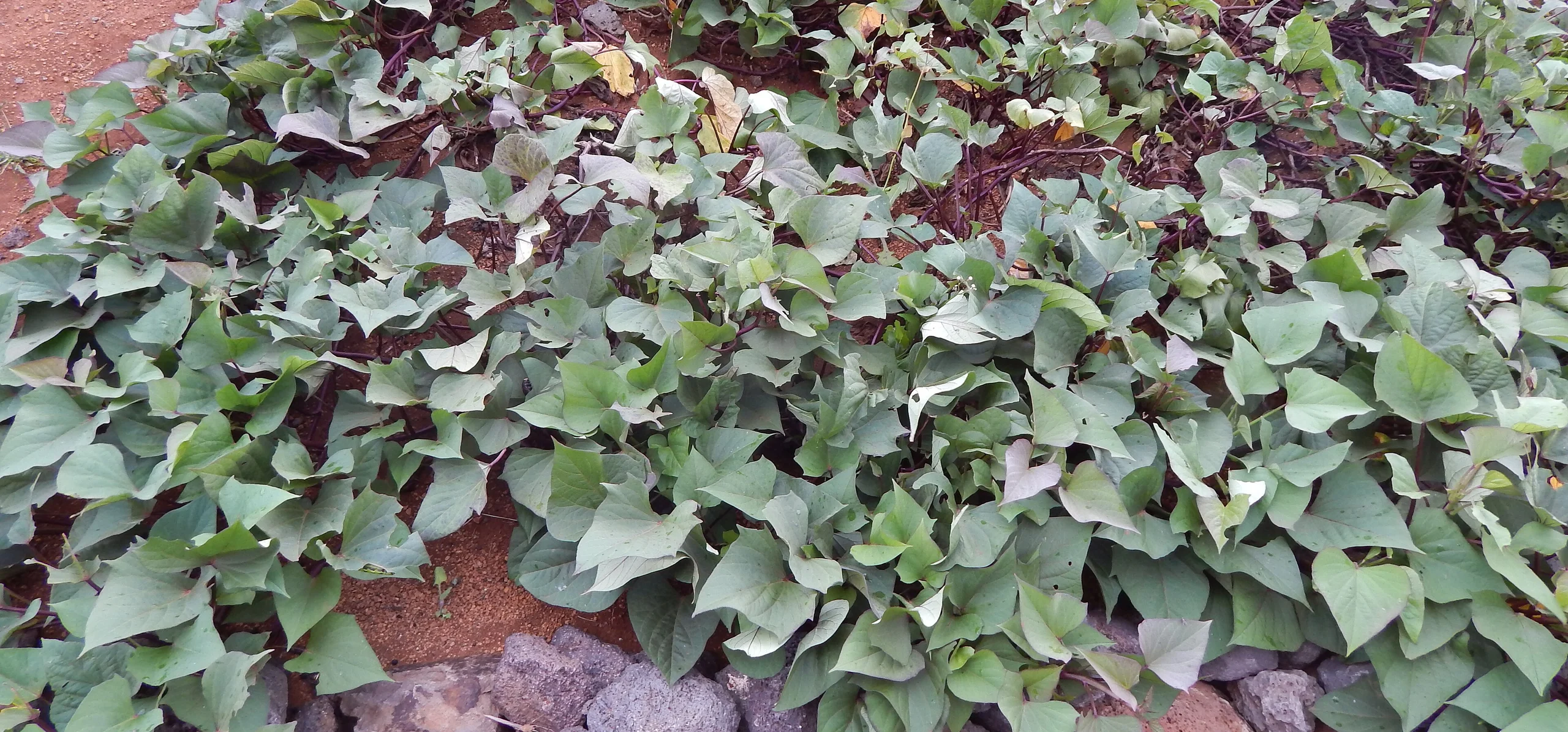
A rooted stem cutting of Ipomoea batatas can be growing new leaves within a week, which is why so many gardeners meet this plant in a jar of water on a windowsill before they ever plant it outside. The same species gives you two different plants depending on why you grow it: chartreuse, purple or variegated cultivars sold as trailing foliage for hanging baskets and window boxes, and the plainer-leaved field types grown for their edible tuberous roots. Both share the same care, the same vigorous sprawling habit, and the same intolerance for frost.
Ornamental Vine or Food Crop: Know What You Bought
Nursery cultivars such as 'Margarita' (lime green, heart-shaped leaves) and 'Blackie' (near-black, deeply lobed leaves) are bred for foliage color and density, not for large storage roots; they still form small tubers, but they are an afterthought. Field varieties sold as seed roots or slips put their energy into spindle-shaped edible roots and carry plainer green leaves. If a label does not say which one you have, watch the growth habit: ornamental types branch low and mound before they trail, while production varieties send out long runners with fewer side shoots.
Light and Placement
Give it full sun to light afternoon shade. In full sun the ornamental cultivars hold their leaf color best: Margarita stays lime rather than fading toward plain green, and Blackie deepens closer to black. Indoors, a bright south or west-facing window with several hours of direct light keeps a windowsill cutting from stretching and going leggy. Outdoors it tolerates part shade but grows more slowly and flowers less there.
Soil and Planting
Plant in loose, well-drained soil; heavy or compacted clay produces long, stringy edible roots and invites root rot, which sets in when soil stays below about 10 degrees C (50 degrees F). Set slips or rooted cuttings roughly 30cm (12 in) apart, in rows 90 to 120cm (3 to 4 ft) apart if you want the vines to fill the space between them within a season. For edible types, a soil pH of about 5.8 to 6 keeps scurf, a fungal disease that blotches the skin, in check; rotating beds every few years does more against this disease than any spray.
Watering
Water newly set slips daily for the first two weeks while roots establish, then settle into a weekly soak, about 1.2cm (0.5 in) of water a week is enough once the vine is running. Established plants have moderate water needs and wilt visibly, rather than crisping, when they go too dry, so a drooping mat of leaves in the afternoon heat is a cue to water rather than an emergency. If you are growing for tubers, cut back sharply on water in the final three to four weeks before harvest; wet soil late in the season splits and cracks the roots.


Feeding
This is a plant that punishes generosity with nitrogen: soil too rich in it produces a tangle of leafy vine and few or no usable roots. Work 2 to 5cm (1 to 2 in) of compost into the bed before planting rather than feeding through the season, and add bone meal at planting if you want to encourage root formation. Container and hanging-basket specimens grown purely for foliage are the exception and can take a diluted balanced feed monthly through summer, since there is no tuber harvest to protect.
Propagation from Cuttings and Slips
This is the plant's party trick. Cut a trailing section with two or three leaf nodes, strip the lower two-thirds of the leaves, and stand the cut end in a glass of water; roots appear from the nodes within about ten days, and the cutting is ready to pot or plant out two to three weeks later. To grow slips for an edible harvest, suspend a whole tuber half-submerged in water or bury it in moist sand; sprouts form along its length, and each one that has grown a few roots of its own can be twisted or cut free and planted as its own start.
Pests, Diseases and Common Mistakes
Scurf leaves dark, papery blotches on the skin of stored roots; it lives in the soil, so rotate beds and start from disease-free slips rather than treating it after the fact. Voles, mice and deer treat a bed of forming tubers as a pantry, and a physical barrier such as hardware cloth or a raised bed does more than any repellent. The most common mistake with ornamental cultivars is planting them in shade and rich soil expecting the vivid nursery color to hold; the foliage fades and the growth turns leggy instead. The most common mistake with edible types is leaving them in the ground past the first light frost, which shortens their storage life even when the cold has not touched the roots directly.
Harvest and Overwintering
Dig edible roots around the time of the first fall frost, using a spading fork well clear of the crown to avoid stabbing the tubers. Let them air-dry on the ground for two or three hours, then cure for ten to fourteen days at 27 to 29 degrees C (80 to 85 degrees F) and high humidity, a loosely sealed plastic bag with a few slits works without a dedicated curing room, before storing at 13 to 16 degrees C (55 to 60 degrees F) in darkness. Outside its hardy range the whole plant collapses at the first real frost; gardeners in cold climates either bring a favorite ornamental vine indoors as a rooted cutting before the cold arrives, or treat the season's growth as an annual and start fresh from new slips or cuttings the following spring.
Test your plant knowledge
Tap a card to flip it and reveal the answer.
A stem cutting of sweet potato vine can root in a glass of water in under two weeks. Tap to reveal ✓ True
Ornamental sweet potato vine cultivars keep their brightest foliage color in shade. Tap to reveal ✕ False
Nitrogen-rich soil grows the biggest edible sweet potato roots. Tap to reveal ✕ False
The ASPCA lists sweet potato vine (Ipomoea batatas) as non-toxic to cats, dogs and horses. Tap to reveal ✓ True
Cutting back watering in the weeks before harvest helps prevent the roots from splitting. Tap to reveal ✓ True
Sources
References consulted for this guide
- GBIF Backbone Taxonomy: Ipomoea batatasgbif.org
- Plants of the World Online (Kew): Ipomoea batataspowo.science.kew.org
- ASPCA: Sweet Potato Vineaspca.org
- Clemson HGIC: Ornamental Sweetpotato Vinehgic.clemson.edu
- Penn State Extension: Sweet Potatoes, a Winning Vine for Your Gardenextension.psu.edu
- Reference entity : Wikipédiaen.wikipedia.org