Chinese Silver Grass
Miscanthus sinensis
Family · Poaceae
Miscanthus sinensis forms silvery plumes in late summer, needs only a late-winter cutback, and comes in cultivars from 90 cm pots to 4 m screens.
Miscanthus sinensis
Plant profile
- WateringLittleWater every 10 days
- Light exposureFull sun
- Hardiness zoneUSDA 5–9
Growth
- Family
- Poaceae
- Life cycle
- Perennial
- Growth speed
- 6/10
- Mature size
- 250–400 cm
- Spread
- 100–150 cm
- Propagation
- Seed
- Division
FloweringSilvery-pink to reddish plumes above the foliage from late summer into autumn, fading to pale tan and persisting through winter
DormancyDies back to the ground after hard frost; slow to break dormancy, with new shoots emerging late in spring
Time to maturityReaches full clump size within about 2 to 5 years (RHS); by 3 to 4 years the center often begins thinning and dividing is recommended (UF/IFAS)
Soil & climate
- Soil types
- clay, loam, sand, chalk
- Saline soil
- Partially tolerated
- Drought tolerance
- Yes
Light & Placement
- Where to place it
- open sunny border in a prairie-style or naturalistic planting
- row planting as a seasonal screen or informal windbreak
- large pot on a sunny patio for compact cultivars
- compact cultivars such as Yakushima Dwarf in a large container
OriginNative from China to Malesia and the Russian Far East, across temperate East Asia (POWO)
Safety
- Toxicity
- Not listed in the ASPCA toxic and non-toxic plant database
Invasive speciesEscaped cultivation across parts of the eastern United States (NC State Extension, Missouri Botanical Garden); a growing number of eastern states restrict or are phasing out sale of the species, so choose a cultivar bred to be sterile or late-flowering where that applies
Data fromGBIF: Miscanthus sinensis AnderssonPOWO (Kew): Miscanthus sinensis AnderssoRHS: Miscanthus sinensis (eulalia)NC State Extension Gardener Plant ToolboMissouri Botanical Garden Plant Finder:
Where it grows
World distribution
Chinese Silver Grass is native to 11 countries: China, Indonesia, Japan, Laos, Malaysia, Philippines, Russia, and South Korea….GBIF records 23,646 documented identifications across 70 countries, with the largest concentrations in Japan, United States, and Taiwan.
- China
- Indonesia
- Japan
- Laos
- Malaysia
- Philippines
- Russia
- South Korea
- Taiwan
- Thailand
- Vietnam
Yellow to orange dots: concentration of documented identifications per country. Green countries: sourced native range. Source: GBIFNative range from POWO (Kew).
Miscanthus sinensis is the big clumping ornamental grass behind most of the silvery-pink plumes you see arching over garden beds from late summer into winter. It wants full sun, tolerates almost any moist, well-drained soil, and asks for nothing beyond an annual cutback once established. The one decision that actually matters is which cultivar to buy: sizes range from knee-high pot specimens to 3.5 m screens, and in parts of the eastern United States the species itself is now restricted, so the cultivar you choose also decides whether you are planting something well-behaved or something that will seed into the woods next door.
Choosing a cultivar for size and purpose
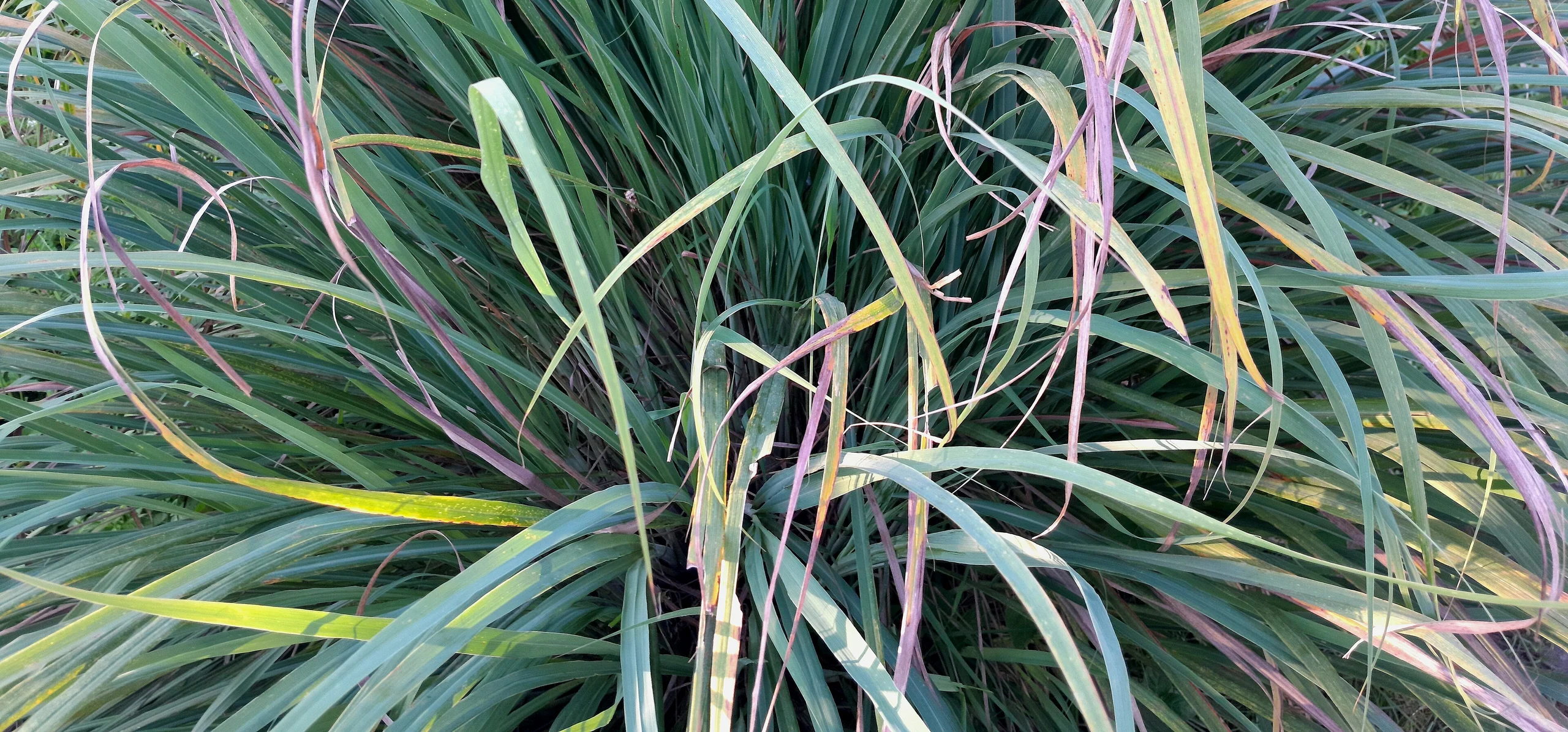
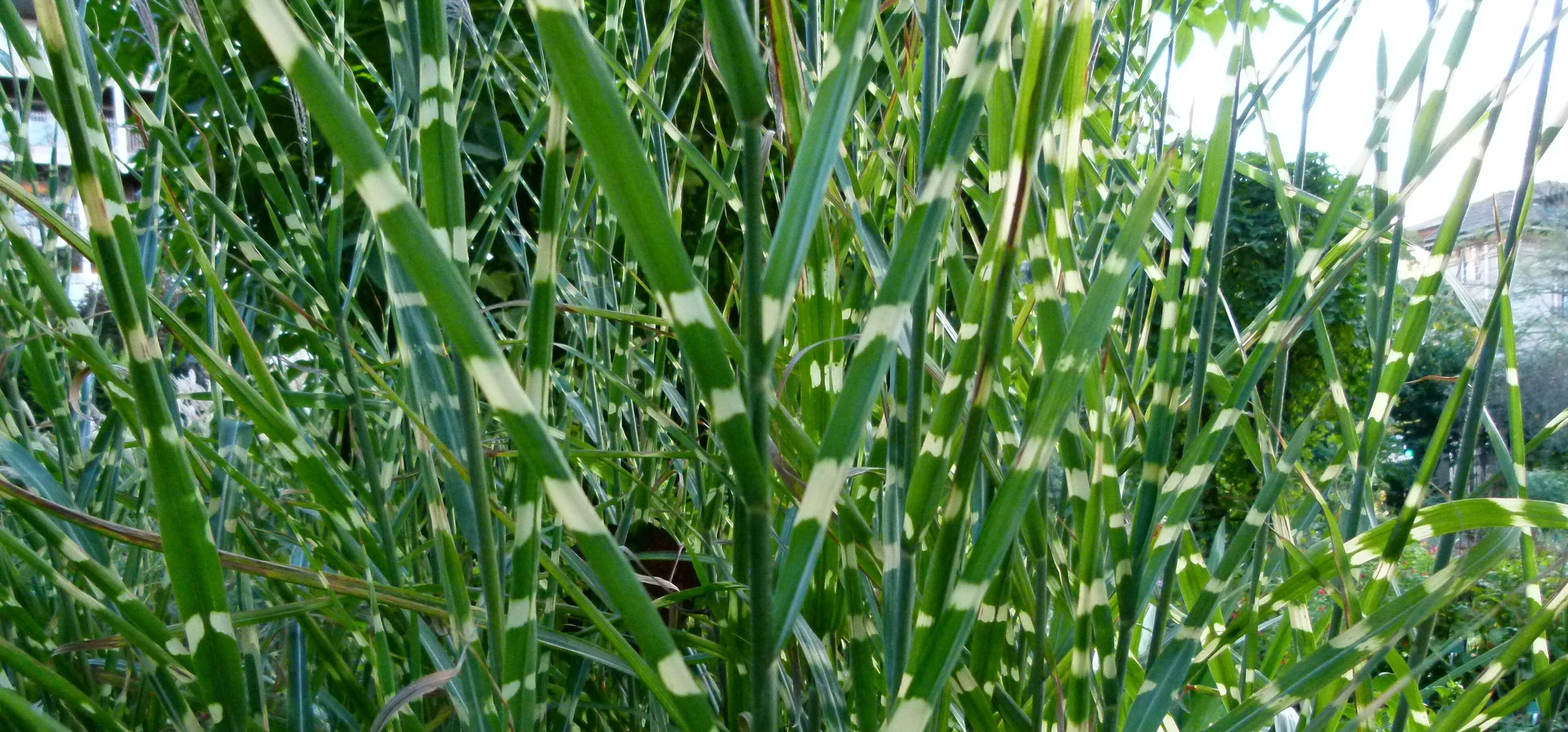
Straight species Miscanthus sinensis reaches 2.5 to 4 m tall with a 1 to 1.5 m spread (RHS), which is too large for most borders. Named cultivars solve that. 'Gracillimus' and 'Morning Light' keep narrow, fine-textured foliage and stay more compact and upright than the species. 'Zebrinus' and 'Strictus' carry horizontal gold banding across the blade instead of a plain white midrib, an effect called zebra-striping that reads as a distinct plant from across the garden. German breeder Ernst Pagels' cultivars fill the middle ground: 'Kleine Silberspinne' (little silver spider) stays compact with fine, wiry leaves and early flower heads, while 'Malepartus' grows taller with broad blades that turn orange-red in autumn and reddish-pink plumes that open earlier than most. For containers or the front of a border, 'Yakushima Dwarf' (sold as 'Yaku Jima') is the one to look for, rarely topping 90 cm even in the ground. Check the tag for flowering time and mature height before buying; a plant labelled simply 'Miscanthus sinensis' with no cultivar name is usually the tall, seedy species form.
Light and site
Give it full sun. In shade the stems etiolate, lean toward the light, and flop open in the middle of the clump instead of standing as a vase-shaped fountain; flowering also weakens. NC State Extension and RHS both list full sun as the baseline requirement, with only light, dappled shade tolerated without a real change in habit. Leave room for the mature spread: even a mid-size cultivar will crowd a path or a smaller perennial within two or three seasons.
Soil and watering
Miscanthus sinensis is not fussy about soil chemistry. RHS lists it as tolerant of acid, neutral and alkaline soils and of clay, loam, sand or chalk, provided drainage is reasonable; Missouri Botanical Garden notes it accepts everything from occasionally wet to occasionally dry ground once it is established. Water regularly through the first growing season while the root system builds out, then back off: an established clump handles short dry spells without visible stress, and constantly soggy ground in winter is more likely to cause problems (crown rot) than a normal dry summer. It does not need feeding; rich soil mostly produces extra height and weaker, more floppy stems.


Cutting back for winter structure
Do not cut it back in autumn. The dried stems, seed heads and pale winter color are a large part of why gardeners grow this plant, and they hold up through frost, snow and into the new year better than almost any other perennial. Cut the whole clump down to about 10 to 15 cm above the ground in late winter, before the new shoots push through; RHS gives the same window, removing dead foliage and last year's flowered stems in spring. Leaving the cutback any later risks slicing through the new growth, which emerges from the base of the old stems and is easy to damage with shears or a hedge trimmer.
Dividing an aging clump
A clump that has been in the ground three or four years often starts to die out in the center, leaving a ring of vigorous growth around a bare or woody middle (UF/IFAS). That is the signal to divide. Lift the whole clump in spring, just as new growth starts, and split it into sections with a spade or saw, since the root mass on an established plant is dense and fibrous. Discard the old center and replant the outer, actively growing divisions. Miscanthus sinensis is also one of the slower perennials to show itself each spring, and a clump that still looks like bare ground in early to mid spring while everything else is up is very often just dormant, not dead; digging it up too early to 'check' is a common and unnecessary mistake.
Pests and diseases
This grass is close to trouble-free. RHS rates it generally pest-free and disease-free. The two issues worth knowing by name are the miscanthus mealybug (Miscanthicoccus miscanthi), a specialist pest that hides inside the leaf sheaths and stunts growth, first reported spreading through US gardens in the 1980s, and rust, which shows as orange pustules on the blades in humid weather and usually fades once conditions dry out. Neither is common on a healthy, well-sited plant, and a bad infestation is usually solved by cutting out and destroying the affected stems at the next cutback.
Invasive risk and responsible cultivars
The straight species and several older cultivars set large amounts of viable, wind-blown seed, and Miscanthus sinensis has escaped cultivation into roadsides, meadows and open woodland across a wide swath of the eastern United States, where NC State Extension and Missouri Botanical Garden both flag it as invasive, capable of outcompeting native grassland and forest-edge plants. A growing number of eastern states now restrict or are phasing out sale of the species, so it is worth checking local rules before buying. If you garden in a region with these concerns, choose a cultivar bred to be sterile or to flower too late in the season to set viable seed before frost rather than the unnamed species form; breeders have selected specifically for this over the last two decades, and the label or a quick check with the nursery should tell you whether a given cultivar qualifies.
Using it in the garden
Its habit of standing upright through winter and swaying rather than shattering in wind makes it a natural fit for prairie-style and naturalistic planting, where it reads as a matrix grass among coneflowers, asters and other late-season perennials. A row of a taller cultivar such as 'Malepartus' or 'Silberfeder' also works as a seasonal screen or informal windbreak that fills in by midsummer and stays as structure through winter, then gets cut back to nothing each year rather than needing pruning like a shrub hedge. In a large pot, a compact cultivar like 'Yakushima Dwarf' gives the same silvery late-summer plumes and winter presence at a scale that suits a patio, though container plants need more frequent watering than the same cultivar in the ground and benefit from division every couple of years once roots fill the pot.
Test your plant knowledge
Tap a card to flip it and reveal the answer.
Miscanthus sinensis flops open in the middle and flowers weakly when grown in shade. Tap to reveal ✓ True
The dead foliage should be cut back in autumn, right after the first frost. Tap to reveal ✕ False
Every cultivar of Miscanthus sinensis is legally safe to plant anywhere in the United States. Tap to reveal ✕ False
RHS rates Miscanthus sinensis as generally pest-free and disease-free, though a specialist mealybug and occasional rust can appear. Tap to reveal ✓ True
New shoots usually appear very early in spring, ahead of most other perennials. Tap to reveal ✕ False
Sources
References consulted for this guide
- GBIF: Miscanthus sinensis Anderssongbif.org
- POWO (Kew): Miscanthus sinensis Anderssonpowo.science.kew.org
- RHS: Miscanthus sinensis (eulalia)rhs.org.uk
- NC State Extension Gardener Plant Toolbox: Miscanthus sinensisplants.ces.ncsu.edu
- Missouri Botanical Garden Plant Finder: Miscanthus sinensismissouribotanicalgarden.org
- Reference entity : Wikipédiaen.wikipedia.org