Scarlet Bee Balm
Monarda didyma
Family · Lamiaceae
Monarda didyma needs consistently moist, rich soil or it wilts and mildews fast. Covers dividing rhizomes, deadheading and powdery mildew control.
Monarda didyma
Plant profile
- WateringHighWater every 4 days
- Light exposurePartial sun
- Hardiness zoneUSDA 4–9
Growth
- Family
- Lamiaceae
- Life cycle
- Perennial
- Growth speed
- 7/10
- Mature size
- 60–120 cm
- Spread
- 60–90 cm
- Flowering
- July through September, deadheading brings a second, smaller flush
- Propagation
- Seed
- Division
- Cutting
Dormancydies back to the ground after the first hard frost, new shoots resprout from spreading rhizomes in spring
Time to maturity1 to 2 years to reach full flowering size and clump width
Soil & climate
- Soil pH
- pH 6–7
- Soil types
- loam, clay, humus-rich
- Drought tolerance
- No
Light & Placement
- Origin
- Southeastern Canada to the eastern United States
- Where to place it
- sunny to lightly shaded border with rich, moisture-retentive soil
- streamside or pond-edge planting
- cottage garden bed watered regularly in dry spells
- large container with a moisture-retentive mix, watered often
Safety
- Toxicity
- Not listed by the ASPCA as toxic or non-toxic to cats, dogs or horses
- Pet safe
- Yes
Invasive speciesspreads by shallow rhizomes into a wide patch within a couple of seasons and can crowd out slower neighbors in a small bed; divide every 2 to 3 years or sink a root barrier at planting to keep it contained
Data fromMonarda didyma L., GBIF Backbone TaxonomPOWO: Monarda didyma L.Missouri Botanical Garden Plant Finder: NC State Extension Gardener Plant ToolboRHS: Monarda didyma (bergamot)
Where it grows
World distribution
Scarlet Bee Balm is native to 2 countries: Canada and United States.GBIF records 10,678 documented identifications across 35 countries, with the largest concentrations in United States, Canada, and Austria.
- Canada
- United States
Yellow to orange dots: concentration of documented identifications per country. Green countries: sourced native range. Source: GBIFNative range from POWO (Kew).
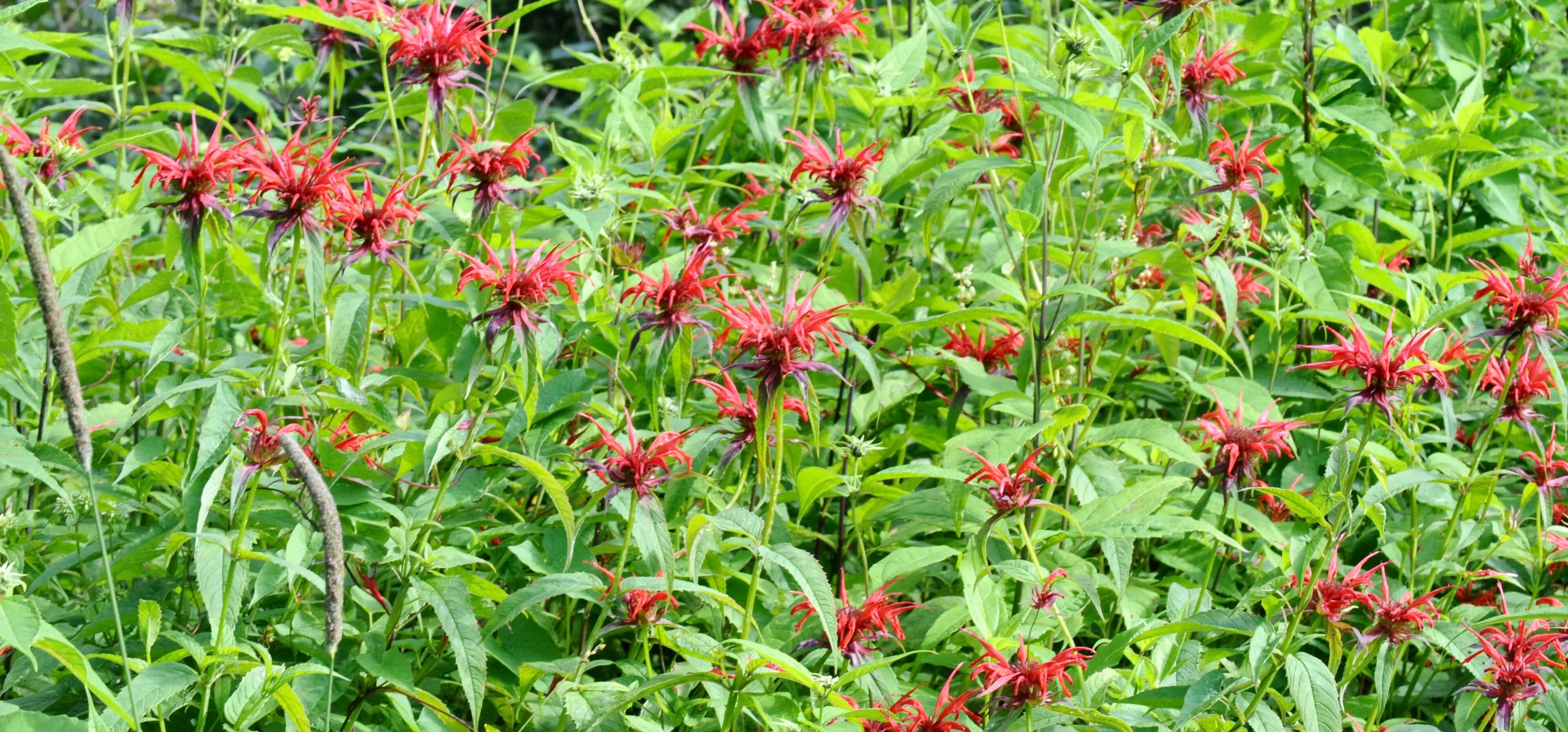
Scarlet bee balm, Monarda didyma, announces itself with shaggy, two-lipped scarlet flower heads that hummingbirds visit before you have finished planting the rest of the bed, and bees work over all day long. It wants sun to light shade like most summer perennials, but the soil underneath is the part gardeners get wrong: this species comes from streambanks and moist thickets, and it wilts and mildews fast if the ground dries out between waterings. Left in a bed that is too dry or too crowded, it sulks with scorched leaf edges and a dusty white coating by midsummer. Give it damp, fertile soil and room to breathe, and it spreads by rhizomes into a wide patch fast enough that dividing, not planting, becomes the main long-term chore.
Origin, the Oswego Tea Story and a Look-Alike Cousin
The GBIF backbone accepts Monarda didyma L. as the current name, in the mint family Lamiaceae, order Lamiales, alongside six recorded synonyms including the older names Monarda kalmiana and Monarda oswegoensis. Plants of the World Online gives its native range as southeastern Canada to the eastern United States, where it grows in bottomlands, moist thickets and along stream banks rather than open, dry ground. The Oswego people of what is now upstate New York taught early colonists to brew the aromatic leaves into a tea, and the name stuck: after the 1773 Boston Tea Party pushed colonists to boycott British tea, Oswego tea became a popular substitute. Despite the name, it has nothing to do with the bergamot orange that flavors Earl Grey, that is an unrelated citrus fruit from the Mediterranean; Monarda simply shares its perfumed scent, not its family. Its close relative Monarda fistulosa, wild bergamot, carries paler lavender pink flowers and tolerates drier soil far better than M. didyma does.
Site and Soil: Sun to Light Shade, but the Soil Must Stay Rich and Moist
Full sun suits it best where summers are mild, six hours of direct light or more, but in hot climates some afternoon shade reduces stress and helps keep powdery mildew at bay. Soil is the non-negotiable part: rich, humus-heavy loam or clay that holds moisture, with a pH from about 6.0 to 7.0, mildly acid to neutral. This is not a plant for the lean, fast-draining beds that suit prairie natives; scarlet bee balm wants the moisture-retentive, fertile ground of a streambank, and a spot that bakes dry by midsummer will show it in curled, scorched leaves within days.
Watering and Mulching: Never Let the Roots Dry Out
Water deeply whenever the top few centimeters of soil dry out, especially through the first growing season while roots are still establishing, and expect to water regularly through any stretch of hot, rainless weather. A 5 to 7 cm layer of organic mulch, shredded bark or leaf mold, over the root zone slows evaporation, keeps soil temperature even and cuts down on the weeding a spreading rhizome mat would otherwise need. Water at the base of the plant rather than overhead: wet foliage that stays damp overnight is one of the main triggers for the powdery mildew this species is prone to, so a soaker hose or careful hand watering in the morning beats a sprinkler every time.


Spreading by Rhizomes: Divide Every 2 to 3 Years or Contain It
Scarlet bee balm spreads by shallow underground rhizomes, not by seed alone, and a single planting can widen into a substantial patch within two or three seasons. That vigor is useful for filling a damp border fast but becomes a problem in a small bed, where it will crowd out slower neighbors. Lift and divide clumps every two to three years in spring or early autumn, discarding the older, often hollow or woody center and replanting the vigorous rhizomes from the outer edge; division also thins the clump enough to improve the air circulation that keeps mildew down. Where spread needs to stay in check without regular digging, sinking a bottomless container or a root barrier around the planting hole at installation is the more permanent fix.
Deadheading for a Second Flush
Snip spent flower heads back to the next leaf node as they fade through the main July to September bloom window. Prompt deadheading keeps the plant from putting energy into seed and reliably pushes out a second, smaller flush of flowers on side shoots a few weeks later. Leave a portion of the last flowers of the season unclipped if you want seed heads for the birds, covered below.
Powdery Mildew and Rust: The Real Challenge
Powdery mildew, a dusty white coating that spreads across the upper leaf surface, is the defining problem of growing this species, especially in humid climates or on a plant that has been allowed to dry out between waterings. Rust shows up less often but can also disfigure the foliage in a wet season. Good air circulation is the main defense: space plants generously, thin overcrowded clumps in spring by pulling out a third of the weakest stems, and water at the soil line rather than overhead. Some cultivars were bred specifically for resistance and hold up noticeably better than the wild species in trials, 'Jacob Cline', 'Raspberry Wine' and 'Gardenview Scarlet' are the three most commonly recommended where mildew has been a recurring problem in a given garden.
End of Season: Cutting Back or Leaving Seed Heads for Birds
After the first hard frost blackens the foliage, cut the stems down to a few centimeters above the ground; this also removes any mildew-affected leaf tissue before it can overwinter in the bed. Alternatively, leave the dried seed heads standing through winter: goldfinches and other seed-eating birds will work them through the cold months, and the bare stems add some structure to a winter border. Either way, cut back whatever is left to the ground by very early spring, before the new shoots emerge from the rhizomes.
Pollinators, Edible Leaves and Pets
The tubular scarlet flowers are built for hummingbirds, which visit them through the whole bloom season, alongside bees, butterflies and day-flying moths. The leaves are aromatic and edible: fresh or dried, they make a minty, faintly citrusy herbal tea, the same Oswego tea colonists drank, and small amounts work as a garnish or infusion in cooking. A search of the ASPCA's toxic and non-toxic plant database turns up no listing for Monarda didyma or bee balm under cats, dogs or horses, so no established toxic principle is on record for the species, though heavy chewing on any garden plant can cause mild stomach upset in a pet.
Test your plant knowledge
Tap a card to flip it and reveal the answer.
Monarda didyma tolerates dry, sandy soil as well as a prairie perennial like coreopsis. Tap to reveal ✕ False
Dividing the clump every 2 to 3 years helps keep its spreading rhizomes in bounds. Tap to reveal ✓ True
The bergamot flavor in Earl Grey tea comes from Monarda didyma. Tap to reveal ✕ False
Deadheading spent flower heads can trigger a second, smaller flush of blooms. Tap to reveal ✓ True
Powdery mildew is the main disease problem for this species, especially in humid or drought-stressed conditions. Tap to reveal ✓ True
Sources
References consulted for this guide
- Monarda didyma L., GBIF Backbone Taxonomygbif.org
- POWO: Monarda didyma L.powo.science.kew.org
- Missouri Botanical Garden Plant Finder: Monarda didymamissouribotanicalgarden.org
- NC State Extension Gardener Plant Toolbox: Monarda didymaplants.ces.ncsu.edu
- RHS: Monarda didyma (bergamot)rhs.org.uk
- Reference entity : Wikipédiaen.wikipedia.org