African Daisy
Dimorphotheca ecklonis
Family · Asteraceae
African daisy (Osteospermum ecklonis) needs full sun and free-draining soil, flowers pause in summer heat, and late-summer cuttings carry it through frost.
Dimorphotheca ecklonis
Plant profile
- WateringLittleWater every 7 days
- Light exposureFull sun
- Ideal temperature-5–1 °C
Growth
- Family
- Asteraceae
- Life cycle
- Perennial
- Growth speed
- 6/10
- Mature size
- 50–100 cm
- Spread
- 50–100 cm
- Flowering
- Spring through autumn, pausing during the hottest weeks of summer
- Propagation
- Seed
- Cutting
Dormancynone (evergreen subshrub); grown as a summer annual where winters bring hard frost
Time to maturityflowers within weeks of planting out
Soil & climate
- Soil types
- chalk, loam, sand
- Drought tolerance
- Yes
Light & Placement
- Where to place it
- bright, frost-free windowsill for overwintering rooted cuttings
- sunny bedding border
- raised bed
- gravel garden
- patio pot
- free-draining pot with peat-free, grit-added potting mix and drainage holes
OriginCape Provinces, South Africa (POWO); naturalized from cultivation in mild climates worldwide
Safety
- Toxicity
- Not listed by the ASPCA for cats, dogs or horses under this name
- Pet safe
- No
Invasive speciesPOWO records the species naturalized from cultivation in the Azores, the Canary Islands, coastal California, southern Europe and parts of Australia; not flagged as invasive within its native South African range.
Data fromDimorphotheca ecklonis DC., GBIF BackbonPOWO: Dimorphotheca ecklonis DC.RHS: Dimorphotheca ecklonis (deep purpleUC ANR Master Gardener, Under the Solano
Where it grows
World distribution
African Daisy is native to a single country: South Africa.GBIF records 1,953 documented identifications across 43 countries, with the largest concentrations in Australia, Spain, and United States.
- South Africa
Yellow to orange dots: concentration of documented identifications per country. Green countries: sourced native range. Source: GBIFNative range from POWO (Kew).
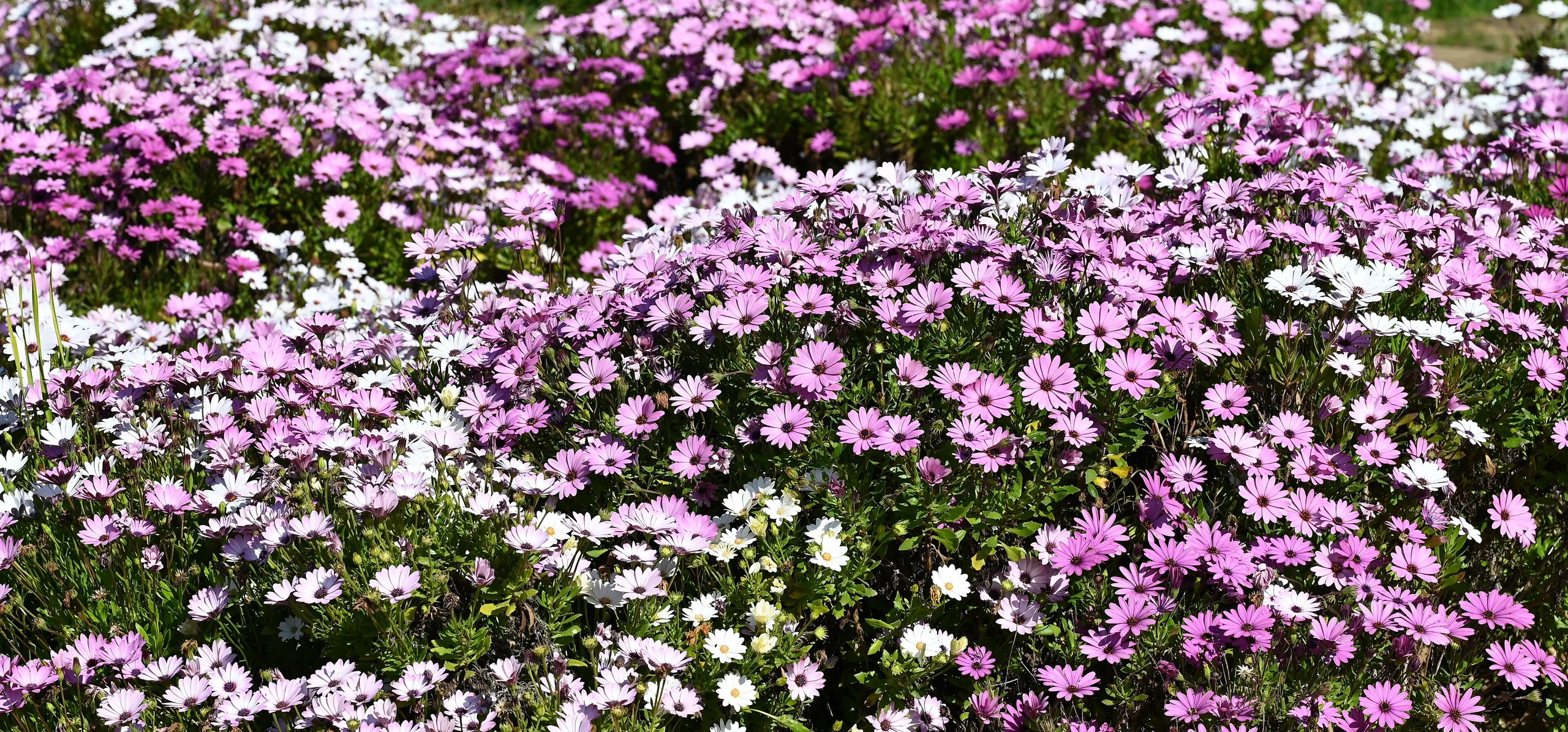
The daisy sold in garden centers as Osteospermum ecklonis, white to purple rays around a blue-steel eye that closes up on dull days, needs one thing above all: as much direct sun as the spot can give it. Give it that, free-draining soil or a gritty pot mix, and moderate water rather than a constantly wet root run, and it flowers from spring into autumn with a pause through the hottest weeks of summer. In frost-prone gardens it is grown and discarded as a bedding annual; in mild, Mediterranean-type climates the same plant lives on for years as a low, woody-based subshrub. Its accepted botanical name has also changed since it first reached nurseries, worth knowing if a label or an old book calls it something else.
A Trade Name That Outlived the Reclassification
Nurseries and seed packets still call this plant Osteospermum ecklonis (DC.) Norl.; that name is not wrong, it is a synonym. GBIF's backbone taxonomy, species 5387293, records the accepted name as Dimorphotheca ecklonis DC., a reclassification that folded a group of Cape genera back together without changing the plant itself. It belongs to the daisy family Asteraceae, genus Dimorphotheca. Kew's Plants of the World Online lists its native range as Cape Prov., the Cape region of South Africa, and records it naturalized from cultivation in the Azores, the Canary Islands, coastal California and parts of Australia. This guide keeps the trade name African daisy and Osteospermum ecklonis in its title, since that is how most people search for it, and uses Dimorphotheca ecklonis as the correct name going forward.
Full Sun Is Not Negotiable
Skimp on light and this plant sulks: buds stay small, stems stretch and flower color fades. The RHS places it in full sun on a south or west facing, sheltered aspect, six or more hours of direct sun a day; part shade keeps it alive but rarely in flower. Soil needs to drain fast: the RHS lists chalk, loam and sand as suitable, on condition water never sits around the roots, so work grit into heavy border soil before planting. In a pot, use a peat-free, free-draining mix with added grit rather than standard compost, in a container with real drainage holes; a subshrub spreading 50 to 100 cm wide needs room to run without sitting wet.
Watering: Moderate, Then Drought Tolerant
Keep new plants and young cuttings evenly moist while roots establish, then ease off. Once rooted in, Osteospermum ecklonis is genuinely drought tolerant, and copes with a missed week far better than it copes with waterlogging, which brings on root and crown rot fast in heavy or badly drained soil. Water deeply but infrequently, letting the top few centimetres of soil dry between sessions; in pots, check the compost with a finger rather than working to a fixed schedule. Overcast spells need far less water than a run of hot, sunny days, and waterlogging remains the most common way this plant is lost.


Deadheading and the Midsummer Flowering Pause
Spent flowers left on the plant divert energy into seed, so regular deadheading, snapping the stem to the first set of leaves, keeps flowers coming longer. Even so, expect flowering to stall through the hottest weeks of summer; the plant is not dying, it is conserving itself, and bud production picks back up as temperatures ease. To speed recovery, cut the whole plant back by roughly a third once the first flush fades and stems sprawl and go bare; the RHS notes this pruning is not essential but that deadheading and a harder late-season trim both prolong flowering. The result is a bushier plant carrying a second flush into autumn rather than one limping along on a handful of blooms at the tips of leggy stems.
Flowers That Read the Weather
This plant has an obvious daily rhythm: the rays open flat and bright in direct sun and close up, or stay half open, once cloud rolls in or light fades toward evening. University of California horticulturists note many forms show a different color on the back of the ray florets, visible only when a flower is half closed on a dull day. It is a normal, reversible response to light, not a sign of stress, and a bed can look strikingly different at nine under cloud versus midday in full sun. Gardeners who mostly see it in the evening should factor this in: peak display is a sunny midday, not dusk.
Bedding Annual, Perennial Subshrub, or Cuttings Through Winter
How this plant is grown depends entirely on winter temperatures. The RHS rates it H3, hardy to between minus 5 and 1 degrees C, and notes some forms shrug off short spells down toward minus 10 degrees C, though a hard or prolonged frost kills it outright. In climates with real winter frost it is planted out each spring and grown as a bedding annual, discarded at the first hard freeze; in Mediterranean and other near frost-free climates it behaves as a genuine perennial, a low, woody subshrub left in the ground year to year. Worth knowing before a plant is lost for nothing: take cuttings in late summer, root non-flowering shoots in a free-draining mix and overwinter them frost-free on a bright windowsill or in an unheated greenhouse, ready to plant out the following spring.
Seed Strains Versus Named Cutting Series
Two different products share the same shelf label. Older, cheaper seed-raised strains grow readily from a packet, flower within weeks, and set seed of their own, part of why they need regular deadheading. Named series such as Serenity and Voltage are propagated only by cuttings under license, sold as young plants or plugs rather than seed; vegetative propagation lets breeders lock in a compact habit or an exact flower color, from clean whites and yellows to the two-tone purples the genus is known for, without the variation a mixed seed packet produces. Neither route changes the plant's basic needs, sun, drainage and moderate water still decide whether it thrives, but a named cutting series cannot be reproduced true from any seed it sets and has to be kept going, if at all, from cuttings as described above.
Aphids, Downy Mildew and a Pet Safety Check
Osteospermum ecklonis is not troubled by many pests: the RHS calls it generally pest-free, with aphids the main insect to watch for, clustering on soft new growth where they are easily washed off before numbers build. The bigger risk comes from the conditions that also cause root rot: damp, poorly ventilated growing favors downy mildew, seen as pale patches on the upper leaf surface with fuzzy grey growth beneath, and the RHS also lists Verticillium wilt as an occasional problem; both are far less likely where sun and drainage are already right. For households with pets, the ASPCA's toxic and non-toxic plant database has no dedicated entry under Osteospermum ecklonis, Dimorphotheca ecklonis or African daisy; other, unrelated plants also called African daisy are listed there as non-toxic, but that does not cover this species, so treat its pet safety as unconfirmed.
Test your plant knowledge
Tap a card to flip it and reveal the answer.
Osteospermum ecklonis flowers stay fully open through the night and on overcast days, just as they do in full sun. Tap to reveal ✕ False
The botanical name accepted today for the plant sold in nurseries as Osteospermum ecklonis is Dimorphotheca ecklonis. Tap to reveal ✓ True
Cutting the plant back by about a third once the first flush of flowers fades can bring on a second flush later in the season. Tap to reveal ✓ True
This plant grows best in soil that stays consistently wet. Tap to reveal ✕ False
The ASPCA's toxic and non-toxic plant database has a dedicated entry for Osteospermum ecklonis (Dimorphotheca ecklonis). Tap to reveal ✕ False
Sources
References consulted for this guide
- Dimorphotheca ecklonis DC., GBIF Backbone Taxonomygbif.org
- POWO: Dimorphotheca ecklonis DC.powo.science.kew.org
- RHS: Dimorphotheca ecklonis (deep purple African daisy)rhs.org.uk
- UC ANR Master Gardener, Under the Solano Sun: Osteospermum ecklonisucanr.edu
- Reference entity : Wikipédiaen.wikipedia.org