Purple Shamrock
Oxalis triangularis
Family · Oxalidaceae
Oxalis triangularis folds its purple leaflets at night and rests underground as a corm each year. Here is how to keep it thriving through both cycles.
Oxalis triangularis
Plant profile
- WateringModerateWater every 8 days
- Light exposurePartial sun
- Hardiness zoneUSDA 8–11
Growth
- Family
- Oxalidaceae
- Life cycle
- Perennial
- Growth speed
- 5/10
- Mature size
- 15–46 cm
- Spread
- 30–61 cm
- Flowering
- Pale pink to white funnel-shaped flowers, summer and fall
- Propagation
- Seed
- Division
DormancyFoliage yellows and dies back once or twice a year, usually from summer heat, drought, or shortening daylight; the plant rests as a small scaly corm and regrows on its own within four to eight weeks
Time to maturityReaches flowering size within 1 to 2 years (RHS)
Soil & climate
- Soil types
- Loamy, well-drained potting mix
- Drought tolerance
- No
Light & Placement
- Origin
- Peru to Brazil and northern Argentina, South America
- Where to place it
- East or west-facing windowsill with some direct sun
- Sheltered spot in full sun to partial shade in frost-free or mild climates
- Any well-draining pot sized close to the corm mass; standard 6 inch pot for a mature clump
Safety
- Toxicity
- CatsToxic
- DogsToxic
- HorsesToxic
- HumansToxic
Invasive speciesNot considered invasive; spreads slowly in cultivation through corm offsets and is generally deer and rabbit resistant
Data fromOxalis triangularis A.St.-Hil., GBIF BacOxalis triangularis A.St.-Hil., Plants oShamrock Plant (Oxalis spp.) toxicity, AOxalis triangularis, North Carolina StatOxalis triangularis (purpleleaf false sh
Where it grows
World distribution
Purple Shamrock is native to 5 countries: Argentina, Bolivia, Brazil, Paraguay, and Peru.GBIF records 3,586 documented identifications across 76 countries, with the largest concentrations in Brazil, United States, and Sweden.
- Argentina
- Bolivia
- Brazil
- Paraguay
- Peru
Yellow to orange dots: concentration of documented identifications per country. Green countries: sourced native range. Source: GBIFNative range from POWO (Kew).
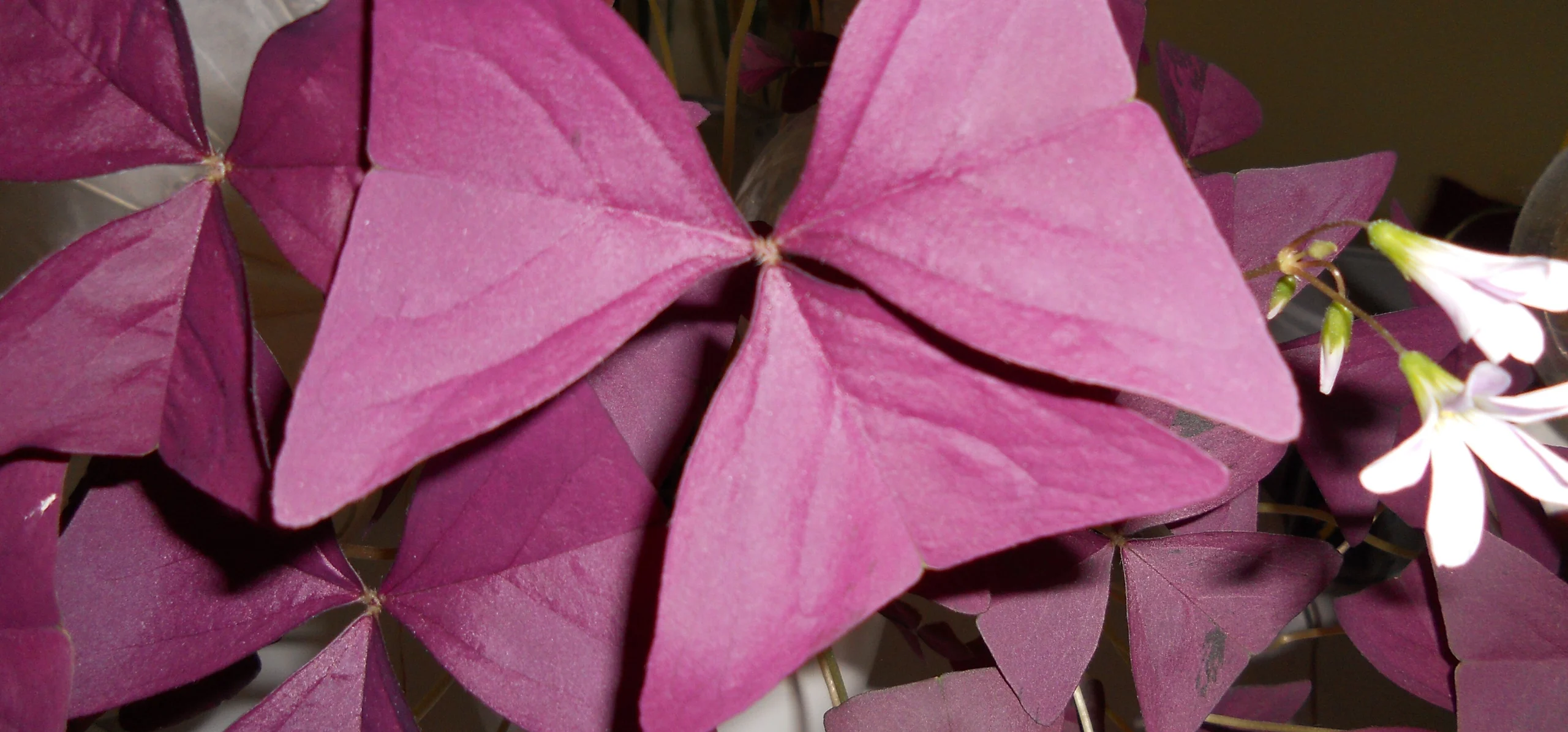
The deep maroon, triangular leaflets that fold shut at dusk and reopen with the morning light are the first thing most people notice about a purple shamrock. That folding movement, called nyctinasty, is normal and happens daily, not a sign of stress. The plant grows from a small scaly corm rather than a true root system, which is also why it periodically dies back to nothing and looks abandoned in its pot before regrowing on its own a few weeks later. Understanding that cycle, rather than fighting it, is most of what keeping this plant healthy comes down to.
Purple Shamrock or Clover? Identifying Oxalis Triangularis
Despite the common names false shamrock and purple shamrock, this plant has nothing to do with true clover in the genus Trifolium. Its three leaflets are triangular with a sharp point rather than rounded like clover, and they fold along the central vein at night, in deep shade, or when the plant is stressed by heat or drought, then reopen as light returns. Small funnel-shaped flowers, pale pink to white, rise on thin leafless stems held at roughly the same height as the foliage. Plants sold under the older name Oxalis regnellii, and the pale green cultivars sometimes labeled Oxalis triangularis subsp. papilionacea, are the same species under current taxonomy; the accepted scientific name is Oxalis triangularis A.St.-Hil.
Origin and Native Habitat
The species is native to South America, with a documented range running from Peru through Brazil to northern Argentina, according to Plants of the World Online (Kew). In the wild it grows as a tuberous geophyte in seasonally dry tropical habitat, storing energy in its underground corm during the dry season and pushing up new foliage once rain returns. That boom-and-rest pattern from its native climate is exactly what shows up in cultivation as the plant's dormancy.
Light and Placement
A spot with bright indirect light and an hour or two of direct morning or evening sun produces the deepest leaf color and the most flowers; the North Carolina State Extension lists it as suited to full sun through partial shade. Too little light does not kill the plant, but the leaflets stay folded through more of the day and new growth turns a duller, greener purple. An east or west-facing windowsill indoors, or a sheltered porch outdoors in mild climates, both work well.
Watering
Water when the top inch of the potting mix has dried out, then let it drain fully rather than sitting in a saucer. The corm rots quickly in soil that stays wet, which is the single most common way this plant is lost. During active growth that usually means watering every week to ten days; once the foliage starts dying back for dormancy, cut back sharply and let the mix run nearly dry until new leaves appear.
How often to water your Purple Shamrock
Soil and Repotting
A standard loamy potting mix with good drainage suits it, and the RHS notes the species tolerates acidic, neutral, and alkaline soil without difficulty, so getting the pH exactly right matters far less than drainage does. Repot only when the clump of corms has filled its container, ideally right after dormancy as new shoots emerge, using a pot barely larger than the old one; oversized pots hold excess moisture around the corms.
The Dormant Rest Period
Expect the foliage to yellow and collapse for a stretch of weeks once or twice a year, most often triggered by summer heat, a dry spell, or simply shortening daylight in autumn. This is not dying, it is the corm entering its natural rest phase. Stop watering except for an occasional light misting of the soil surface, move the pot somewhere cool and out of direct light, and resist the urge to repot or discard it. New leaves typically emerge on their own within four to eight weeks; once growth resumes, resume normal watering and move the pot back into brighter light.
Propagation by Dividing the Corms
The easiest method is division: tip the plant out of its pot during dormancy or right as new growth starts, and the corm mass will usually separate into several smaller scaly corms with a gentle pull. Each piece with an intact growing point can be potted individually in fresh, well-drained mix and kept barely moist until leaves appear. The RHS also lists propagation by seed, though division is faster and keeps the leaf color true to the parent plant.
Pests, Diseases, and Common Mistakes
North Carolina State Extension reports no serious insect or disease problems for this species indoors, though outdoor plantings can develop oxalis rust, a fungal disease that shows up as small orange pustules on the leaf undersides and should be pruned out and discarded rather than composted. Slugs and snails will graze outdoor foliage. Deer and rabbits generally leave the plant alone. The most common mistake is treating a dormant, leafless pot as a dead plant and throwing it out, followed closely by keeping the soil constantly wet, which is the fastest way to rot the corm before it ever gets the chance to go dormant properly.
Toxicity and Pet Safety
Every part of the plant contains soluble calcium oxalates, and the ASPCA lists Oxalis species, including purple shamrock, as toxic to cats, dogs, and horses. Ingestion typically causes drooling, mouth irritation, and vomiting; the ASPCA notes that kidney injury is possible but rare in cats and dogs, and that horses grazing larger quantities are more at risk of colic and calcium imbalance. Keep the pot out of reach of pets that chew on houseplants, and treat a curious nibble as a reason to call a vet or the ASPCA Animal Poison Control line rather than to panic.


Test your plant knowledge
Tap a card to flip it and reveal the answer.
Oxalis triangularis leaflets fold closed at night and reopen with daylight. Tap to reveal ✓ True
Purple shamrock is a true shamrock in the clover genus Trifolium. Tap to reveal ✕ False
The plant naturally dies back and rests as a dormant corm for part of the year. Tap to reveal ✓ True
The ASPCA lists Oxalis species, including purple shamrock, as toxic to cats, dogs, and horses. Tap to reveal ✓ True
It grows best in deep, constant shade and cannot tolerate any direct sun. Tap to reveal ✕ False
Sources
References consulted for this guide
- Oxalis triangularis A.St.-Hil., GBIF Backbone Taxonomygbif.org
- Oxalis triangularis A.St.-Hil., Plants of the World Online (Kew)powo.science.kew.org
- Shamrock Plant (Oxalis spp.) toxicity, ASPCA Animal Poison Controlaspca.org
- Oxalis triangularis, North Carolina State Extension Gardener Plant Toolboxplants.ces.ncsu.edu
- Oxalis triangularis (purpleleaf false shamrock), RHSrhs.org.uk
- Reference entity : Wikipédiaen.wikipedia.org