Southern Wood Sorrel
Oxalis dillenii
Family · Oxalidaceae
Oxalis dillenii forms clover-like mats with yellow flowers and seed pods that eject on contact. Identify it, grow it on purpose, or remove it for good.
Oxalis dillenii
Plant profile
- WateringModerateWater every 7 days
- Light exposurePartial sun
Growth
- Family
- Oxalidaceae
- Life cycle
- Perennial
- Growth speed
- 7/10
- Mature size
- 10–30 cm
- Flowering
- Late spring through early fall, sometimes year-round in mild climates
- Propagation
- Seed
- Division
DormancyTop growth dies back after hard frost; regrows from rhizomes and self-sown seed in spring
Time to maturityFlowers within its first growing season
Soil & climate
- Drought tolerance
- Yes
Soil typesMoist fertile garden soil, Disturbed or compacted soil, Sidewalk cracks and container mix
Light & Placement
- Origin
- Central & E. Canada to E. Mexico
- Where to place it
- Bright windowsill (often arrives uninvited in the soil of potted plants)
- Lawns and garden beds
- Sidewalk cracks and disturbed soil
- Partial shade under shrubs
- Any well-draining pot; usually arrives on its own in nursery containers rather than being planted
Safety
- Toxicity
- CatsToxic
- DogsToxic
- HorsesToxic
- HumansToxic
Invasive speciesNot federally listed as invasive, but spreads aggressively by explosive seed capsules and regrowing rhizomes, making an established patch difficult to eradicate.
Data fromOxalis dillenii Jacq., GBIF Backbone TaxOxalis dillenii Jacq., Plants of the WorShamrock Plant (Oxalis spp.) toxicity, AOxalis (Yellow Woodsorrel) Weeds, UniverOxalis Control, Clemson Cooperative Exte
Where it grows
World distribution
Southern Wood Sorrel is native to 3 countries: Canada, Mexico, and United States.GBIF records 28,289 documented identifications across 57 countries, with the largest concentrations in United States, France, and Austria.
- Canada
- Mexico
- United States
Yellow to orange dots: concentration of documented identifications per country. Green countries: sourced native range. Source: GBIFNative range from POWO (Kew).
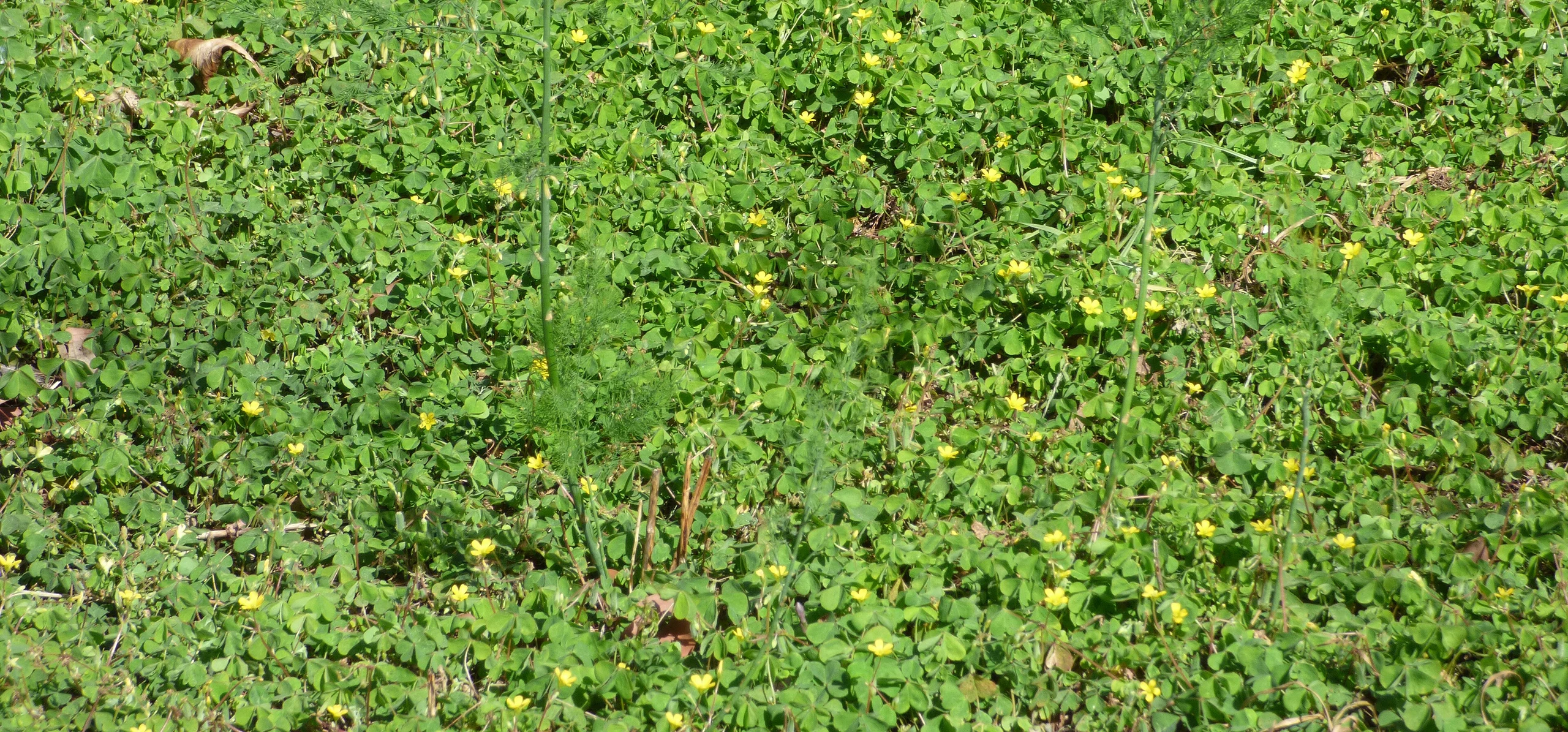
If a low, clover-like plant with heart-shaped leaflets and small yellow flowers has shown up uninvited in your lawn, a raised bed, or the pot of a store-bought houseplant, you are almost certainly looking at Oxalis dillenii, commonly called southern wood sorrel or slender yellow wood sorrel. It is native to North America rather than an import, and it behaves less like a garden ornamental and more like a persistent, self-seeding perennial that spreads from short rhizomes at the base of each stem. Whether you want to remove it or let a patch grow on purpose, it responds to the same handful of conditions described below.
Telling Oxalis Dillenii Apart From Clover
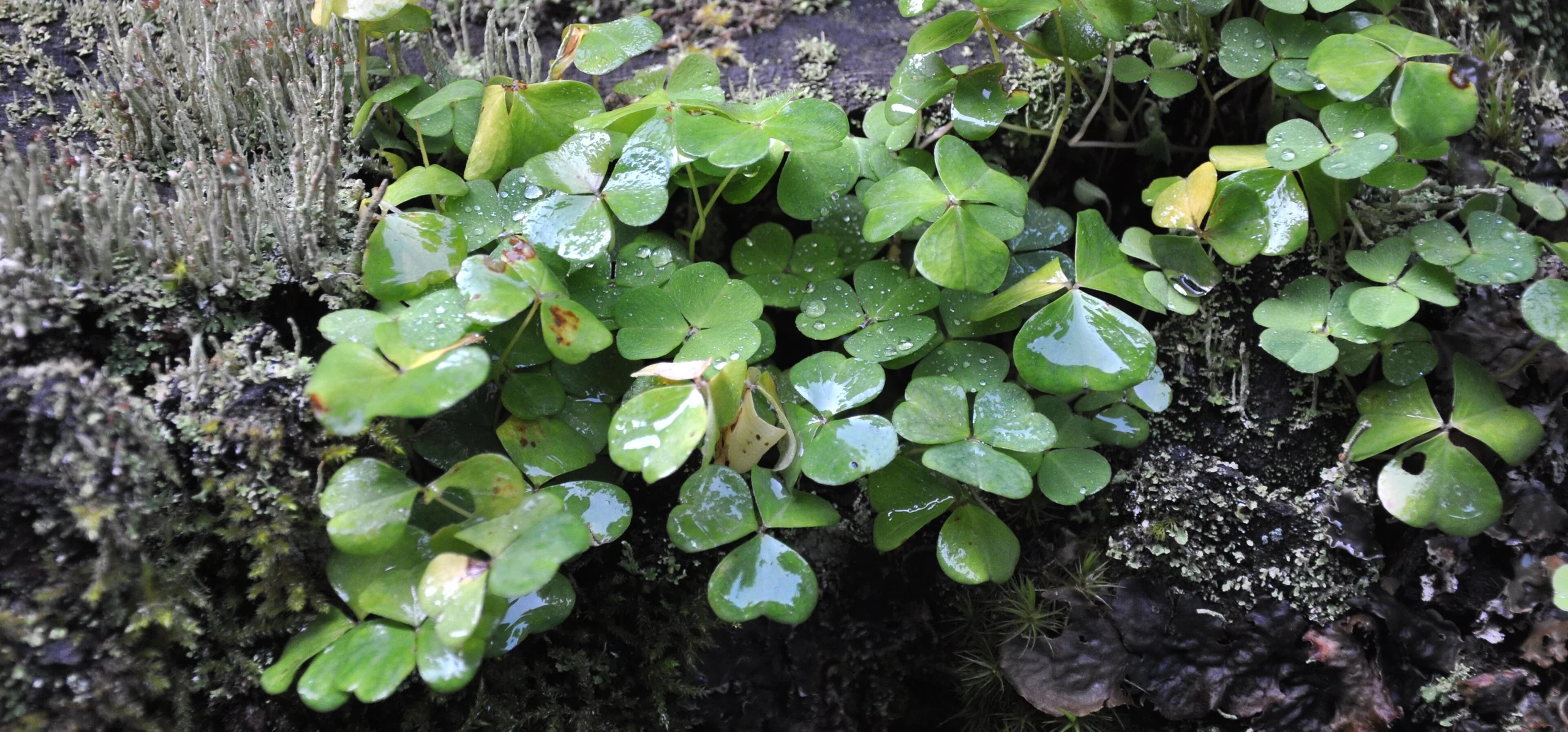
The three leaflets fold at the midrib like a shamrock, which is why this plant gets mistaken for clover on sight. Look closer and the difference is obvious: each leaflet is heart-shaped with a distinct notch at the tip, while clover leaflets are rounded or oval and often carry a pale chevron marking that wood sorrel never has. The stems are green to purple, branch from the base, and carry fine hairs that lie flat against the surface, a detail extension agents use to separate this species from its close relative Oxalis stricta, whose hairs spread outward and whose pedicels curve sharply downward after flowering. The leaflets also fold shut and droop in strong midday sun, in heat, and at night, so a patch that looks lush in the morning can look wilted by early afternoon without anything being wrong.
Origin and Where It Grows Naturally
Oxalis dillenii's native range runs from central and eastern Canada down to eastern Mexico, and within that span it has naturalized into nearly every disturbed soil habitat available: lawns, vegetable beds, gravel paths, sidewalk cracks, and the potting mix of nursery-grown plants, which is how it so often arrives in a home without being planted on purpose. It is not an invasive species from another continent, it is a native plant that thrives specifically because ordinary landscaping creates exactly the loose, disturbed ground it is built for.
Light and Soil
Full sun produces the densest foliage and the most flowers, but the plant tolerates partial shade without much complaint, which is why it turns up under shrubs and along shaded fence lines as readily as it does in an open lawn. Soil preference follows the same pattern: growth is fastest in moist, fertile garden soil, yet the plant survives just as well in compacted, poor, or gravelly ground where few other species would establish. That adaptability, not a specific soil recipe, is the trait to plan around, whether you are trying to encourage a patch in a container or discourage one in a flower bed.
Watering
Established plants growing in the ground rarely need supplemental watering where rainfall is normal, they simply slow down in extended drought and resume growth as soon as moisture returns. In a pot, water once the top of the mix has dried out, typically about once a week in warm weather, since the shallow rhizome system dries faster in a container than in open ground.
How often to water your Southern Wood Sorrel
Flowering and the Explosive Seed Capsules
Small five-petaled yellow flowers, roughly a quarter to half an inch across, open in clusters from the leaf axils from late spring through early fall, and in mild climates the plant can flower almost year-round. Each pollinated flower produces a slender, upright, okra-shaped capsule that ripens within a few weeks. When the capsule dries, it splits explosively and throws seeds several feet from the parent plant, one of the main reasons a single overlooked plant can seed an entire bed by the following season. Because the seeds need light to germinate, a light mulch layer over bare soil is one of the few passive ways to slow new seedlings without disturbing the plants already growing.
Removing It When You Do Not Want It
Hand-pulling works well while the soil is moist and the patch is still small, but only if the roots and rhizomes come out with it, leaving fragments behind lets the plant regrow from every node left in the ground. In an established lawn, dense, well-fed turf mowed at the correct height for its grass species closes the gaps that new seedlings need to establish in the first place. Where hand-pulling is not practical, a broadleaf herbicide labeled for oxalis and safe for the surrounding turf, applied to actively growing foliage, is the standard follow-up recommended by extension services; spot treatment in beds and containers is usually more effective than a single blanket application across a whole lawn.
Toxicity and Pet Safety
Every part of the plant contains soluble oxalates, the same compound that gives its leaves their sharp, lemony taste. In small amounts, chewing a leaf causes little more than mild mouth irritation, but the ASPCA lists Oxalis species as toxic to cats, dogs, and horses, with drooling, vomiting, and tremors possible after a pet eats a larger quantity, and kidney injury possible after very heavy ingestion, particularly in grazing animals such as horses. Keep an eye on patches within reach of a curious dog or a grazing horse, and treat a sudden thick mat of it in a pasture as worth pulling rather than ignoring.


Test your plant knowledge
Tap a card to flip it and reveal the answer.
Oxalis dillenii can be told apart from clover by its heart-shaped, notched leaflets rather than clover's rounded ones. Tap to reveal ✓ True
The ripe seed capsules of Oxalis dillenii burst open and can throw seeds several feet from the parent plant. Tap to reveal ✓ True
This plant needs constant full sun and dies back completely in any shade. Tap to reveal ✕ False
All parts of the plant are completely safe to eat in any quantity because they contain no oxalic acid. Tap to reveal ✕ False
Because it regrows from rhizome fragments left in the soil, pulling only the visible leaves rarely eliminates an established patch. Tap to reveal ✓ True
Sources
References consulted for this guide
- Oxalis dillenii Jacq., GBIF Backbone Taxonomygbif.org
- Oxalis dillenii Jacq., Plants of the World Online (Kew)powo.science.kew.org
- Shamrock Plant (Oxalis spp.) toxicity, ASPCA Animal Poison Controlaspca.org
- Oxalis (Yellow Woodsorrel) Weeds, University of Maryland Extensionextension.umd.edu
- Oxalis Control, Clemson Cooperative Extension Home & Garden Information Centerhgic.clemson.edu
- Reference entity : Wikipédiaen.wikipedia.org