Creeping Woodsorrel
Oxalis corniculata
Family · Oxalidaceae
How to identify Oxalis corniculata in lawns and pots, why it spreads so fast, how to remove it, and the purple-leaved form worth keeping on purpose.
Oxalis corniculata
Plant profile
- WateringLittleWater every 7 days
- Light exposureIndirect light
- Hardiness zoneUSDA 4–8
Growth
- Family
- Oxalidaceae
- Life cycle
- Perennial
- Growth speed
- 8/10
- Mature size
- 5–20 cm
- Spread
- 5–75 cm
- Flowering
- Small yellow flowers nearly year-round in mild climates
- Propagation
- Seed
- Division
DormancyMinimal in mild climates
Time to maturityFlowers within weeks
Soil & climate
- Soil pH
- pH 5–8
- Soil types
- Sandy, Loamy, Clay, Chalky
- Drought tolerance
- Yes
Light & Placement
- Origin
- Indian Subcontinent to Japan and the Philippines, now naturalized worldwide
- Where to place it
- Bright windowsill for the purple-leaved cultivar
- Lawn edges and paving cracks
- Garden beds and containers
- Any well-draining container, usually arriving on its own
Safety
- Toxicity
- HumansToxic
Invasive speciesAggressive, self-seeding weed
Data fromOxalis corniculata L., GBIF Backbone TaxOxalis corniculata L., Plants of the WorOxalis corniculata (Creeping Woodsorrel)Oxalis corniculata, RHS
Where it grows
World distribution
Creeping Woodsorrel is native to 12 countries: Bangladesh, Bhutan, China, India, Japan, Myanmar (Burma), Nepal, and Pakistan….GBIF records 213,064 documented identifications across 224 countries, with the largest concentrations in France, United Kingdom, and Netherlands.
- Bangladesh
- Bhutan
- China
- India
- Japan
- Myanmar (Burma)
- Nepal
- Pakistan
- Philippines
- South Korea
- Taiwan
- Vietnam
Yellow to orange dots: concentration of documented identifications per country. Green countries: sourced native range. Source: GBIFNative range from POWO (Kew).
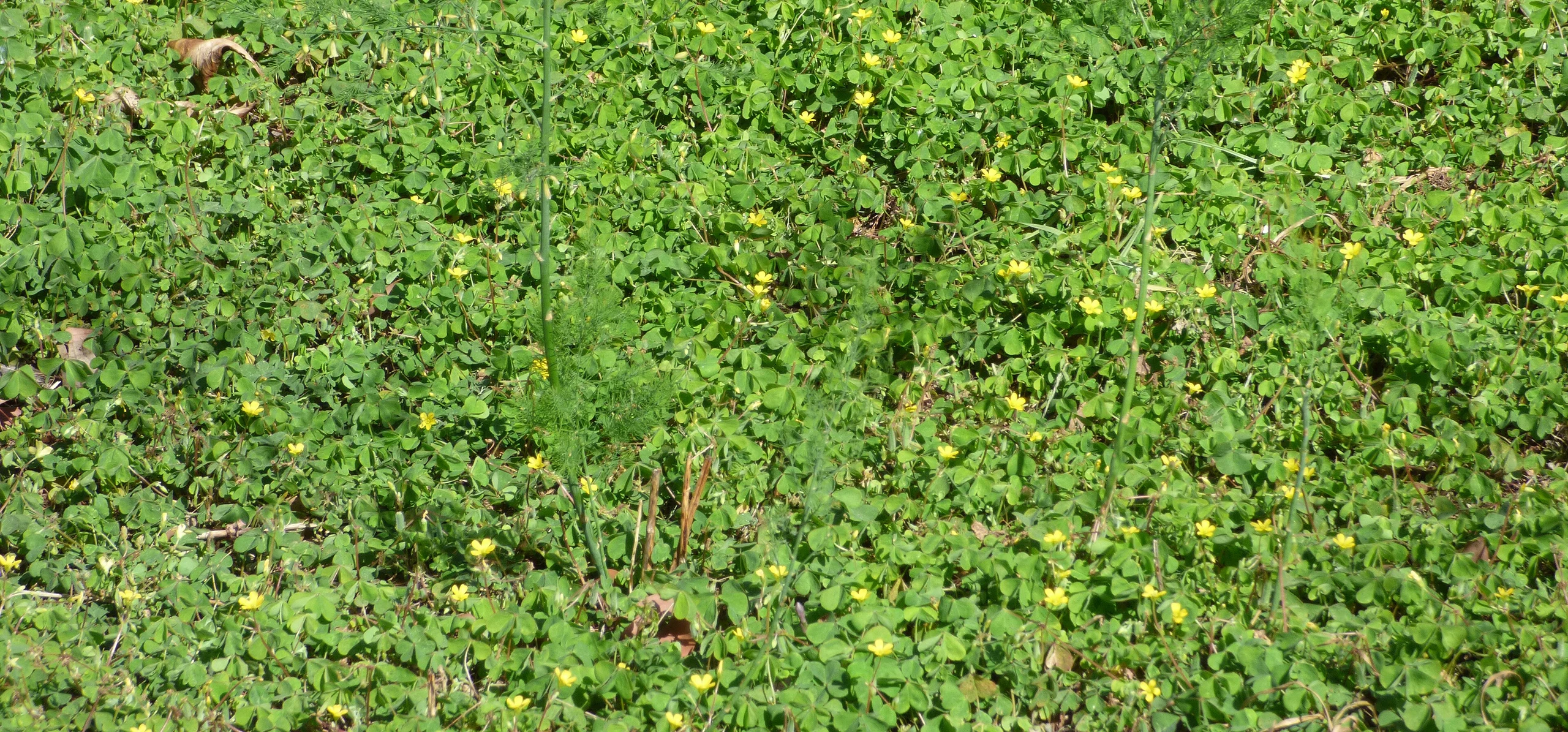
If small clover-like leaves and tiny yellow flowers have shown up in a potted plant, a lawn edge, or a gap in the paving, this is almost certainly Oxalis corniculata, creeping woodsorrel. It was not planted: it arrived as wind-blown or splashed seed, and one plant is rarely alone for long. Whether it stays depends on what you want from it, because the plain green form is a persistent weed while a bronze-leaved relative of the same species is sold as a garden plant on purpose.
Telling It Apart from Clover and Purple Shamrock
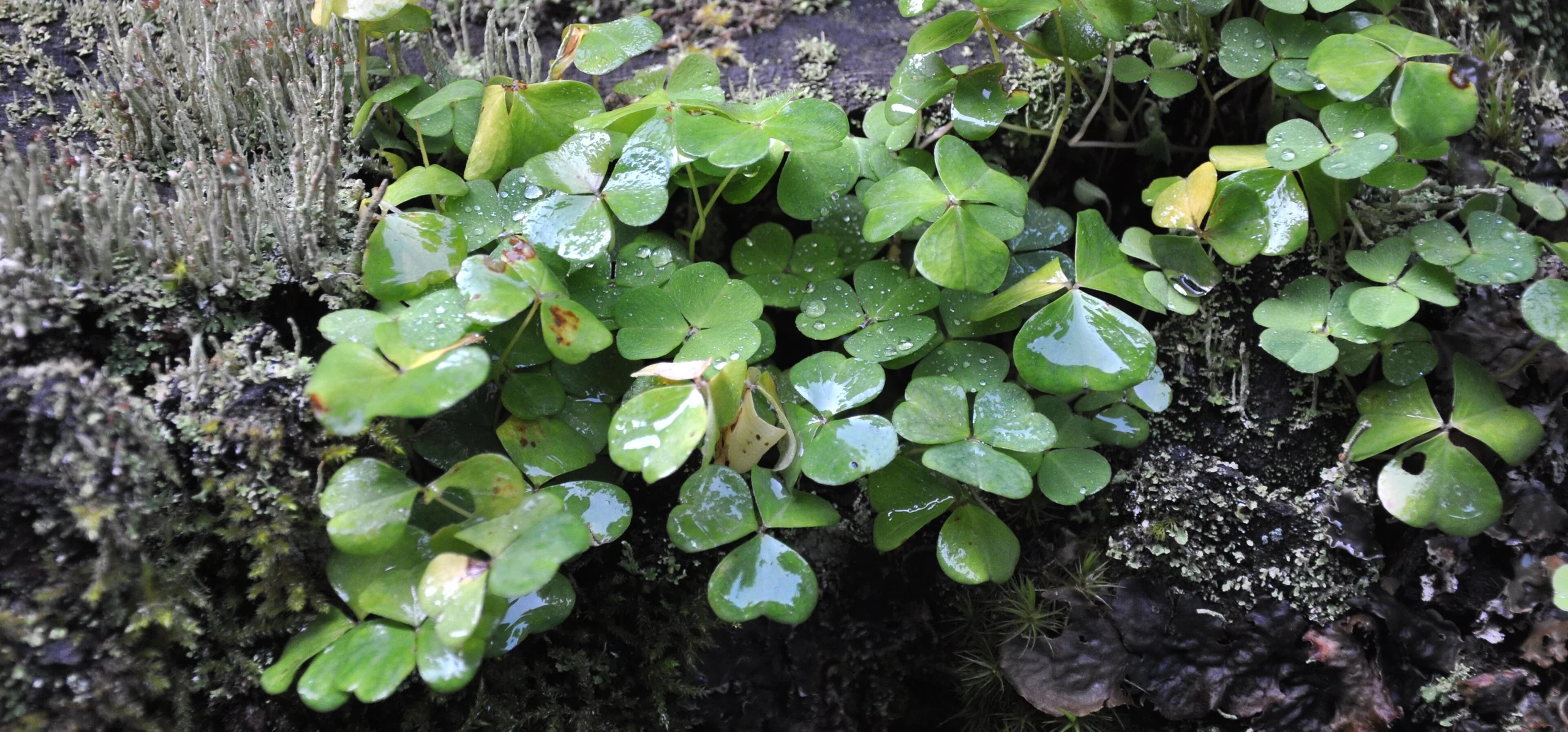
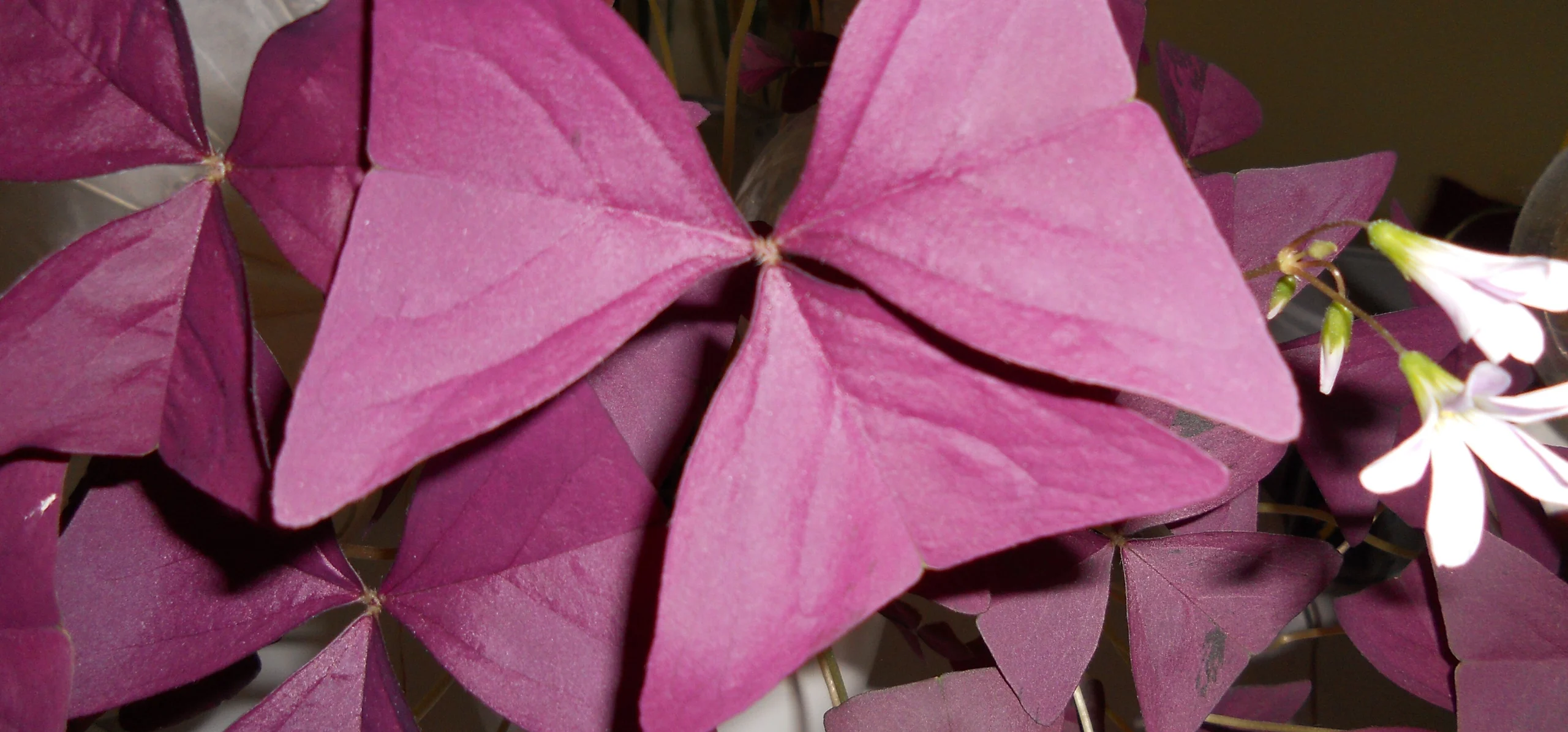
Each leaf is made of three leaflets, which invites confusion with white clover, but the shape gives it away. Woodsorrel leaflets are heart-shaped with a distinct notch at the tip, folding along that notch like a shallow inverted heart, while clover leaflets are rounded ovals, often with a pale chevron marking that woodsorrel never has. The leaves also close up at night and during the hottest part of the day, a movement clover does not perform. Flowers settle the identification: woodsorrel produces small, five-petaled yellow flowers, followed by slender, upright, cylindrical seed pods, features true clover never shows. It is also easy to confuse with purple shamrock (Oxalis triangularis), a related but distinct species with larger, deep purple leaves and pink or white flowers, sold deliberately as a houseplant rather than pulled as a weed.
Where It Comes From and Why It Grows Almost Anywhere
The species is native to the Indian Subcontinent, extending east to Japan and the Philippines, and has since naturalized across most temperate and subtropical regions of the world, including much of the United States and the United Kingdom, where it is treated as a lawn and border weed. It is hardy in USDA zones 4 to 8, tolerating winter cold well enough to persist as a low perennial in most temperate gardens, dying back only briefly in the coldest weeks before resuming growth. That wide native range across very different climates explains why so few conditions stop it once it is established.


Light, Soil, and Watering It Actually Needs
This is not a plant that requires attention to thrive, which is exactly the problem for anyone trying to be rid of it. It grows in full sun and in full shade with equal ease, and it is unfussy about soil, rooting happily in sand, loam, clay, or chalk across a pH range from moderately acidic to moderately alkaline. It tolerates both consistently moist soil and soil that dries out between waterings, and once a colony is established it needs no supplemental watering at all, drawing on whatever moisture is already reaching the surrounding bed or lawn.
How the Seed Pods Launch the Next Generation
The upright, cylindrical seed pods are the reason a single overlooked plant becomes a colony within one growing season. When ripe, the pods are under enough internal tension that the lightest touch, a hand weeding nearby, a brushing sleeve, even a raindrop, triggers explosive dehiscence, throwing seeds outward. NC State Extension records a dispersal range of up to about 16 feet from the parent plant. Because the plant also spreads vegetatively through low, spreading stems that root wherever a node touches soil, a patch expands from two directions at once: seed thrown outward and stems creeping along the ground.
Removing It from Lawns, Beds, and Potted Plants
Pulling the visible foliage rarely works on its own, because any stem section left touching soil, or any piece of the fine taproot left behind, regrows. Hand-forking or a narrow taproot weeder, worked in close to the crown to lift the whole root, is the reliable method for isolated plants, ideally before pods form. In containers, where the roots of an infested houseplant are tangled with the woodsorrel's own root system, the safest approach is to tip the pot out, tease the intruder's roots free by hand, and repot into fresh soil rather than risk leaving root fragments in the old mix. In lawns, thickening the turf through regular overseeding and feeding closes the bare patches woodsorrel needs to establish, since it rarely competes well against dense, healthy grass. Common household weedkillers have limited effect on it; consistent hand-removal before seed set does more over a season than a single chemical treatment.
Growing the Purple-Leaved Form on Purpose
Oxalis corniculata var. atropurpurea, sold under names like 'Atropurpurea' or 'Rubra', carries the same heart-shaped leaflets and yellow flowers in a deep bronze-purple rather than green, and it is listed by the RHS as a garden plant in its own right. Grown in a container or as edging where its spread can be watched, it offers the same easy tolerance of sun, shade, and irregular watering as the green form, without the anonymity that lets the species take over a bed unnoticed. Because it sets seed just as readily as the green form, deadheading spent flowers before pods form keeps a deliberately planted patch from seeding into gravel paths or a neighbouring lawn.
Toxicity to Pets and People
Every part of the plant contains soluble oxalic acid, the same compound found in spinach and rhubarb leaves, and NC State Extension lists it as having toxic potential for both humans and pets, with serious effects generally limited to large ingested quantities. In small amounts, as when a cat or dog nibbles a few leaves in passing, the usual outcome is mild digestive upset rather than anything severe; problems escalate only with sustained or large-volume consumption, which can affect calcium levels. The species does not currently appear on the ASPCA's toxic or non-toxic plant lists under its own name, so treat this as a general oxalic-acid caution rather than a confirmed ASPCA rating, and keep young children and pets from treating a purple ornamental patch as a snack.
Test your plant knowledge
Tap a card to flip it and reveal the answer.
Creeping woodsorrel can be told apart from clover by its heart-shaped, notched leaflets, unlike clover's rounded ones. Tap to reveal ✓ True
Its seed pods can fling seeds several feet from the parent plant when touched. Tap to reveal ✓ True
It needs steady humidity and shelter from direct sun to stay healthy, like a typical houseplant. Tap to reveal ✕ False
Pulling off the visible top growth is enough to stop it coming back. Tap to reveal ✕ False
The bronze-leaved form sold as 'Atropurpurea' is the same species as the green lawn weed. Tap to reveal ✓ True
Sources
References consulted for this guide
- Oxalis corniculata L., GBIF Backbone Taxonomygbif.org
- Oxalis corniculata L., Plants of the World Online (Kew)powo.science.kew.org
- Oxalis corniculata (Creeping Woodsorrel), NC State Extension Gardener Plant Toolboxplants.ces.ncsu.edu
- Oxalis corniculata, RHSrhs.org.uk
- Reference entity : Wikipédiaen.wikipedia.org