Common Self-Heal
Prunella vulgaris
Family · Lamiaceae
Selfheal shrugs off mowing, feeds bumblebees and butterflies for months, and can be grown on purpose in a flowering lawn: identification, care and control.
Prunella vulgaris
Plant profile
- WateringModerateWater every 10 days
- Light exposurePartial sun
Growth
- Family
- Lamiaceae
- Life cycle
- Perennial
- Growth speed
- 7/10
- Mature size
- 10–50 cm
- Spread
- 30–90 cm
- Propagation
- Seed
- Division
- Layering
FloweringViolet-purple (occasionally pink or white) flower spikes, roughly summer into early autumn, earlier in warmer climates
DormancySemi-evergreen; the low leaf mat persists through mild winters and dies back further in hard frost
Soil & climate
- Soil types
- chalk, clay, loam, sand
- Drought tolerance
- Yes
Light & Placement
- Where to place it
- flowering or bee lawn mix
- path edge or stepping-stone gaps
- wildlife meadow strip
- mixed border groundcover
OriginNative across the temperate and subtropical Northern Hemisphere, from Europe to Central America (POWO)
Safety
- Toxicity
- Not listed by the ASPCA for cats, dogs or horses
- Pet safe
- No
Invasive speciesThe RHS notes the spreading habit may be considered invasive in a maintained lawn or border; the North Carolina State Extension similarly flags it as potentially weedy and aggressive in turf, especially in damp conditions
Data fromGBIF: Prunella vulgaris L.Plants of the World Online (Kew): PrunelRHS: Prunella vulgaris (selfheal)NC State Extension Gardener Plant ToolboUniversity of Arkansas Extension: Plant
Where it grows
World distribution
Common Self-Heal is native to 66 countries: Afghanistan, Albania, Algeria, Austria, Belarus, Belgium, Bhutan, and Bulgaria….GBIF records 1,249,226 documented identifications across 105 countries, with the largest concentrations in United Kingdom, France, and Netherlands.
- Afghanistan
- Albania
- Algeria
- Austria
- Belarus
- Belgium
- Bhutan
- Bulgaria
- Canada
- Cape Verde
- China
- Costa Rica
Show 54 more countriesShow fewer countries
- Croatia
- Cyprus
- Czechia
- Denmark
- Dominican Republic
- Egypt
- Estonia
- Faroe Islands
- Finland
- France
- Georgia
- Germany
- Greece
- Guatemala
- Haiti
- Hungary
- Iceland
- India
- Iran
- Iraq
- Ireland
- Italy
- Jamaica
- Japan
- Kazakhstan
- Kyrgyzstan
- Lebanon
- Mexico
- Mongolia
- Morocco
- Myanmar (Burma)
- Nepal
- Netherlands
- Norway
- Pakistan
- Palestinian Territories
- Poland
- Portugal
- Romania
- Russia
- South Korea
- Spain
- Sweden
- Switzerland
- Taiwan
- Tajikistan
- Tunisia
- Türkiye
- Turkmenistan
- Ukraine
- United Kingdom
- United States
- Uzbekistan
- Vietnam
Yellow to orange dots: concentration of documented identifications per country. Green countries: sourced native range. Source: GBIFNative range from POWO (Kew).
A Creeping Mint That Colonizes Lawns Without Being Asked
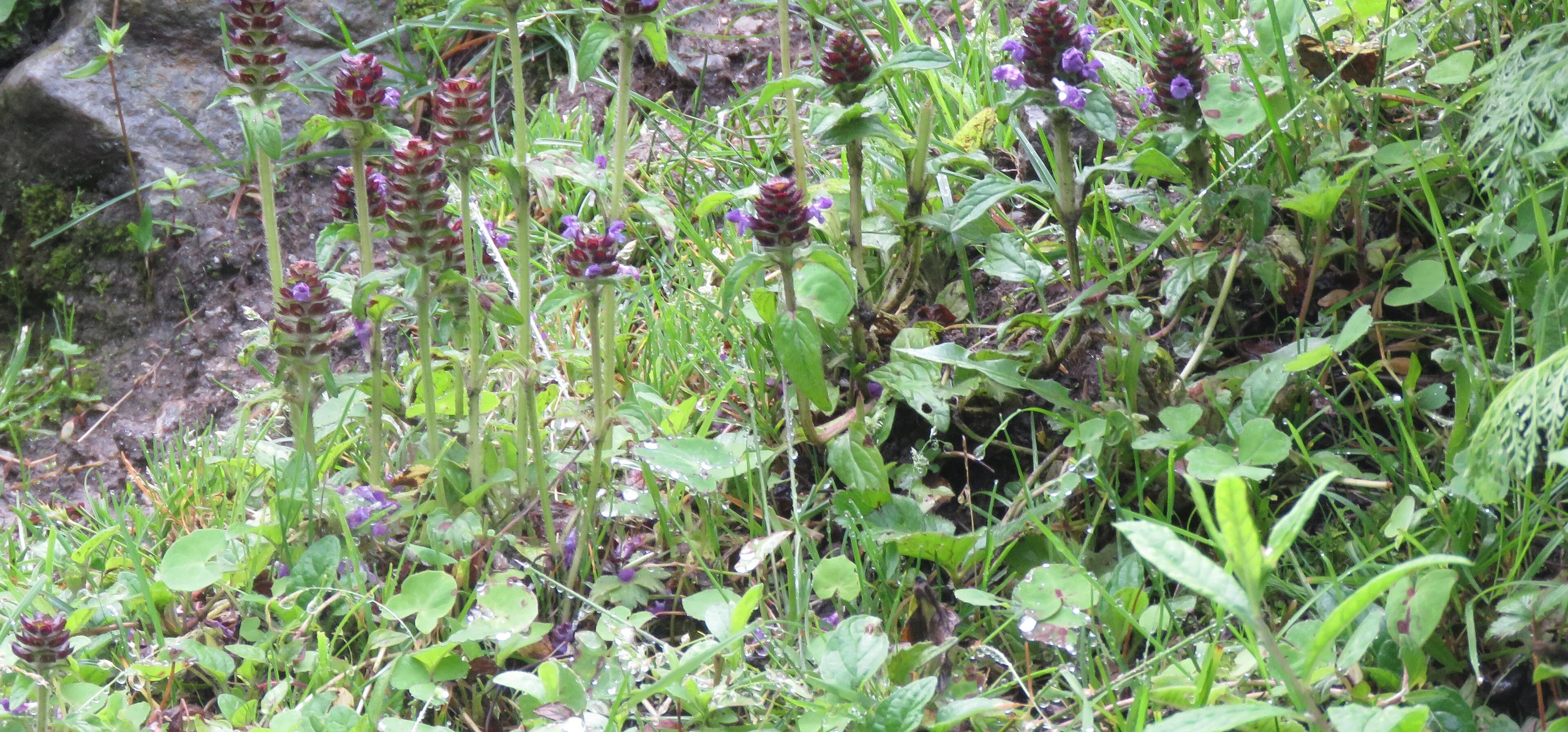
If a patch of grass has started throwing up short spikes tipped with a brown, pinecone-like cluster and small violet-purple flowers, this is almost certainly Prunella vulgaris, selfheal, also called heal-all. GBIF records the accepted name as Prunella vulgaris L., in the mint family Lamiaceae, and the University of Arkansas Cooperative Extension describes it plainly as a creeping herb 12 to 16 inches tall with opposite, ovate, pubescent leaves on square stems, the giveaway cross-section of any mint relative. It is native to Eurasia and now grows, according to the same source, in every US state and every Canadian province, one of the most widely distributed flowering plants around. Most people meet it uninvited, in a lawn or a bare patch of border soil, long before they consider growing it on purpose.
Reading the Pinecone-Shaped Flower Spike
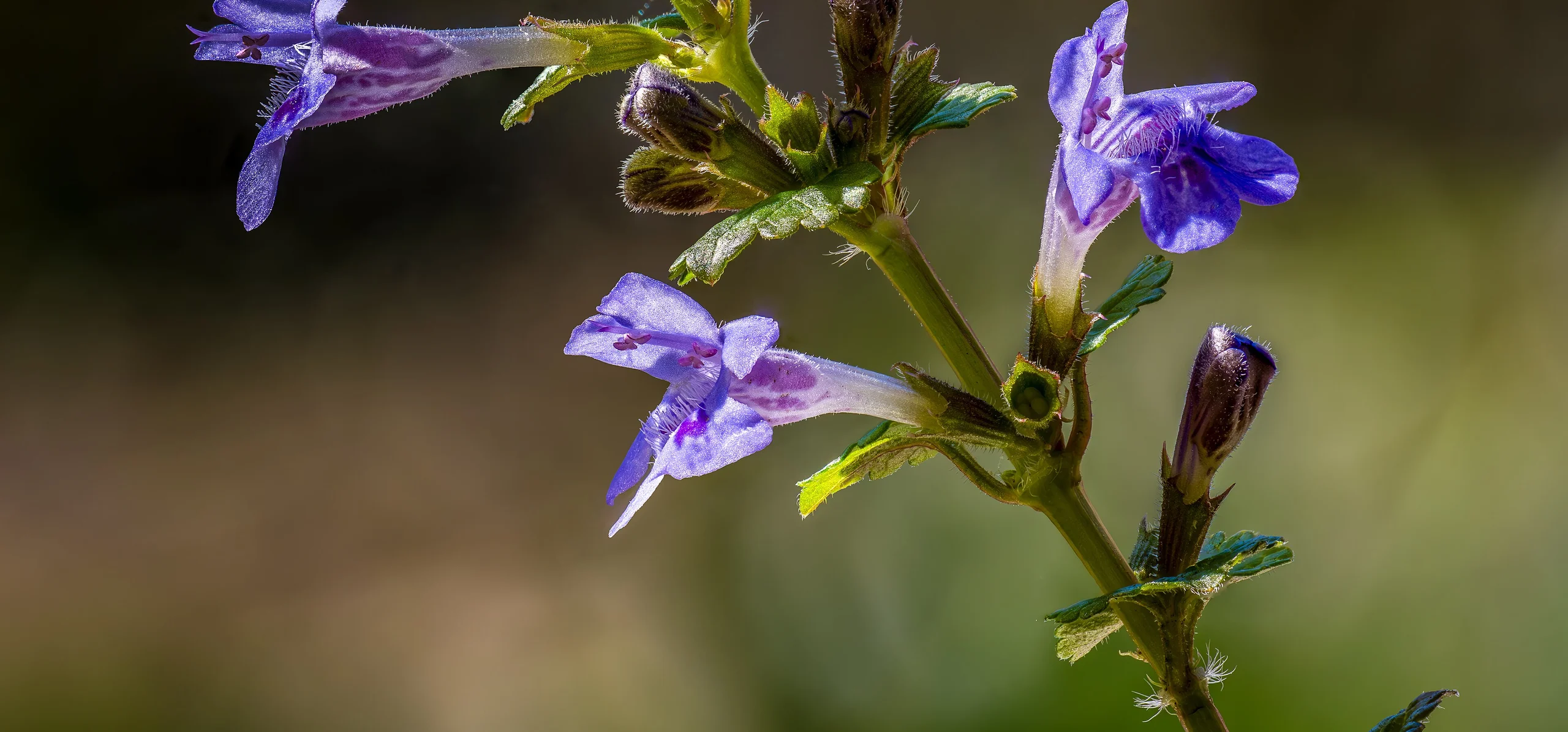
The flower head is the easiest way to confirm the identification: a dense, roughly two-inch spike that the Arkansas extension describes as blooming from the base of the cluster upward, so the top often still shows tight brown-purple bracts while the lower flowers have already opened. Each individual bloom has the two-lipped mint-family shape, a hooded upper lip and a larger, showier, three-tipped lower lip, in violet-purple, purple-and-white, or rarely white. In the UK, the RHS lists the bloom period as summer into early autumn; the Arkansas extension records flowering as early as late spring in warmer parts of the US. Selfheal is semi-evergreen, so even outside that window there is usually a low mat of leaves rather than bare ground.


Why a Lawn Mower Barely Slows It Down
Selfheal survives regular mowing because almost none of its growth strategy depends on height. The RHS describes it as a spreading, semi-evergreen perennial, and it spreads mainly by stems that root wherever they touch soil rather than by relying on one tall crown that a mower blade could remove outright. Cut the flower spikes off at turf height and the low mat of leaves underneath is untouched, ready to send up another round of spikes as soon as conditions allow. The RHS's own management advice, deadheading the spent flower spikes to prevent excessive self-seeding, only makes sense for a plant that keeps flowering close to the ground no matter how often it is cut; a mower is effectively doing a rough version of that same deadheading, over and over, without ever killing the plant underneath.
A Genuine Draw for Bees and Butterflies
This is not a marginal pollinator plant. The North Carolina State Extension Gardener Plant Toolbox lists Prunella vulgaris subsp. lanceolata, the North American native form, as attracting bumblebees and butterflies, and names it as a host plant for the Clouded Sulfur butterfly, which is why the extension includes it on its NC Native Pollinator Plant list. The long bloom season and the shape of the flower, a tubular hooded corolla suited to a bee's tongue, make an unmown or lightly mown patch of selfheal a genuine food source through the middle of the season, at a point when a plain grass lawn offers pollinators nothing at all.
Sowing It Into a Flowering Lawn on Purpose
Everything that makes selfheal a nuisance in a formal lawn is exactly what makes it useful in a deliberate flowering or bee lawn: it tolerates mowing, spreads on its own by rooting stems across 30 to 90 cm of ground per plant according to the North Carolina extension, and keeps producing flowers between cuts rather than needing to be left to grow tall like a wildflower meadow mix. The same extension notes it resists browsing by deer and rabbits and tolerates drought once established, both useful traits in a low-input lawn that is mown less often and watered less than a conventional one. Because it is semi-evergreen, a selfheal-seeded lawn also keeps more green cover through a mild winter than a lawn of grass alone.
Soil and Light: Where It Actually Thrives
The RHS profile lists selfheal as tolerant of chalk, clay, loam and sand, across acid, neutral and alkaline soils, in anything from well-drained to poorly-drained ground, provided it stays moist rather than parched. Light is similarly forgiving: full sun to partial shade, though the North Carolina extension recommends six or more hours of direct sun a day for the strongest flowering and the densest ground cover. The Arkansas extension adds that it favors moist, disturbed ground, which explains why it so often turns up first at the edge of a path, along a compacted lawn margin, or in a bare patch left by a dry summer, rather than in the middle of an established, well-fed border.
Removing It From a Border or a Formal Lawn
Where selfheal is not wanted, hand-pulling or forking out the whole rooted mat is more effective than mowing or hoeing, because a mower only removes what shows above turf height and hoeing tends to sever the creeping stems into fragments that each root again. Working a hand fork underneath the mat and lifting complete runners, rather than tugging at the top growth, takes out the rooted sections that would otherwise regrow. Deadheading any flower spikes before they set seed, the same RHS advice given for managing it deliberately, is worth doing even when the goal is removal, since it stops that season's seed from restarting the problem somewhere else in the bed.
Common Mistakes
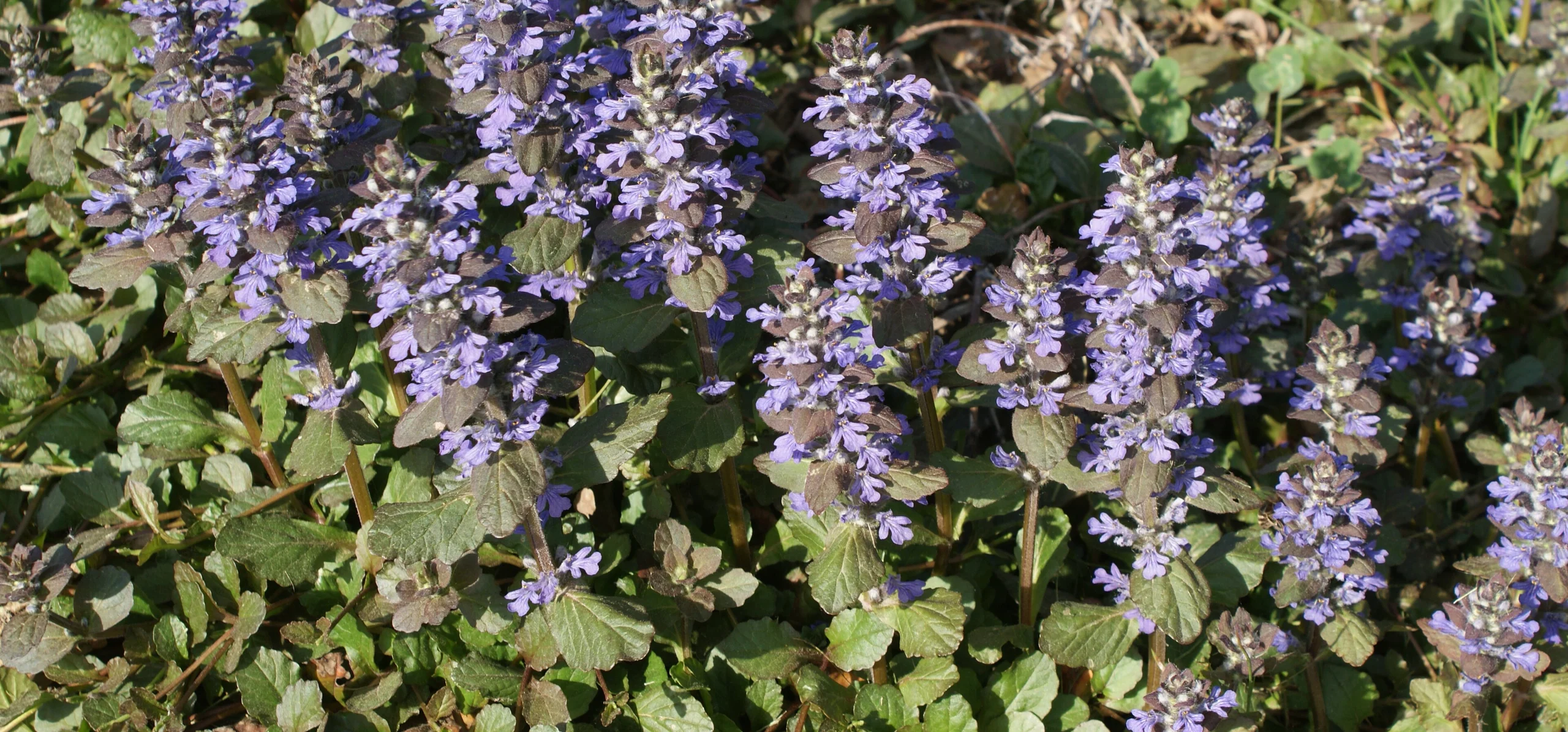
The most common mistake is misidentifying selfheal as clover or ground ivy from a distance: clover has three rounded leaflets and ground ivy has scalloped, kidney-shaped leaves on trailing stems, while selfheal's opposite, ovate, slightly hairy leaves sit on square mint-family stems below that distinctive brown-purple flower spike. The second is pulling flowering stems and leaving them on the lawn or border, where a spike that has already set seed can still shed it from the cut stem exactly as it would standing. The third is treating every patch as an enemy: a plant this valuable to bumblebees and butterflies, this tolerant of mowing and drought, is often better managed as part of a flowering lawn than fought as a weed, with hand-removal reserved for the borders and beds where it genuinely competes with something being grown on purpose.
Test your plant knowledge
Tap a card to flip it and reveal the answer.
Selfheal spreads mainly by stems that root wherever they touch the soil, rather than from one fixed crown. Tap to reveal ✓ True
Selfheal loses all its foliage and leaves bare soil every winter. Tap to reveal ✕ False
Deer and rabbits generally leave selfheal alone. Tap to reveal ✓ True
Selfheal flowers best in heavy shade with no direct sun at all. Tap to reveal ✕ False
Selfheal appears on the ASPCA's list of plants toxic to cats and dogs. Tap to reveal ✕ False
Sources
References consulted for this guide
- GBIF: Prunella vulgaris L.gbif.org
- Plants of the World Online (Kew): Prunella vulgarispowo.science.kew.org
- RHS: Prunella vulgaris (selfheal)rhs.org.uk
- NC State Extension Gardener Plant Toolbox: Prunella vulgaris subsp. lanceolataplants.ces.ncsu.edu
- University of Arkansas Extension: Plant of the Week, Prunella vulgaris (Heal-All, Self-Heal)uaex.uada.edu
- Reference entity : Wikipédiaen.wikipedia.org