Black Cherry
Prunus serotina
Family · Rosaceae
Identify Prunus serotina by its rust-haired midrib and scaly bark, understand why wilted leaves poison livestock, and see why it invades European forests.
Prunus serotina
Plant profile
- WateringModerateWater every 10 days
- Light exposureFull sun
- Hardiness zoneUSDA 2–8
Growth
- Family
- Rosaceae
- Life cycle
- Perennial
- Growth speed
- 8/10
- Mature size
- 1800–2400 cm
- Spread
- 900–1800 cm
- Flowering
- Fragrant white racemes in late April and May, followed by dark purple-black cherries
- Propagation
- Seed
DormancyDeciduous, winter dormant
Soil & climate
- Soil types
- clay, loam, sand
- Drought tolerance
- Yes
Light & Placement
- Origin
- Eastern North America, from Nova Scotia to Texas, south into Mexico and Guatemala
- Where to place it
- Naturalized woodland edge
- Windbreak
- Wildlife planting
Safety
- Toxicity
- CatsToxic
- DogsToxic
- HorsesToxic
- HumansToxic
Invasive speciesBlacklisted as invasive on national lists in France, Belgium, Germany, the Netherlands, Denmark, Sweden, Austria, Slovenia and Spain; forms dense monoculture understories in European forests
Data fromGBIF: Prunus serotina Ehrh.Plants of the World Online (Kew): PrunusASPCA: Toxic and Non-Toxic Plants, BlackUSDA Plants Database: Prunus serotinaNC State Extension Gardener Plant Toolbo
Where it grows
World distribution
Black Cherry is native to 7 countries: Canada, El Salvador, Guatemala, Honduras, Mexico, Panama, and United States.GBIF records 305,842 documented identifications across 76 countries, with the largest concentrations in Netherlands, Belgium, and United States.
- Canada
- El Salvador
- Guatemala
- Honduras
- Mexico
- Panama
- United States
Yellow to orange dots: concentration of documented identifications per country. Green countries: sourced native range. Source: GBIFNative range from POWO (Kew).
A tree with reddish-brown bark marked by short horizontal lenticels when young, leaves that release a faint bitter-almond smell when crushed, and drooping racemes of small white flowers in spring is almost certainly Prunus serotina, black cherry. It is the largest native cherry in North America, prized for cabinet-grade timber and heavy wildlife use in its home range, and enough of a problem in European forests that land managers spend real budget holding it back. Two things matter immediately: the ripe black fruit is the edible part, but wilting or damaged leaves concentrate cyanide that has killed grazing livestock within hours, and the tree looks different at every age, so smooth young bark eventually turns into dark, scaly plates.
Identification: Bark, Leaves and Flowers
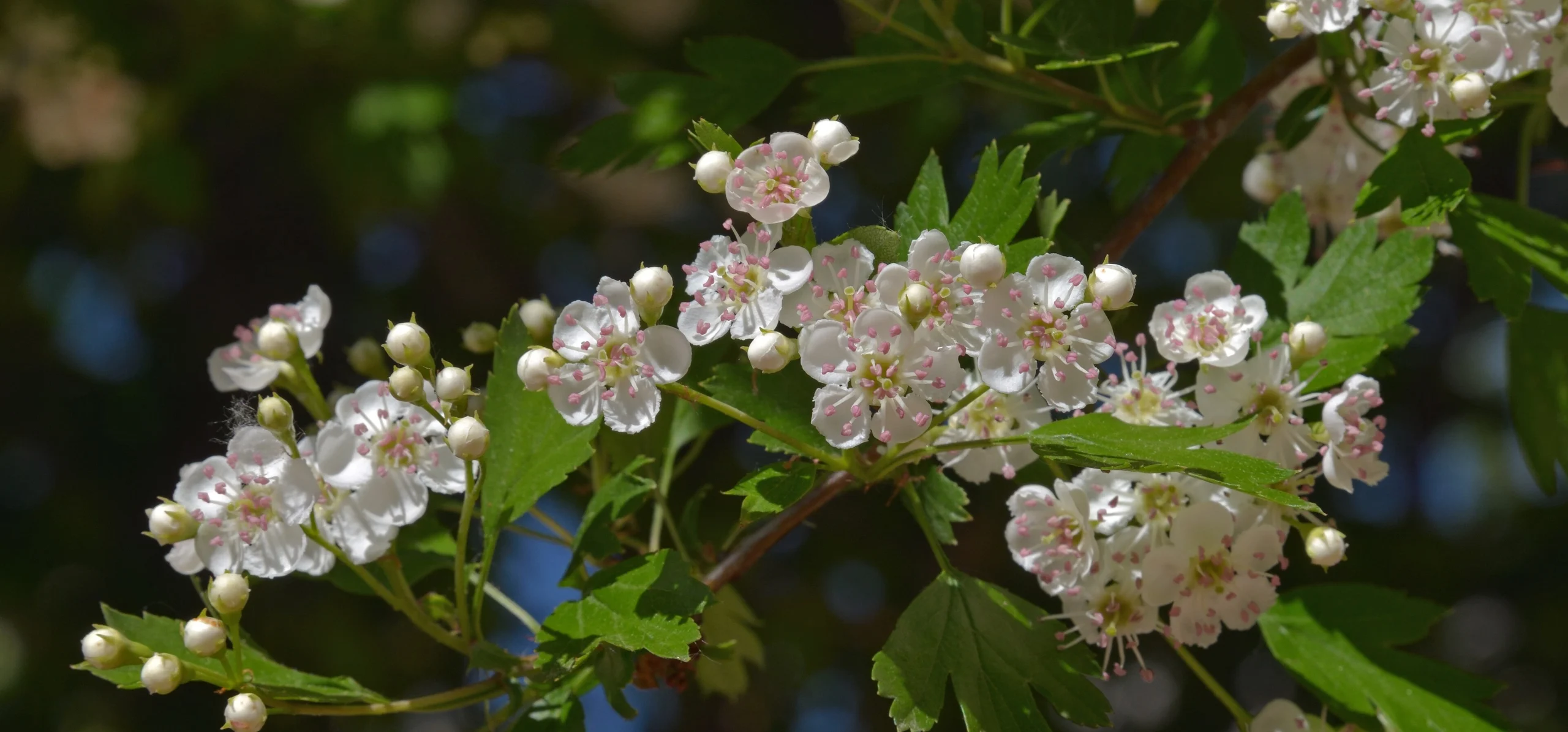
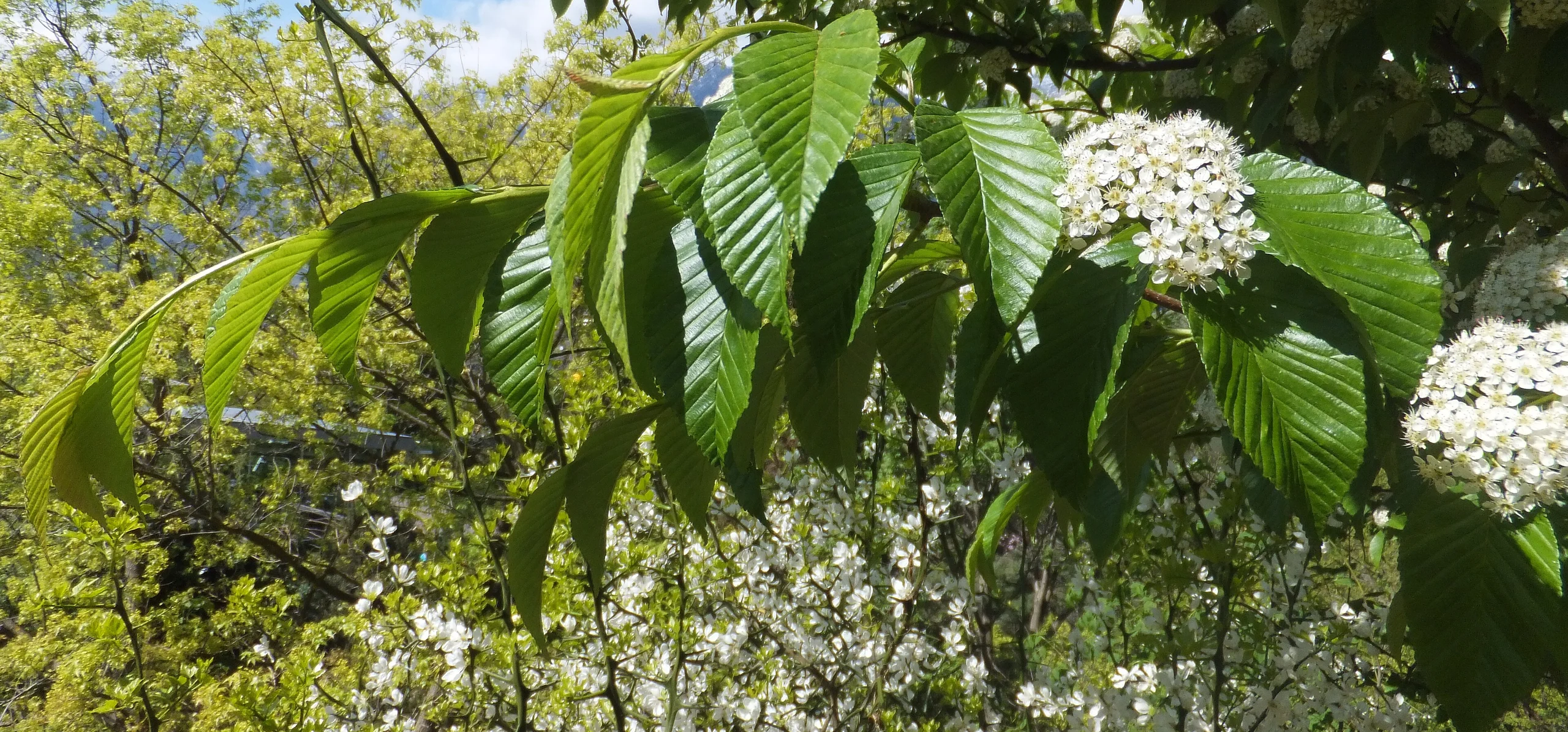
Young black cherry bark is smooth, reddish-brown to gray, marked with short horizontal lenticels; on a mature trunk it breaks up into small, dark, curling plates often described as looking burnt. Leaves run 7 to 15 cm long, elliptic to oblong-lanceolate, finely toothed with incurved teeth, glossy dark green above, and carry a line of fine hairs along the midrib on the underside that starts pale blond on young leaves and darkens to rust or black with age, a detail worth checking with a hand lens. Fragrant white flowers open in slender pendulous racemes in late April and May, followed by drooping clusters of cherries about 1 cm across that ripen from red to dark purple-black in late summer. Snap a twig or crush a leaf and the bitter-almond smell, from the same cyanogenic compounds that make the foliage dangerous, is a fast confirmation.
Black Cherry vs Chokecherry and Other Lookalikes
Prunus virginiana, chokecherry, is the most common mix-up: its leaves are broader with straight, not incurved, teeth, the underside hairs sit only in the pockets where side veins meet the midrib rather than running along it, and it stays a shrub or small tree instead of reaching full canopy height. Pin cherry, Prunus pensylvanica, has narrower, more finely toothed leaves and fruit in flat-topped clusters rather than racemes. None of this changes the toxicity picture, since chokecherry and pin cherry carry the same cyanogenic risk, but it matters for working out whether the tall tree at the fence line is worth managing as timber or worth removing.


Native Range and Why It Took Over European Forests
Black cherry is native to eastern North America, from Nova Scotia west into the Great Lakes and Minnesota, south through the eastern United States to central Florida and eastern Texas, with outlying populations in the southwestern states and a range continuing south through Mexico into Guatemala. It was introduced into Europe as an ornamental and forestry tree, and the same fast growth, heavy seed production and long-lived soil seed bank that make it easy to establish also let it escape into surrounding woodland. It now sits on national invasive species blacklists in France, Belgium, Germany, the Netherlands, Denmark, Sweden, Austria, Slovenia and Spain, among others, and forms dense, near-monoculture understories in parts of Western Europe that crowd out native tree regeneration, which is why removal is treated as a forest management priority rather than a garden chore in those countries.
Cyanide Toxicity: Why Wilted Leaves Kill Livestock
According to the ASPCA, black cherry is toxic to dogs, cats and horses: the stems, leaves and seeds contain cyanogenic glycosides, and the risk spikes specifically while leaves are wilting, whether from a broken branch, frost, drought stress or storm damage, because wilting speeds the release of free cyanide from the intact compound. Reported clinical signs include brick red mucous membranes, dilated pupils, difficulty breathing, panting and shock, and poisoning can progress fast enough to be fatal before a vet can intervene. The practical takeaway for anyone with grazing animals nearby is to clear fallen branches and storm-damaged limbs from pasture promptly rather than leaving wilted foliage within reach, and to fence mature trees out of paddocks where possible. Ripe fruit flesh is what is traditionally used for jams, jellies and wine; the seeds and any wilted leaf or bark material carry the same cyanide risk for people as for livestock and should not be eaten.
Pests and Diseases: Tent Caterpillars and Black Knot
The eastern tent caterpillar, Malacosoma americanum, treats black cherry as its preferred host, spinning silky tents in branch crotches each spring and defoliating twigs; it specifically seeks out the tree's young leaves, which carry the highest concentration of the cyanogenic precursor prunasin. Repeated defoliation weakens a tree without necessarily killing it. Black knot, caused by the fungus Apiosporina morbosa, is the more serious long-term threat: it produces hard, black, warty galls that girdle twigs and branches, and trees carrying multiple infections lose vigor, bloom poorly, and become more vulnerable to winter injury and secondary pathogens. Pruning out knots in winter, cutting well below the visible gall, is the standard control; leaving them in place lets the fungus keep spreading through the canopy.
Where and How It Grows
Within its native range, black cherry is hardy in USDA zones 2 to 8, grows fastest in full sun, and tolerates acid, neutral and alkaline soils as long as organic matter is decent; it prefers good drainage but adapts to both moist ground and occasionally dry sites once established. Mature trees typically reach 18 to 24 m tall with a 9 to 18 m spread, though exceptional forest-grown specimens exceed 30 m. It is not a tree for a small residential lot given that size, and given the poisoning risk it should never be planted where horses, cattle or other grazing animals have access to fallen or pruned branches.
Wood, Wildlife and the Fruit Itself
The hard, reddish-brown wood takes a fine polish and is one of the most commercially valuable North American hardwoods, used for furniture, cabinetry, veneer, gun stocks and musical instruments. Fall color turns yellow to orange. Fruit that is fully ripe, not picked underripe, feeds songbirds, wild turkeys, quail, white-tailed deer and small mammals, and the foliage serves as a larval host for several butterfly species. Native American communities historically used the inner bark medicinally, particularly for coughs, a use documented in extension literature though not a basis for any home remedy given the cyanogenic compounds present throughout the plant.
Common Mistakes
The most common error outside its native range is leaving a young black cherry to grow because it looks unremarkable, then losing control of a seed source that birds spread hundreds of meters into surrounding woodland within a few seasons. The second is assuming the fruit's edibility makes the whole plant safe, when the danger sits specifically in wilted leaves and seeds, not ripe flesh. The third is skipping cleanup after storms or pruning, leaving wilting branches within reach of livestock precisely when the cyanide risk is highest. The fourth is mistaking black knot galls for normal bark texture until the infection has already spread through several branches, at which point pruning has to be far more aggressive to catch up.
Test your plant knowledge
Tap a card to flip it and reveal the answer.
Black cherry is listed as invasive on national blacklists in several European countries. Tap to reveal ✓ True
Ripe black cherries are the most cyanide-dangerous part of the plant. Tap to reveal ✕ False
The eastern tent caterpillar's preferred host plant is black cherry. Tap to reveal ✓ True
Black cherry and chokecherry leaves are impossible to tell apart. Tap to reveal ✕ False
Black knot disease produces hard, black, warty galls that girdle twigs and branches. Tap to reveal ✓ True
Sources
References consulted for this guide
- GBIF: Prunus serotina Ehrh.gbif.org
- Plants of the World Online (Kew): Prunus serotinapowo.science.kew.org
- ASPCA: Toxic and Non-Toxic Plants, Black Cherryaspca.org
- USDA Plants Database: Prunus serotinaplants.usda.gov
- NC State Extension Gardener Plant Toolbox: Prunus serotinaplants.ces.ncsu.edu
- Reference entity : Wikipédiaen.wikipedia.org