Common Tansy
Tanacetum vulgare
Family · Asteraceae
Common tansy spreads fast by rhizome and self-seeds by the thousands: where to plant it, how to keep it contained, and why several US states ban it.
Tanacetum vulgare
Plant profile
- WateringLittleWater every 8 days
- Light exposurePartial sun
- Hardiness zoneUSDA 3–8
Growth
- Family
- Asteraceae
- Life cycle
- Perennial
- Growth speed
- 8/10
- Mature size
- 60–150 cm
- Spread
- 10–50 cm
- Flowering
- Midsummer into fall, mustard-yellow button flowerheads with no ray petals
- Propagation
- Seed
- Division
DormancyHerbaceous top growth dies back after frost; RHS recommends cutting old stems back in late autumn or early spring for fresh regrowth.
Time to maturity2 to 5 years to full size (RHS)
Soil & climate
- Soil types
- chalk, clay, loam, sand
- Drought tolerance
- Yes
Light & Placement
- Origin
- Temperate Eurasia, widely naturalized across North America
- Where to place it
- herb garden
- pollinator border
- contained bed with root barrier
- lean or gravel soil planting
- large bottomless container sunk into the ground to block rhizome spread
Safety
- Toxicity
- HumansToxic
Invasive speciesClassified as a noxious weed in several Midwestern US states; prohibited in Colorado, Minnesota, Montana, Wyoming, parts of Washington state, and the Canadian provinces of Alberta and British Columbia (NC State Extension, RHS).
Data fromGBIF: Tanacetum vulgare L.Plants of the World Online (Kew): TanaceRHS: Tanacetum vulgare (tansy)NC State Extension: Tanacetum vulgareASPCA: Toxic and Non-Toxic Plants, Ragwo
Where it grows
World distribution
Common Tansy is native to 33 countries: Albania, Austria, Belarus, Belgium, Bulgaria, China, Croatia, and Czechia….GBIF records 700,802 documented identifications across 86 countries, with the largest concentrations in Sweden, Netherlands, and Germany.
- Albania
- Austria
- Belarus
- Belgium
- Bulgaria
- China
- Croatia
- Czechia
- Denmark
- Estonia
- Finland
- France
Show 21 more countriesShow fewer countries
- Georgia
- Germany
- Greece
- Hungary
- Italy
- Japan
- Kazakhstan
- Kyrgyzstan
- Mongolia
- Netherlands
- Norway
- Poland
- Romania
- Russia
- South Korea
- Spain
- Sweden
- Switzerland
- Türkiye
- Ukraine
- United Kingdom
Yellow to orange dots: concentration of documented identifications per country. Green countries: sourced native range. Source: GBIFNative range from POWO (Kew).
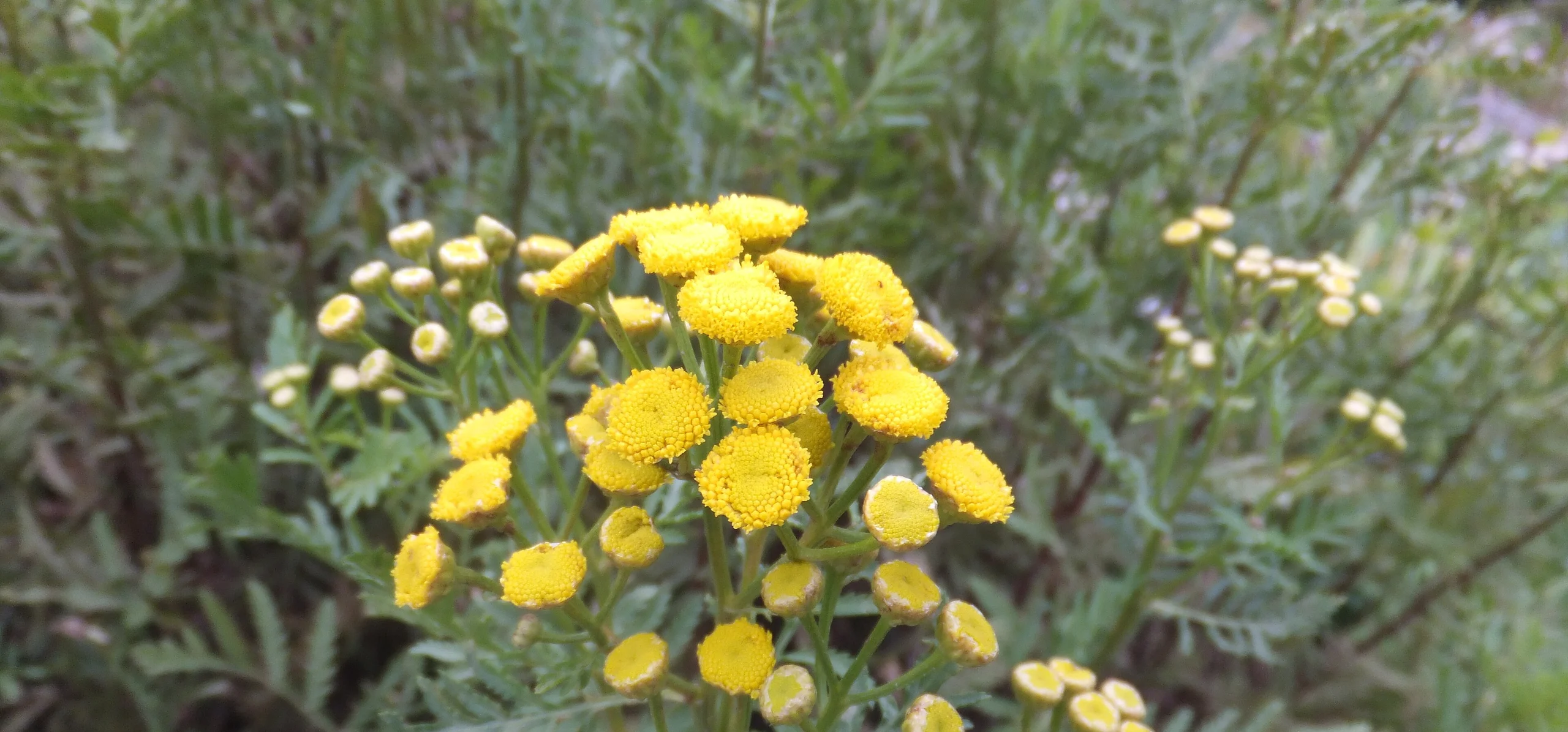
A pot of common tansy (Tanacetum vulgare) looks tidy on the nursery bench: ferny, deeply cut foliage and clusters of small, button-shaped yellow flowerheads with no petals, blooming from midsummer into fall. In the ground it behaves differently. The Royal Horticultural Society rates it hardy to H7, tolerant of chalk, clay, loam or sand at almost any pH, and it spreads by rhizome as readily as it self-seeds, which is why NC State Extension lists it as a noxious weed across several US states and why Colorado, Minnesota, Montana, Wyoming and parts of Washington prohibit growing it outright. Buy it for a herb bed or a pollinator patch and plan for containment from day one, not as an afterthought once it has already reached the fence line.
Origin and Naturalized Range
Plants of the World Online lists the native range of Tanacetum vulgare as temperate Eurasia. NC State Extension's plant toolbox traces that range across Britain, France, Germany, Italy, Russia and Siberia, and GBIF records the accepted name as Tanacetum vulgare L., in the family Asteraceae and order Asterales. The species crossed the Atlantic early: NC State Extension credits the Pilgrims with bringing tansy seed to North America, where it was grown as a medicinal herb for complaints ranging from intestinal worms to jaundice before naturalizing so completely along roadsides, riverbanks and disturbed ground that many gardeners now meet it as a volunteer rather than something they planted.
Recognizing Tansy in the Garden
The foliage is the fastest way to place it: RHS describes pinnate, deeply divided, aromatic leaves reaching about 10 cm long, while NC State Extension records leaflets up to 12 inches long on vigorous stands, all carrying a sharp, camphor-like scent when crushed. Flowerheads open as flat-topped clusters of mustard-yellow buttons, which RHS calls pincushion-like, with no ray petals at all. That detail separates tansy at a glance from feverfew, chamomile or the daisy-type Tanacetum cultivars sold as garden ornamentals: those all carry white ray petals around a yellow center, tansy carries none.


Site, Soil and Light
RHS growing notes call for full sun and accept exposed or sheltered positions on a south, west or east aspect; NC State Extension adds that partial shade of two to six hours a day is tolerated too, with fuller flowering in more light. Soil is close to a non-issue: RHS lists chalk, clay, loam and sand as all workable, at acid, neutral or alkaline pH, and NC State Extension confirms the same spread from below pH 6 to above pH 8. The one real requirement is drainage. NC State Extension notes both good drainage and consistently moist soil are tolerated, but rhizomes run fastest through humus-rich, evenly moist ground, so a lean, dry corner is actually the safer choice for a gardener who wants less spread rather than more.
Sowing and Establishing
Seed is the propagation method RHS lists first, alongside division, which NC State Extension also names as reliable for an established clump. RHS growing notes recommend sowing under glass from February to April or July to August, or direct sowing outdoors from May to June once soil has warmed and frost risk has passed, covering the fine seed only lightly since it needs little more than a dusting of compost to germinate. Keep new sowings evenly moist, not soggy, and give seedlings full light so they do not stretch; RHS notes plants take two to five years to reach full size. Space plants roughly 30 cm (12 in) apart per RHS, though NC State Extension's wider 12 inch to 3 foot spacing range reflects how quickly a stand fills in once the rhizomes take hold.
Rhizome Spread and Legal Restrictions
This is the section that matters most for anyone planting tansy outside a contained bed. NC State Extension describes a stand producing roughly 50,000 seeds a year on top of an aggressive creeping rhizome system, spreading by seed, rhizome and any root fragment left behind after a half-hearted removal attempt. That combination is why tansy carries noxious weed status across multiple Midwestern states and why growing it is legally prohibited in Colorado, Minnesota, Montana and Wyoming, plus parts of Washington state and the Canadian provinces of Alberta and British Columbia. A gardener in an unrestricted area who still wants it in a border rather than a meadow should plant it inside a buried root barrier or a large bottomless container sunk into the ground, and should never add spent flowerheads to an open compost pile.
Cutting Back and Deadheading
RHS lists tansy as needing no formal pruning, but deadheading is the maintenance job actually worth doing. Removing flowerheads as they fade keeps a planting tidy and, more importantly, is the main tool for limiting the self-seeding NC State Extension flags as a problem: every head left to dry and shatter adds to next year's seedling flush. RHS also recommends cutting old stems back hard in late autumn or early spring to clear the way for fresh growth. Both sources report it as essentially pest and disease free; NC State Extension flags spider mites as an occasional, minor issue and southern blight as a possible but uncommon disease, while deer and drought both leave it alone.
Toxicity, Handling and the Ragwort Mix-Up
Tansy's oil concentrates thujone, and NC State Extension classifies it as a high-severity poison to humans, capable of being fatal in large quantities, with documented toxicity to horses and cattle as well, though sheep and goats tolerate it well enough to be used for weed-control grazing. Handling the fresh foliage can also trigger contact dermatitis in sensitive people. The ASPCA's toxic and non-toxic plant database has no entry for Tanacetum vulgare by that name; searching it instead turns up a different plant, Senecio species, listed under the common name Ragwort with Tansy given as an alternate name. That is a separate genus entirely, sometimes called tansy ragwort, and its ASPCA toxicity listing should not be read as covering this species. Given the documented risk to humans and grazing animals in the plant's own literature, keep it out of reach of pets and livestock regardless of what any single database does or does not list.
Test your plant knowledge
Tap a card to flip it and reveal the answer.
Common tansy's yellow flowerheads have ray petals like a daisy. Tap to reveal ✕ False
Tansy is illegal to plant in some US states. Tap to reveal ✓ True
The ASPCA lists Tanacetum vulgare by name as toxic to cats and dogs. Tap to reveal ✕ False
Tansy spreads mainly by underground rhizomes as well as by self-seeding. Tap to reveal ✓ True
Tansy needs consistently rich, well-fed soil to grow well. Tap to reveal ✕ False
Sources
References consulted for this guide
- GBIF: Tanacetum vulgare L.gbif.org
- Plants of the World Online (Kew): Tanacetum vulgare L.powo.science.kew.org
- RHS: Tanacetum vulgare (tansy)rhs.org.uk
- NC State Extension: Tanacetum vulgareplants.ces.ncsu.edu
- ASPCA: Toxic and Non-Toxic Plants, Ragwortaspca.org
- Reference entity : Wikipédiaen.wikipedia.org