Star Jasmine
Trachelospermum jasminoides
Family · Apocynaceae
Trachelospermum jasminoides is not a true jasmine and needs a sheltered spot below about -10°C. Siting, pruning, winter care and the sap's irritant risk.
Trachelospermum jasminoides
Plant profile
- WateringModerateWater every 7 days
- Light exposurePartial sun
- Hardiness zoneUSDA 8–10
Growth
- Family
- Apocynaceae
- Life cycle
- Perennial
- Growth speed
- 6/10
- Mature size
- 300–600 cm
- Flowering
- Fragrant white pinwheel flowers, late spring into summer
- Propagation
- Cutting
- Layering
Dormancyevergreen; foliage may bronze or redden in cold weather
Time to maturityslow first season or two while roots establish, then vigorous
Soil & climate
- Soil types
- loam, well-drained
- Drought tolerance
- No
Light & Placement
- Origin
- W. Central and southern Japan to Vietnam (POWO)
- Where to place it
- unheated, frost-free conservatory or porch for containers over winter
- sheltered south- or west-facing wall
- trellis or wires
- pergola
- bank or slope as groundcover
- large pot with a trellis or obelisk, moved to shelter in hard frost
Safety
- Toxicity
- CatsSafe
- DogsSafe
- HorsesSafe
Invasive speciesNaturalized in parts of the southeastern United States (Alabama, Arkansas, Florida) per POWO's distribution data, but not listed as invasive by the RHS, Missouri Botanical Garden or NC State Extension.
Data fromGBIF Backbone Taxonomy: Trachelospermum Plants of the World Online (Kew): TracheRHS: Trachelospermum jasminoides (star jMissouri Botanical Garden Plant Finder: ASPCA: Toxic and Non-Toxic Plants, Star
Where it grows
World distribution
Star Jasmine is native to 5 countries: China, Japan, South Korea, Taiwan, and Vietnam.GBIF records 5,689 documented identifications across 55 countries, with the largest concentrations in China, United States, and Taiwan.
- China
- Japan
- South Korea
- Taiwan
- Vietnam
Yellow to orange dots: concentration of documented identifications per country. Green countries: sourced native range. Source: GBIFNative range from POWO (Kew).
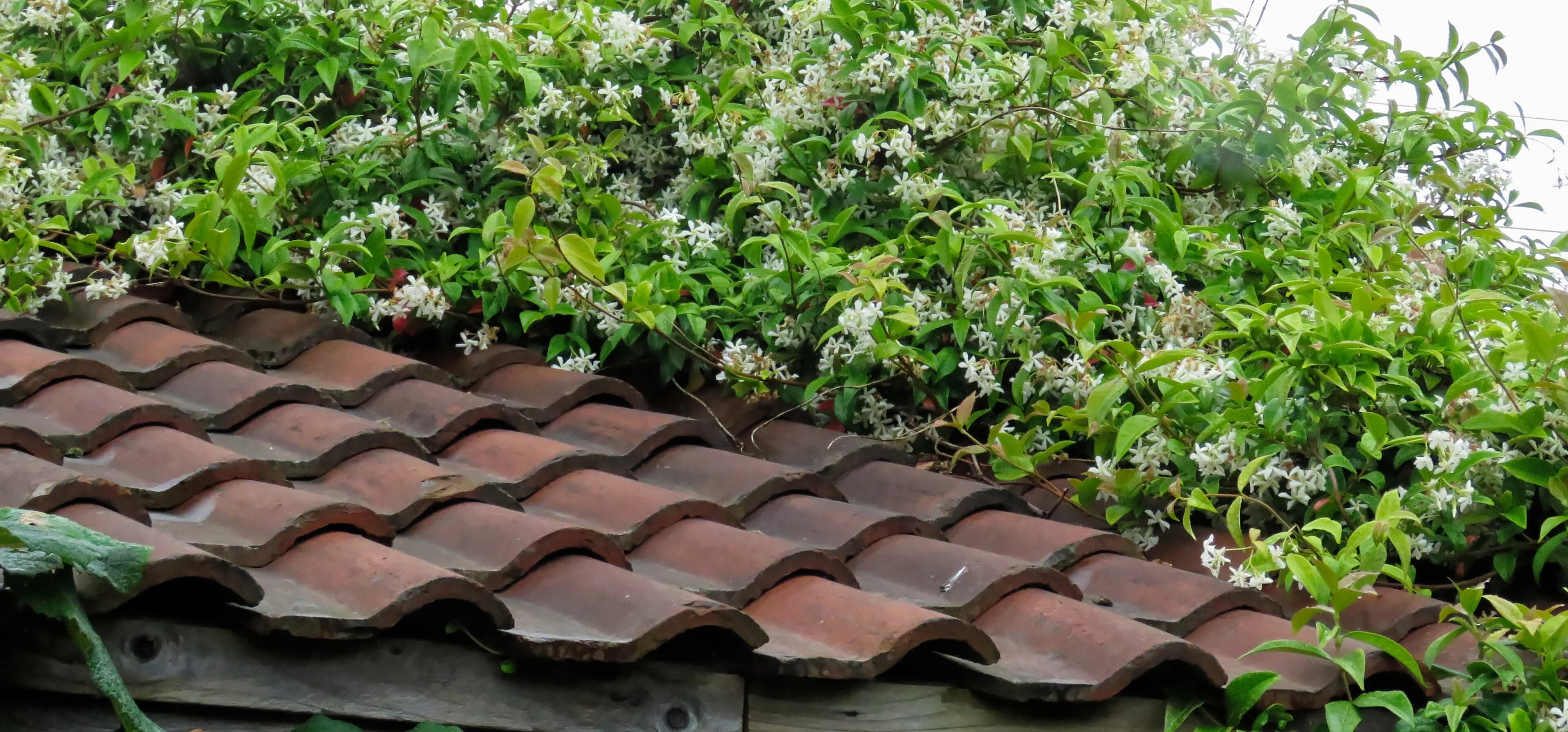
The plant sold everywhere as star jasmine is not related to the true jasmines at all: it belongs to the dogbane family, not the olive family that gives us Jasminum. What you actually have is a twining evergreen climber that stays slow and unremarkable for its first year while roots establish, then puts on real growth once it has found something to wrap around. The pinwheel-shaped white flowers and their heavy sweet scent arrive from year two onward, usually late spring into summer. Give it a warm, sheltered spot and something to climb, and the slow start is the only patience it asks for.
Not Actually a Jasmine
Trachelospermum jasminoides sits in the family Apocynaceae, the dogbane family that also contains oleander, one of its own historic synonyms was even published as Nerium divaricatum. True jasmines, the genus Jasminum, belong to the olive family, Oleaceae, an entirely different lineage that only converges with this plant on flower shape and fragrance. The resemblance is strong enough that garden centers rarely bother with the distinction, and the common names, star jasmine, Confederate jasmine, Chinese star-jessamine, all lean on it. Plants of the World Online lists the species as native from west-central and southern Japan through China, Korea and Taiwan to Vietnam, and it has since naturalized in parts of the southeastern United States, including Alabama, Arkansas and Florida.
Siting It on a Wall or Trellis
The RHS gives it a hardiness rating of H4, meaning it copes with winter minimums down to around -10°C to -5°C where it is against a warm, sheltered wall rather than standing in the open. A south- or west-facing wall with wires or a trellis to twine around suits it well; it will not cling on its own the way ivy does, so the support has to be there before the vine needs it. Full sun brings the heaviest flowering, but the RHS notes it also tolerates part shade, at the cost of a thinner, less floriferous plant. Wind and waterlogged ground are the two conditions it dislikes most, so an open, exposed corner is the wrong spot even where winters are mild enough otherwise.
Getting It Established
Missouri Botanical Garden describes it as a woody evergreen perennial that can eventually reach up to about 20 feet where it is happy, but that height comes after a slow first season or two spent building roots rather than top growth. Tie young growth loosely to its support every few weeks through the first spring and summer; once several stems have found the wires, the plant starts covering ground and height noticeably faster on its own, and by the second or third season a well-sited vine no longer needs much help finding its way. Resist the urge to judge it by year one.


Watering, Soil and Feeding
Fertile, free-draining soil is what both the RHS and Missouri Botanical Garden point to, evenly moist loam rather than anything that sits wet after rain. The plant is not drought-tolerant despite its glossy, almost leathery leaves: the RHS specifically warns against letting it dry out in summer, particularly in a pot or against a wall where rain rarely reaches the roots. A layer of mulch in spring helps even out soil moisture, and a balanced liquid feed through the growing season keeps a young plant filling out its support without pushing so much soft growth that it becomes vulnerable to the first cold snap.
Pruning After Flowering
Prune once flowering finishes, cutting wayward or overcrowded stems back into shape and thinning congested growth so light reaches the center of the plant. Pruning any earlier removes the wood that was about to flower; pruning much later starts cutting into the new growth that would have flowered the following year. The cut stems weep the same milky, sticky sap described below, so clean secateurs afterward rather than moving straight on to another plant with the blade still coated.
Winter Cold, Bronzed and Yellow Leaves
Where winter temperatures approach the lower end of that H4 range, the evergreen foliage often turns bronze or purplish-red rather than dropping, a normal cold response rather than a sign of dieback; it greens up again as temperatures rise in spring. Yellowing leaves are a different problem and usually point to one of two causes: a hard, prolonged cold spell stressing an unprotected plant, or waterlogged soil suffocating the roots after a wet winter. Checking drainage before assuming the plant is simply struggling with cold saves a lot of unnecessary replanting.
Groundcover and Pot Growing
Missouri Botanical Garden notes that where it is reliably hardy, star jasmine is grown as often as a sprawling groundcover or bank cover as it is trained upright, left to spread and root where stems touch soil rather than tied to a support. In a large pot with a trellis or obelisk it works equally well on a patio, though containers dry out faster than a border and need closer attention to watering through summer; in areas where winter falls outside its hardiness range, a potted plant can be moved to an unheated, frost-free conservatory or porch for the coldest months rather than left to face the open ground.
Sap, Pests and Toxicity
Every cut stem or torn leaf releases a milky sap that the RHS lists as an irritant to skin and eyes, worth remembering when pruning or when children are likely to snap stems while playing near it. Set against that, the ASPCA lists star jasmine as non-toxic to cats, dogs and horses, a distinction worth keeping straight: the sap can irritate on contact, but the plant is not on the ASPCA's list of species toxic if chewed or eaten. In hot, sheltered spots the RHS also flags scale insects, sometimes heavy enough to leave foliage covered in sooty mould, as the main pest to watch; mealybugs turn up in the same warm, still conditions. Both are treatable with insecticidal soap or a systemic spray once spotted, and neither tends to trouble a plant grown with reasonable air movement around it.
Test your plant knowledge
Tap a card to flip it and reveal the answer.
Star jasmine is a true jasmine in the genus Jasminum. Tap to reveal ✕ False
The milky sap released when a stem is cut can irritate skin and eyes. Tap to reveal ✓ True
The ASPCA lists star jasmine as non-toxic to cats, dogs and horses. Tap to reveal ✓ True
Star jasmine typically climbs fast and covers its support in its first year. Tap to reveal ✕ False
Bronze or reddish winter foliage on a sheltered wall always means the plant is dying. Tap to reveal ✕ False
Sources
References consulted for this guide
- GBIF Backbone Taxonomy: Trachelospermum jasminoides (Lindl.) Lem.gbif.org
- Plants of the World Online (Kew): Trachelospermum jasminoides (Lindl.) Lem.powo.science.kew.org
- RHS: Trachelospermum jasminoides (star jasmine)rhs.org.uk
- Missouri Botanical Garden Plant Finder: Trachelospermum jasminoidesmissouribotanicalgarden.org
- ASPCA: Toxic and Non-Toxic Plants, Star Jasmineaspca.org
- Reference entity : Wikipédiaen.wikipedia.org