Coontie
Zamia pumila
Family · Zamiaceae
Zamia pumila (coontie) is a slow cycad with an underground caudex: drought tolerance, sun-to-shade flexibility, and why nurseries sell it as Zamia integrifolia.
Zamia pumila
Plant profile
- WateringLittleWater every 14 days
- Light exposureIndirect light
- Hardiness zoneUSDA 8–11
Growth
- Family
- Zamiaceae
- Life cycle
- Perennial
- Growth speed
- 1/10
- Mature size
- 30–90 cm
- Spread
- 90–150 cm
- Propagation
- Seed
- Offsets
FloweringNo flowers; separate male and female cones on mature plants, pollinated cones bear orange-red seeds
DormancyNo true dormancy in warm climates; growth pauses between leaf flushes and slows further in cool, dry winters
Time to maturityRated a slow grower with low maintenance needs (NC State Extension); adds leaves in occasional flushes rather than steadily
Soil & climate
- Soil pH
- pH 5–8.5
- Drought tolerance
- Yes
Soil typesSandy, fast-draining soil, Cactus or palm potting mix, or potting soil cut with coarse sand or perlite
Light & Placement
- Where to place it
- Bright east- or west-facing window
- A few feet back from a south-facing window in filtered light
- Full sun for the most compact growth
- Shaded understory beneath open pine or oak canopy
- Small to medium pot with excellent drainage
- Cactus or palm potting mix
OriginGreater Antilles in the strict POWO sense; the Florida coontie usually sold under this name is the related Zamia integrifolia, native from SE Georgia to Florida, the Bahamas, Cuba and the Cayman Islands
Safety
- Toxicity
- CatsToxic
- DogsToxic
- HorsesToxic
Data fromZamia pumila L., GBIF Backbone TaxonomyZamia pumila L. | Plants of the World OnCoontie Palm, Toxic and Non-Toxic PlantsZamia integrifolia (Coontie, Florida ArrCycad scale: a threat to wild and cultiv
Where it grows
World distribution
Coontie is native to 4 countries: Cuba, Dominican Republic, Jamaica, and Puerto Rico.GBIF records 855 documented identifications across 26 countries, with the largest concentrations in United States, Dominican Republic, and Puerto Rico.
- Cuba
- Dominican Republic
- Jamaica
- Puerto Rico
Yellow to orange dots: concentration of documented identifications per country. Green countries: sourced native range. Source: GBIFNative range from POWO (Kew).
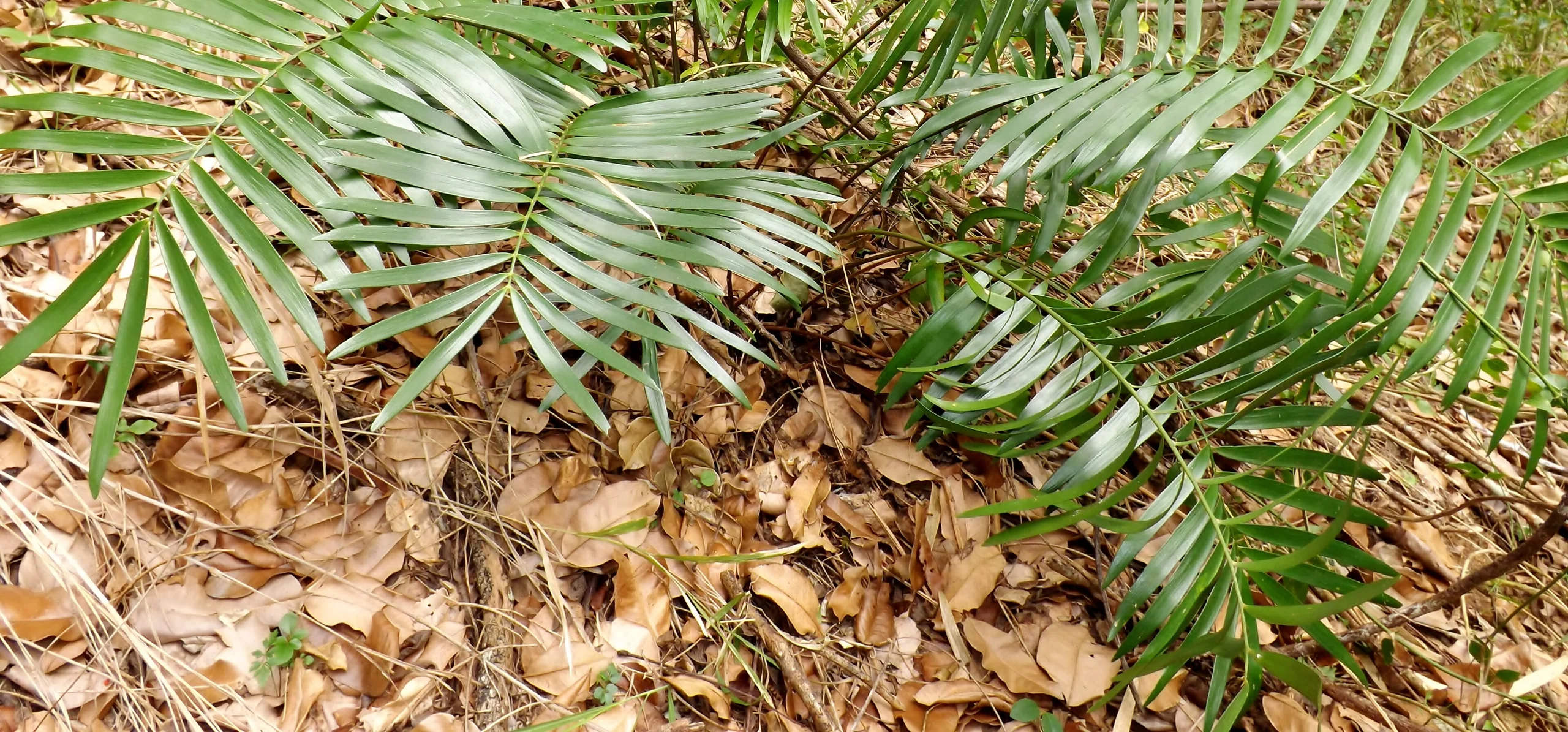
A coontie in a nursery pot looks unassuming: a low rosette of stiff, glossy, feather-like leaflets rising straight from the soil with no visible trunk. That absence of a trunk is normal, not a sign of a sick plant. Zamia pumila is a cycad, an ancient seed plant lineage that predates flowering plants, and its short, thick stem, called a caudex, sits mostly or entirely underground. Everything about growing it follows from that fact: it stores water and starch in the caudex, pushes out new leaves in rare, all-at-once flushes, and shrugs off drought, poor sandy soil and long stretches of neglect that would kill a true fern or palm.
A cycad, not a fern or palm
The compound, pinnate leaves invite comparison to ferns, and the common names Florida arrowroot and coontie palm invite comparison to palms, but GBIF's accepted classification places this species in the family Zamiaceae, order Cycadales, class Cycadopsida: a lineage of gymnosperms that reproduces by cones rather than flowers or spores. Male and female cones grow on separate plants, an arrangement called dioecious, and a pollinated female cone produces bright orange-red seeds with a fleshy outer coat. None of that reproductive machinery has anything to do with ferns, which spread by spores, or with true palms, which are flowering monocots in an unrelated family.
Coontie or Zamia integrifolia: a naming tangle
The taxonomy here has been argued over for a long time. GBIF's backbone, the accepted reference this guide follows for the name Zamia pumila, folds several historical Florida names, including Zamia allison-armourii and Zamia debilis, into one broadly defined species. Kew's Plants of the World Online takes the opposite approach: it restricts Zamia pumila in the strict sense to the Greater Antilles (Cuba, Hispaniola, Jamaica and Puerto Rico) and treats the plant native to southeastern Georgia, Florida, the Bahamas, Cuba and the Cayman Islands as a separate species, Zamia integrifolia. In practice, nearly every coontie sold in Florida nurseries and planted along Florida roadsides is what Kew calls Zamia integrifolia, even though older USDA references and much of the trade still label the same plant Zamia pumila. The two are grown identically, so the dispute changes which Latin name ends up on the tag, not how the plant is cared for.
Florida native and an endangered butterfly's only host
Under either name, this is Florida's only native cycad, a low understory shrub of pine rockland, scrub and coastal hammock from the panhandle south through the Keys. It is also the sole larval host plant of the atala butterfly (Eumaeus atala), thought extinct in Florida from 1937 to 1959 after coontie was stripped from the wild for starch production and later for landscaping. Atala caterpillars eat coontie foliage and sequester the plant's own cycasin toxin in their bodies, which is why the adult butterflies carry warning colors and why the atala's slow recovery has tracked the return of coontie to South Florida gardens. A coontie hosting a cluster of bright red-and-black caterpillars that strip a few fronds bare is not a pest problem: the plant recovers, and removing the caterpillars removes the butterfly.

Light: from full sun to deep shade
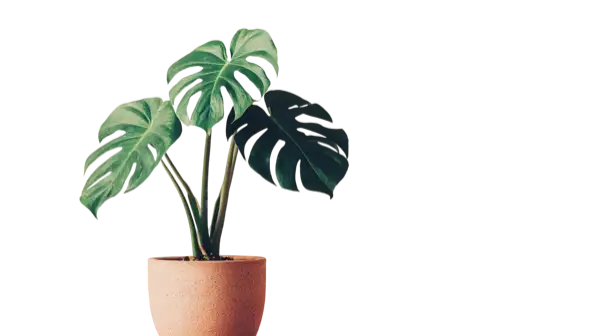
Few landscape plants tolerate as wide a light range. Coontie grows fastest and holds the most compact, upright rosette in full sun, but it performs almost as well tucked under oak or pine canopy in fairly deep shade, which is close to the pine-rockland understory it evolved in. Indoors, that translates into real flexibility: a bright east or west window works, and so does a spot several feet back from a south window that only ever gets filtered light. The visible difference between a sun-grown and shade-grown plant is leaflet spacing and color, not survival; shaded plants carry slightly darker, more widely spaced leaflets on longer leaves reaching for the light.
Watering, soil and drought tolerance
The caudex is a water and starch reservoir built for the sandy, fast-draining, nutrient-poor soils of Florida scrub, and the plant is genuinely drought tolerant once established. It grows in sand in the wild and needs the same in a pot: a cactus or palm mix, or ordinary potting soil cut generously with coarse sand or perlite, in a container that never sits in standing water. Let the top several centimetres of soil dry before watering again, and water less in winter, when growth stalls, than during a warm-season flush. Overwatering in a slow-draining mix is a far more common way to lose a coontie than underwatering ever is.
Growth rate and the caudex
Patience is not optional with this species. Extension references rate its growth as slow and its maintenance as low, and a coontie can sit at the same size for a stretch, then push out a whole ring of new leaflets over a couple of weeks before pausing again. The caudex thickens gradually at or below soil level rather than rising into a visible trunk the way it does in some other cycads, so even a mature specimen reads as a low, dense clump rather than a small tree. Resist the urge to feed heavily to speed things along; a light, balanced fertiliser during an active flush is enough, and heavy feeding does not shorten the long pauses in between.
Propagation: seed versus offsets
Coontie propagates two ways, and they behave differently. Seed requires a pollinated female cone, seeds with the fleshy orange sarcotesta cleaned off before sowing, since that pulp invites mould and slows germination, and then a long, unhurried wait, because cycad seed germinates slowly and somewhat unevenly. Offsets, sometimes called pups, are small, independently rooted clumps that many mature plants throw from the base of the caudex; separating a well-rooted offset with a clean cut and potting it on its own is a faster, more reliable route to a new plant than seed, since it skips the germination bottleneck and starts from a clump that is already established.
Pests: scale insects
Scale insects are the main recurring problem on this species, and one is worth knowing by name. Cycad aulacaspis scale (Aulacaspis yasumatsui), first found in the Miami area in 1996, spread rapidly through Florida because it arrived without any of its natural predators, and it can kill even large, established cycads when an infestation on the undersides of the leaflets goes unnoticed. Extension guidance calls for horticultural oil at the first sign of the small white, waxy scale covers, since populations caught early are far easier to knock back than an infestation that has already coated the foliage. Ordinary soft scale and mealybugs also turn up on coontie but are considerably less destructive.
Toxicity and pet safety
The ASPCA lists this species, under the name Coontie Palm and the scientific name Zamia pumila, as toxic to cats, dogs and horses, with cycasin as the primary toxic principle alongside BMAA and an unidentified neurotoxin implicated in cattle poisoning. As few as one or two seeds can be fatal, and signs of ingestion include vomiting that may contain blood, dark or bloody stool, jaundice, increased thirst, bruising and liver failure. The seeds carry the most concentrated dose, but the ASPCA listing covers the whole plant, so a coontie within reach of a curious dog or cat, or planted where fallen seed collects, deserves the same caution as any other cycad in the household.
Test your plant knowledge
Tap a card to flip it and reveal the answer.
Zamia pumila is a fern. Tap to reveal ✕ False
The coontie most Florida nurseries sell is usually classified by Kew's Plants of the World Online as the separate species Zamia integrifolia, not Zamia pumila in the strict sense. Tap to reveal ✓ True
Coontie is the only known larval host plant of the atala butterfly. Tap to reveal ✓ True
Coontie's underground caudex lets it tolerate long droughts in sandy soil. Tap to reveal ✓ True
The ASPCA lists coontie as safe for cats and dogs to chew on. Tap to reveal ✕ False
Sources
References consulted for this guide
- Zamia pumila L., GBIF Backbone Taxonomygbif.org
- Zamia pumila L. | Plants of the World Online, Kew Sciencepowo.science.kew.org
- Coontie Palm, Toxic and Non-Toxic Plants, ASPCA Animal Poison Controlaspca.org
- Zamia integrifolia (Coontie, Florida Arrowroot), NC State Extension Gardener Plant Toolboxplants.ces.ncsu.edu
- Cycad scale: a threat to wild and cultivated cycads, UF/IFAS Pest Alertblogs.ifas.ufl.edu
- Reference entity : Wikipédiaen.wikipedia.org