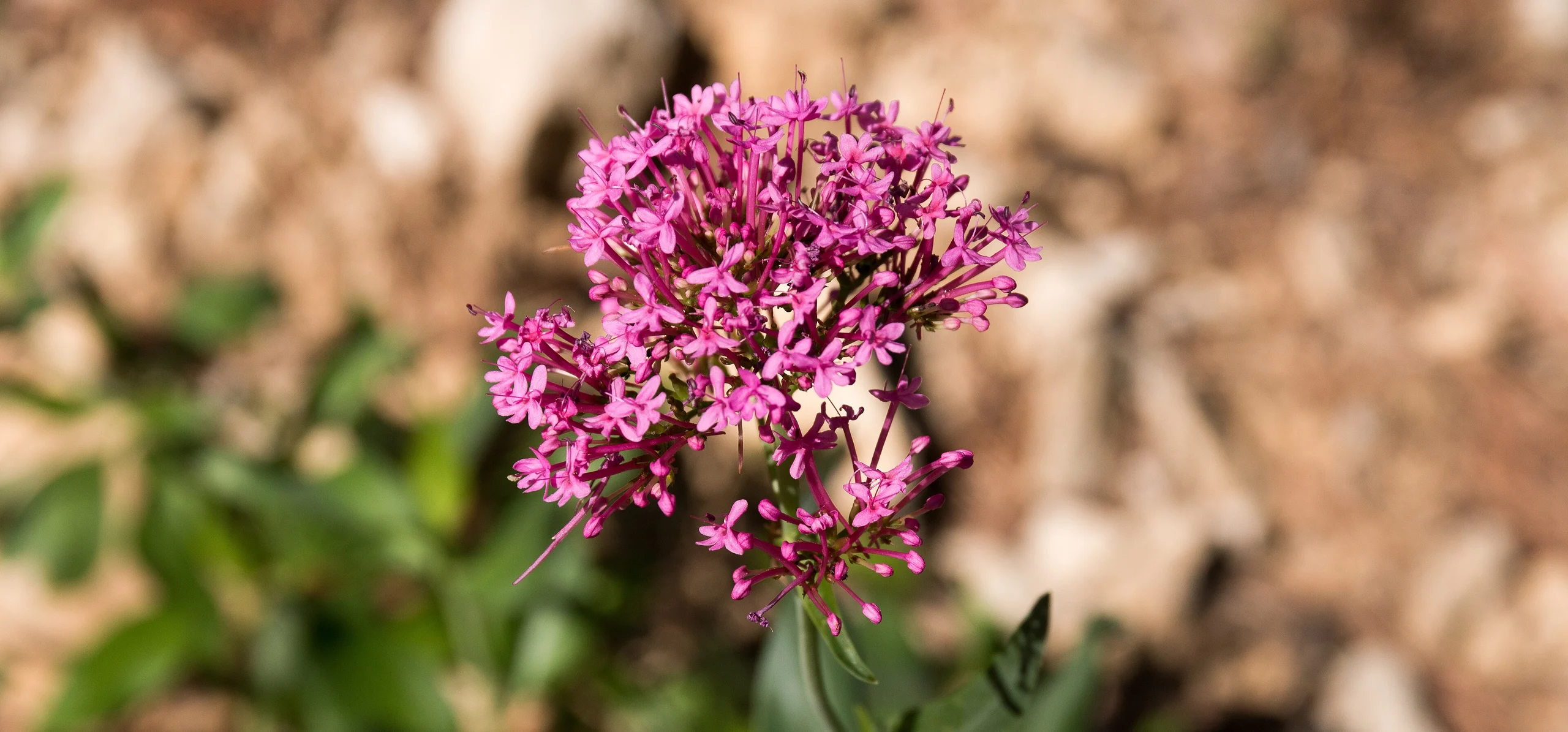
Red Valerian
Centranthus ruber
Family · Caprifoliaceae
Red valerian self-seeds into walls and gravel, blooms crimson through summer in poor chalky soil, and needs deadheading or a July cut-back to stay in bounds.
Centranthus ruber
Plant profile
- WateringLittleWater every 14 days
- Light exposurePartial sun
- Hardiness zoneUSDA 5–8
Growth
- Family
- Caprifoliaceae
- Life cycle
- Perennial
- Mature size
- 45–91 cm
- Spread
- 30–61 cm
- Flowering
- Late spring through autumn, starting around May
- Propagation
- Seed
Dormancysemi-evergreen; grey-green foliage persists through mild winters
Soil & climate
- Soil pH
- pH 7.1–8
- Soil types
- chalk, loam, sand
- Drought tolerance
- Yes
Light & Placement
- Where to place it
- stone wall crevice
- gravel garden
- chalky bank
- dry raised bed
- coastal garden
- large container with a gritty, free-draining compost
OriginAzores, southern Europe and northwestern Africa; naturalized on walls and roadsides in the western United States
Safety
- Toxicity
- Not listed by the ASPCA toxic or non-toxic plant database
Invasive speciesself-seeds freely into walls, gravel and disturbed ground; naturalized and locally invasive along the west coast of the United States; deadhead before seed forms to control spread
Data fromCentranthus ruber (L.) DC., GBIF BackbonPOWO: Centranthus ruber (L.) DC.RHS: Centranthus ruber (red valerian)Missouri Botanical Garden Plant Finder: NC State Extension Gardener Plant Toolbo
Where it grows
World distribution
Red Valerian is native to 11 countries: Albania, Algeria, Croatia, France, Greece, Italy, Morocco, and Portugal….GBIF records 151,372 documented identifications across 78 countries, with the largest concentrations in United Kingdom, France, and Belgium.
- Albania
- Algeria
- Croatia
- France
- Greece
- Italy
- Morocco
- Portugal
- Spain
- Tunisia
- Türkiye
Yellow to orange dots: concentration of documented identifications per country. Green countries: sourced native range. Source: GBIFNative range from POWO (Kew).
A Mediterranean Wall Plant, Not the Medicinal Valerian
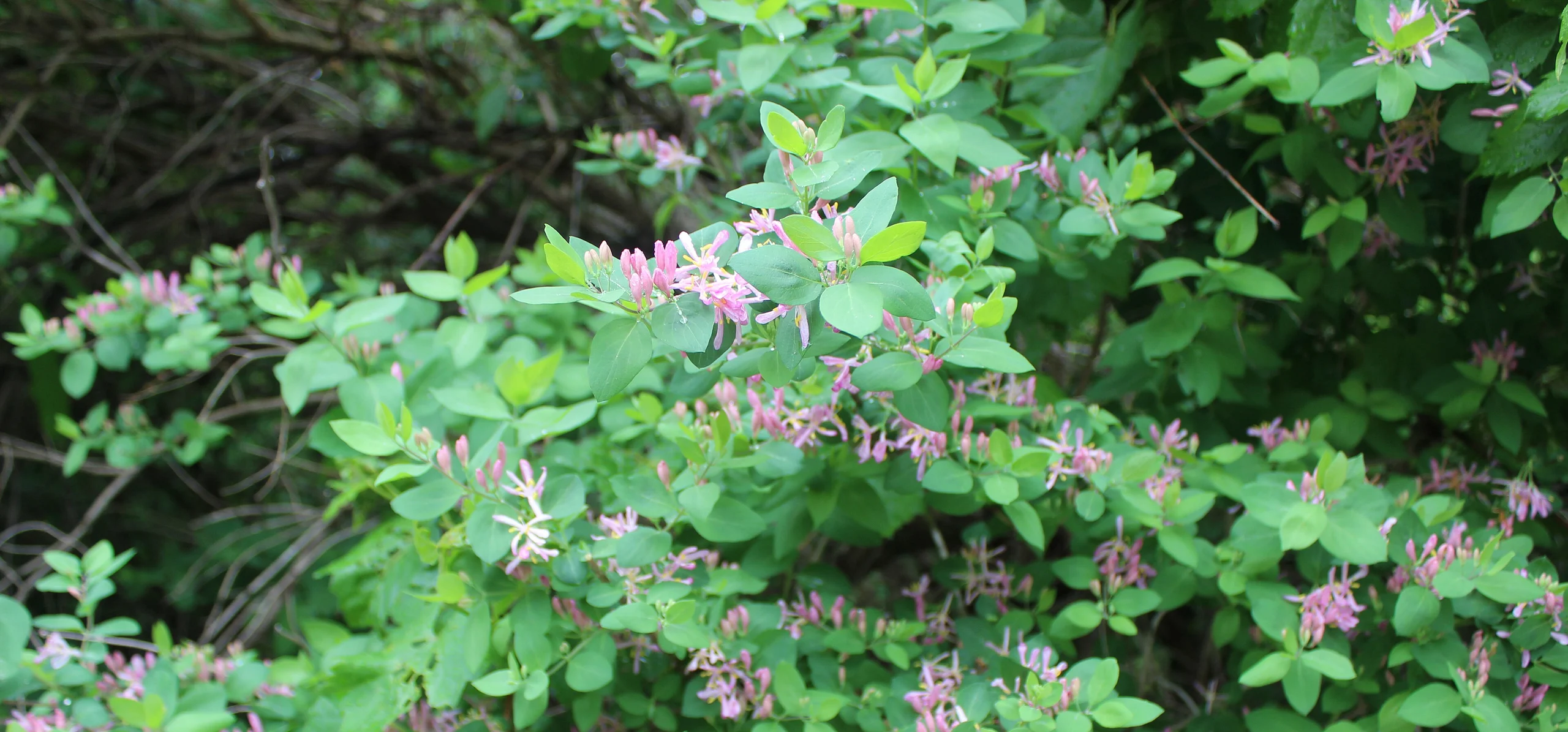
Centranthus ruber, red valerian, is a woody-based perennial in the honeysuckle family (Caprifoliaceae), native to the Azores, southern Europe and northwestern Africa, where it roots into cliff faces and old stone rubble rather than open ground. Fleshy, grey-green, semi-evergreen leaves clasp upright to relaxed stems that rise 45 to 91 cm, spreading loosely to about 30 to 61 cm, and from around May into autumn each stem carries a dense, rounded head of small, fragrant, star-shaped flowers in crimson, pink or white. The genus name comes from the Greek kentron, a spur, and anthos, a flower, for the short spur behind each bloom. It has nothing to do with the medicinal valerian, Valeriana officinalis, whose dried root is used as a sedative; red valerian's foliage lacks that plant's sharp smell, and gardeners who buy it expecting the same herb are usually surprised. Some recent references, including NC State Extension's plant database, now file the species under Valeriana rubra rather than Centranthus ruber, reflecting a taxonomic merger of the two genera; GBIF still treats Centranthus ruber as the accepted name, and that is the name used here.
Site, Soil and the Chalk It Craves
Full sun suits it best, the RHS notes the plant needs it to flower well, though the Missouri Botanical Garden rates it full sun to part shade further from the Mediterranean. The soil that suits it best is poor to moderately fertile, alkaline to neutral and free-draining: chalk, stony rubble, loam or sand rather than clay. Chalky ground, typically pH 7.1 to 8, is where red valerian is most often recommended as a matching plant, and it is one of the few ornamentals that thrives in the thin, dry pocket of soil at the base of a wall or between paving. What it will not tolerate is winter wet: heavy, poorly drained ground that stays sodden through the cold months can bring on crown rot, so a raised bed, a gravel garden or a wall crevice suits it far better than a border that holds moisture.
Watering and Feeding
The Missouri Botanical Garden rates its water need as medium while a plant is establishing, but once rooted it is genuinely drought-tolerant and needs little beyond rainfall in most climates; water new plants through their first season only until roots reach into surrounding soil or masonry joints. Feeding is counterproductive here: rich or heavily fertilised ground pushes soft, lax growth that flops and shortens the plant's life, where the poor, stony conditions it evolved for keep it compact and free-flowering. Coastal gardens are a good match too, the same drought tolerance that lets it grow on Mediterranean cliffs carries over to salt-exposed sites, and the Missouri Botanical Garden lists it as tolerant of erosion, useful on a dry bank or slope.


Deadheading and the July Cut Back
Snipping off flowerheads as they fade, before the dandelion-like seed heads form, is the main routine task through summer and keeps new buds coming. The RHS recommends a second, harder intervention if the plant is self-seeding more than wanted: cut the whole plant back hard in July, right after its first flush finishes, which both curbs seed set and often triggers a fresh round of bloom later in the season. Where self-seeding is not a concern, the simpler approach is to leave stems standing through summer and cut them down once in autumn, tidying the woody framework before winter rather than deadheading all season.
Self-Seeding Into Masonry and Gravel
Spent flowerheads turn to small, tufted seed that the wind scatters into the thinnest cracks: old mortar joints, gravel paths, the gaps between paving slabs, exactly the conditions many other plants cannot germinate in at all. This is how the species naturalised across garden walls and stonework wherever it was introduced, and it is the trait that makes it either a prized self-sufficient wall plant or a nuisance, depending on how much control a gardener wants. Left alone, a single plant can fill a wall base with volunteer seedlings within two or three seasons; deadheading before seed forms, or hand-pulling unwanted seedlings while they are small, is the only practical check.
Where It Turns Weedy
Red valerian has escaped cultivation across parts of the west coast of the United States, where the Missouri Botanical Garden records it naturalizing within USDA zones 5 to 8, and it appears on regional invasive-plant watch lists in California and Oregon as a roadside and wall coloniser. The same self-seeding shows up wherever the climate is Mediterranean-adjacent: mild, dry summers and alkaline rubble give the wind-blown seed everything it needs to establish. The Missouri Botanical Garden also notes plants grow less vigorously through the hot, humid summers of the southeastern United States than in cooler summer climates, one reason its spread is uneven across the country. Gardeners in regions where it self-seeds aggressively generally keep it out of beds that back onto open ground or waterways, and deadhead the way growers elsewhere do to stop it becoming a groundcover exercise.
Propagation From Seed
Seed sown in spring, either direct where the plant is to grow or in trays for transplanting, is the method the RHS lists, and given how freely established plants self-seed, most gardeners end up propagating it by simply potting on volunteer seedlings rather than sowing deliberately. Seedlings rooted in a wall crevice can be lifted with a trowel while still small and moved to a new gravel bed or container with minimal disturbance, since the plant is not fussy about the transplant as long as drainage stays sharp.
Pests, Disease and a Short Working Life
Red valerian is close to trouble-free: the Missouri Botanical Garden lists no serious insect or disease problems, only occasional mealybugs and aphids, and the RHS likewise rates it generally pest and disease free. Crown rot in overly moist soil is the one real risk, and it is a drainage problem rather than a pathogen the plant is prone to. Its main limitation is age rather than illness: the woody base becomes increasingly gnarled and sparse-flowering after a few years, and most gardeners let self-sown seedlings replace the parent plant rather than trying to keep an old specimen going indefinitely, treating it in practice as a short-lived perennial that renews itself.
Test your plant knowledge
Tap a card to flip it and reveal the answer.
Red valerian needs rich, fertile soil to flower well. Tap to reveal ✕ False
Cutting red valerian back hard in July, right after its first flush, is a recommended way to curb self-seeding. Tap to reveal ✓ True
Red valerian tolerates waterlogged winter soil without trouble. Tap to reveal ✕ False
Red valerian is the plant used to make the herbal sedative valerian root. Tap to reveal ✕ False
In parts of the western United States, red valerian has escaped gardens and now grows wild. Tap to reveal ✓ True
Sources
References consulted for this guide
- Centranthus ruber (L.) DC., GBIF Backbone Taxonomygbif.org
- POWO: Centranthus ruber (L.) DC.powo.science.kew.org
- RHS: Centranthus ruber (red valerian)rhs.org.uk
- Missouri Botanical Garden Plant Finder: Centranthus rubermissouribotanicalgarden.org
- NC State Extension Gardener Plant Toolbox: Valeriana rubra (red valerian)plants.ces.ncsu.edu
- Reference entity : Wikipédiaen.wikipedia.org