Morrow's Honeysuckle
Lonicera morrowii
Family · Caprifoliaceae
Hairy leaves, a hollow pith and berries that spread by bird: how to identify Morrow's honeysuckle, why it outcompetes natives, and when to cut and treat it.
Lonicera morrowii
Plant profile
- WateringModerateWater every 12 days
- Light exposurePartial sun
- Hardiness zoneUSDA 3–7
Growth
- Family
- Caprifoliaceae
- Life cycle
- Perennial
- Growth speed
- 8/10
- Mature size
- 180–245 cm
- Spread
- 180–245 cm
- Flowering
- White flowers fading to yellow in spring, followed by paired red berries in summer
- Propagation
- Seed
- Cutting
Dormancydeciduous; one of the first shrubs to leaf out in spring and the last to drop leaves in fall
Time to maturityreaches full size and starts fruiting within a few years of establishing
Soil & climate
- Soil types
- Not fussy: colonizes disturbed, average garden, roadside and woodland-edge soils
- Drought tolerance
- Yes
Light & Placement
- Origin
- Japan, Korea and northeastern China
- Where to place it
- forest edges and understory
- old fields and fencerows
- roadsides and disturbed ground
Safety
- Toxicity
- Not listed by the ASPCA as toxic to cats, dogs or horses
- Pet safe
- Yes
Invasive speciesRegulated or banned for sale in several northeastern and midwestern states; do not plant, remove where found and replace with a native shrub such as a viburnum or winterberry.
Data fromGBIF Backbone Taxonomy: Lonicera morrowiPOWO: Lonicera morrowii A.GrayUniversity of Maryland Extension: Non-NaPurdue Extension: Kill the Shrub, a GuidUConn Plant Database: Lonicera morrowii
Where it grows
World distribution
Morrow's Honeysuckle is native to 3 countries: China, Japan, and South Korea.GBIF records 8,932 documented identifications across 22 countries, with the largest concentrations in United States, Japan, and Canada.
- China
- Japan
- South Korea
Yellow to orange dots: concentration of documented identifications per country. Green countries: sourced native range. Source: GBIFNative range from POWO (Kew).
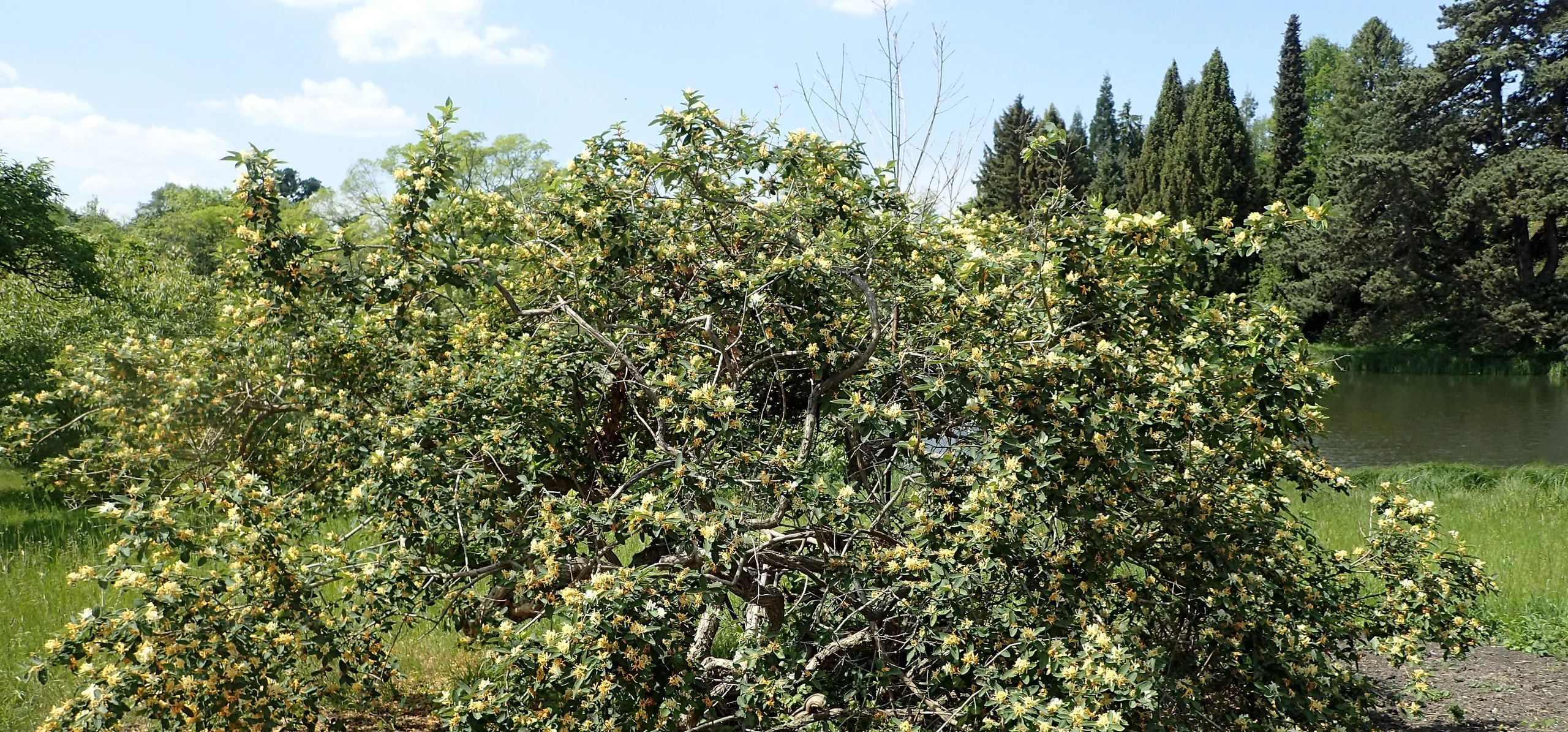
If a dense, arching shrub has taken over a fence line or the edge of your woods, and it was already leafed out and flowering while everything else nearby was still bare, there is a good chance you are looking at Lonicera morrowii, Morrow's honeysuckle. It was brought over from Japan, Korea and northeastern China in the 1870s as a fast, tough hedging plant, and it did exactly what it was bred to do: it grows in almost any soil, tolerates shade and sun alike, and resprouts hard after cutting. That same toughness has made it one of the more persistent invasive shrubs across the northern and mid-Atlantic United States, where it crowds out the native understory it was originally planted next to. This guide covers how to identify it with confidence, why its berries are a bigger problem than they look, and how and when to actually remove it.
Where It Comes From and How It Spread
Morrow's honeysuckle is native to Japan, Korea and northeastern China; Plants of the World Online lists its native range as northeastern China to South Korea and Japan, specifically southwestern Hokkaido and Honshu. Nurseries introduced it as an ornamental and wildlife hedge starting in the 1870s, and conservation agencies later planted it deliberately for erosion control and game cover well into the twentieth century. Birds finished what nurseries and highway departments started: seed-laden berries dropped along fencerows and then along the woodland edges those same birds fly into, and the shrub is now established from the upper Midwest through New England and south into the Appalachians and mid-Atlantic. It also crosses freely with the related Tatarian honeysuckle, Lonicera tatarica, to produce the hybrid Bell's honeysuckle, Lonicera x bella, which is at least as invasive and is often found growing right alongside the parent species.
Telling It Apart From Native Honeysuckles
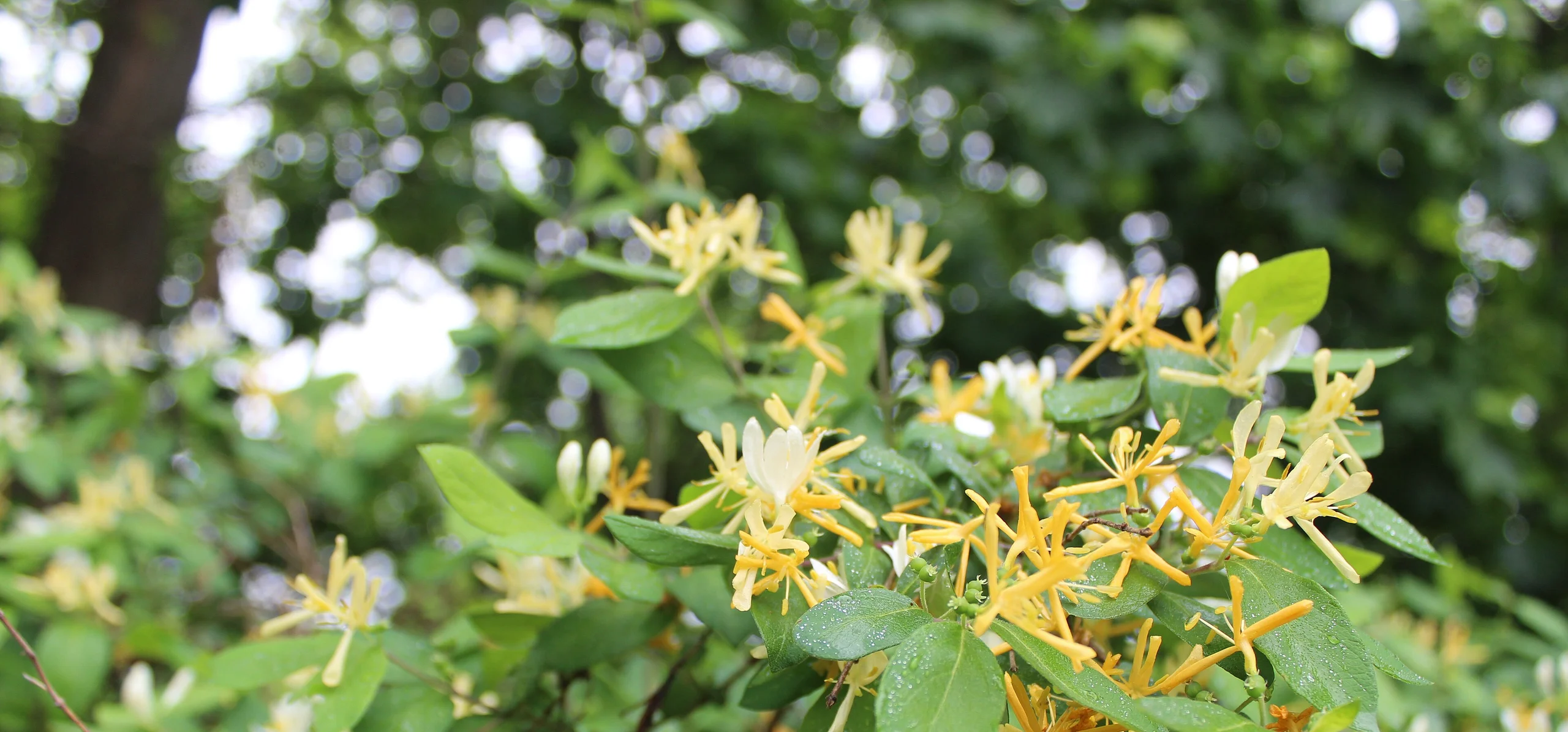
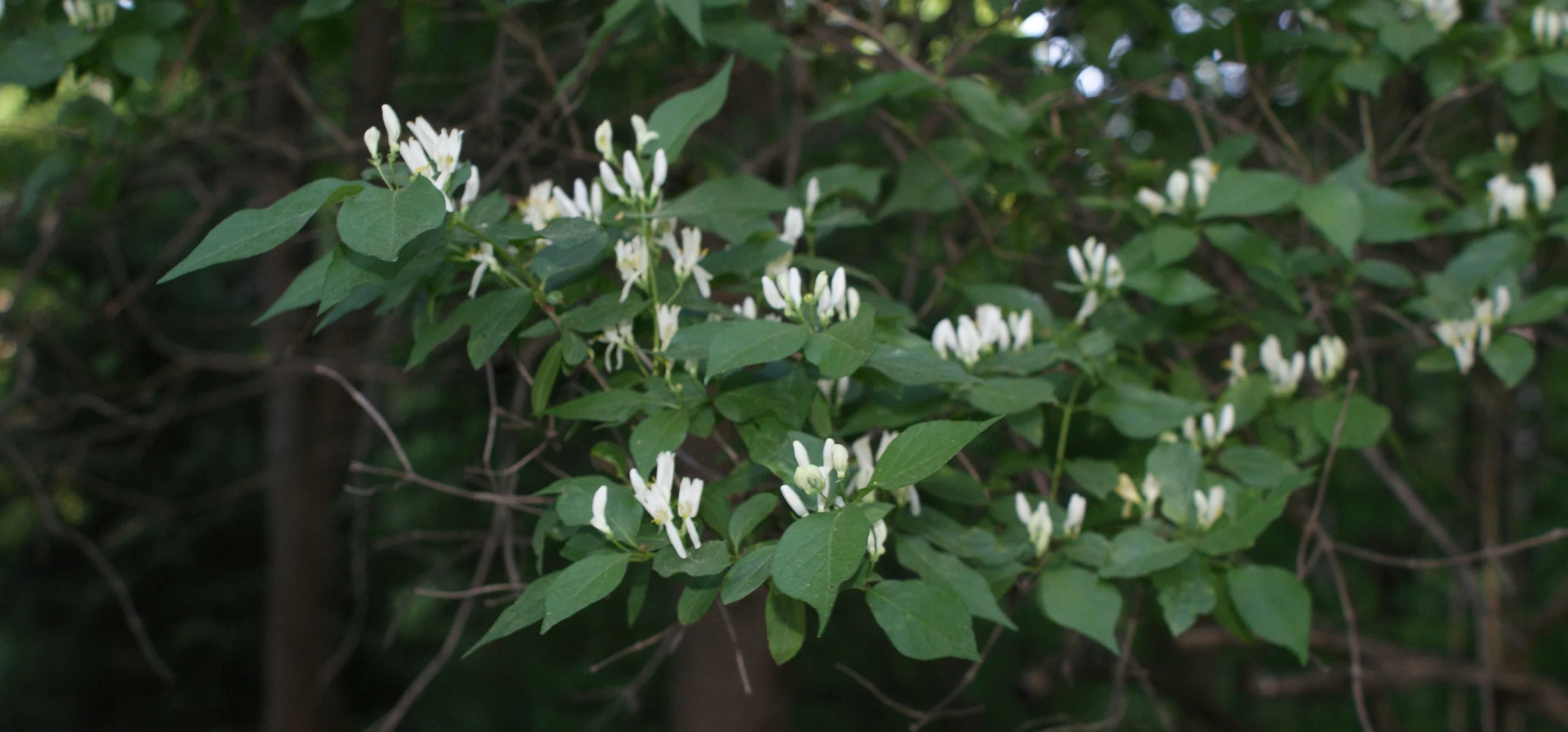
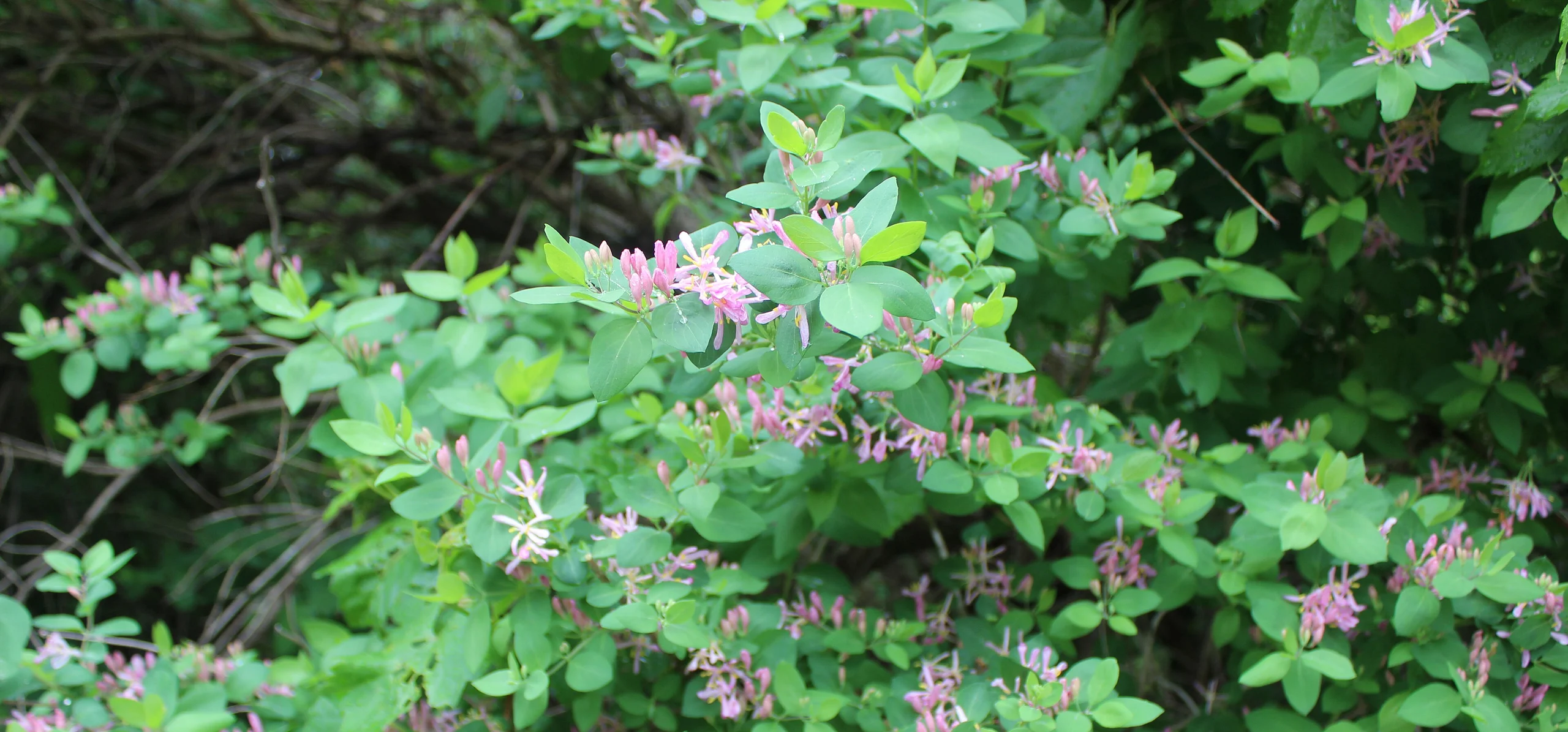
Two checks settle most identifications. First, run a finger under a leaf: Morrow's honeysuckle leaves are gray-green and noticeably hairy or felted on the underside, while native honeysuckles and native bush honeysuckle, Diervilla lonicera, have smooth, hairless leaves. Second, and more reliable on older wood, cut a pencil-thick stem in cross-section. Morrow's honeysuckle, like the other invasive Asian honeysuckle shrubs, has a hollow, often brown pith running down the center of the stem, while native honeysuckles have a solid white pith all the way through. The paired tubular flowers open white and fade to a soft yellow as they age. If a plant does not key out cleanly as pure Morrow's, do not spend too long pinning it down: once it shows a hollow pith and hairy leaves, it is a non-native honeysuckle, and the removal advice below applies whether it is Morrow's itself or the Bell's hybrid.


Why the Berries Are a Bigger Problem Than They Look
By midsummer the shrub is loaded with small red berries in pairs, and birds strip them fast: robins, catbirds, cedar waxwings and many migrating species eat them readily and pass the seeds, often far from the parent plant, in a single flight. The problem is nutritional. University of Maryland Extension notes that the fruit of non-native honeysuckles like this one is high in sugar but lacks the high fat content migratory birds actually need to fuel long flights, unlike native fruit such as viburnum, dogwood or spicebush. Birds still eat it because it is abundant and easy to reach, which means the shrub spreads efficiently while quietly shortchanging the birds doing the spreading. Every mature, un-removed shrub within bird range of a property is a seed source for years, not just the one plant in front of you.
How It Outcompetes Native Shrubs
Watch the woods in early spring and Morrow's honeysuckle gives itself away: it is usually the first deciduous shrub to leaf out, days to weeks ahead of native understory species, and it is one of the last to drop its leaves in fall. That extra stretch of leaves at both ends of the season means extra weeks of photosynthesis and food storage that native seedlings underneath do not get, and it is a large part of why the shrub keeps outcompeting native shrubs and tree seedlings even where light and soil are otherwise identical. Add a genuinely fast growth rate, the University of Connecticut's plant database lists it as a fast grower reaching about six to eight feet tall and about as wide, and a shallow, aggressive root system, and a handful of seed-grown shrubs can shade out an entire fencerow or forest edge within a decade.
When and How to Remove It
Timing is most of the strategy. Because Morrow's honeysuckle leafs out earliest and holds its leaves latest, fall, after native shrubs have dropped their leaves but while the honeysuckle is still green, is the best window: you can see exactly what you are treating, and any herbicide drift does far less collateral damage to dormant natives. Seedlings and young plants with thin, whippy stems can be hand-pulled or lifted with a weed wrench when the soil is damp enough to let go of the shallow roots. For anything past finger-thickness, cut the stem down to a low stump and immediately dab the fresh cut with a concentrated systemic herbicide, roughly a 20 percent glyphosate solution, using a foam dauber rather than a sprayer to keep it off nearby plants. Wait even a few minutes and the cut face starts to seal, and the herbicide will no longer translocate into the root system. Expect resprouts: even a well-treated stump can throw up new shoots the following year, so mark cleared areas and check them for at least two more growing seasons before calling the job finished.
Native Shrubs to Plant in Its Place
Clearing a fencerow or wood edge of Morrow's honeysuckle leaves an obvious gap, and filling it with a native shrub keeps the spot from simply reseeding itself out of a neighbor's yard. Native viburnums fill a similar rounded, multi-stemmed, thicket-forming shape, flower in spring, and carry fruit that actually feeds migrating birds properly. Winterberry, Ilex verticillata, does the same job in wetter ground and holds its bright red berries through winter after its leaves drop, well past the point honeysuckle berries would already have been stripped. Spicebush and summersweet cover the shadier, damper edges where Morrow's honeysuckle often thrives best. None of these need the aggressive removal and resprout monitoring the honeysuckle demands, and none will turn up as a hollow-pithed volunteer in a neighbor's woods ten years from now.
Common Mistakes
The most common mistake is treating removal as a one-time mowing job: cutting the top growth without an immediate stump treatment just triggers a flush of vigorous resprouts from the root crown, often bushier than the original shrub. The second is misjudging the removal window and spraying foliage in early spring or midsummer, when nearby native shrubs are also in leaf and equally exposed to drift. The third is assuming a shrub already established for years is not worth removing because it has gotten too big; the size that makes it intimidating is exactly what makes it a heavy seed producer, and every season left in place adds another cohort of bird-planted seedlings somewhere downwind.
Test your plant knowledge
Tap a card to flip it and reveal the answer.
Slicing open a Morrow's honeysuckle stem reveals a hollow, often brown pith, while most native honeysuckle stems are solid. Tap to reveal ✓ True
Morrow's honeysuckle drops its leaves earlier in autumn than most native shrubs. Tap to reveal ✕ False
The bright red berries give migrating birds the same fat reserves as fruit from native shrubs like viburnum or dogwood. Tap to reveal ✕ False
Morrow's honeysuckle is native to Japan, Korea and northeastern China. Tap to reveal ✓ True
Simply mowing an established Morrow's honeysuckle to the ground is usually enough to kill it for good. Tap to reveal ✕ False
Sources
References consulted for this guide
- GBIF Backbone Taxonomy: Lonicera morrowii A.Graygbif.org
- POWO: Lonicera morrowii A.Graypowo.science.kew.org
- University of Maryland Extension: Non-Native Invasive Honeysucklesextension.umd.edu
- Purdue Extension: Kill the Shrub, a Guide to Fall Removal of Invasive Honeysuckleextension.purdue.edu
- UConn Plant Database: Lonicera morrowii (Morrow Honeysuckle)plantdatabase.uconn.edu
- Reference entity : Wikipédiaen.wikipedia.org