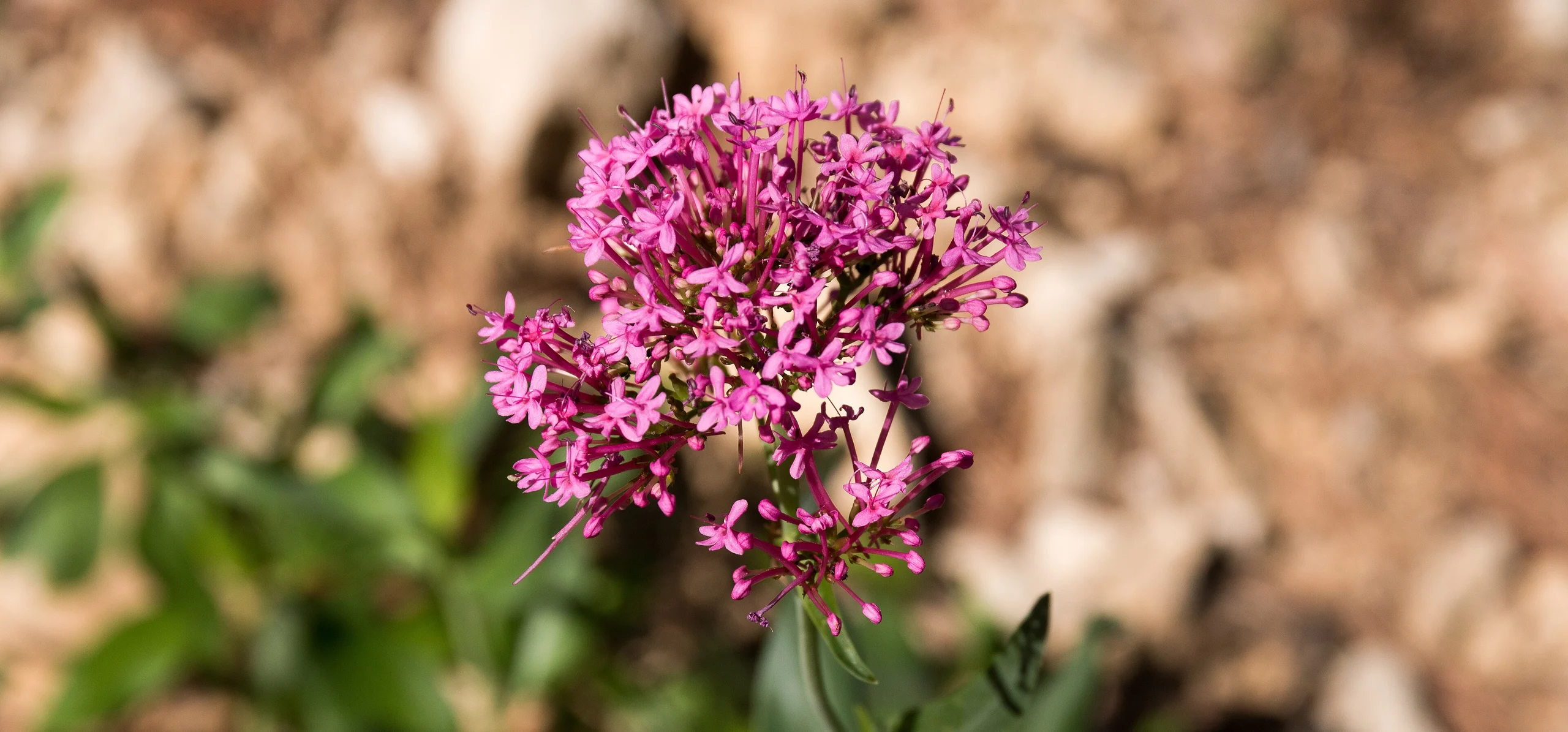
Tatarian Honeysuckle
Lonicera tatarica
Family · Caprifoliaceae
Pink flowers, red berries, and a hollow pith that gives it away: how to identify, prune, and manage Lonicera tatarica, and why some regions restrict it.
Lonicera tatarica
Plant profile
- WateringLittleWater every 10 days
- Light exposurePartial sun
- Hardiness zoneUSDA 3–8
Growth
- Family
- Caprifoliaceae
- Life cycle
- Perennial
- Growth speed
- 8/10
- Mature size
- 240–370 cm
- Propagation
- Seed
- Cutting
- Layering
FloweringPaired pink, sometimes white, tubular flowers in late spring, followed by red berries in summer
Dormancydeciduous, bare in winter
Time to maturityreaches full size within a few vigorous growing seasons
Soil & climate
- Soil types
- loam, clay, sand, average well-drained garden soil
- Drought tolerance
- Yes
Light & Placement
- Origin
- Eastern Europe to central Siberia and northwestern and northeastern China
- Where to place it
- open sunny border
- hedge or screen
- windbreak planting
- woodland edge (where not restricted)
Safety
- Pet safe
- No
ToxicityNot listed by the ASPCA for cats, dogs, or horses; berries are not intended for human or pet consumption
Invasive speciesnaturalized and classed as invasive in parts of the northern and western United States; check local regulations before planting
Data fromGBIF Backbone Taxonomy: Lonicera tataricPlants of the World Online (Kew): LoniceMissouri Botanical Garden Plant Finder: University of Maryland Extension: Non-naUniversity of Illinois Extension Hort An
Where it grows
World distribution
Tatarian Honeysuckle is native to 6 countries: China, Georgia, Kazakhstan, Kyrgyzstan, Mongolia, and Russia.GBIF records 32,089 documented identifications across 53 countries, with the largest concentrations in Russia, United States, and Canada.
- China
- Georgia
- Kazakhstan
- Kyrgyzstan
- Mongolia
- Russia
Yellow to orange dots: concentration of documented identifications per country. Green countries: sourced native range. Source: GBIFNative range from POWO (Kew).
Lonicera tatarica turns up in two very different settings: bought on purpose in a European garden for its arching sprays of pink, tubular flowers, or found already established along a fence line or woodland edge in North America, where it has spread so successfully that several states now restrict its sale. A quick way to confirm the identification without a flower in sight is to snap a young twig: the pith inside is hollow, not solid, a trait it shares with the other Eurasian bush honeysuckles it is most often confused with. Flowers open in pairs from the leaf axils in late spring, and by midsummer they have become small red berries that local birds strip within days. Whatever brought this shrub into your garden, the two questions worth answering first are which honeysuckle you actually have, and whether it is one you want to keep.
Identifying Tatarian Honeysuckle vs Morrow's and Amur Honeysuckle
The three Eurasian bush honeysuckles planted and gone wild across the temperate world, Lonicera tatarica, L. morrowii, and L. maackii, look enough alike that gardeners and land managers routinely mix them up, and their hybrid L. x bella splits the difference further. The reliable separator is texture: Tatarian honeysuckle's leaves, stems, and flower stalks are hairless or nearly so, while Morrow's honeysuckle has a soft, felted underside to its leaves, and Amur honeysuckle's foliage is slightly fuzzy and tapers to a longer point. Flower colour helps too: L. tatarica opens usually pink, occasionally white as in the cultivar 'Alba', while Morrow's and Amur both open white and fade to yellow, Amur on a larger, more tree-like shrub. If none of that settles it, cut a young stem: all three species, unlike the native honeysuckles of North America, have a hollow brown pith running down the centre, one of the most-cited field marks for telling an invasive Eurasian Lonicera from a native one.
Native Range and Why It Escaped Cultivation
Tatarian honeysuckle's native range runs from Eastern Europe across to central Siberia and into northwestern and northeastern China, cold continental country that explains why the shrub shrugs off winters that kill less hardy ornamentals. It was brought to North America as a tough, fast-flowering hedge and windbreak plant, and it did exactly what it was chosen to do: grow quickly in poor soil, flower reliably, and set fruit even in partial shade. The problem is the fruit. Birds eat the red berries and carry the seeds well beyond the garden fence, and Tatarian honeysuckle has since naturalized through much of the northern and western United States, where it is now classed as invasive in a number of states. None of that history changes how the plant behaves in a European border, where it remains, for now, an old-fashioned, undemanding flowering shrub rather than a regulated species.
Site, Soil, and Hardiness
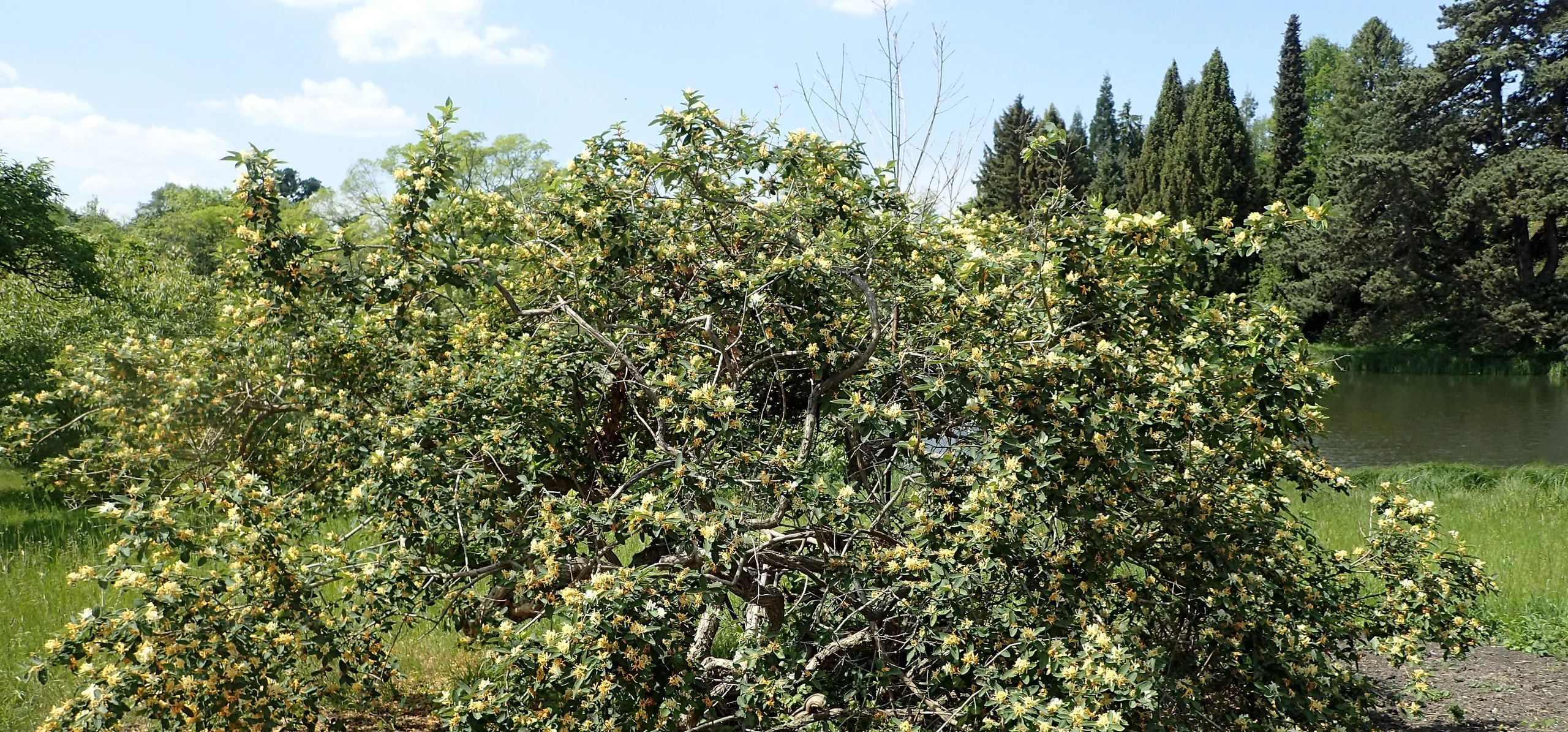
Where it is still planted deliberately, Tatarian honeysuckle asks for very little: full sun to part shade, and average, medium-moisture soil with reasonable drainage. It tolerates poor, dry ground better than most flowering shrubs and is not fussy about pH, part of why it naturalizes so readily on roadsides and old fields. It is hardy through USDA zones 3 to 8, taking hard continental winters without dieback, and the same cold tolerance that makes it useful as a windbreak in exposed northern gardens is what let it spread unchecked once it reached similar climates in North America. A young plant typically reaches its mature 8 to 12 feet of height within a few vigorous growing seasons, arching outward rather than staying upright, so give it room from the start rather than planning to keep it small with constant clipping.


Flowers and Berries
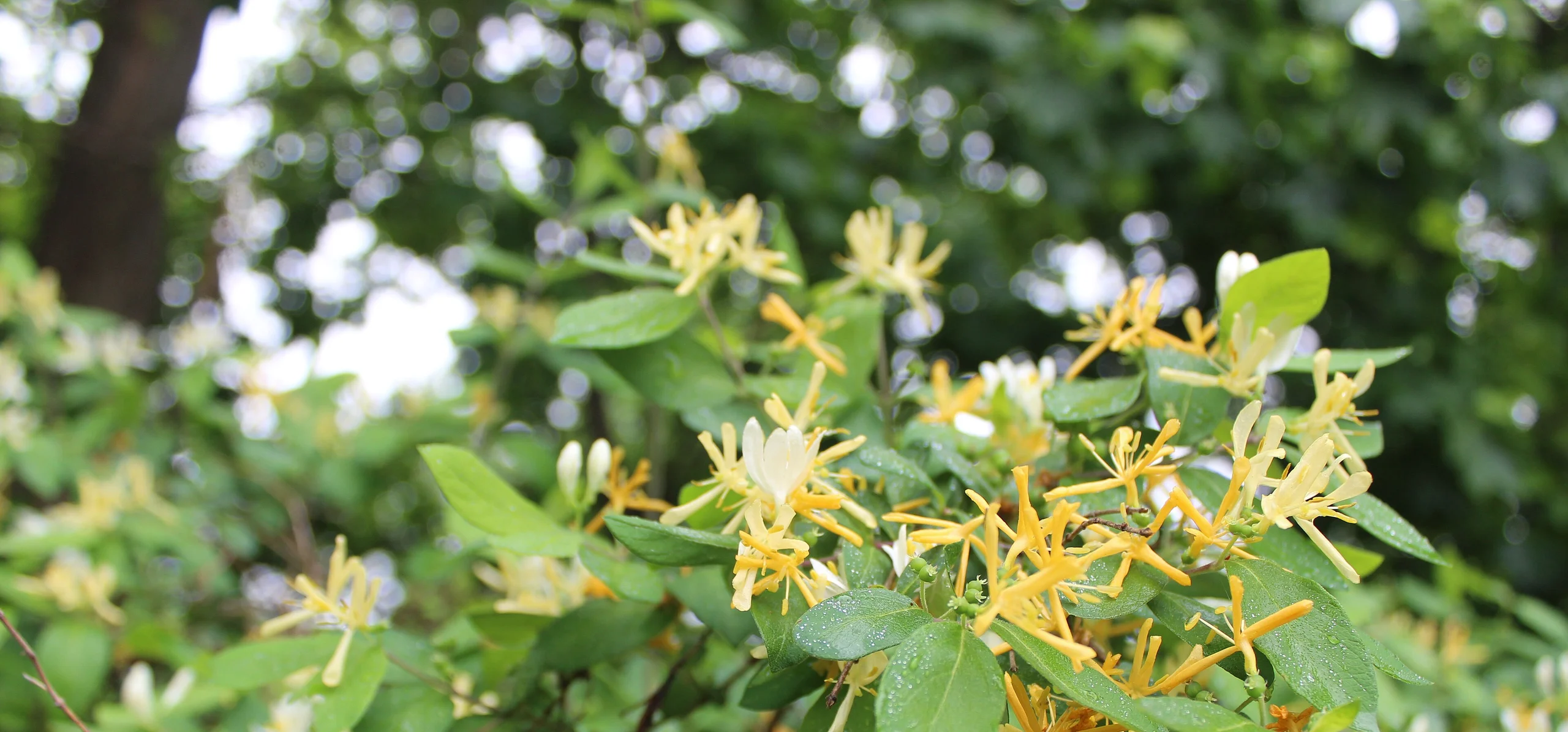
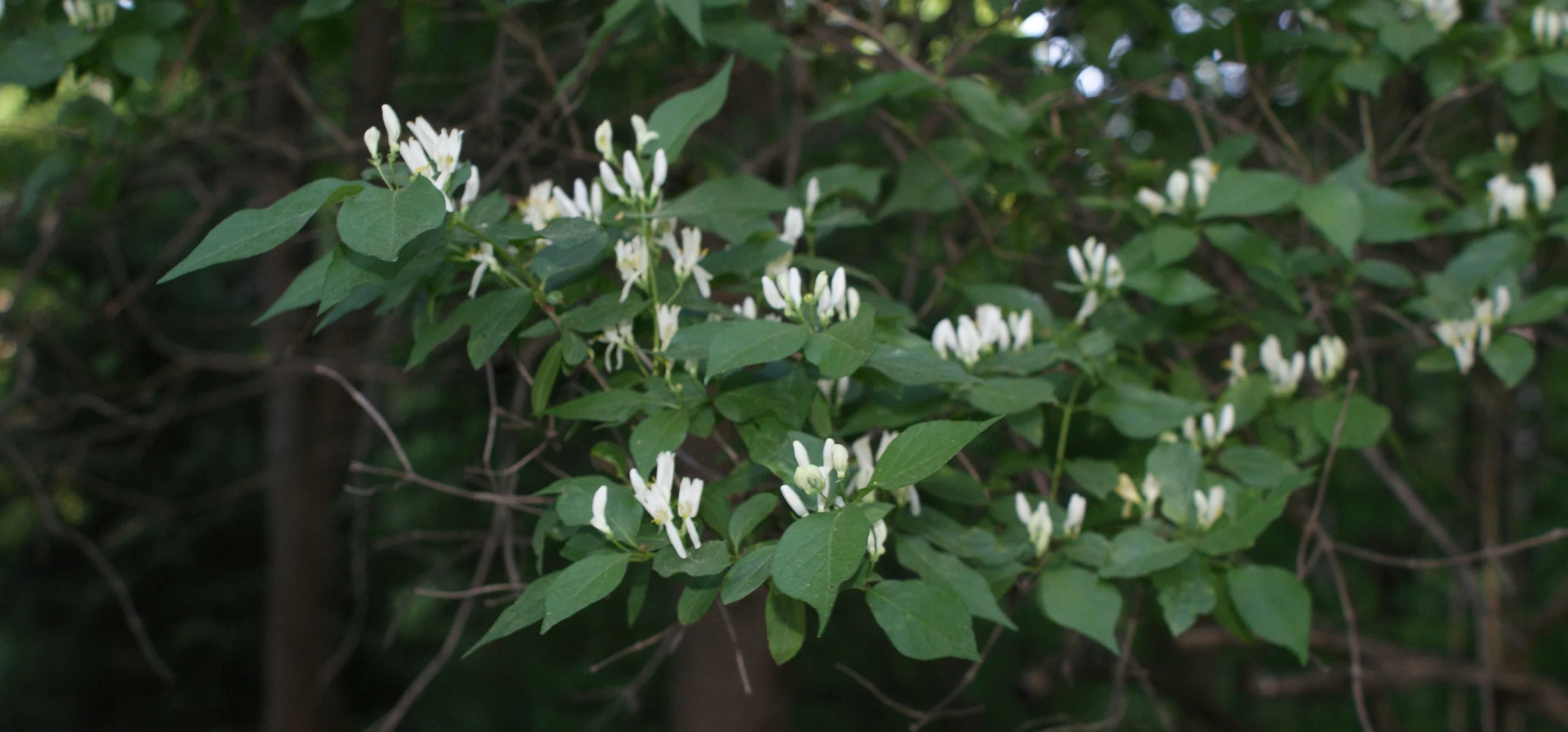
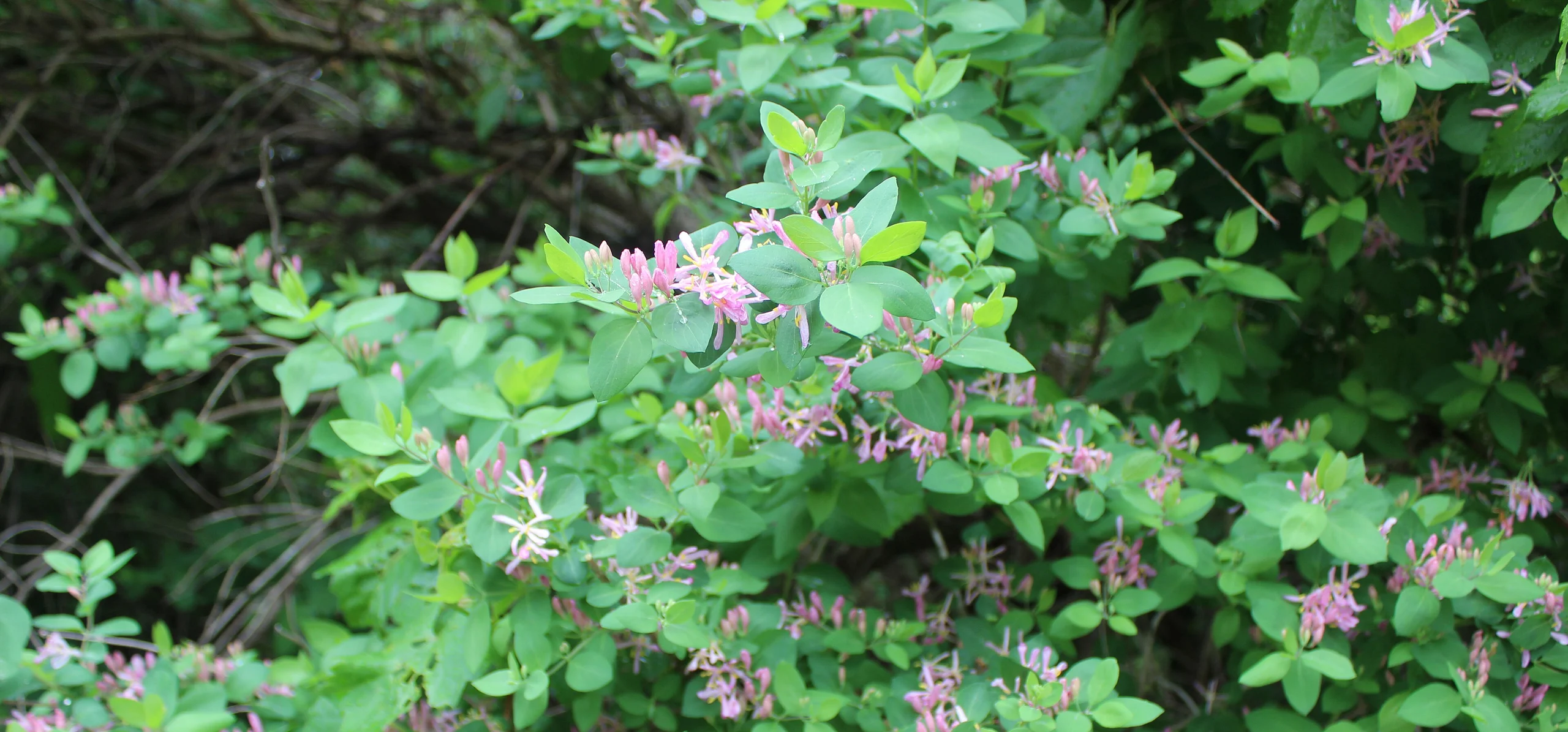
Paired, tubular flowers open from the leaf axils along the previous year's wood in late spring, usually a clear pink but occasionally white, each pair sitting on its own short stalk rather than clustered at the stem tip. They are lightly scented, but the display is about quantity: a mature shrub in full bloom can be covered from base to tip for two to three weeks. Pollinated flowers swell into pairs of small, round, bright red berries by midsummer, and it is these berries, not the flowers, that do the plant's dispersal work. Birds strip a fruiting shrub fast, which makes the display short-lived if you were hoping to enjoy it as a winter feature, and is exactly the mechanism responsible for the shrub's spread into hedgerows and woodland edges far from any garden.
Pruning an Overgrown Shrub
Left alone, Tatarian honeysuckle thickens into a dense tangle of arching canes, and an untouched specimen after ten or fifteen years is usually more twig than flower at eye level. Renewal pruning works better than shearing: each late winter, cut a third of the oldest, thickest canes back to the base, which keeps a constant supply of the younger wood that flowers most freely and stops the shrub from becoming bare-legged underneath. A badly overgrown plant tolerates a hard rejuvenation cut, taking the whole framework down to 15 to 30 centimetres in late winter; it will look like a stump for one season but resprouts vigorously and usually flowers again within two years. What to avoid is shearing it into a tight hedge shape every year, which sacrifices most of the flowering wood, thickens the interior with the kind of dense, soft new growth that pests favour, and produces a plant that is mostly green wall and very little bloom.
Honeysuckle Witches' Broom Aphid
Tatarian honeysuckle is one of the species most susceptible to the honeysuckle witches' broom aphid, Hyadaphis tataricae, a pest specific to Lonicera that overwinters as eggs on the twigs and hatches around bud break. Its feeding injects a substance into the growing tip that stunts shoot elongation and forces dormant buds to sprout all at once, producing the dense, deformed tangle of small, upward-folded leaves that gives the problem its common name. Established witches' brooms do not resolve on their own even after the aphids that caused them are gone, so the only real fix is to cut the deformed growth out during the dormant season, well back into clean wood. Some named selections, including 'Arnold Red', show useful resistance and are worth choosing over an unnamed seedling shrub where this aphid is already common on honeysuckles nearby.
Should You Plant It, or Choose a Native Alternative
In much of its introduced range this is no longer a straightforward yes. Because birds spread the berries so efficiently, a single garden shrub can seed new plants well beyond the property line, and several North American jurisdictions now discourage or restrict new plantings for exactly that reason. Where that applies, extension services typically point gardeners toward native shrubs that fill the same rounded, flowering-hedge role without the same spread risk, among them native viburnums and other regionally native shrubs of comparable size with bird-friendly fruit of their own. In parts of Europe where Tatarian honeysuckle is simply an old, familiar garden plant rather than a regulated one, the more useful precaution is local: deadhead or remove berries near woodland edges and hedgerows if you would rather it stayed exactly where you planted it.
Test your plant knowledge
Tap a card to flip it and reveal the answer.
Tatarian honeysuckle twigs have a solid pith, like most native North American honeysuckles. Tap to reveal ✕ False
Its leaves, stems, and flower stalks are largely hairless, which helps separate it from the felted leaves of Lonicera morrowii. Tap to reveal ✓ True
Lonicera tatarica is native to North America. Tap to reveal ✕ False
The honeysuckle witches' broom aphid, Hyadaphis tataricae, causes dwarfed, folded new growth on this species. Tap to reveal ✓ True
Birds eating the red berries are the main reason this shrub has spread into wild areas across North America. Tap to reveal ✓ True
Sources
References consulted for this guide
- GBIF Backbone Taxonomy: Lonicera tatarica L.gbif.org
- Plants of the World Online (Kew): Lonicera tatarica L.powo.science.kew.org
- Missouri Botanical Garden Plant Finder: Lonicera tataricamissouribotanicalgarden.org
- University of Maryland Extension: Non-native Invasive Honeysucklesextension.umd.edu
- University of Illinois Extension Hort Answers: Honeysuckle Aphid (Hyadaphis tataricae)web.extension.illinois.edu
- Reference entity : Wikipédiaen.wikipedia.org