Japanese Honeysuckle
Lonicera japonica
Family · Caprifoliaceae
Lonicera japonica 'Halliana' scents a whole garden from a fence, yet it is a federally unlisted noxious weed in parts of the US. Siting, pruning and control.
Lonicera japonica
Plant profile
- WateringLittleWater every 8 days
- Light exposurePartial sun
- Hardiness zoneUSDA 4–9
Growth
- Family
- Caprifoliaceae
- Life cycle
- Perennial
- Growth speed
- 9/10
- Mature size
- 450–900 cm
- Spread
- 90–180 cm
- Flowering
- White flowers aging to yellow, late spring to first frost, then black berries
- Propagation
- Cutting
- Layering
Dormancysemi-evergreen to evergreen in mild winters, deciduous where frosts are harder
Time to maturitycovers a fence panel within 2 to 3 growing seasons
Soil & climate
- Soil types
- loam, sand, clay, well-drained
- Drought tolerance
- Yes
Light & Placement
- Origin
- China to temperate East Asia
- Where to place it
- fence
- trellis
- chain-link boundary
- arbor
Safety
- Toxicity
- Not listed by the ASPCA (neither toxic nor non-toxic status confirmed)
- Pet safe
- No
Invasive speciesNot federally listed as a US noxious weed, but flagged as a Midwest noxious weed by Missouri Botanical Garden, classed among invasive vines of the mid-Atlantic and Northeast by Penn State Extension, and a prohibited invasive species in New Hampshire; grown as a manageable garden climber across most of Europe.
Data fromGBIF Backbone Taxonomy: Lonicera japonicPlants of the World Online (Kew): LoniceMissouri Botanical Garden Plant Finder: Penn State Extension: The Invasive JapanUniversity of New Hampshire Extension: I
Where it grows
World distribution
Japanese Honeysuckle is native to 4 countries: China, Japan, South Korea, and Taiwan.GBIF records 107,457 documented identifications across 135 countries, with the largest concentrations in United States, France, and United Kingdom.
- China
- Japan
- South Korea
- Taiwan
Yellow to orange dots: concentration of documented identifications per country. Green countries: sourced native range. Source: GBIFNative range from POWO (Kew).
The plant sold at every US nursery under a fragrance-forward name is usually 'Halliana', Hall's honeysuckle, and it is the same twining vine that state extension offices list as a noxious weed a few counties over. Both things are true at once: on a fence or chain-link boundary in a garden setting, it is one of the most rewarding scented climbers you can grow, covering itself in white flowers that turn butter-yellow through summer; left to reach a hedgerow or woodland edge in the eastern United States, it climbs into the canopy and shades out what was there first. Knowing which situation you are in changes almost every decision below.
'Halliana' and Other Forms
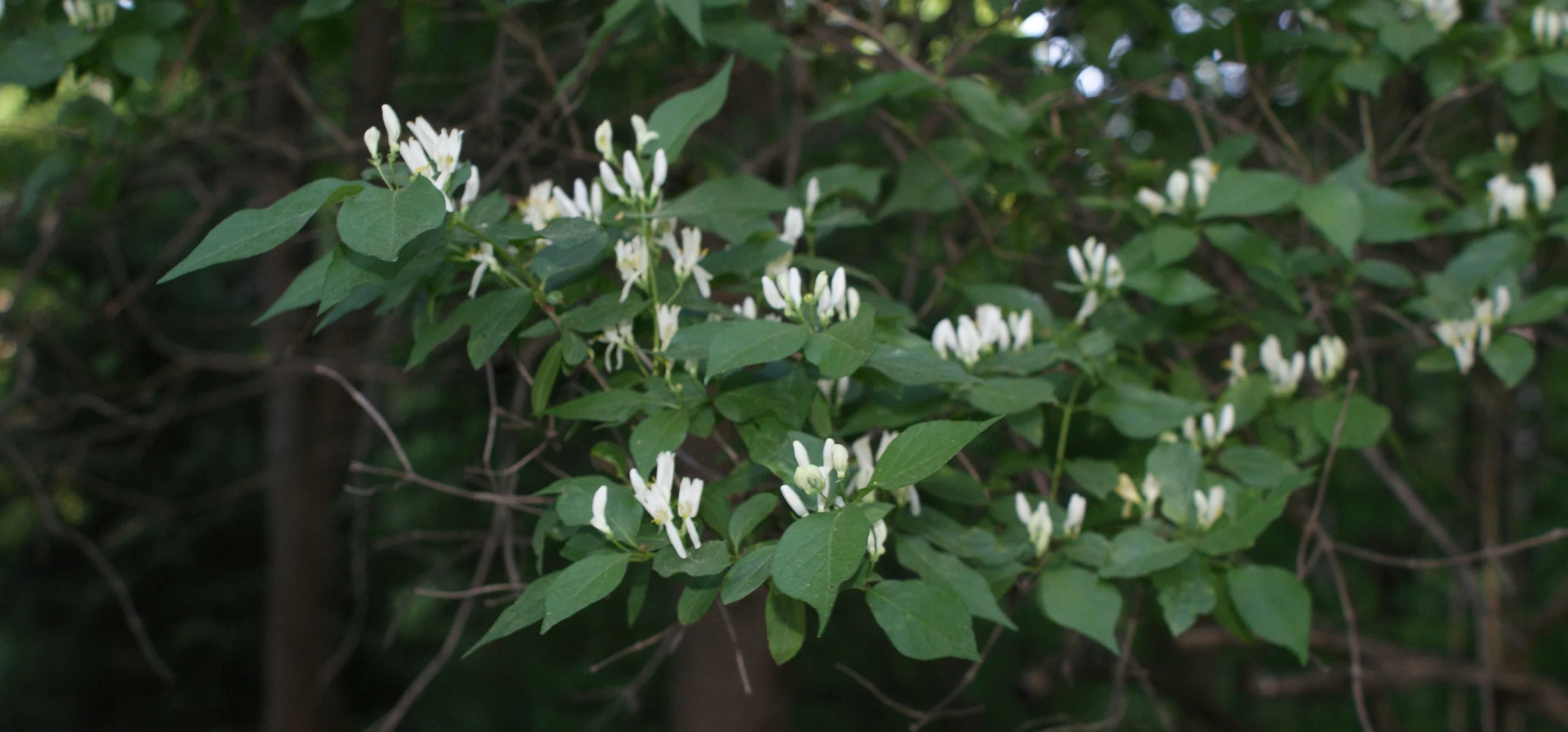
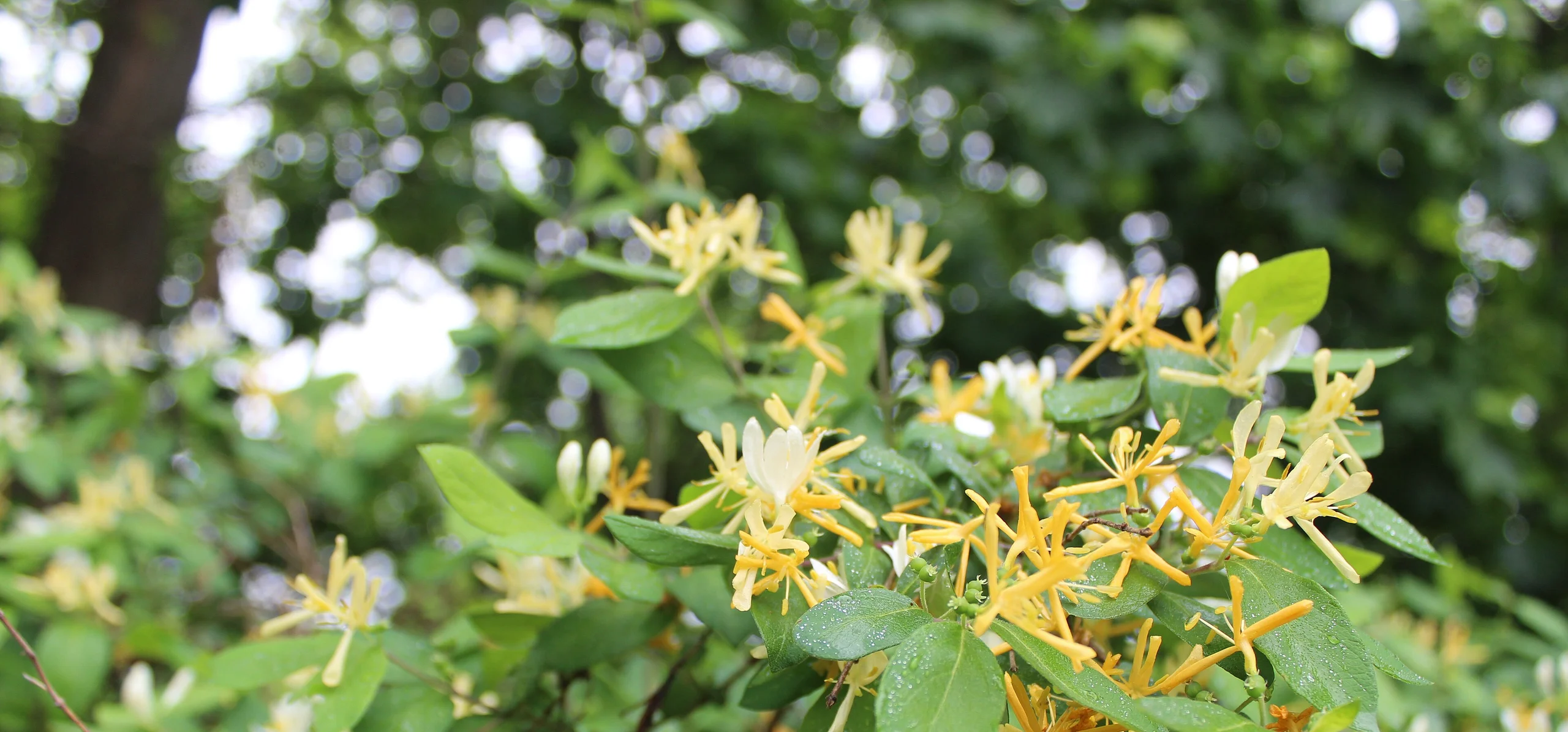
'Halliana' is the cultivar behind most honeysuckle sold for scent: paired, two-lipped tubular flowers open pure white and age to light yellow within a couple of days, so a single vine carries both colors at once, the origin of the older folk name gold-and-silver flower. It is semi-evergreen to fully evergreen through mild winters and drops its oval, dark green leaves only where frosts are harder. Variegated forms such as 'Aureoreticulata', with gold-netted veining, are grown more for the foliage than the bloom and flower less freely. None of the named forms are less vigorous than the species; choosing 'Halliana' is about flower color and fragrance, not about taming the plant.
Growing It on a Fence or Trellis
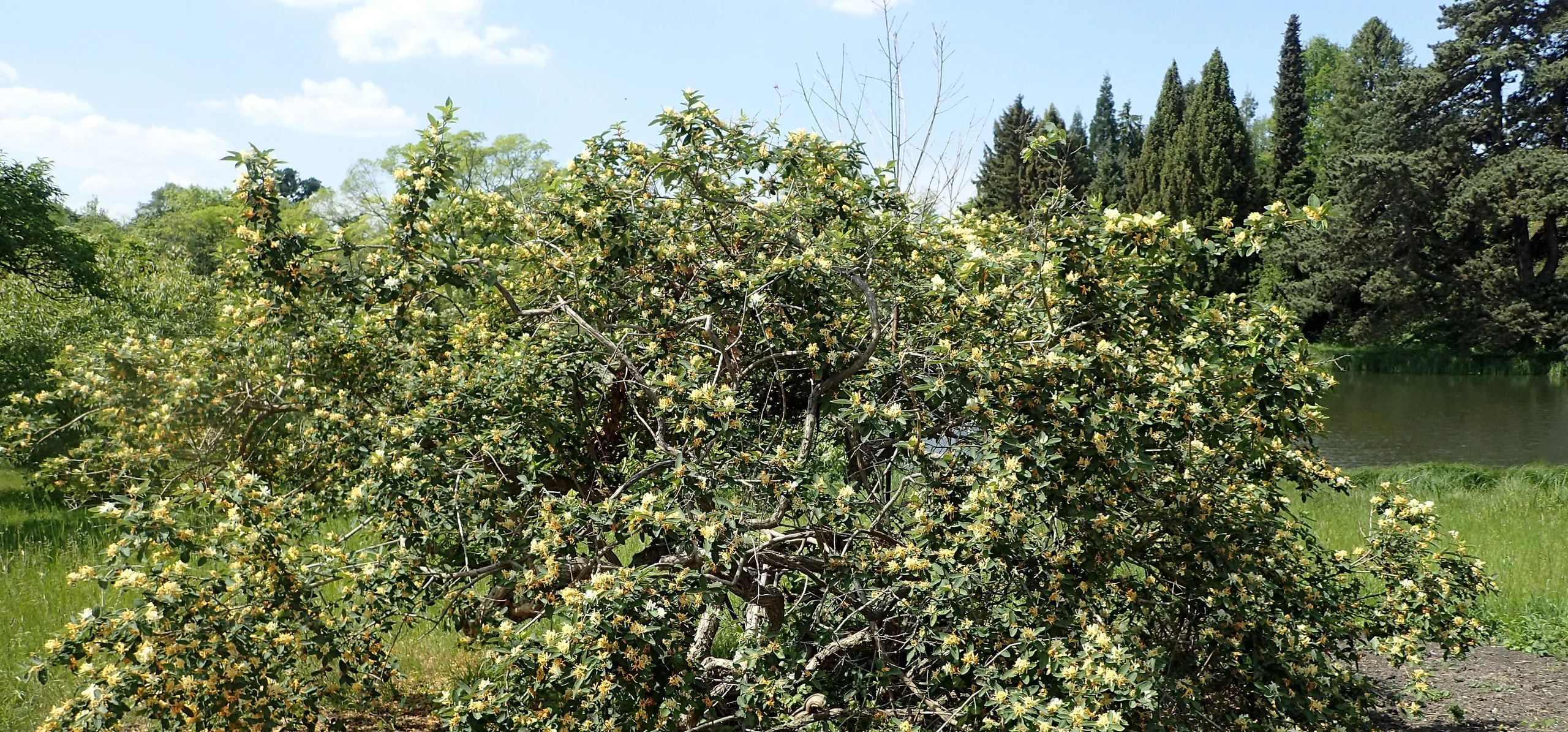
This is a twining vine, not a clinging one: it needs something to wrap around, wire, trellis, chain-link or an open fence panel, rather than a flat wall. In most of Europe it is grown this way without the reputation it carries in parts of the US South and Midwest, as a well-behaved boundary or screening plant that tolerates poor soil, wind and a fair amount of shade, though flowering thins as shade increases. Give it full sun to part shade and average, well-drained soil; it copes with dry spells once rooted and, per Missouri Botanical Garden's Plant Finder, tolerates drought, deer browsing and even the juglone produced by black walnut roots, a combination few climbers manage. Space one plant per post rather than one per panel; a single 'Halliana' will happily cover 3 to 6 feet of spread and climb 15 feet or more given the years to do it.
Watering and Feeding
Water new plants regularly through the first season while roots establish, then back off: Missouri Botanical Garden rates its water need as dry to medium, and overwatering established honeysuckle does more to encourage rampant growth than to keep it healthy. A spring mulch and a single light feed of a balanced fertilizer is enough on average soil; on the loamy, moisture-retentive ground it prefers, skip feeding most years, since the goal on a fence is usually to slow it down, not speed it up.


Pruning Hard, Late Winter Into Spring
Because it flowers on the current season's new growth, Japanese honeysuckle tolerates pruning that would ruin a shrub that blooms on old wood. Missouri Botanical Garden's own culture notes describe cutting it back hard, sheared close to the ground, in late winter to remove dead growth and reset the size; the same hard cut in early spring works just as well before new shoots take over, and it is the standard way to keep a fence-grown vine from swallowing a gate or a neighboring shrub. A lighter second trim after the first flush of flowers keeps it tidy through summer without sacrificing the later bloom.
Flowers, Scent and the Moths That Find Them
The fragrance is strongest from dusk onward: research on floral scent chemistry has found that Lonicera japonica releases far more of its scent compounds at night than during the day, timed to the activity of hawkmoths, its main pollinators, alongside bees, butterflies and hummingbirds drawn to the tubular flowers by day. Bloom runs from late spring into autumn, effectively until the first hard frost, followed by small black berries in late summer and fall that songbirds strip quickly. A vine planted where its scent reaches a porch, path or open window earns its keep after dark in a way daytime visitors to the garden will miss entirely.
Invasive Status in the United States
Missouri Botanical Garden flags this species with a Midwest noxious weed warning, meaning it should not be moved or grown where it risks spreading in those states, and its own plant profile calls it, in its words, a dreadful weed once it escapes cultivation. Penn State Extension lists it among the invasive vines of the mid-Atlantic and Northeast, able to climb into tree canopies, girdle young trunks as stems thicken, and smother understory plants with dense, evergreen-into-winter cover that keeps growing after native vegetation goes dormant. The University of New Hampshire treats it as a prohibited invasive species: it should never be sold, planted or propagated there. None of this is universal; it is native to China and temperate East Asia and behaves as a manageable garden plant across most of Europe, but a fence-grown vine in the eastern US still needs watching if woodland or an unmanaged hedgerow lies within reach of its seed-carrying berries.
Controlling an Established Patch
Where it has already jumped the fence, mechanical control alone rarely finishes the job. Penn State Extension recommends cutting or mowing in mid to late summer, then either treating the cut stems directly with a concentrated glyphosate or triclopyr solution or waiting for regrowth and spraying the new foliage; because the vine holds its leaves into fall after most surrounding plants have gone dormant, a late-season foliar spray can target it with little risk to neighboring species. Repeated cutting without any follow-up herbicide mostly thickens the root system and buys another season of regrowth, which is why patches persist for years in gardens that only ever get mowed.
Toxicity and Common Mistakes
The ASPCA does not carry a listing for Lonicera japonica in its toxic and non-toxic plant database, so no verified toxicity to cats, dogs or horses can be cited either way here; treat unlisted plants with the same caution as any unfamiliar vine around pets that chew foliage. The most common mistake is planting it against a young tree or shrub instead of a fence, where its twining stems tighten around the trunk as both grow and can girdle it over several seasons. The second is treating a hard prune as optional: skip it for a few years and a vine rated as covering 15 to 30 feet will do exactly that, over a shed roof, a neighboring hedge or anything else within reach.
Test your plant knowledge
Tap a card to flip it and reveal the answer.
'Halliana' honeysuckle flowers open white and age to yellow, so a single vine shows both colors at once. Tap to reveal ✓ True
Japanese honeysuckle flowers on old wood, so hard pruning sacrifices that year's bloom. Tap to reveal ✕ False
Its fragrance is released more strongly at night than during the day. Tap to reveal ✓ True
Missouri Botanical Garden lists it as a noxious weed in parts of the Midwest. Tap to reveal ✓ True
Cutting the vines back once is generally enough to eliminate an established patch outdoors. Tap to reveal ✕ False
Sources
References consulted for this guide
- GBIF Backbone Taxonomy: Lonicera japonica Thunb.gbif.org
- Plants of the World Online (Kew): Lonicera japonica Thunb.powo.science.kew.org
- Missouri Botanical Garden Plant Finder: Lonicera japonica 'Halliana'missouribotanicalgarden.org
- Penn State Extension: The Invasive Japanese Honeysuckleextension.psu.edu
- University of New Hampshire Extension: Invasive in the Spotlight, Japanese Honeysuckleextension.unh.edu
- Reference entity : Wikipédiaen.wikipedia.org