Cosmos
Cosmos bipinnatus
Family · Asteraceae
Cosmos bipinnatus is an easy annual cut flower from Mexico. Covers sowing, pinching for bushiness, rich soil versus flowering, staking and deadheading.
Cosmos bipinnatus
Plant profile
- WateringLittleWater every 7 days
- Light exposureFull sun
- Hardiness zoneUSDA 2–11
Growth
- Family
- Asteraceae
- Life cycle
- Annual
- Growth speed
- 8/10
- Mature size
- 30–250 cm
- Spread
- 10–100 cm
- Flowering
- Early summer until the first frost
- Propagation
- Seed
Dormancynone, completes its lifecycle in one growing season
Time to maturitygerminates in 7 to 21 days once soil reaches 18 degrees C (65 degrees F); comes into flower within about two months of sowing
Soil & climate
- Soil pH
- pH 6–8
- Soil types
- clay, loam, sand, chalk
- Drought tolerance
- Yes
Light & Placement
- Origin
- Mexico
- Where to place it
- sunny border
- cutting garden
- wildflower-style bed
- large container
Safety
- Toxicity
- CatsSafe
- DogsSafe
- HorsesSafe
Invasive speciesself-sows freely and can turn up as a volunteer the following spring if seed heads are left to ripen and drop
Data fromCosmos bipinnatus Cav., GBIF Backbone TaPOWO: Cosmos bipinnatus Cav.ASPCA: Cosmos toxicity to cats, dogs andRHS: Cosmos bipinnatusNC State Extension Gardener Plant Toolbo
Where it grows
World distribution
Cosmos is native to a single country: Mexico.GBIF records 55,283 documented identifications across 143 countries, with the largest concentrations in Germany, France, and United States.
- Mexico
Yellow to orange dots: concentration of documented identifications per country. Green countries: sourced native range. Source: GBIFNative range from POWO (Kew).
The Easiest Annual for a Non-Stop Cutting Patch
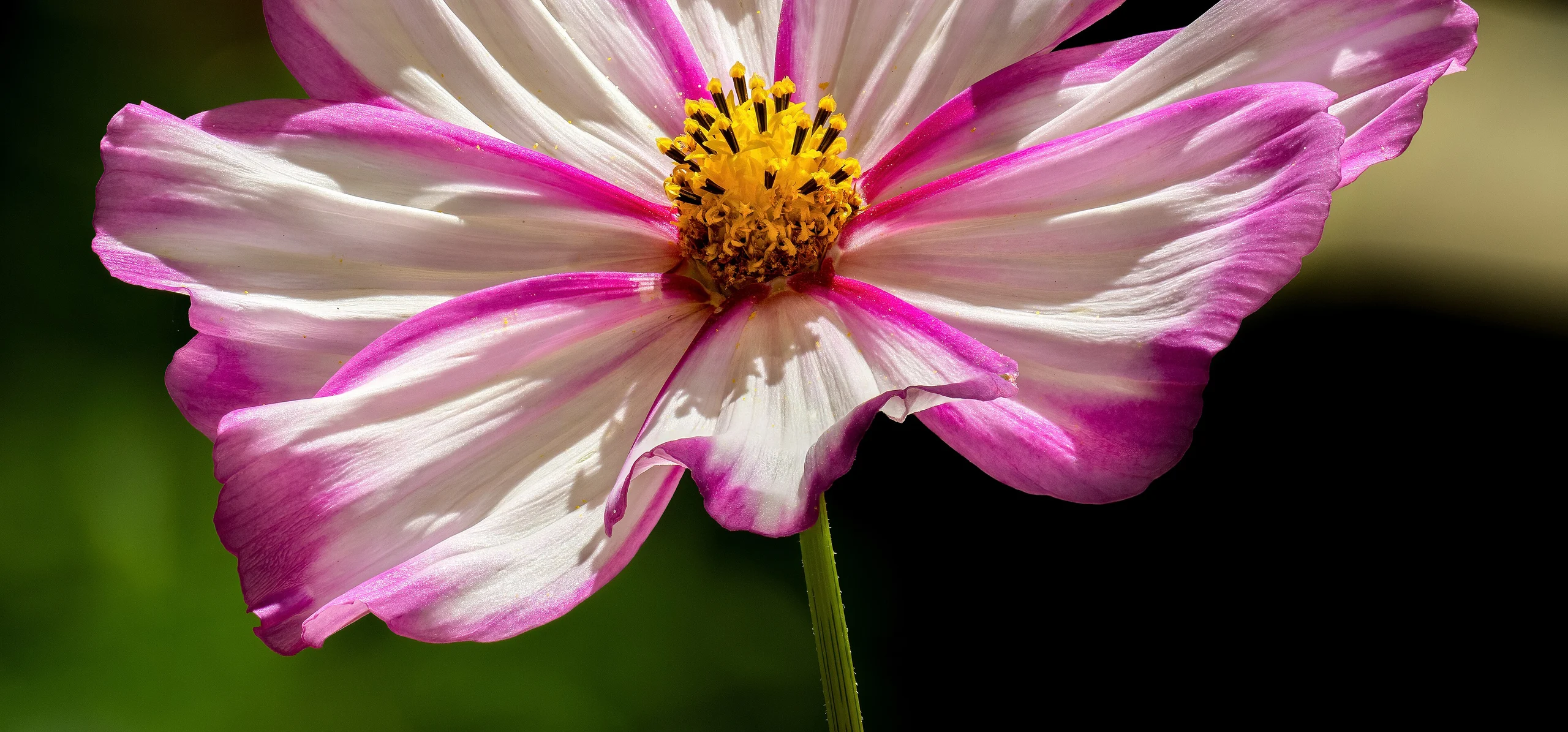
Cosmos bipinnatus is a fast, forgiving annual in the daisy family (Asteraceae), native to Mexico, where it grows as a roadside and field plant before ever reaching a garden bed. Seed germinates in 7 to 21 days once soil reaches 18 degrees C (65 degrees F), and the same sowing that produces a seedling in spring is usually flowering by midsummer and does not stop until the first hard frost. Ferny, thread-fine foliage on wiry stems carries single, saucer-shaped flowerheads in white, pink, red or bicolor shades, each with a cluster of yellow disc florets at the centre. Almost nothing about growing it is difficult, which is exactly why it is one of the most reliable cut flowers a beginner can sow from a packet.
Sowing Indoors or Direct After the Last Frost
Cosmos seed needs light and warmth more than depth: rake it into loose soil rather than burying it, since planting too deep is a common reason seed fails to come up. Direct sowing outdoors, once all frost danger has passed and the soil has warmed, is the simplest route and suits gardeners who want a low-effort summer border. Starting seed indoors several weeks earlier under cover, then transplanting out after the last frost, buys several extra weeks of bloom and lets you space plants exactly where you want them from the start. Either way, thin or space seedlings roughly 30 to 45 cm apart, crowded plants stretch for light and produce thinner, weaker stems than ones given room to branch.


Choosing a Variety: 'Purity', 'Sensation' and 'Apricotta'
The straight species and its seed strains cover a wide range of heights and colours. 'Purity' is a tall, pure white selection reaching around 1.2 m, its 8 cm flowers held on branching stems above feathery green foliage, a classic choice for an all-white cutting bed. The open-pollinated Sensation Series, an older and still widely grown strain, produces flowers up to 9 cm across in shades of pink, red and white on plants 1 to 1.5 m tall, and because it is not an F1 hybrid its seed can be saved and resown with reasonably true results. 'Apricotta' is a shorter bicolor type, its petals opening a warm apricot with a soft pink flush toward the base and centre, ageing to deeper rose tones as the bloom matures. Matching variety to space matters here: a dwarf type under 60 cm needs no staking and suits containers, while a 1.5 m 'Sensation' needs a proper cutting row.
Pinching for Bushier, More Floriferous Plants
Once young plants have formed two or three pairs of true leaves, pinching out the growing tip, snipping off the top few centimetres just above a leaf node, forces the plant to branch from lower down instead of running up on a single stem. The effect is most worthwhile on taller varieties, which respond with several new flowering stems and, over the season, noticeably more blooms; dwarf types under about 60 cm are already naturally bushy and gain little from the same treatment. Do it early, while the plant is still small, and expect the pinched stem to disappear behind new growth within three or four weeks.
Rich Soil Means Leaves, Not Flowers
Cosmos is one of the clearest examples in the garden of a plant that punishes kindness: grown in poor to average, well-drained soil it flowers freely, but push it with rich compost or regular nitrogen feeding and it answers with soft, lush foliage and comparatively few blooms. Skip fertiliser at sowing time and avoid planting it in a bed recently enriched for hungrier crops. A lean, sunny spot that would leave many other annuals sulking is, for cosmos, exactly where it performs best, tolerating clay, loam, sand or chalk across a pH range from neutral to fairly alkaline.
Staking Tall Types and Deadheading for Months of Bloom
Varieties over about a metre benefit from a stake or a ring of twiggy pea sticks pushed in early, before the plant needs it, since wind and heavy summer rain can snap an unsupported stem carrying a full head of flowers. Deadheading, cutting spent flowerheads back to just above the next set of leaves before they set seed, is what turns a short summer flush into months of bloom; left alone, plants slow down and put their energy into ripening seed instead of opening new buds. Regular cutting for the vase has the same effect as deliberate deadheading, so a cosmos grown purely to be picked rarely needs separate attention.
Saving Seed and Letting Cosmos Self-Sow
Leave a handful of flowerheads to fade and dry on the plant late in the season rather than deadheading every last one, and the dark, needle-like seed inside ripens without any extra effort. NC State Extension notes that cosmos plants readily reseed on their own, so a bed left standing over winter often produces a scatter of volunteer seedlings the following spring, sometimes reverting toward the plainer wild colours if the parent was a mixed strain. Seed from open-pollinated types such as the Sensation Series comes reasonably true to the parent plant; seed saved from a named F1 hybrid will not.
Pests, Pollinators and a Toxicity Check
Slugs are the main threat to young seedlings, protect a direct-sown row until plants are a few centimetres tall and past their most vulnerable stage. Established plants are otherwise mostly trouble-free, with aphids the most likely visitor and powdery mildew or grey mould occasionally appearing on crowded plants in still, humid weather. What cosmos lacks in pest problems it makes up for as a pollinator plant, its open, accessible flowerheads draw bees and butterflies through the whole flowering season. For households with pets, the ASPCA lists cosmos as non-toxic to cats, dogs and horses, one less thing to worry about in a bed grown mainly for cutting.
Test your plant knowledge
Tap a card to flip it and reveal the answer.
Cosmos bipinnatus keeps flowering for months if spent blooms are deadheaded regularly. Tap to reveal ✓ True
Rich, heavily fertilised soil makes cosmos produce more flowers. Tap to reveal ✕ False
Pinching out the growing tip on young plants makes tall cosmos bushier and more floriferous. Tap to reveal ✓ True
The ASPCA lists cosmos as toxic to cats and dogs. Tap to reveal ✕ False
Cosmos self-sows so readily that a few ripened seed heads left standing will often produce volunteer seedlings the next spring. Tap to reveal ✓ True
Sources
References consulted for this guide
- Cosmos bipinnatus Cav., GBIF Backbone Taxonomygbif.org
- POWO: Cosmos bipinnatus Cav.powo.science.kew.org
- ASPCA: Cosmos toxicity to cats, dogs and horsesaspca.org
- RHS: Cosmos bipinnatusrhs.org.uk
- NC State Extension Gardener Plant Toolbox: Cosmos bipinnatusplants.ces.ncsu.edu
- Reference entity : Wikipédiaen.wikipedia.org