Winter Squash
Cucurbita maxima
Family · Cucurbitaceae
A soft corky stem, not colour, is how you tell Cucurbita maxima squash apart, sow it in 58 degree soil, space vines widely, and cure fruit before storage.
Cucurbita maxima
Plant profile
- WateringHighWater every 5 days
- Light exposureFull sun
Growth
- Family
- Cucurbitaceae
- Life cycle
- Annual
- Growth speed
- 8/10
- Flowering
- Separate yellow male and female flowers on the same plant, insect-pollinated
- Propagation
- Seed
Mature sizeSprawling vining annual; full vining types want 50 to 100 sq ft per hill, semi-bush and bush cultivars far more compact
DormancyNone; a frost-tender annual killed outright by the first autumn frost
Time to maturityFruit sets in summer and the rind hardens gradually into early autumn; readiness is judged by stem corking and rind hardness rather than a fixed calendar date
Soil & climate
- Soil types
- well-drained, moisture-retentive, rich in organic matter
- Drought tolerance
- No
Light & Placement
- Origin
- Bolivia to northern Argentina, as a cultigen not known in the wild (POWO)
- Where to place it
- open sunny vegetable bed or hill
- 50 to 100 sq ft per hill for full vining types
- large container for compact bush cultivars only; most types sprawl too widely for pots
Safety
- Toxicity
- CatsSafe
- DogsSafe
- HorsesSafe
Invasive speciesNot invasive; a cultivated annual grown for its edible fruit that does not persist or spread outside cultivation.
Data fromGBIF: Cucurbita maxima DuchesnePOWO (Kew): Cucurbita maxima DuchesneASPCA: Toxic and Non-Toxic Plants, ButteUniversity of Illinois Extension Hort AnSouth Dakota State University Extension:RHS: Cucurbita maxima 'Atlantic Giant'
Where it grows
World distribution
Winter Squash is native to 2 countries: Argentina and Bolivia.GBIF records 11,316 documented identifications across 133 countries, with the largest concentrations in Spain, Argentina, and United States.
- Argentina
- Bolivia
Yellow to orange dots: concentration of documented identifications per country. Green countries: sourced native range. Source: GBIFNative range from POWO (Kew).
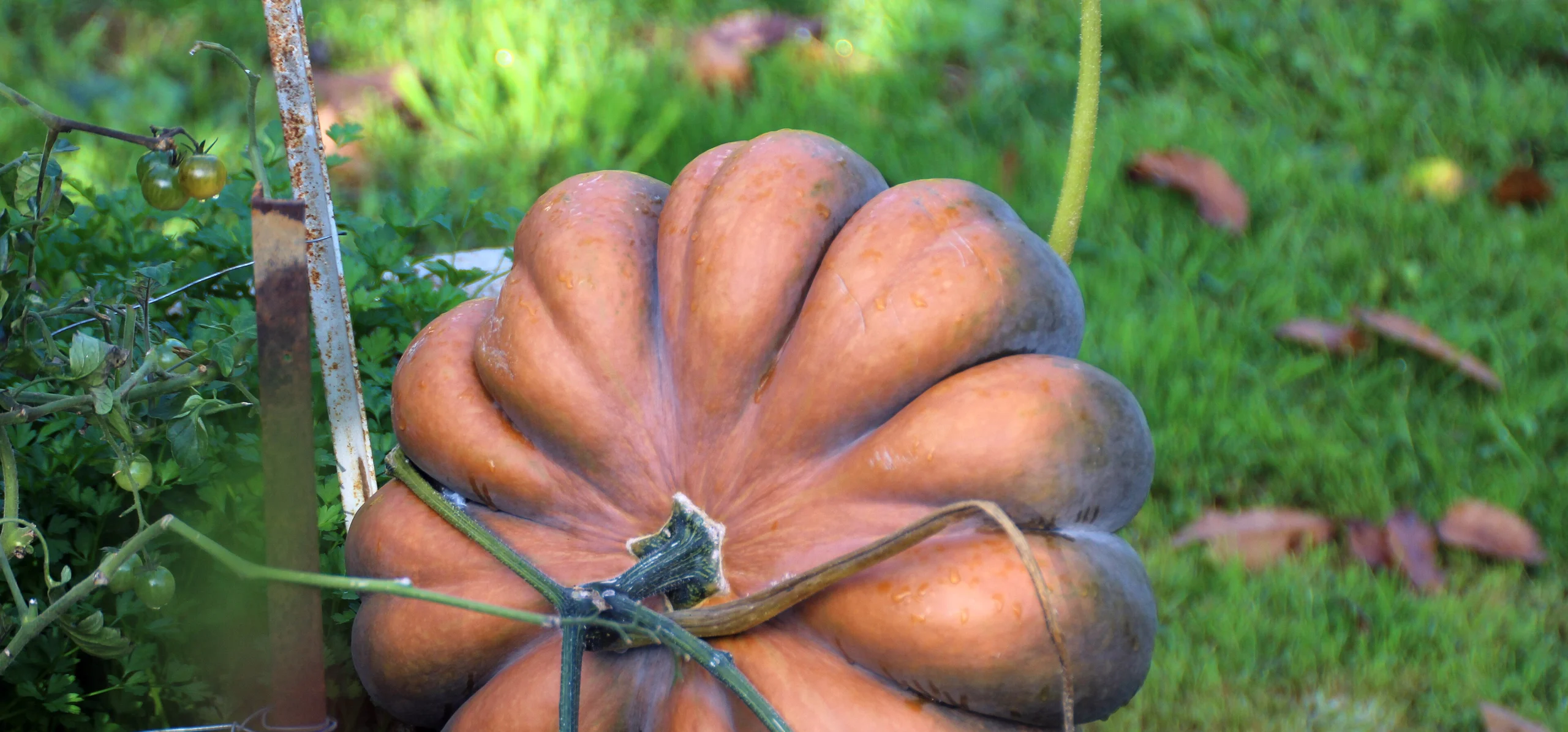
A winter squash bought as a curing Hubbard, a ribbed orange buttercup or a seed packet simply labelled Cucurbita maxima is the same species behind pumpkins that reach 2,624 pounds at autumn weigh-offs and squash that keep in a cool pantry until spring. Every cultivar shares one identifying feature most seed catalogues never mention: where the fruit stalk meets the fruit, the stem stays soft, round and corky rather than hard and sharply ridged, the single most reliable way to tell this species apart from the zucchini-type Cucurbita pepo growing in the next row. The plant asks for very little skill, mostly space, heat to germinate and a long stretch of summer before the rind hardens enough for storage. What it will not forgive is cold, wet soil at sowing, or a harvest date decided by colour alone.
One Species Behind Hubbard, Buttercup, Turban and Giant Pumpkins
GBIF records Cucurbita maxima Duchesne in the family Cucurbitaceae, genus Cucurbita, order Cucurbitales, the accepted name for a species grown in forms that barely look related on a shelf: grey-blue Hubbard squash, ribbed orange buttercup, flattened turban squash and the competition pumpkins bred to outgrow a small car. Plants of the World Online lists it as a cultigen native from Bolivia to northern Argentina, domesticated so long ago in South America that no wild ancestor grows there today. Cucurbita pepo, the far more common zucchini and jack-o-lantern species, has a fruit stalk that is hard, woody and sharply five-angled; on Cucurbita maxima the same stalk stays round, soft and corky right up to where it flares into the fruit, with no ridges at all. That corky stem is also part of why the largest pumpkins on record belong to this species rather than to true pumpkins: the exhibition line Atlantic Giant, a Cucurbita maxima selection, produced a fruit weighing 782 kilograms, 2,624 pounds, in 2016.
Sowing Warm and Giving the Vine Room to Sprawl
Seed goes in about an inch deep once the soil has warmed to 58 to 60 degrees Fahrenheit, since cold, wet ground stalls germination rather than killing the seed outright. Spacing depends entirely on habit: full vining types need hills spaced five to six feet apart with ten to fifteen feet between rows, roughly fifty to a hundred square feet of open ground per hill, semi-bush selections manage on four-foot hills and eight-foot rows, and the rarer miniature or true bush cultivars fit two feet apart in the row. Skimping on that spacing is the single most common mistake with this species: a vine given three feet where it needed ten simply climbs over itself, its own foliage and every neighbouring plant, shading out fruit before it can size up.


Watering and Feeding a Vine Built to Carry Heavy Fruit
The plant wants moderately moist, well-drained soil high in organic matter and does not recover well from drought once fruit is filling out, so water goes at the base rather than overhead, deep enough to reach the root zone rather than little and often. Field-scale extension guidance puts nitrogen needs at roughly 60 to 100 pounds per acre, about two thirds worked into the soil before planting and the rest sidedressed once vines start to run, a ratio that scales down easily to a balanced vegetable fertiliser at planting and again when the first flowers open. Exhibition growers chasing size go further, switching to a high-potassium feed once fruit has set, since potassium rather than nitrogen is what pushes one pumpkin from large toward record-breaking.
Pollination and Why a Flower Sometimes Fails to Set Fruit
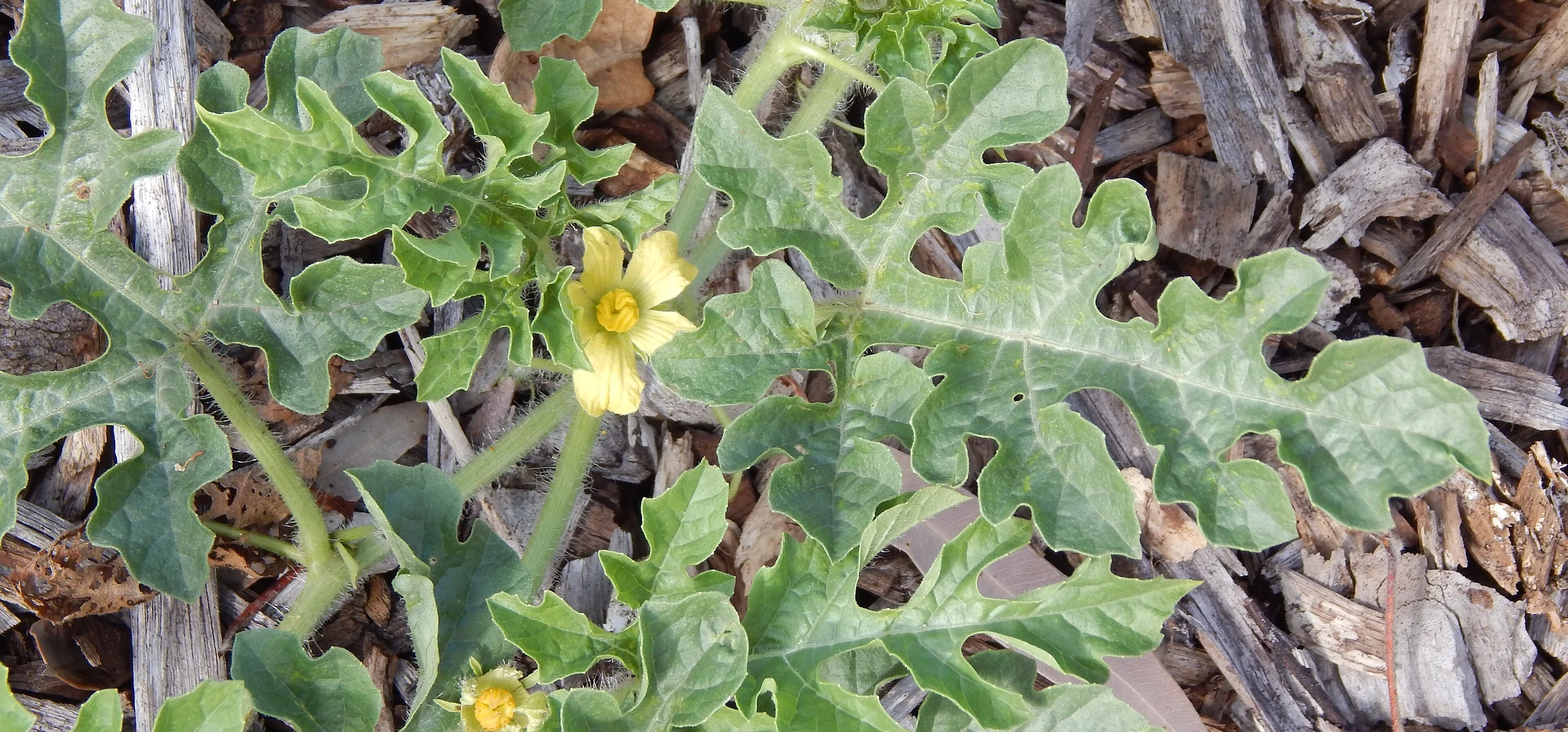
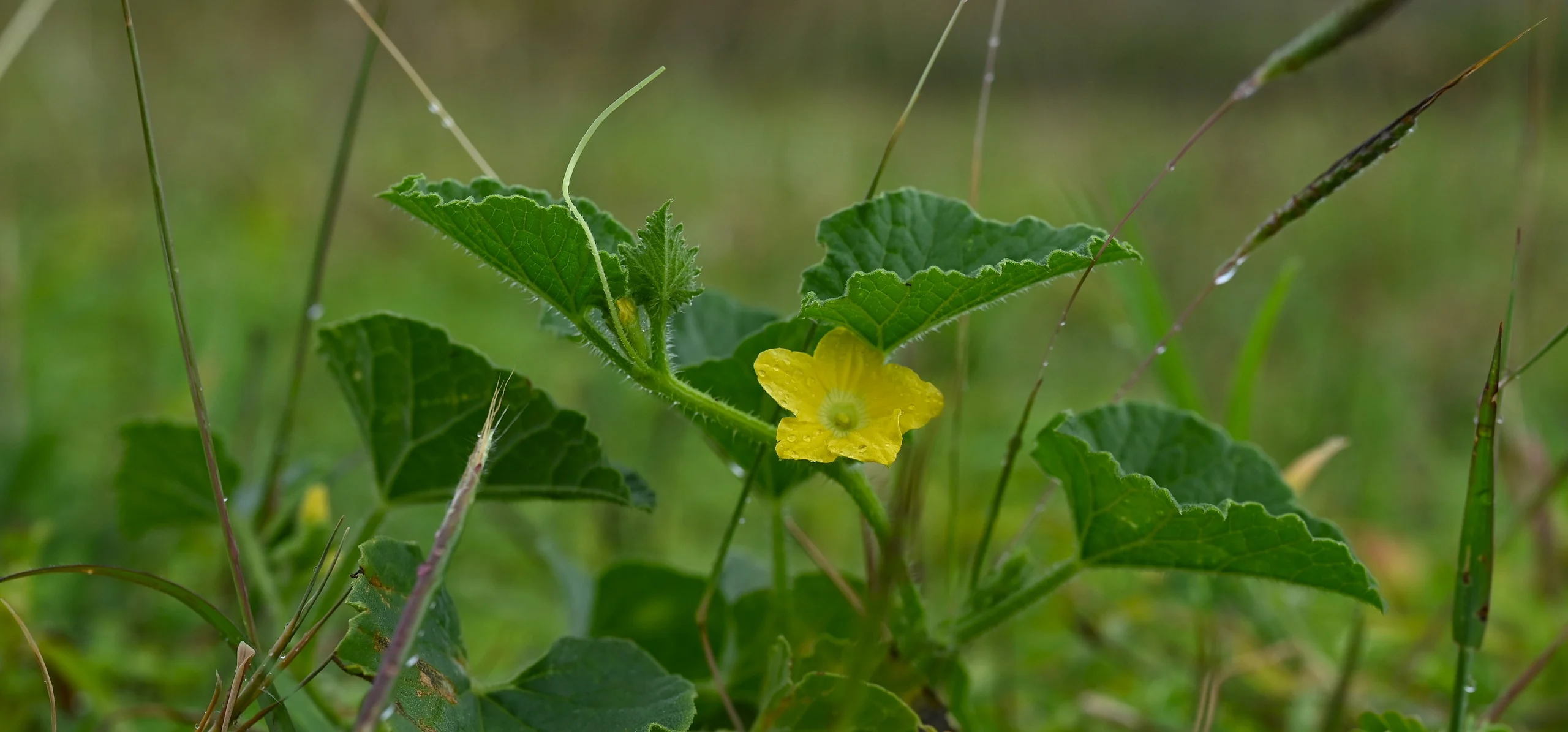
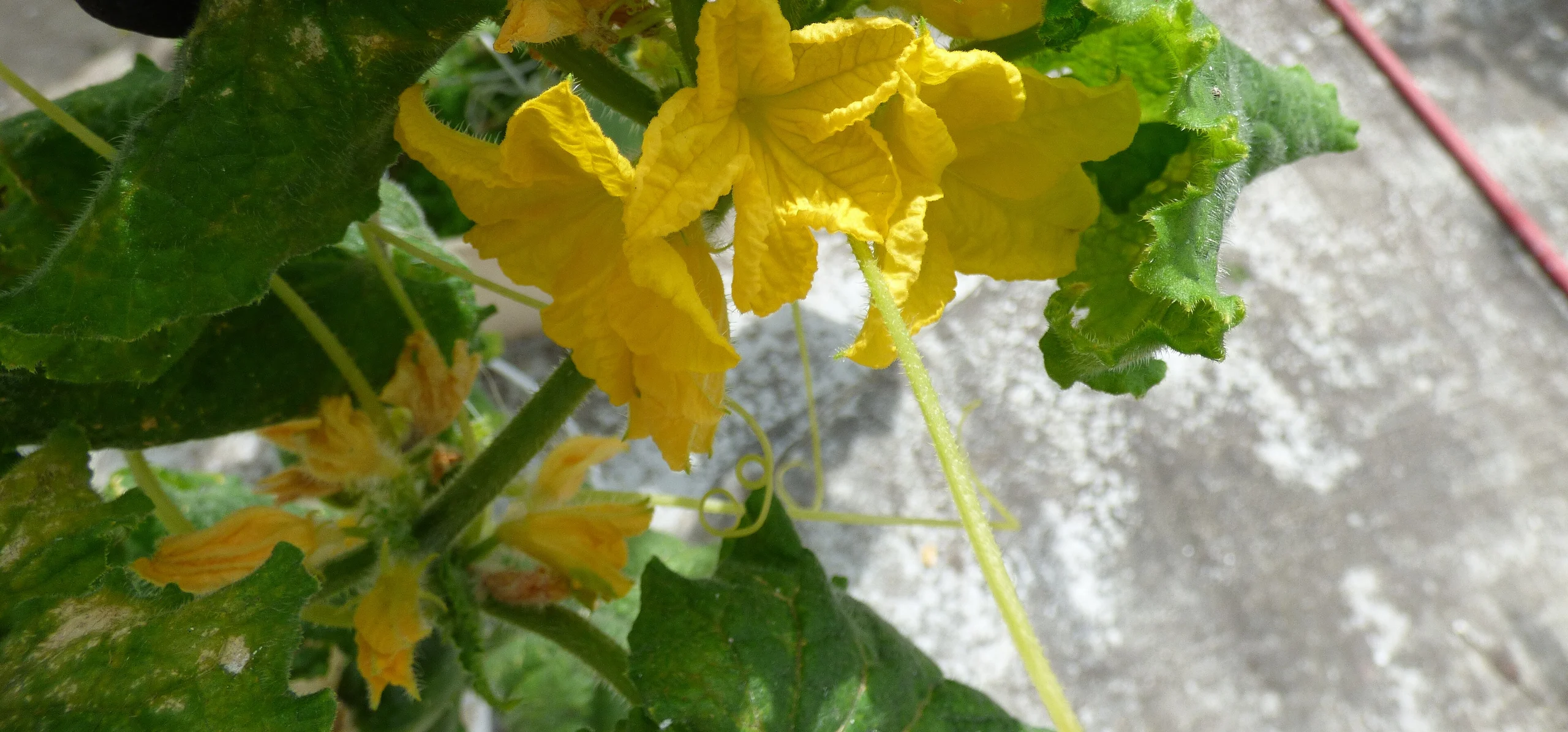
Like every squash, this species carries separate male and female flowers on the same plant, the female obvious by the miniature fruit already swollen behind the petals, and it depends on bees to move pollen between the two. Commercial growing guidance is to move beehives into the field once flowering begins, a fix most home gardeners cannot copy but that makes the underlying point clearly: a garden short on pollinators is a garden where flowers open, close again by afternoon and drop without ever swelling into fruit. A cool, wet spell that keeps bees grounded during the first flush of flowering is usually the real explanation when a healthy-looking vine carries plenty of blossom and very little squash.
Pests and Diseases to Watch For
University extension lists aphids, cucumber beetles, squash bugs, squash vine borer and spider mites as the insects most likely to trouble this species, with squash vine borer the one that kills outright: a vine wilting suddenly, with sawdust-like frass piled at a small hole in the stem, has a larva tunnelling inside it, and by the time the wilting is obvious the damage is already done. On the disease side, cucurbit downy mildew and powdery mildew both show up as discoloured leaves, downy mildew producing yellow, angular patches on the upper leaf with a grey mould visible underneath in damp weather, powdery mildew a plain white dusting across the surface; both spread fastest when foliage stays wet, so watering at the base does double duty against these diseases as well as against fruit rot.
Kitchen Squash Versus Show-Stopping Giants: Choosing a Variety
Hubbard, buttercup and turban types are bred to eat: dense, sweet flesh, a long storage life and a manageable vine, usually within the ten-foot spread that keeps them realistic for an ordinary vegetable bed. The Atlantic Giant line exists for the opposite reason, fruit that can exceed six feet across with flesh so watery it is really only useful in stock or soup, and growing one well means feeding hard, giving it the full fifty to a hundred square feet a single vine wants, and accepting that most of what the plant produces goes into one enormous fruit instead of a dozen normal ones. Choosing between them is really choosing what the harvest is for: a winter's worth of soup and roasting squash, or one outsized pumpkin for the autumn weigh-off.
Harvesting by Stem Corking, Then Curing for Winter Storage
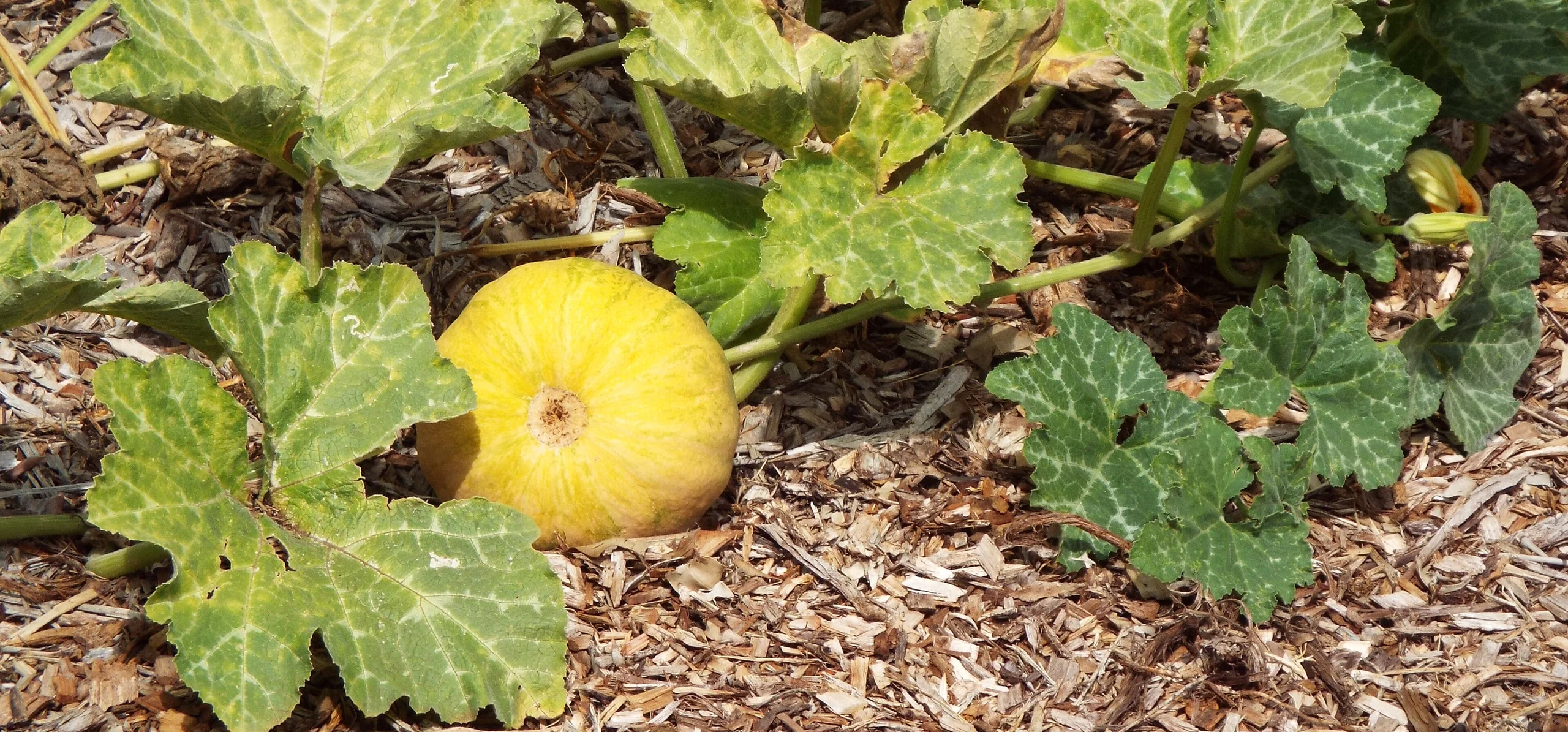
Colour alone is not a reliable harvest signal for this species, since some types change colour weeks before the fruit is actually mature; the better indicator is the stem itself corking, losing its green colour and developing brown, woody stripes where it meets the fruit, alongside a rind a fingernail can no longer puncture and a duller, less glossy skin. Fruit should be cut with several inches of stem left attached rather than pulled, since a torn or missing stem is an open door for rot in storage. Curing for a week or two somewhere warm right after harvest raises sugar content and hardens the rind further, after which properly cured fruit keeps at 50 to 60 degrees Fahrenheit and 50 to 70 percent relative humidity, with storage life varying sharply by type: Hubbard squash can hold for up to six months this way, while thinner-skinned buttercup and turban types are best used within a couple of months of harvest.
Test your plant knowledge
Tap a card to flip it and reveal the answer.
A soft, round, corky stem where it meets the fruit is one of the clearest ways to tell Cucurbita maxima apart from Cucurbita pepo. Tap to reveal ✓ True
Cucurbita maxima includes only small culinary squash, never giant show pumpkins. Tap to reveal ✕ False
This squash germinates best when sown into soil that is still cold and wet from spring rain. Tap to reveal ✕ False
A change in fruit colour alone is a reliable sign that this winter squash is ready to harvest. Tap to reveal ✕ False
Buttercup squash, a Cucurbita maxima cultivar, is listed by the ASPCA as non-toxic to cats, dogs and horses. Tap to reveal ✓ True
Sources
References consulted for this guide
- GBIF: Cucurbita maxima Duchesnegbif.org
- POWO (Kew): Cucurbita maxima Duchesnepowo.science.kew.org
- ASPCA: Toxic and Non-Toxic Plants, Buttercup Squashaspca.org
- University of Illinois Extension Hort Answers: Pumpkin (Cucurbita pepo, C. maxima, C. moschata, C. mixta)web.extension.illinois.edu
- South Dakota State University Extension: Harvesting and Storing Pumpkins and Winter Squashextension.sdstate.edu
- RHS: Cucurbita maxima 'Atlantic Giant'rhs.org.uk
- Reference entity : Wikipédiaen.wikipedia.org