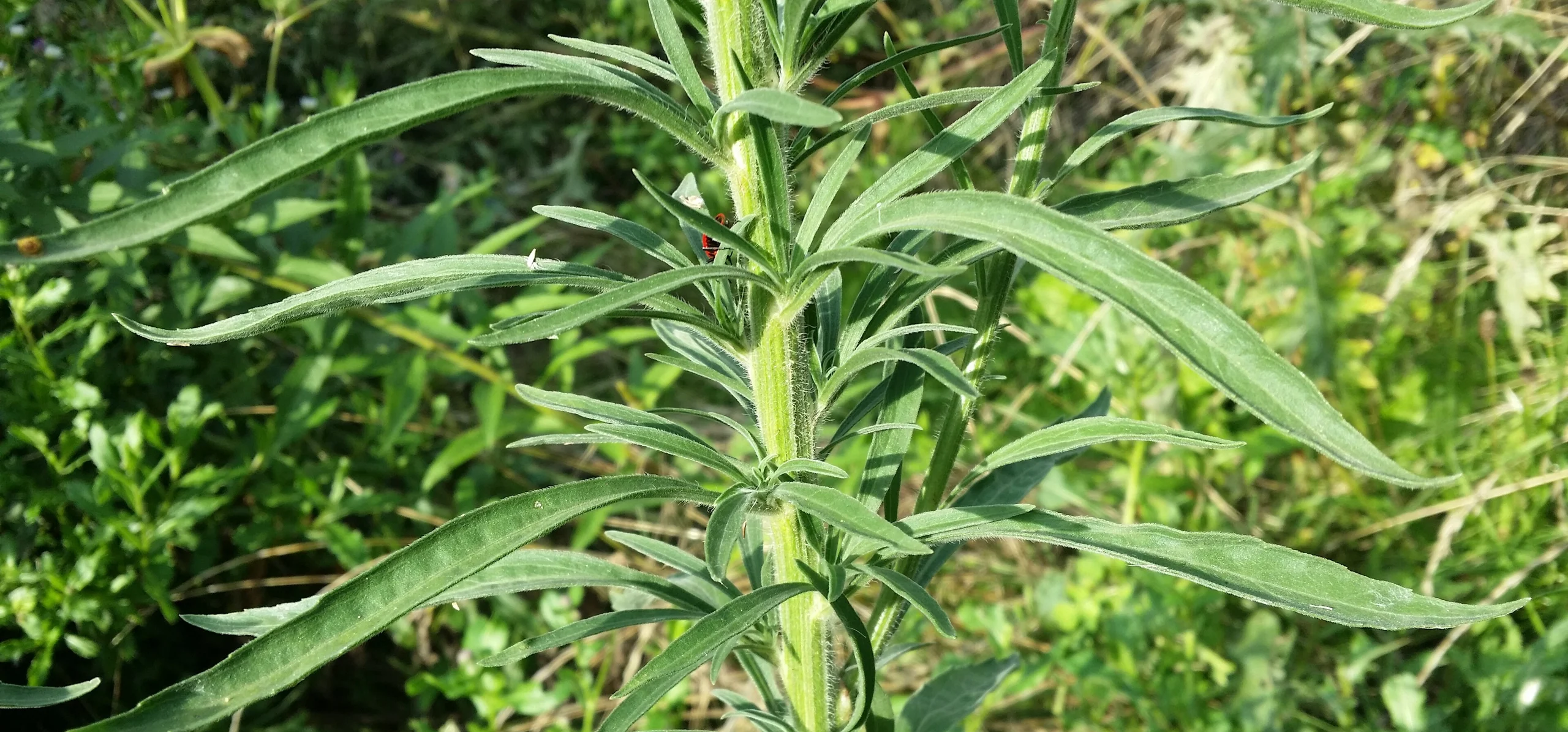
Guernsey Fleabane
Erigeron sumatrensis
Family · Asteraceae
Erigeron sumatrensis, Guernsey fleabane, has nearly invisible ray florets and a Latin name from a Sumatran specimen despite Latin American origins.
Erigeron sumatrensis
Plant profile
- WateringVery littleWater every 21 days
- Light exposureFull sun
Growth
- Family
- Asteraceae
- Life cycle
- Annual
- Growth speed
- 8/10
- Mature size
- Erect annual with a single main stem, branching only near the top
- Propagation
- Seed
FloweringSmall, cream to greenish heads with barely visible ray florets, produced during the warm growing season
DormancyNone; dies after seeding
Time to maturitySeed to seed within one growing season
Soil & climate
- Soil types
- disturbed ground, dry, stony or gravelly soil, roadsides and waste ground
- Drought tolerance
- Yes
Light & Placement
- Origin
- Mexico to South Tropical America (POWO); now naturalized worldwide, including Europe
- Where to place it
- roadsides and verges
- gravel drives and paving cracks
- disturbed or waste ground
- field margins
- neglected outdoor pots (self-sown, not cultivated)
Safety
- Toxicity
- Not listed by the ASPCA; no verified toxicity data for this species
- Pet safe
- No
Invasive speciesNaturalized weed of disturbed ground outside its native Mexico to S. Tropical America range; documented hybrid with Erigeron canadensis in France (INPN)
Data fromGBIF: Erigeron sumatrensis Retz.Plants of the World Online (Kew): ErigerInternational Plant Names Index: ErigeroJepson eFlora (UC Berkeley): Erigeron suINPN (Muséum national d'Histoire naturel
Where it grows
World distribution
Guernsey Fleabane is native to 18 countries: Argentina, Belize, Bolivia, Brazil, Colombia, Costa Rica, Ecuador, and El Salvador….GBIF records 141,207 documented identifications across 142 countries, with the largest concentrations in France, Belgium, and Netherlands.
- Argentina
- Belize
- Bolivia
- Brazil
- Colombia
- Costa Rica
- Ecuador
- El Salvador
- Guatemala
- Guyana
- Honduras
- Mexico
Show 6 more countriesShow fewer countries
- Nicaragua
- Panama
- Paraguay
- Peru
- Uruguay
- Venezuela
Yellow to orange dots: concentration of documented identifications per country. Green countries: sourced native range. Source: GBIFNative range from POWO (Kew).
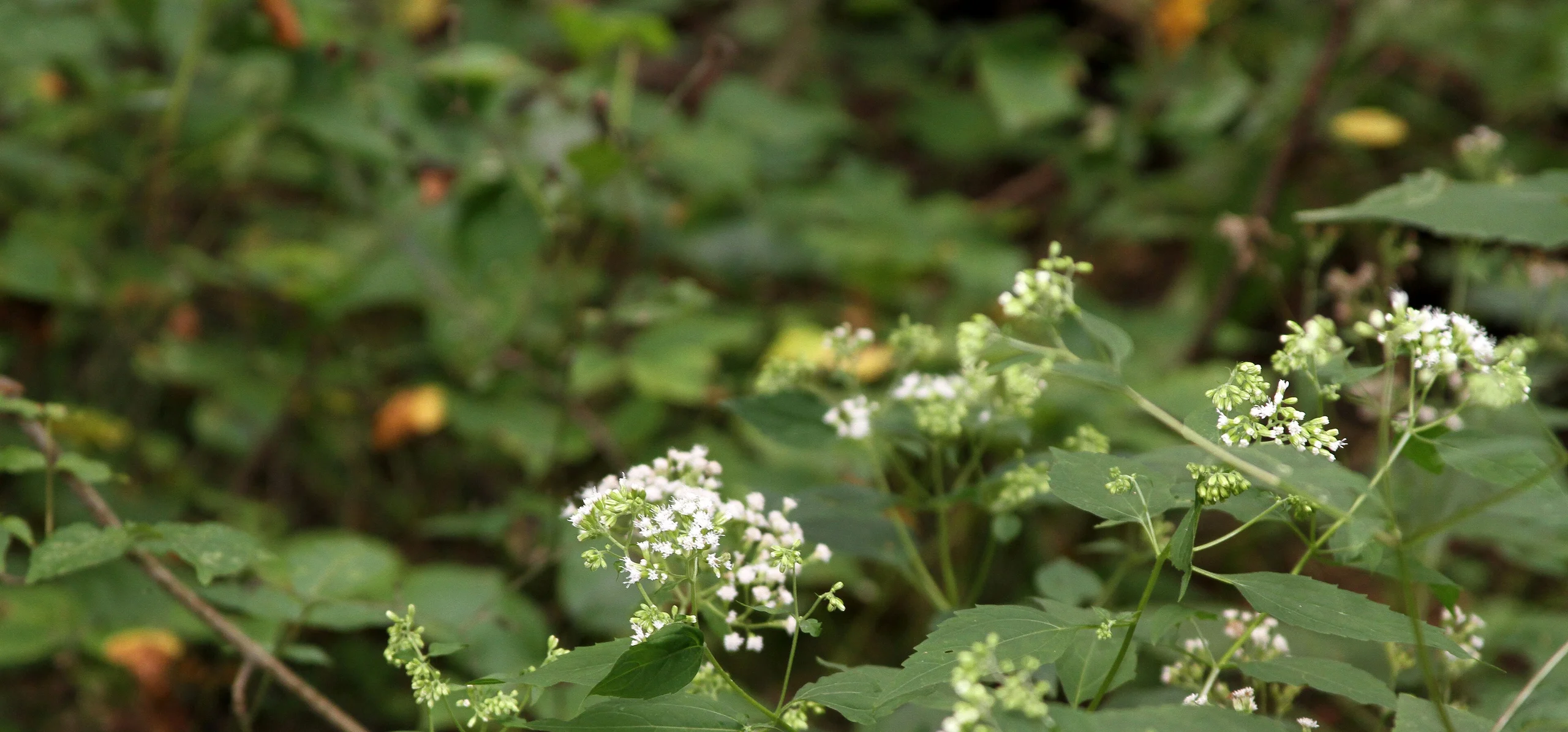
A tall, densely hairy stem covered in narrow, grey-green leaves and topped with hundreds of tiny, cream-colored flower heads that never quite look like open daisies: that combination usually points to Erigeron sumatrensis, Guernsey fleabane. It is not a plant anyone plants on purpose. It arrives on its own in gravel drives, vegetable beds, roadside verges and neglected pots, grows fast through a single season, and sets seed before most gardeners have identified it. The first useful step is working out which of the three common weedy fleabanes is actually in front of you, since Erigeron sumatrensis, Erigeron canadensis (horseweed) and Erigeron bonariensis (hairy fleabane) are routinely mistaken for one another.
A Name Split Between Two Genera
The Global Biodiversity Information Facility (GBIF) records the accepted name for this species as Erigeron sumatrensis Retz., placing it alongside the true fleabanes and the garden Erigeron daisies. Many working floras disagree: the reference flora used across Belgium and northern France, cited by Tela Botanica, keeps Conyza sumatrensis (Retz.) E.Walker as its retained name, treating Erigeron and Conyza as separate genera. Conyza sumatrensis is simply a later combination of the same basionym, published by E. Walker in 1971 according to the International Plant Names Index, so the two names describe exactly the same plant. Anyone comparing an old field guide, a herbicide label, or a regional flora against GBIF should expect to see both names in use, sometimes on the same page.
A Latin Name From the Wrong Continent
The species epithet sumatrensis has nothing to do with where the plant actually originates. The International Plant Names Index records that Retzius described it in 1788 from a specimen collected on Sumatra, in what is now Indonesia. Plants of the World Online (Kew) lists the true native range as Mexico to South Tropical America, an annual of the subtropical biome across Central and South America. By the late eighteenth century the plant was already naturalized far enough into Southeast Asia that the first scientific description was written from an Indonesian specimen rather than an American one, and the geographically misleading name has stuck ever since.


Telling It Apart From Horseweed and Hairy Fleabane
The most reliable field character separating the three common weedy fleabanes is how visible the ray florets are around the edge of each small flower head. Jepson eFlora, the University of California's flora of California, describes Erigeron sumatrensis with ray florets only 0 to 0.3 mm long, so short they barely project past the surrounding phyllaries and each head reads as a dull cream or greenish button rather than a daisy. Erigeron canadensis, horseweed, shows slightly longer, more visible white rays, and Erigeron bonariensis sits closer to sumatrensis. Hairiness is a second clue: Jepson notes the phyllaries on Erigeron sumatrensis range from glabrous to densely strigose or spreading-hairy depending on the population, on top of an already evenly hairy stem and leaf surface.
Stem, Leaves and Flower Heads Up Close
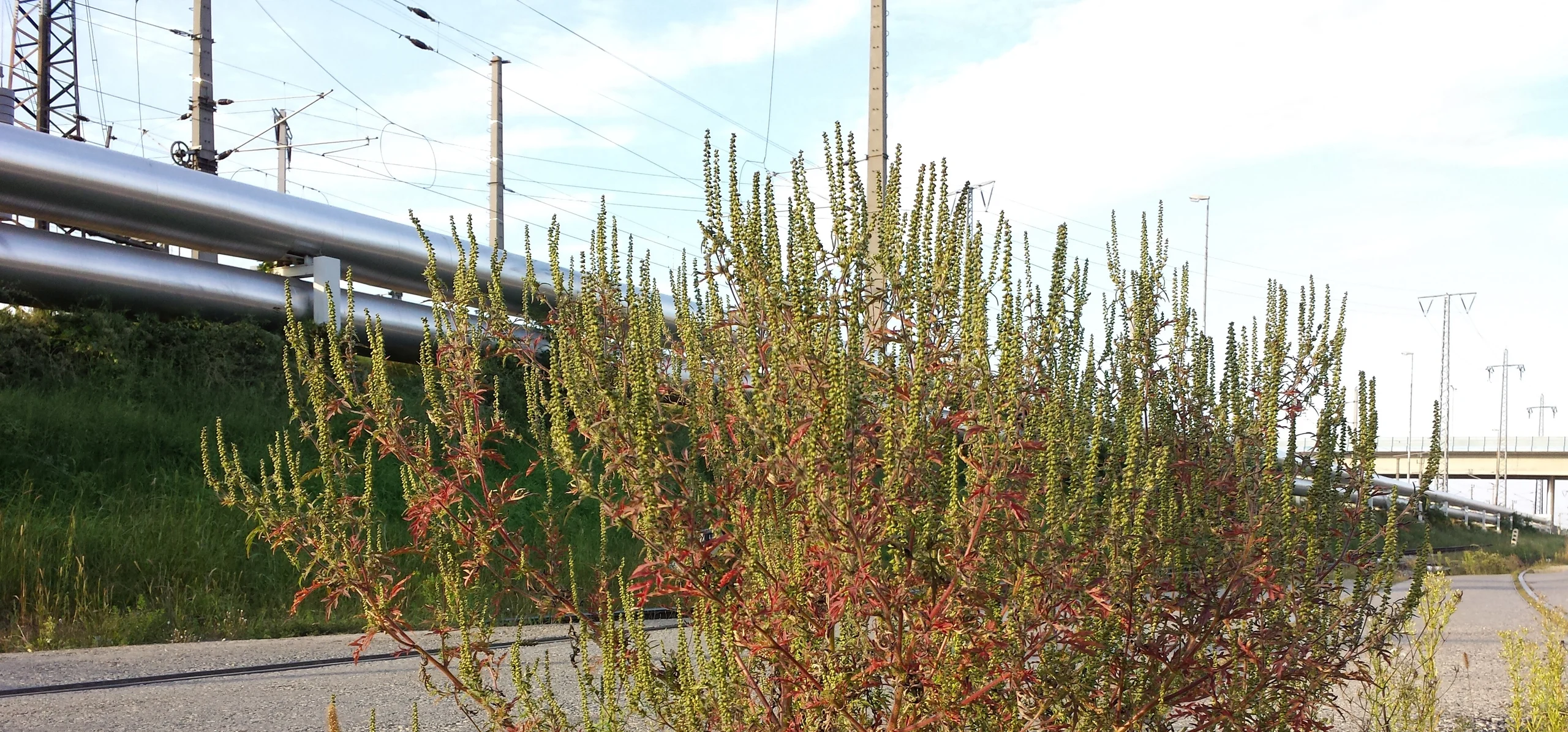
A mature plant grows as a single erect stem, usually unbranched until well above the base, where it divides into a narrow, elongated cluster of branches carrying hundreds of small flower heads, a shape closer to a slim conifer than a rounded shrub. Lower leaves are narrowly lanceolate to oblanceolate and toothed; leaves higher up the stem get progressively narrower, smaller and closer to stalkless, a change easy to see by running a hand up a single stem from base to tip. Jepson eFlora notes that the fruit, a small achene, is pale tan with faint red veins in this species, a detail visible under a hand lens once the flower heads have gone to seed and turned fluffy white with their pappus.
Where It Grows Now
Outside its native Mexico to South Tropical America range, this species behaves as a classic disturbed-ground coloniser. The Royal Horticultural Society lists it under the name Guernsey fleabane and records it as not native to Great Britain or Ireland, one of many places where it now turns up as an introduced weed rather than a wildflower. France's national biodiversity inventory, INPN, records it as naturalized there too, under vernacular names including Erigeron de Sumatra and Vergerette de Sumatra, and documents a recognized hybrid between Erigeron canadensis and Erigeron sumatrensis where the two now overlap, a sign of how closely related and how widely both have spread outside their original ranges.
A Short Life Cycle, Repeated Every Season
Like its close relatives, Erigeron sumatrensis behaves as an annual: a plant germinates from seed, grows through a single warm season, flowers, sets seed, and dies, leaving nothing behind but the seed bank in the soil. There is no dormant rootstock or bulb to dig out and no perennial crown to prune back; every plant present in a bed or a gravel path this year grew from seed that landed sometime in the previous months. That single-season habit is also why it shows up so unpredictably: disturbed soil left bare for even one season is enough for windblown seed to establish a stand that looks, by late summer, as if it had always been there.
Toxicity and Handling
Erigeron sumatrensis does not appear in the ASPCA's toxic and non-toxic plant database under this name or its Conyza sumatrensis synonym, so there is no ASPCA record to confirm or rule out toxicity to cats, dogs or horses; treat that absence as unknown rather than as a safety guarantee. No verified data on human skin or ingestion toxicity for this specific species was found either, so the sensible approach with an unfamiliar weed is ordinary caution: wear gloves when pulling large stands, particularly once the hairy stems and foliage have dried and turned brittle, and keep pets and children from chewing on it.
Common Mistakes
The most frequent error is assuming any tall, hairy weed with small whitish flower heads is horseweed, when it may in fact be Erigeron sumatrensis or Erigeron bonariensis; a hand-lens look at the ray florets and leaf hairs is worth the extra minute before deciding how to remove it, since typical mature size and control notes differ across the three. A second mistake is trusting a single field guide's name for the plant: because GBIF, national floras and older references split the group between Erigeron and Conyza differently, checking a find against the accepted GBIF name and its listed synonyms avoids confusion when reading advice written under the other genus.
Test your plant knowledge
Tap a card to flip it and reveal the answer.
GBIF's accepted scientific name for this species is Erigeron sumatrensis, even though many regional floras use the synonym Conyza sumatrensis. Tap to reveal ✓ True
The species epithet 'sumatrensis' reflects the plant's true native range in Southeast Asia. Tap to reveal ✕ False
Erigeron sumatrensis has showy, easily visible white ray florets like a typical garden daisy. Tap to reveal ✕ False
The ASPCA lists Erigeron sumatrensis as toxic to cats and dogs. Tap to reveal ✕ False
Erigeron sumatrensis is native to Great Britain and Ireland. Tap to reveal ✕ False
Sources
References consulted for this guide
- GBIF: Erigeron sumatrensis Retz.gbif.org
- Plants of the World Online (Kew): Erigeron sumatrensis Retz.powo.science.kew.org
- International Plant Names Index: Erigeron sumatrensis Retz.ipni.org
- Jepson eFlora (UC Berkeley): Erigeron sumatrensisucjeps.berkeley.edu
- INPN (Muséum national d'Histoire naturelle): Erigeron sumatrensis Retz.inpn.mnhn.fr
- Reference entity : Wikipédiaen.wikipedia.org