St. John's Wort
Hypericum perforatum
Family · Hypericaceae
St. John's wort spreads by rhizome and seed, stains fingers red when crushed, and is a regulated Klamath weed across the US West and Australia.
Hypericum perforatum
Plant profile
- WateringLittleWater every 10 days
- Light exposurePartial sun
- Hardiness zoneUSDA 3–8
Growth
- Family
- Hypericaceae
- Life cycle
- Perennial
- Growth speed
- 7/10
- Mature size
- 30–91 cm
- Spread
- 23–61 cm
- Flowering
- May to August
- Propagation
- Seed
- Division
Dormancydies back to a low, woody rootstock over winter, regrowing from rhizomes and basal shoots in spring
Time to maturitycommonly flowers by its second summer from seed, then returns each year from the rootstock and spreads outward by rhizome
Soil & climate
- Soil types
- clay, loam, sand
- Drought tolerance
- Yes
Light & Placement
- Where to place it
- unmown meadow
- wildflower border
- roadside verge
- waste ground
- large container with poor, free-draining compost to contain its spread
OriginEurope to China and NW Africa (POWO), now naturalised across North America and Australia
Safety
- Toxicity
- CatsToxic
- DogsToxic
- HorsesToxic
- HumansToxic
Invasive speciesregulated as a noxious weed in California and several other western US states, and a prohibited or declared weed in parts of Australia including Victoria and Western Australia
Data fromHypericum perforatum L., GBIF Backbone TPOWO: Hypericum perforatum L.Toxic and Non-toxic Plants: St. John's WNC State Extension Gardener Plant ToolboUC Statewide IPM Program: Klamathweed Be
Where it grows
World distribution
St. John's Wort is native to 33 countries: Albania, Austria, Belarus, Belgium, Bulgaria, China, Croatia, and Cyprus….GBIF records 928,515 documented identifications across 95 countries, with the largest concentrations in France, United Kingdom, and Germany.
- Albania
- Austria
- Belarus
- Belgium
- Bulgaria
- China
- Croatia
- Cyprus
- Czechia
- Denmark
- Estonia
- Finland
Show 21 more countriesShow fewer countries
- France
- Germany
- Greece
- Ireland
- Italy
- Kazakhstan
- Kyrgyzstan
- Lebanon
- Morocco
- Netherlands
- Norway
- Poland
- Portugal
- Romania
- Russia
- Spain
- Sweden
- Switzerland
- Türkiye
- Ukraine
- United Kingdom
Yellow to orange dots: concentration of documented identifications per country. Green countries: sourced native range. Source: GBIFNative range from POWO (Kew).
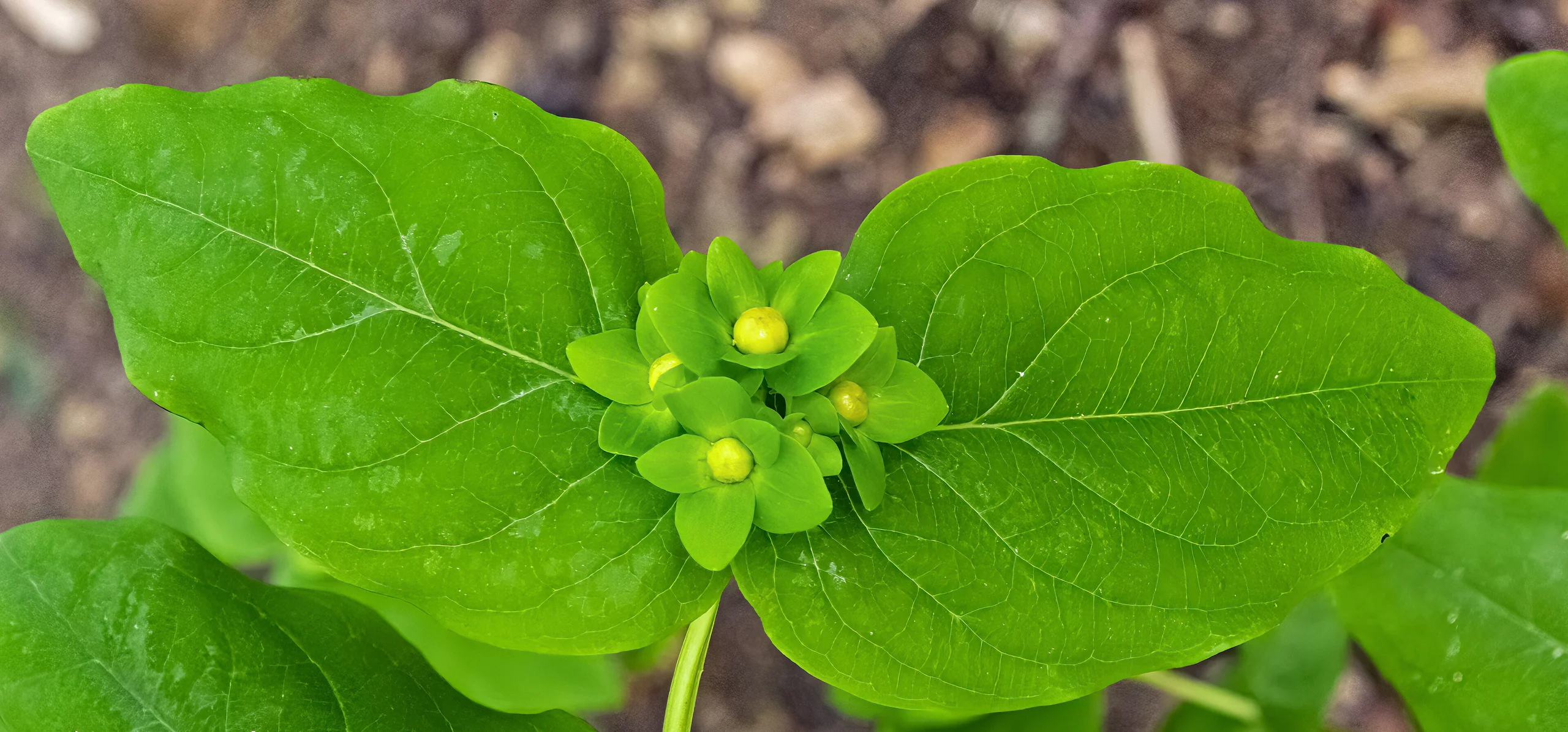
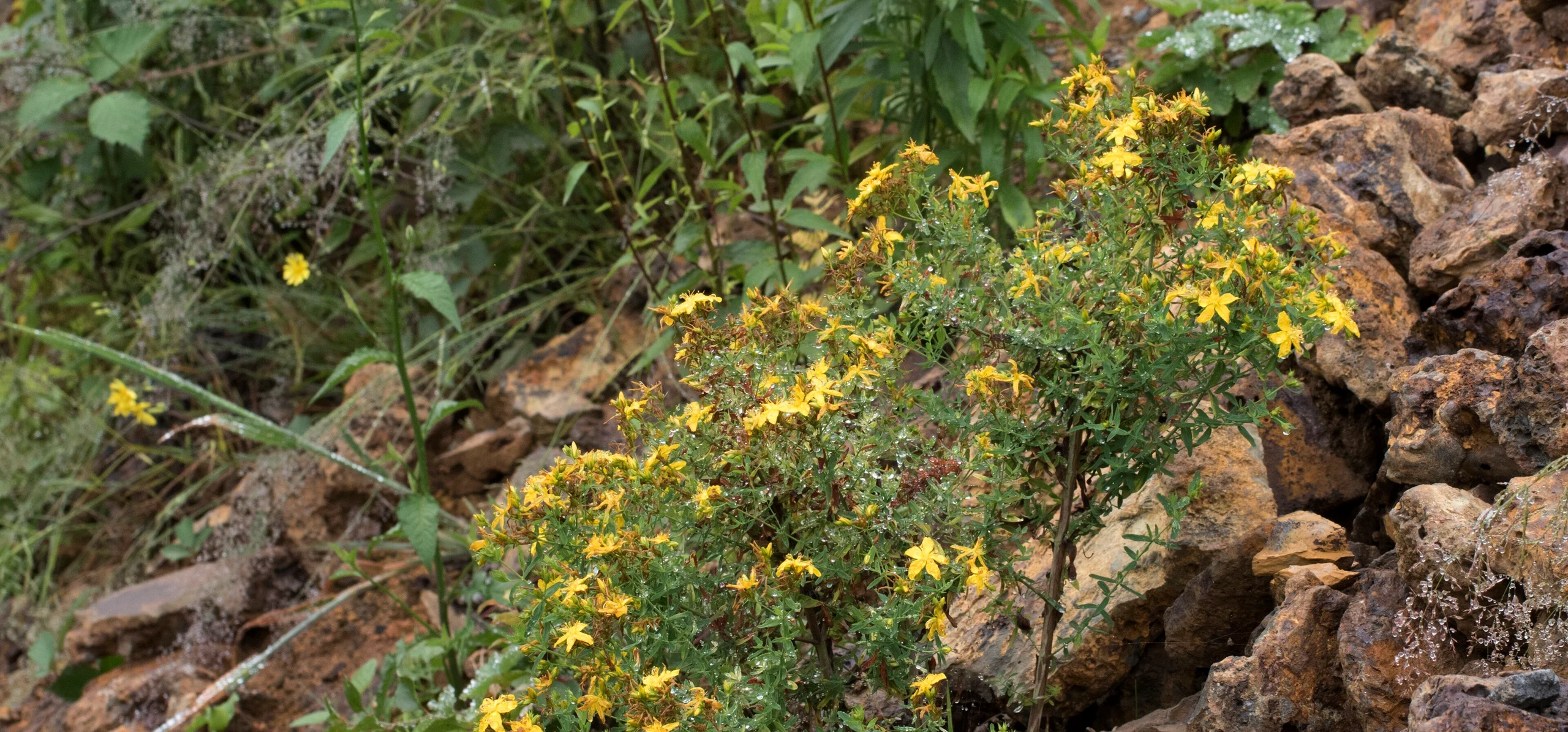
Hypericum perforatum, commonly called St. John's wort or Klamath weed, is easy to place once you know what to look for: hold a leaf up to the light and it is stippled with tiny translucent dots, and pinching an open flower or bud between your fingers leaves a red-purple stain on your skin. It is a rhizome-spreading perennial of meadows, verges and disturbed ground, native from Europe to China and northwest Africa, and it has since naturalised so widely across North America and Australia that in several places it is regulated as a noxious weed rather than welcomed as a wildflower. The straight species is not the compact hedging shrub sold in garden centres as Hypericum 'Hidcote'; that is a different, non-invasive plant entirely. What you do with a stand of it, let it flower for the bees or pull it before it seeds, depends on which of those two identities you are actually looking at.
Origin, Habitat and How It Spreads
Plants of the World Online gives the native range of Hypericum perforatum as Europe to China and NW Africa, where it grows as a perennial of open, disturbed and grassy ground. It spreads two ways at once: a single plant produces tens of thousands of tiny seeds a year that stay viable in the soil for up to a decade, and established clumps also send out shallow, branching rhizomes that push up new shoots along their length, according to North Carolina State University Extension. That combination, seed for long-distance colonisation and rhizome for filling in locally, is why a patch that looks like a handful of stems in spring can cover several square metres by late summer, and why pulling the top growth without digging out the rootstock rarely gets rid of it for good.
Perforated Leaves and Blood-Staining Flowers
The species name comes from those translucent leaf dots: held to the light, the small, stalkless, oblong leaves look pierced with pinpricks, though the marks are glands rather than holes. The five-petalled, bright yellow flowers, borne in flat-topped clusters from May to August, add a second identifying feature: their petals and buds carry tiny black dots along the margins, and crushing them releases hypericin, a red pigment that stains fingers and paper alike. Bees do most of the pollinating, drawn in by dense orange pollen even though the flowers offer no nectar; honeybees and several bumblebee species are the most frequent visitors, with hoverflies adding to the traffic on a sunny day.


A Declared Weed: Klamath Weed in the Western US and Australia
Outside its native range, the same rhizome-and-seed strategy that lets it fill a meadow has made Hypericum perforatum, known there as Klamath weed or goatweed, a regulated pest. It is listed as a noxious weed under California's Food and Agricultural Code, and Oregon's Douglas County weed list carries it as a Class B species, alongside similar listings across several other western states; by the early 1940s it had spread across roughly two million acres of California rangeland and wildland. It arrived in Australia as a garden plant around 1880 and became established as a serious pasture and woodland weed there too, prohibited in states including Victoria and Western Australia. In both places the appeal to grazing animals is part of the problem: cattle and sheep will eat it when better forage is scarce, which is where its second reputation, as a livestock hazard, comes from.
The Beetle That Turned the Tide: Chrysolina Biocontrol
California's answer became one of the founding case studies of weed biocontrol. Starting in 1946, two leaf beetle species, Chrysolina quadrigemina and Chrysolina hyperici, were imported by way of Australia, where they had already been introduced from Europe, and released across infested rangeland, according to the University of California Statewide IPM Program. The beetles feed on the foliage as larvae and adults, and by 1957 Klamath weed cover in California had dropped by more than 99 percent, eliminating it from many low-elevation sites and saving ranchers the cost of lost grazing and poisoned stock. The same beetles now keep ornamental Hypericum in irrigated gardens under occasional attack too, a minor nuisance that is really the same success story working exactly as designed.
Photosensitization: A Risk to Grazing Animals
The hypericin that stains your fingers red is also the reason Hypericum perforatum is a recognised livestock hazard, particularly for light-coloured or unpigmented animals grazing it in quantity. Once ingested, hypericin circulates to the skin and reacts with sunlight, producing photosensitization, a sunburn-like injury that shows up as blistering, ulcerative dermatitis on exposed, lightly pigmented skin rather than as internal poisoning. It is one of the standard reasons this plant is pulled from pasture edges and horse paddocks rather than left to flower, since animals that graze it heavily can develop signs once exposed to strong sun.
Toxic to Cats, Dogs and Horses
The ASPCA's toxic and non-toxic plant database lists St. John's wort as toxic to dogs, cats and horses, with hypericin named as the toxic principle and photosensitization, ulcerative and exudative dermatitis, as the clinical sign to watch for. That makes it worth removing from anywhere a dog, cat or grazing horse has regular access, particularly pale-coated or thin-coated animals that sunburn more easily even without a toxic plant involved. North Carolina State University Extension separately rates its toxicity to humans as medium, causing photosensitivity, dermatitis and gastrointestinal upset if handled or eaten carelessly, so glove up before pulling a large stand by hand.
An Herbal Antidepressant, With a Drug-Interaction Warning
The same plant that is a regulated weed in a pasture is sold, under the same common name, as an over-the-counter herbal remedy for low mood, and it is one of the most widely used herbal antidepressants on the market. North Carolina State University Extension flags the practical catch: ingesting St. John's wort can reduce the effectiveness of prescription medicine, since it interacts with how the body processes a range of other drugs. This is not medical advice, and the extract sold in shops is a standardised preparation rather than garden foliage, but anyone already taking prescription medication should talk to a doctor or pharmacist before adding any St. John's wort product, and should not treat a plant growing wild in the yard as a home remedy.
Garden Shrub or Wild Weed: Hypericum perforatum vs Hypericum 'Hidcote'
Garden centres sell a completely different plant under a related name: Hypericum 'Hidcote', a bushy, semi-evergreen shrub bred from Hypericum x hidcoteense rather than the wild species, with an RHS Award of Garden Merit and a well-behaved, clump-forming habit that reaches roughly 1.2 m and does not run by rhizome. It flowers later into the season, from summer into autumn, on woody stems that hold their shape without staking or division, and it is chosen precisely because it stays put in a mixed border. Confusing the two matters in practice: someone who buys 'Hidcote' for a shrub border and someone who finds Hypericum perforatum spreading through a meadow are dealing with plants that share a genus and very little else, from growth habit to legal status.
Test your plant knowledge
Tap a card to flip it and reveal the answer.
Hypericum perforatum spreads both by seed and by creeping underground rhizomes. Tap to reveal ✓ True
The ASPCA lists St. John's wort as toxic to cats, dogs and horses. Tap to reveal ✓ True
The photosensitization St. John's wort causes in livestock mainly affects dark-coated, heavily pigmented animals. Tap to reveal ✕ False
Two species of Chrysolina beetle, released in California starting in 1946, cut Klamath weed cover by more than 99 percent within about a decade. Tap to reveal ✓ True
The compact garden shrub sold as Hypericum 'Hidcote' is the same plant as the wild, rhizome-spreading Hypericum perforatum. Tap to reveal ✕ False
Sources
References consulted for this guide
- Hypericum perforatum L., GBIF Backbone Taxonomygbif.org
- POWO: Hypericum perforatum L.powo.science.kew.org
- Toxic and Non-toxic Plants: St. John's Wort, ASPCAaspca.org
- NC State Extension Gardener Plant Toolbox: Hypericum perforatumplants.ces.ncsu.edu
- UC Statewide IPM Program: Klamathweed Beetleipm.ucanr.edu
- Reference entity : Wikipédiaen.wikipedia.org