Tutsan
Hypericum androsaemum
Family · Hypericaceae
Tutsan holds its leaves through mild winters, flowers on new wood after a hard spring cutback, and self-seeds fast enough to be a declared weed abroad.
Hypericum androsaemum
Plant profile
- WateringLittleWater every 10 days
- Light exposureIndirect light
- Hardiness zoneUSDA 5–8
Growth
- Family
- Hypericaceae
- Life cycle
- Perennial
- Growth speed
- 6/10
- Mature size
- 50–100 cm
- Spread
- 50–100 cm
- Propagation
- Seed
- Cutting
- Division
FloweringSmall cup-shaped yellow flowers from midsummer, followed by berries ripening green to salmon-pink to red to black
Dormancysheds some or most leaves in cold winters but stays semi-evergreen where winters are mild
Time to maturityreaches its full 0.5-1m size in about 2 to 5 years (RHS)
Soil & climate
- Soil types
- chalk, clay, loam, sand
- Drought tolerance
- Yes
Light & Placement
- Origin
- Western and Southern Europe to Northern Iran and Northwest Africa (POWO)
- Where to place it
- woodland edge or dappled shade
- informal or cottage border
- bank or slope
- low hedge
Safety
- Toxicity
- HumansToxic
Invasive speciesself-sown seedlings spread readily once a plant is 18 months to 2 years old; classed as an invasive weed in parts of New Zealand and Australia, and naturalised outside gardens in Chile
Data fromHypericum androsaemum L., GBIF Backbone POWO: Hypericum androsaemum L.Hypericum androsaemum (tutsan), RHSLocating a biological control for tutsanHypericum androsaemum, NC State Extensio
Where it grows
World distribution
Tutsan is native to 18 countries: Algeria, Belgium, Bulgaria, Croatia, France, Georgia, Iran, and Ireland….GBIF records 122,807 documented identifications across 58 countries, with the largest concentrations in United Kingdom, France, and Spain.
- Algeria
- Belgium
- Bulgaria
- Croatia
- France
- Georgia
- Iran
- Ireland
- Italy
- Lebanon
- Morocco
- Portugal
Show 6 more countriesShow fewer countries
- Russia
- Spain
- Tunisia
- Türkiye
- Turkmenistan
- United Kingdom
Yellow to orange dots: concentration of documented identifications per country. Green countries: sourced native range. Source: GBIFNative range from POWO (Kew).
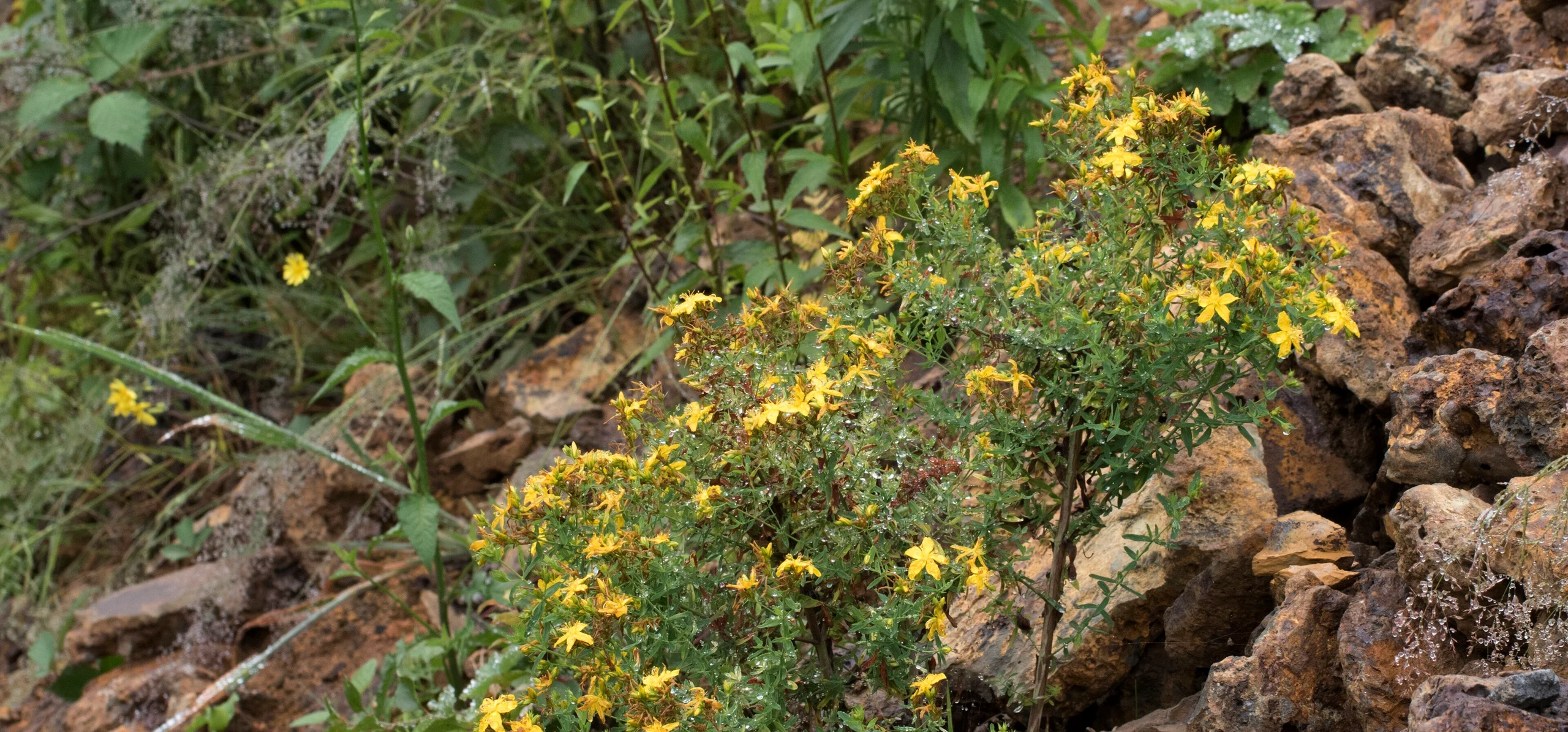
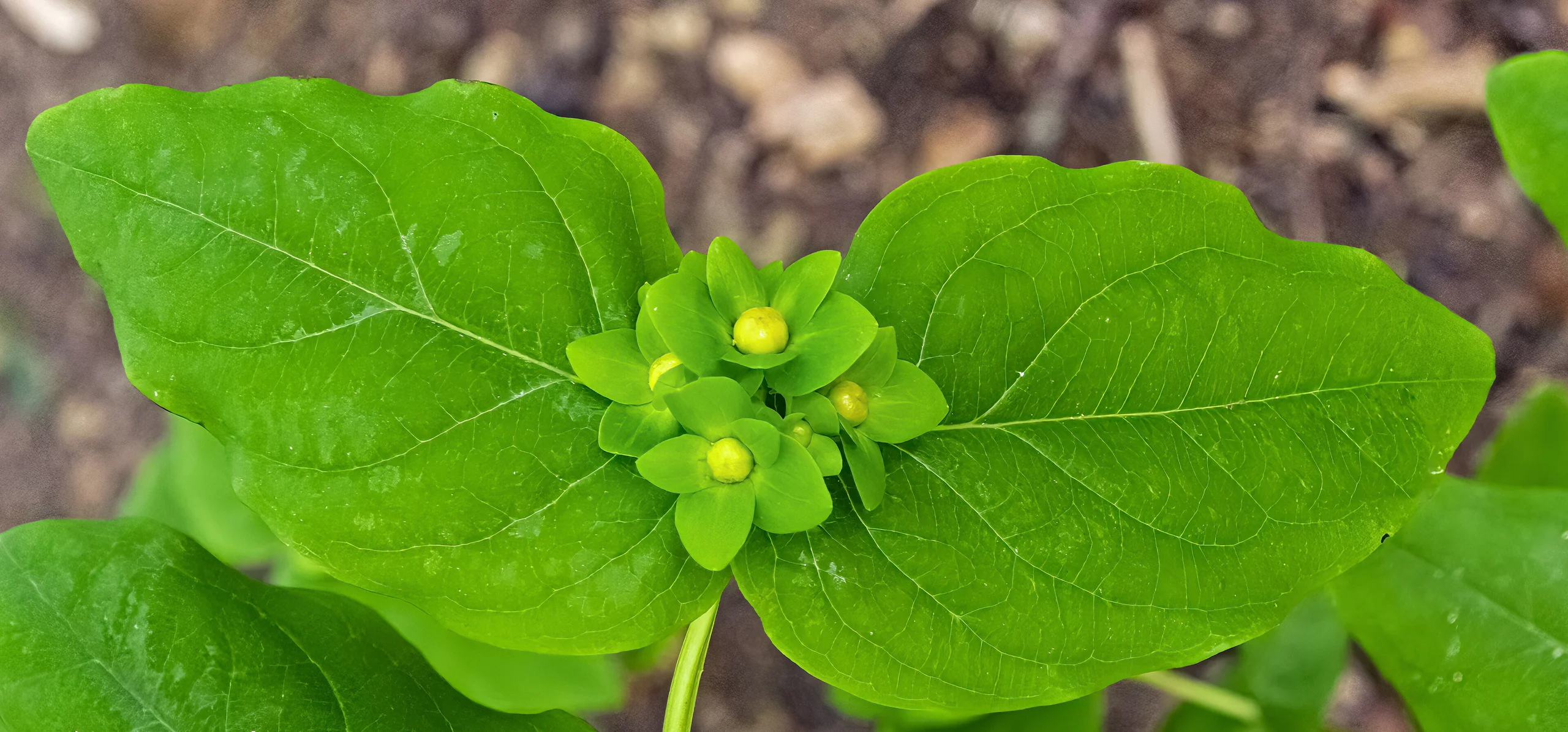
Tutsan earns its keep two ways: as a shade-tolerant filler for a dry, awkward corner where little else flowers, and as the shrub florists reach for when they want stems of berries that shift from green to salmon-red to near-black over a few weeks. It is a semi-evergreen woodland shrub, rarely taller than a metre, with paired oval leaves and small five-petalled yellow flowers opening through summer. What you do with it next depends on which form you are holding: the plain species self-seeds enthusiastically and is treated as a weed from New Zealand hill country to parts of Australia and Chile, while the purple-leaved and heavy-berried cultivars sold in nurseries are usually bred to behave. Get the identity right before deciding how hard to manage it.
Plain Species or Bred Cultivar: Albury Purple and the Miracle Series
The straight species has plain green leaves and a loose, thicket-forming habit. Most of what garden centres actually sell is a hybrid or selection bred for better colour and less spread. 'Albury Purple', usually listed as Hypericum x inodorum (a cross of H. androsaemum with H. hircinum), opens deep red-purple new leaves that age to green, on a semi-evergreen shrub to about a metre, with the same yellow-flower-to-black-berry sequence. The RHS-listed Miracle and Magical series follow the same pattern: compact, deciduous shrubs that stay semi-evergreen through a mild winter, bred for heavier crops of glossy red or crimson fruit. In North Carolina, breeders went further and produced triploid, seedless tutsan cultivars such as 'Matisse' and 'Pollock' specifically so gardeners could grow the berries without the self-seeding that makes the species a nuisance elsewhere.
Light and Where to Plant It
Tutsan takes full sun or partial to fairly deep shade and copes with any aspect, north-, south-, east- or west-facing, in an exposed or sheltered spot. That range is what makes it useful under high tree canopy or against a shaded fence where flowering shrubs usually sulk; it flowers a little more freely with more direct sun, but it will not simply fail in shade the way many berrying shrubs do.


Soil and Watering
It grows in acid, neutral or alkaline soil, and in chalk, clay, loam or sand, provided drainage is at least moderate; the RHS lists its moisture preference as moist-but-well-drained or well-drained rather than boggy. Water a newly planted tutsan regularly through its first summer while the roots establish. After that it copes with dry spells on its own, and in practice the more common problem is a plant that romps away with no watering at all once it has a season's growth behind it.
Pruning: Cut It Hard Back in Early Spring
Because flowers and fruit form on the current season's new growth, tutsan tolerates a genuinely hard cutback in early spring without costing that year's display; commercial cut-flower growers routinely cut plants right to the ground about twelve weeks before they want a flush of berried stems, then let the regrowth carry the crop. In a garden setting this translates to shearing the whole shrub down to 10 to 20cm in March, which keeps a naturally loose, spreading plant compact and encourages the dense new shoots that carry the best flower and berry show. Skip deadheading, since removing the spent flowers is exactly what would remove the berries that make the plant worth growing.
Flowers, Berries and Self-Sown Seedlings
Clusters of up to about eleven small, cup-shaped yellow flowers open from midsummer, each with a central boss of bushy stamens. They are followed by berries that ripen from green through a salmon-pink stage, prized in the cut-flower trade over duller brown-fruited forms, on to red and finally glossy black, often with several colour stages present on one stem at once. Left to its own devices the plain species starts producing seed at 18 months to two years old, up to roughly 2,000 seeds per plant a year, and those seeds stay viable in the soil for years, spread by birds that eat the fruit, by moving water, and by anyone who dumps garden waste over a fence. That combination is exactly why tutsan is treated as an invasive weed in parts of New Zealand and in Victoria and other states of Australia, and why it has also naturalised outside gardens in Chile: a shrub that looks tidy in a border can throw seedlings well beyond it within a couple of seasons.
Hypericum Rust and Few Other Problems
The main disease to watch for is hypericum rust, Melampsora hypericorum, which shows as yellow to reddish patches on the leaf's upper surface with matching orange-yellow powdery pustules underneath, worse in wet weather since the fungus needs damp foliage to spread. Cut-flower growers run a strict rust-control programme because a single bad outbreak can ruin a crop; a garden plant that gets it should be cut back hard and the infected material binned rather than composted, since the fungus completes its whole life cycle on hypericum alone and reinfects from fallen leaf debris. Choosing one of the newer resistant-leaning cultivars over an unnamed seedling reduces the risk. Otherwise tutsan is close to trouble-free: RHS rates it generally pest-free, with wilt and root rot occasionally reported in hot, humid climates and thrips or scale as minor, infrequent visitors.
History, Toxicity and Look-Alikes
The name tutsan is a worn-down form of the Anglo-Norman toute-saine, meaning all-healthy, reflecting centuries of use as a wound herb: the leaves were bruised or powdered and pressed onto cuts as an antiseptic dressing long before modern wound care existed. The berries that made that reputation are not a food: the RHS flags the plant as potentially harmful, noting the fruit is ornamental only, not to be eaten, and recommending gloves when handling it, with the same caution extended to pets. Hypericum androsaemum itself does not appear on the ASPCA's toxic and non-toxic plant list, only its relative H. perforatum is formally rated there as toxic to cats, dogs and horses, so treat tutsan with the same keep-browsing-animals-away-from-it caution rather than assuming a clean bill of health. That relative is also the easiest lookalike to rule out: H. perforatum has smaller leaves stippled with translucent oil glands and a red-staining sap, a dry seed capsule rather than a fleshy berry, and a reputation as an herbal remedy and pasture weed, while tutsan is the bigger, woodier shrub grown for its colour-changing fruit. The compact, gold-flowered Hypericum 'Hidcote' is a different plant again, an AGM-winning evergreen to semi-evergreen shrub bred for its flowers rather than any berry display.
Test your plant knowledge
Tap a card to flip it and reveal the answer.
Tutsan flowers and fruits on the current season's new growth, so cutting the whole plant hard back in early spring does not sacrifice that year's berries. Tap to reveal ✓ True
Among florists, the salmon-pink stage of tutsan berries is less popular than plain brown-fruited forms. Tap to reveal ✕ False
Tutsan berries are edible and safe to eat straight from the plant. Tap to reveal ✕ False
North Carolina State University bred seedless tutsan cultivars, including 'Matisse' and 'Pollock', specifically to stop the self-seeding that makes the wild species invasive. Tap to reveal ✓ True
The ASPCA formally lists Hypericum androsaemum as toxic to cats, dogs and horses. Tap to reveal ✕ False
Sources
References consulted for this guide
- Hypericum androsaemum L., GBIF Backbone Taxonomygbif.org
- POWO: Hypericum androsaemum L.powo.science.kew.org
- Hypericum androsaemum (tutsan), RHSrhs.org.uk
- Locating a biological control for tutsan in New Zealand, CABIcabi.org
- Hypericum androsaemum, NC State Extension Cut Flowerscutflowers.ces.ncsu.edu
- Reference entity : Wikipédiaen.wikipedia.org