Garden Lupin
Lupinus polyphyllus
Family · Fabaceae
Garden lupin fixes its own nitrogen, resents a disturbed taproot, and rarely lives past five years. What that means for sowing, soil, feeding and pests.
Lupinus polyphyllus
Plant profile
- WateringModerateWater every 7 days
- Light exposurePartial sun
Growth
- Family
- Fabaceae
- Life cycle
- Perennial
- Growth speed
- 6/10
- Mature size
- 100–150 cm
- Spread
- 50–100 cm
- Flowering
- Early to midsummer spikes, opening from the base of the spike upward
- Propagation
- Seed
- Cutting
DormancyDies back to a below-ground crown each autumn; the deciduous foliage and spikes regrow from crown buds the following spring, with no bulb or other storage structure
Time to maturityTime to ultimate height runs two to five years per RHS; from seed, a strong plant can flower in its second year, occasionally its first if sown early under cover
Soil & climate
- Soil types
- clay, loam, sand
- Drought tolerance
- Yes
Light & Placement
- Where to place it
- open sunny border
- cutting garden
- cottage garden bed
- raised or gravel bed on heavy or alkaline soil
- deep, narrow pot or root-trainer for young seedlings only, to give the taproot room before planting out
OriginWestern North America, mainly British Columbia to California and east to the Rockies, with disjunct native populations in eastern Canada and the north-central and northeastern United States
Safety
- Toxicity
- CatsToxic
- DogsToxic
- HorsesToxic
- HumansToxic
Invasive speciesClassed as invasive in Scandinavia (Finland, Norway, Sweden), New Zealand and parts of continental Europe, where garden escapes colonize roadsides, meadows and riverbanks (CABI)
Data fromLupinus polyphyllus Lindl., GBIF BackbonPOWO: Lupinus polyphyllus Lindl.RHS: How to grow lupinsASPCA: Toxic and Non-Toxic Plants, LupinCABI Compendium: Lupinus polyphyllus (ga
Where it grows
World distribution
Garden Lupin is native to 2 countries: Canada and United States.GBIF records 314,297 documented identifications across 68 countries, with the largest concentrations in Sweden, Norway, and Finland.
- Canada
- United States
Yellow to orange dots: concentration of documented identifications per country. Green countries: sourced native range. Source: GBIFNative range from POWO (Kew).
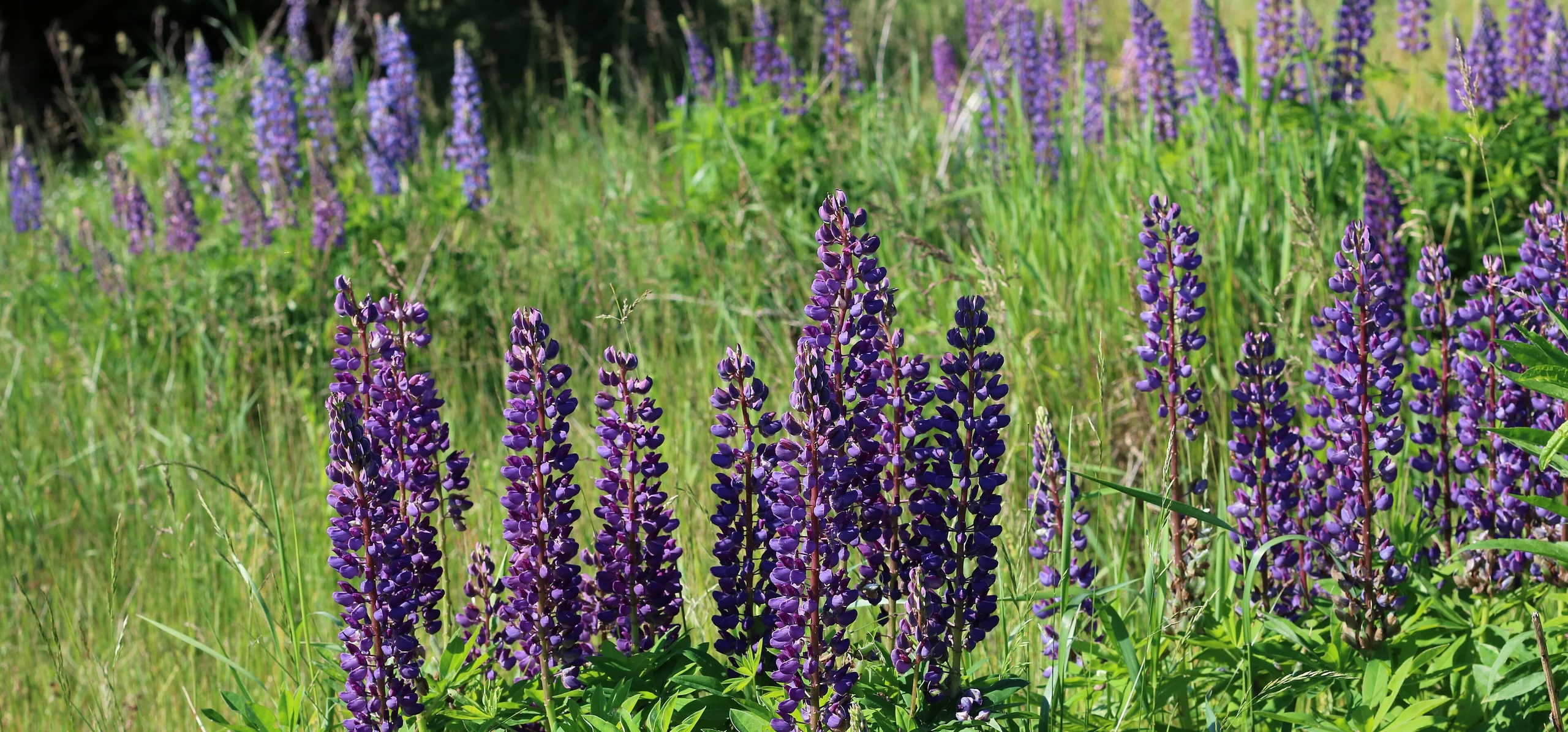
A garden lupin bought as a young pot or a punnet of seedlings is not the plant that turns up two years later filling a border corner. The fan of grey-green, spoke-like leaflets comes first, and the dense spike of pea-shaped flowers, the reason most people grow it, follows once the crown has built up enough reserve to throw one up. Lupinus polyphyllus is the species behind almost every tall garden lupin sold today, including the Russell and Band of Nobles strains bred from it. It wants full sun, soil on the acid side of neutral that never sits wet, and as little fuss as possible, since its roots fix their own nitrogen. The one thing to get right early is the taproot, which resents being moved once it has gone down, so where and how it is sown matters more than almost anything that happens afterward.
A Pacific Northwest Native Behind the Cottage-Garden Spike
Lupinus polyphyllus is native to western North America, its main range running from British Columbia down through the Pacific states to California and east to the Rocky Mountains, and Plants of the World Online records additional native populations in eastern Canada and the north-central and northeastern United States. The Scottish plant collector David Douglas introduced it to Europe in the 1820s, and a century later the English nurseryman George Russell spent decades selecting seedlings for a wider color range and denser spikes, work that produced the Russell hybrids that popularized the tall garden lupin in Britain from the late 1930s onward. Every named strain sold today, from Russell to the shorter Gallery and Band of Nobles series, has this species somewhere in its parentage. Buying a colorful named cultivar rather than plain species seed is the difference between spikes in a chosen palette and a self-sown patch that drifts toward blue and purple over a few generations.
Full Sun and Slightly Acid, Free-Draining Soil
The RHS growing guide is blunt about placement: lupins need a warm spot in full sun for the best flowering, with only light shade tolerated before spikes start to lean and thin. Soil should be moist but well-drained, acid to neutral, and can be clay, loam or sand, but not the chalky, lime-rich ground that suits many other cottage garden perennials. Heavy, wet clay that sits cold through winter is just as poor a match, since the crown rots before spring growth even starts. A raised bed or a border dug through with grit solves both problems at once for gardeners stuck with heavy or alkaline soil, since drainage matters here more than fertility ever does.
Nitrogen-Fixing Roots: Why Lupins Barely Need Feeding
Like other members of the pea family, garden lupin carries rhizobia bacteria in nodules along its roots that convert atmospheric nitrogen into a form the plant can use, and the RHS growing guide notes plainly that lupins like soil that is quite low in nutrients. A dose of general fertilizer, let alone a nitrogen-heavy one, tends to buy soft, lush foliage and fewer, weaker spikes rather than a better display, since the plant is already making its own supply. The most useful feeding a gardener can do is indirect: keep the soil open and well-aerated so the root nodules function well, and skip the border feed entirely on a bed where lupins are the main planting.


Sowing: Nicking the Seed and Respecting the Taproot
Lupin seed carries a hard, water-resistant coat, and the RHS recommends nicking each seed with a blade or soaking it for 24 hours before sowing indoors in early spring at 10 to 15 degrees C. Skipping this step can leave seed sitting ungerminated for weeks. What happens next matters more than the sowing itself: garden lupin develops a long taproot early, and that root does not tolerate being lifted and moved once it has established. Seedlings are best sown singly into deep pots or root-trainers, or straight into their final position and thinned rather than transplanted. A pot-bound or badly disturbed seedling rarely recovers into a strong plant, making this one of the few perennials where buying young stock in small pots and planting it out promptly beats potting on a bigger specimen.
Deadheading for a Second Flush, and a Short Working Life
Once the lower third of a spike has faded, cutting it back to its base redirects the plant into producing smaller side spikes rather than setting seed, extending color for several more weeks. Leaving a few spikes to ripen instead is how a patch self-seeds and renews itself. Garden lupin is a genuinely short-lived perennial, often productive for only three to five years before a clump declines and dies out, so gardeners who want continuity either let some seed drop each year or resow fresh batches on a rolling cycle rather than expecting one planting to last a decade. It is worth remembering that only species-type seed comes true to its parent. Seed saved from a named hybrid grows into an unpredictable mix of colors, sometimes drifting toward the blues and purples that tend to be the most vigorous, dominant forms in a mixed planting.
Lupin Aphid, Slugs and Powdery Mildew
The lupin aphid, Macrosiphum albifrons, is the pest most specific to this plant: a large, greyish-white aphid covered in a waxy bloom that the RHS notes forms dense colonies on stems, leaves and flower spikes, coating them in sticky honeydew and causing wilting where numbers build up unchecked. Because it feeds only on lupins, a colony can often be checked by squashing clusters by hand or with a strong jet of water rather than reaching for a spray. Slugs and snails target the soft new shoots as they emerge in spring, often before there is enough foliage to absorb any losses, so protecting the crown as growth resumes matters more than protecting the mature plant later on. Powdery mildew and lupin anthracnose show up on foliage in humid or crowded conditions, and the RHS guide's suggested response is better air movement and removing affected leaves rather than routine fungicide.
An Escaped Ornamental: Invasive Status Abroad
The same vigor and self-seeding habit that make garden lupin easy in a border have made it a recognized invasive plant well outside its native range. Introduced for roadside planting and ornament, it has escaped into the wild across Scandinavia, most heavily in Finland, Norway and Sweden, and in New Zealand and parts of continental Europe, where the CABI Invasive Species Compendium lists it colonizing roadsides, meadows and riverbanks. Because it fixes its own nitrogen, a lupin colony changes the soil chemistry of naturally nutrient-poor grassland as it spreads, and research cited by CABI links dense stands to reduced native plant diversity and fewer butterflies and other insects in invaded habitat. Gardeners in these regions are generally advised to deadhead before seed drops rather than let plants self-seed freely, the opposite of the advice for maintaining a colony where the species is not a problem.
Toxic Seed Pods: Pets, Livestock and People
Every part of the garden lupin contains quinolizidine alkaloids, concentrated most heavily in the ripe seeds and pods, and the ASPCA lists lupine as toxic to cats, dogs and horses, with ingestion able to cause vomiting, drooling and, in serious cases, tremors. The same alkaloids make ripening pods a genuine hazard to grazing livestock, sheep especially, which is why lupin patches near paddocks are usually fenced off or mown before pods form. People are not exempt either: the reason edible sweet lupin beans exist as a separate, selectively bred crop is that ordinary bitter-type seed like this species produces needs to be treated as inedible, never as food. None of this rules out growing it in a family garden, but pods left to ripen and split are worth clearing away where pets, grazing animals or small children have access to the bed.
Test your plant knowledge
Tap a card to flip it and reveal the answer.
Garden lupin's nitrogen-fixing root nodules mean it rarely needs feeding. Tap to reveal ✓ True
Named hybrid strains such as the Russell lupins come true from their own saved seed. Tap to reveal ✕ False
Nicking or soaking lupin seed before sowing helps break its hard coat and speeds up germination. Tap to reveal ✓ True
A garden lupin's taproot means it transplants easily at any size. Tap to reveal ✕ False
The lupin aphid, Macrosiphum albifrons, feeds only on lupins. Tap to reveal ✓ True
Sources
References consulted for this guide
- Lupinus polyphyllus Lindl., GBIF Backbone Taxonomygbif.org
- POWO: Lupinus polyphyllus Lindl.powo.science.kew.org
- RHS: How to grow lupinsrhs.org.uk
- ASPCA: Toxic and Non-Toxic Plants, Lupineaspca.org
- CABI Compendium: Lupinus polyphyllus (garden lupin)cabi.org
- Reference entity : Wikipédiaen.wikipedia.org