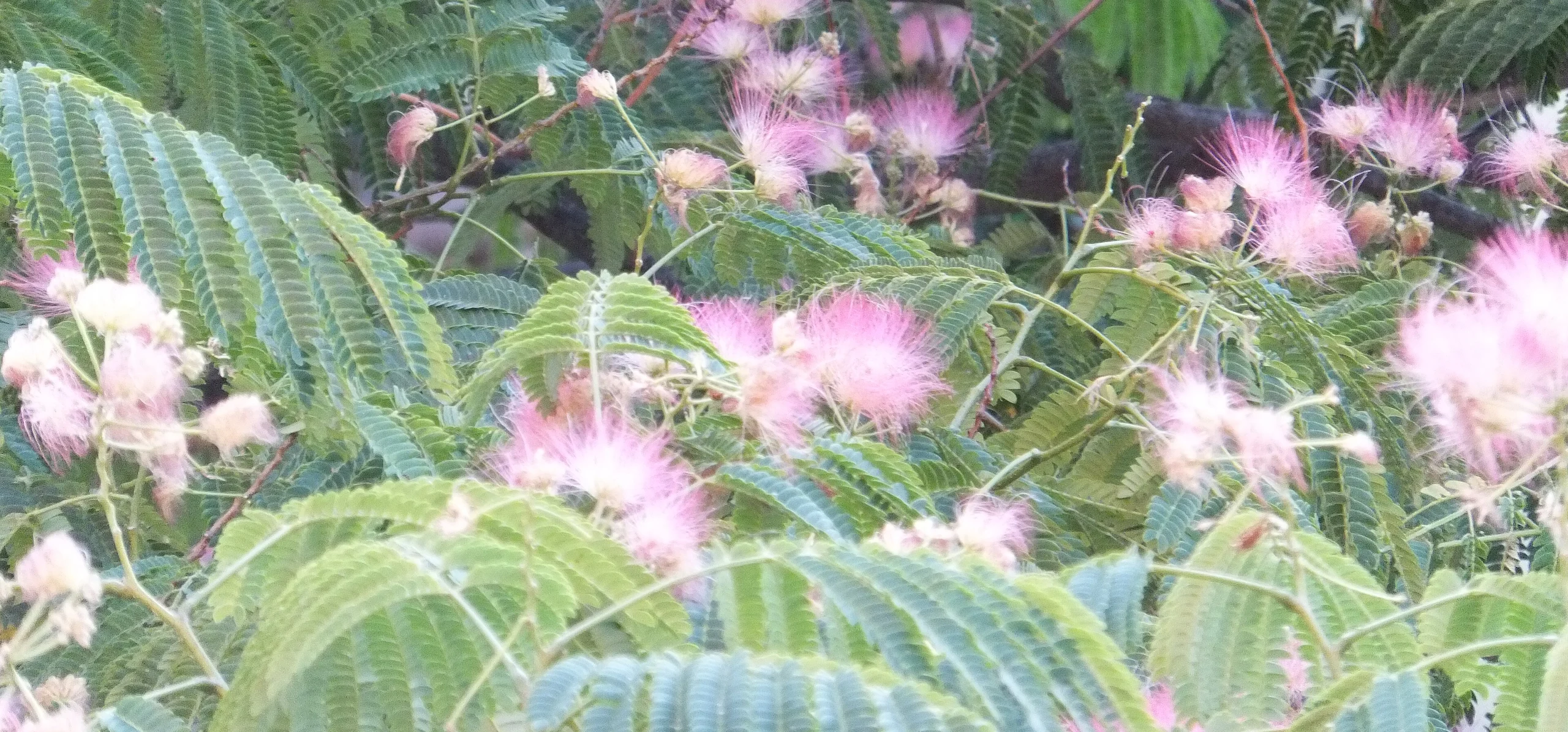
Silk Tree
Albizia julibrissin
Family · Fabaceae
Silk tree grows fast, hardy to zone 6a, but a lethal wilt disease and heavy self-seeding in the US South make siting and cultivar choice matter.
Albizia julibrissin
Plant profile
- WateringLittleWater every 10 days
- Light exposurePartial sun
- Hardiness zoneUSDA 6–9
Growth
- Family
- Fabaceae
- Life cycle
- Perennial
- Growth speed
- 8/10
- Mature size
- 610–1219 cm
- Spread
- 610–1524 cm
- Flowering
- Silky pink, powder-puff flower clusters from early to late summer
- Propagation
- Seed
- Cutting
- Grafting
Dormancydeciduous, bare in winter
Time to maturityflowers on new wood within a few years; reaches full size over 10-20 years
Soil & climate
- Soil pH
- pH 6–8
- Soil types
- clay, loam, sand
- Drought tolerance
- Yes
Light & Placement
- Where to place it
- open lawn or garden, well clear of structures
- sheltered south- or west-facing wall (compact cultivars)
- large container for 'Summer Chocolate' and other compact cultivars
OriginEastern Transcaucasus to Japan (POWO); naturalized and invasive across the southeastern United States
Safety
- Pet safe
- No
ToxicityNot listed by the ASPCA; seeds and pods documented toxic to livestock and dogs by NC State Extension
Invasive speciesself-seeds heavily from wind- and water-dispersed pods; classified invasive in North Carolina and naturalized elsewhere in the southeastern US
Data fromGBIF Backbone Taxonomy: Albizia julibrisPlants of the World Online (Kew): AlbiziNC State Extension Gardener Plant ToolboRHS: Albizia julibrissin 'Summer ChocolaVirginia Cooperative Extension: Fusarium
Where it grows
World distribution
Silk Tree is native to 11 countries: Bangladesh, Bhutan, China, Georgia, India, Iran, Japan, and Myanmar (Burma)….GBIF records 37,686 documented identifications across 92 countries, with the largest concentrations in United States, South Korea, and Japan.
- Bangladesh
- Bhutan
- China
- Georgia
- India
- Iran
- Japan
- Myanmar (Burma)
- Nepal
- South Korea
- Taiwan
Yellow to orange dots: concentration of documented identifications per country. Green countries: sourced native range. Source: GBIFNative range from POWO (Kew).
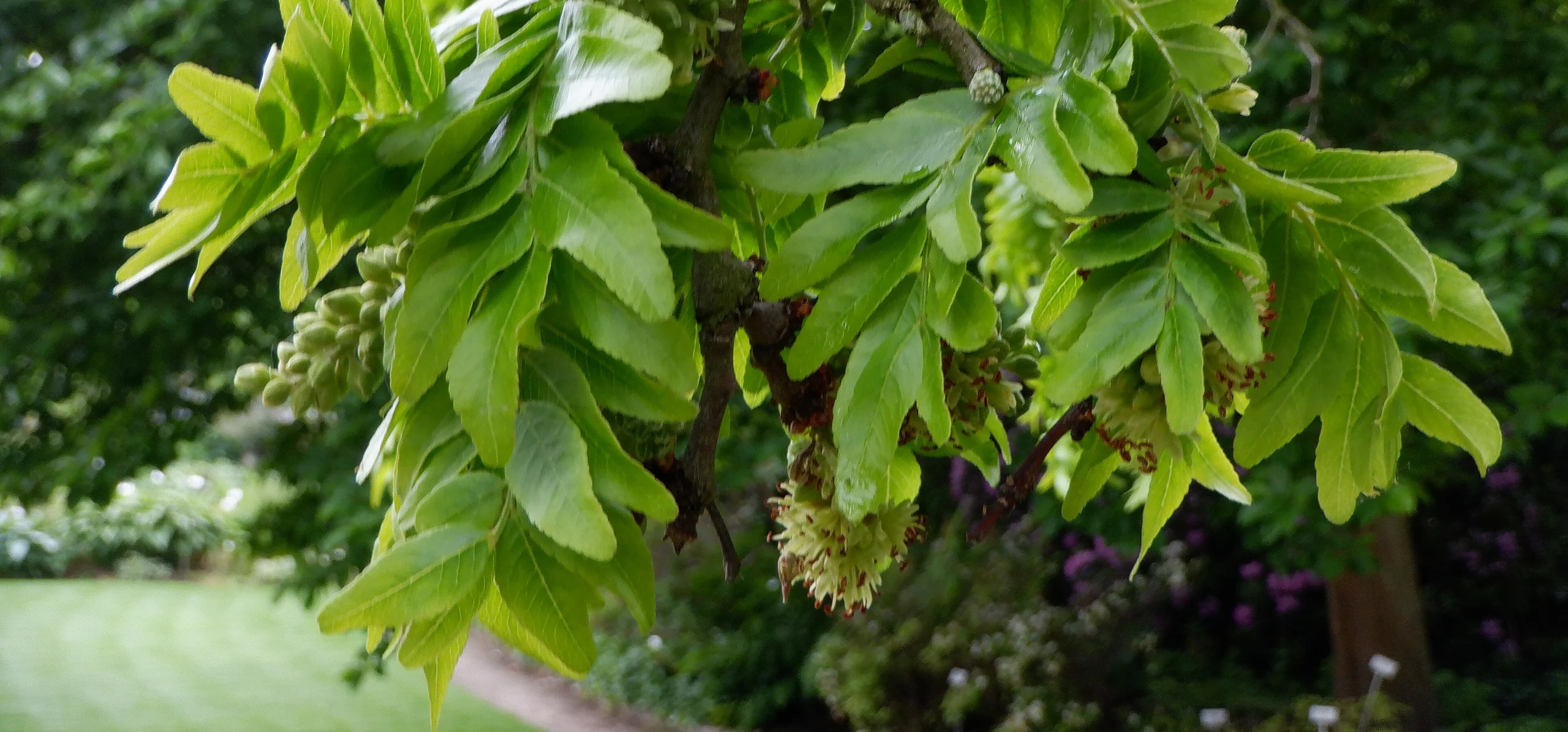
A silk tree (Albizia julibrissin) bought as a young whip or in a five-gallon pot grows fast: expect strong new growth every season, with finely divided, fern-like leaves unfolding pale green in spring and the first silky pink flowers appearing within a few years on a plant grown from a cutting or grafted cultivar. It matures into a broad, flat-topped, umbrella-shaped tree 20 to 40 feet (6 to 12 m) tall with a spread as wide or wider, per NC State Extension, so site it where that eventual canopy will not crowd a house, patio or power line. Average lifespan runs around 30 years, short for a tree of this size, and its two biggest long-term risks, a lethal vascular disease called mimosa wilt and a strong tendency to self-seed into an invasive stand in warm climates, are worth understanding before you plant one.
Origin and Native Range
Plants of the World Online (Kew) lists the native range of Albizia julibrissin as the eastern Transcaucasus to Japan, a wide band running from northern Iran and the Himalaya through to central and southern Japan and China; NC State Extension summarizes the same distribution as southern Asia, from Iran to Japan. That native span already crosses continental winters and humid subtropical summers, which is part of why the species adapts so easily to a wide range of North American climates, and, outside its native range, escapes cultivation just as easily.
Size, Growth Rate and Bloom
Growth is rapid: NC State Extension rates it a fast grower reaching 20 to 40 feet (6 to 12 m) tall with a spread of 20 to 50 feet (6 to 15 m), ending up wider than it is tall on an older, flat-topped, umbrella-shaped specimen. The compound, bipinnate leaves are fern-like, and the tree flowers on new wood from early to late summer, opening clusters of silky, thread-like pink stamens that give the tree its silk tree name and its habit of drawing hummingbirds. Much of that 30-year average lifespan is spent putting on rapid early growth rather than slow, dense wood, which is part of why limbs break in storms.
Hardiness and Winter Care
The species is hardy in USDA zones 6a to 9b according to NC State Extension. A hard freeze can kill the top growth of a young or marginal-zone plant back to the ground, and it then resprouts from the root in spring, effectively resetting it to a large shrub for a season. Ornamental purple-leaved cultivars bred for smaller gardens are less cold-hardy than the straight species: the RHS rates 'Summer Chocolate' at H4, hardy to only around -10 to -5°C (roughly 14 to 23°F), and recommends a sheltered, full-sun, south- or west-facing spot, since foliage damage and stem dieback are common in harsh winters outside the mildest counties.
Choosing a Variety: 'Summer Chocolate' and Wilt-Resistant Cultivars
The straight species has plain green, fern-like foliage and the fastest growth. 'Summer Chocolate' is the widely sold purple-bronze-leaved selection, its foliage described by the RHS as fern-like and pinkish-bronze to purple, reaching 4 to 8 m tall with a 2.5 to 4 m spread and holding an RHS Award of Garden Merit; it is usually grown in a large container or a sheltered border rather than as a full-size specimen, both for its lower hardiness and because gardeners want the color at eye level. A separate, more practical concern than leaf color is mimosa wilt: only three cultivars, 'Charlotte', 'Tryon' and 'Union', show resistance, and even these are not consistently reliable or widely available in the nursery trade, so buying a resistant cultivar is not a guarantee against the disease.


Site, Sun and Soil
Give it full sun for the heaviest bloom, though NC State Extension notes it also tolerates partial shade of two to six hours of direct sun. It is unfussy about soil: clay, loam or sand, with an optimal pH between 6.0 and 8.0 but tolerance running from acidic to alkaline, and it handles both good drainage and periodically moist ground. Once established it is notably drought- and heat-tolerant, needing supplemental water mainly through the first season or two. Because the wood is weak and the canopy spreads wide, site it well clear of the house, patios, driveways and power lines, where dropped leaflets, spent flowers and long seed pods will otherwise need constant clearing.
Mimosa Wilt and Other Problems
The disease to plan around before you plant is Fusarium wilt, or mimosa wilt, caused by Fusarium oxysporum f. sp. perniciosum, a pathogen for which Albizia species are the only known host according to Virginia Cooperative Extension. Early infection shows as brown streaking under the bark, easy to miss; the giveaway symptom is one or several branches with yellowed, stunted, wilting leaves in early to midsummer, followed by premature leaf drop, bark cracking and sometimes a gummy or frothy ooze as the clogged vascular tissue stops moving sap. Virginia Cooperative Extension calls it plainly a lethal disease for which there are no controls, established from New York southward along the East Coast plus Louisiana, Arkansas and California; once a tree shows these symptoms, plan to remove and replace it rather than treat it. Mimosa webworm is the other recurring problem, webbing leaflets together and skeletonizing foliage in summer, usually disfiguring rather than killing an established tree; NC State Extension also lists mites, cottony cushion scale and shot hole borer as occasional pests, plus Armillaria root rot. The wood itself is the structural weak point: fast growth produces brittle limbs prone to splitting in wind or ice, so check an older tree after storms for hanging or cracked branches.
Seed Pods: Self-Seeding and Toxicity to Livestock
Each flower can set a flat, bean-like pod that ripens brown by autumn and releases seed prolifically. NC State Extension classifies Albizia julibrissin as invasive in North Carolina, noting that the pods disperse readily by wind, water and animals and that the species is spreading along streambanks and other natural areas across the southeastern United States. Rake up and dispose of fallen pods before winter if you do not want volunteer seedlings the following spring, and expect to keep doing this every year on a mature tree. The ASPCA does not list Albizia julibrissin, mimosa or silk tree on its toxic-plant database for cats, dogs or horses, so treat that silence as unverified rather than as a clearance: NC State Extension separately documents that the seeds contain a neurotoxin toxic to livestock and dogs when ingested, so grazing animals and dogs that chew fallen pods should be kept away from them.
Common Mistakes
The most common mistake is planting a silk tree within a season or two of a house, patio or driveway, then living with the flower litter, leaflets and long pods that keep dropping through summer and autumn on top of eventual limb breakage. The second is ignoring the wilt risk: buying whatever mimosa is available locally rather than asking a nursery specifically for 'Charlotte', 'Tryon' or 'Union' in a region where Fusarium wilt is already established, and then losing the tree within a few years of otherwise healthy growth. The third is letting pods accumulate under the canopy where they are within reach of pets or livestock and where their seed guarantees a crop of seedlings the following spring; raking up pods each autumn addresses both problems at once.
Test your plant knowledge
Tap a card to flip it and reveal the answer.
Plants of the World Online lists the native range of Albizia julibrissin as stretching from the eastern Transcaucasus to Japan. Tap to reveal ✓ True
Fusarium wilt, or mimosa wilt, can be reliably cured with fungicide once a tree shows symptoms. Tap to reveal ✕ False
The ASPCA lists Albizia julibrissin as toxic to dogs, cats and horses. Tap to reveal ✕ False
Albizia julibrissin has become an invasive, self-seeding species in parts of the southeastern United States. Tap to reveal ✓ True
The cultivar 'Summer Chocolate' is valued for plain green foliage and is hardier than the straight species. Tap to reveal ✕ False
Sources
References consulted for this guide
- GBIF Backbone Taxonomy: Albizia julibrissin Durazz.gbif.org
- Plants of the World Online (Kew): Albizia julibrissin Durazz.powo.science.kew.org
- NC State Extension Gardener Plant Toolbox: Albizia julibrissinplants.ces.ncsu.edu
- RHS: Albizia julibrissin 'Summer Chocolate'rhs.org.uk
- Virginia Cooperative Extension: Fusarium Wilt of Mimosa (Albizia julibrissin)pubs.ext.vt.edu
- Reference entity : Wikipédiaen.wikipedia.org