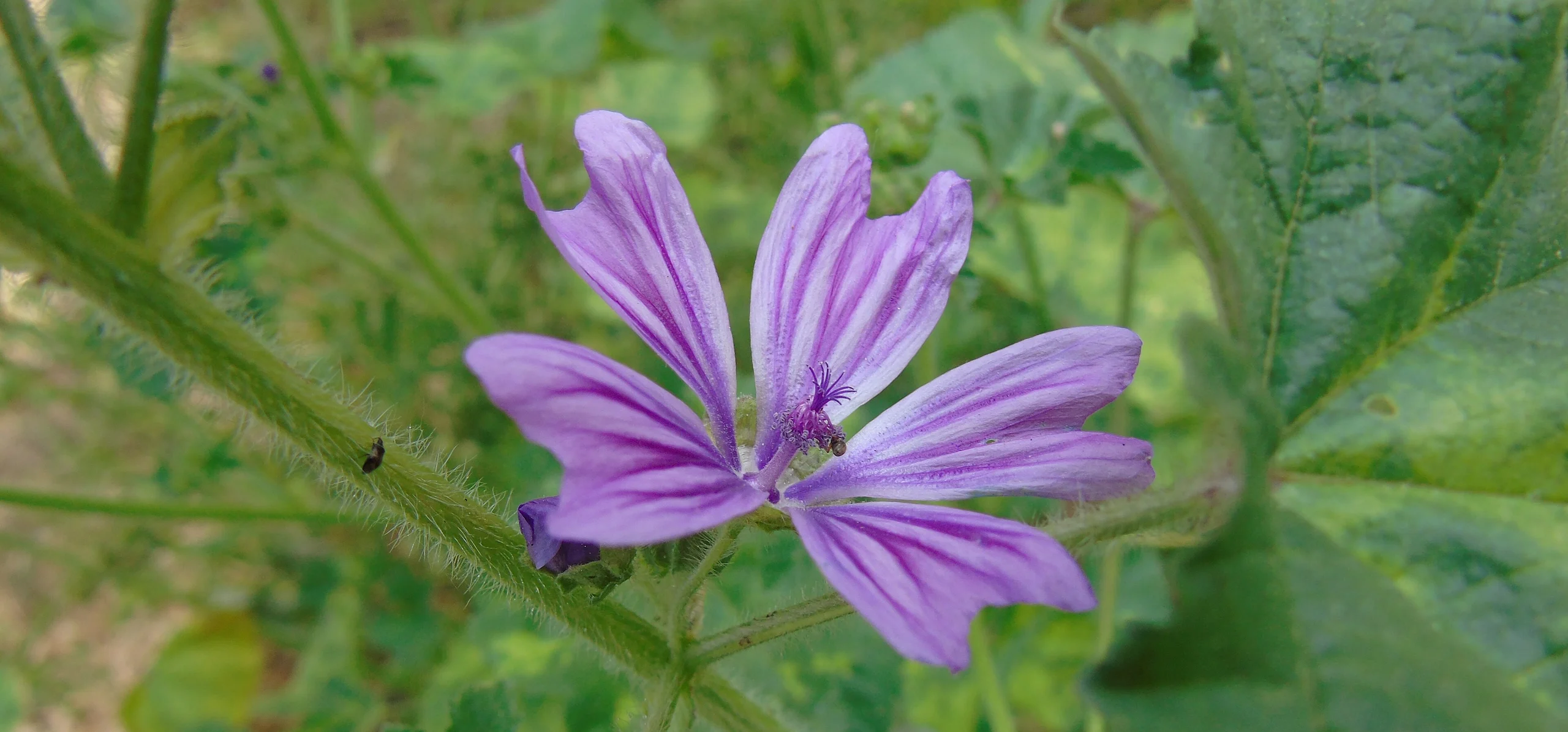
Common Mallow
Malva sylvestris
Family · Malvaceae
Common mallow self-seeds from a taproot that resents transplanting, turns floppy and rust-prone in rich wet soil, and rewards a hard cutback with a second flush
Malva sylvestris
Plant profile
- WateringLittleWater every 9 days
- Light exposureFull sun
- Hardiness zoneUSDA 4–8
Growth
- Family
- Malvaceae
- Life cycle
- Perennial
- Growth speed
- 5/10
- Mature size
- 60–150 cm
- Spread
- 50–100 cm
- Flowering
- June to October
- Propagation
- Seed
Dormancydies back to a basal rosette over winter in cold areas, semi-evergreen where winters are mild, regrowing from the crown above the taproot each spring
Time to maturitycan flower the same summer from an early sowing, and reaches its ultimate height within 2 to 5 years (RHS), though individual plants are often short-lived and the stand persists through self-sown seedlings
Soil & climate
- Soil types
- chalk, clay, loam, sand
- Drought tolerance
- Yes
Light & Placement
- Where to place it
- sunny wayside or verge
- cottage garden border
- wildflower meadow
- waste ground
- large, deep container if grown in a pot, since the taproot resents being cramped or repeatedly repotted
OriginMacaronesia, Europe to Central Asia and W. Himalaya (POWO); naturalised in North America and Australia
Safety
- Toxicity
- Not listed by the ASPCA as toxic or non-toxic to cats, dogs or horses
- Pet safe
- No
Invasive speciesnaturalised in Canada and the United States after escaping cultivation (Missouri Botanical Garden), and self-seeds freely enough to turn weedy on disturbed ground if seed heads are left to ripen
Data fromMalva sylvestris L., GBIF Backbone TaxonPOWO: Malva sylvestris L.RHS: Malva sylvestris (common mallow)RHS Advice: Hollyhock rust (Puccinia malMissouri Botanical Garden Plant Finder:
Where it grows
World distribution
Common Mallow is native to 45 countries: Afghanistan, Albania, Algeria, Austria, Belarus, Belgium, Bulgaria, and China….GBIF records 348,936 documented identifications across 112 countries, with the largest concentrations in United Kingdom, France, and Netherlands.
- Afghanistan
- Albania
- Algeria
- Austria
- Belarus
- Belgium
- Bulgaria
- China
- Croatia
- Cyprus
- Czechia
- Denmark
Show 33 more countriesShow fewer countries
- Egypt
- Estonia
- Finland
- France
- Georgia
- Germany
- Greece
- Hungary
- India
- Iran
- Iraq
- Italy
- Kazakhstan
- Kyrgyzstan
- Lebanon
- Libya
- Morocco
- Netherlands
- Norway
- Palestinian Territories
- Poland
- Portugal
- Romania
- Russia
- Spain
- Sweden
- Switzerland
- Tajikistan
- Tunisia
- Türkiye
- Turkmenistan
- Ukraine
- Uzbekistan
Yellow to orange dots: concentration of documented identifications per country. Green countries: sourced native range. Source: GBIFNative range from POWO (Kew).
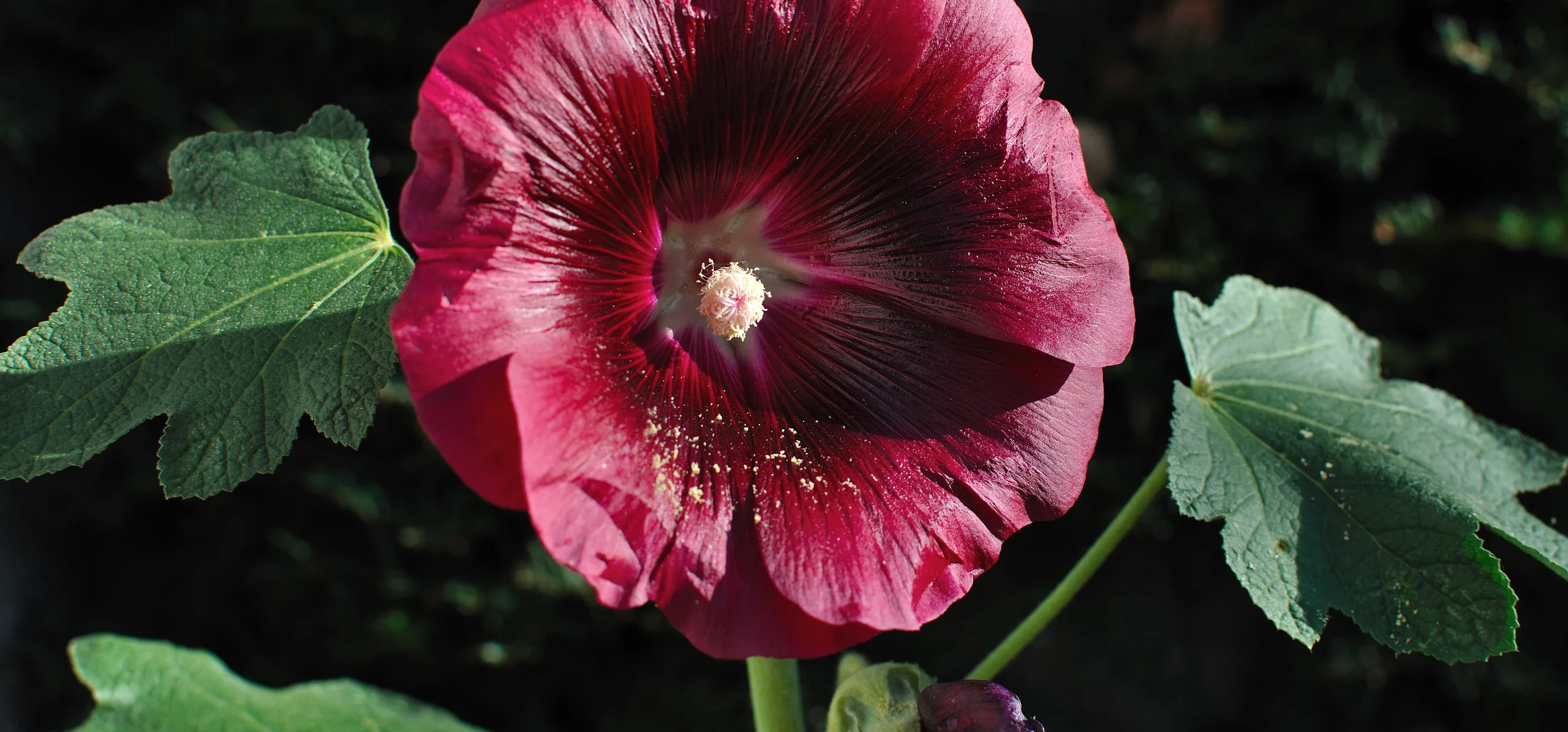
Malva sylvestris, common mallow, is the tall, loose-stemmed plant with pink flowers streaked in deep purple veins that turns up on verges, waste ground and cottage garden borders across Europe from June into October. It usually behaves as a short-lived perennial, though a wet season or a heavy border can push a plant toward biennial behaviour or have it burn out after a single year, and either way it self-seeds so readily that losing the original clump rarely means losing the patch. A single deep taproot anchors it, which is exactly what lets it shrug off dry spells that would wilt shallower-rooted neighbours, and exactly why digging one up to move it usually kills it. Give it poor to average, sharply drained soil in full sun, and it asks for almost nothing else.
Origin and a Taproot That Explains the Rest
Plants of the World Online gives the native range of Malva sylvestris as Macaronesia, Europe to Central Asia and W. Himalaya, where it grows on open, disturbed and grassy ground rather than in woodland or wetland. It has since escaped gardens and naturalised widely outside that range: the Missouri Botanical Garden records it established in parts of Canada and the United States, and it has also naturalised in Australia. Underneath, a single woody taproot goes down further than the plant grows tall, storing enough reserve that an established clump rides out a dry summer without wilting. That same taproot is the reason a mature plant almost never survives being lifted and replanted: sever it and the plant rarely recovers, so treat a well-placed self-sown seedling as permanent rather than planning to move it later.
Site, Soil and Sun
Full sun is what the RHS lists as its requirement, and it takes a south- or west-facing spot sheltered from cold wind. It tolerates chalk, clay, loam and sand, and soil anywhere from acid to alkaline, which is part of why it turns up uninvited on verges and building rubble as readily as in a border. The trap is fertility: give it rich, damp soil and the stems shoot up soft and lush, then flop outward under their own weight and sit wet against the ground, which is exactly the environment that lets mallow rust take hold. Poor to average, sharply drained soil keeps growth shorter, stiffer and healthier, even when the ground looks like it deserves better.
Sowing in Spring or Autumn
The RHS lists seed as the way to propagate it, and Malva sylvestris germinates readily from either a spring sowing, direct where it is to flower or started undercover, or an autumn one that overwinters as a small rosette and gets a head start the following year. Left alone it self-seeds freely, according to the Missouri Botanical Garden, filling gaps in gravel and paving as readily as bare border soil. That habit is useful in a wildflower patch and a nuisance in a tidy bed: thin seedlings hard in spring if only a handful of plants are wanted, and deadhead before the seed heads ripen to stop it spreading further.


Staking, Cutting Back for a Second Flush, and Compact Cultivars
At 1 to 1.5 m tall, the straight species has a habit that is more lax than upright, and a plant grown in anything richer than lean soil usually needs a hazel pea stick or a link stake pushed in early to stop it sprawling over its neighbours. Once the first flush of flowers is over, typically by midsummer, cutting the whole plant back hard to a low framework of leaves encourages a second, later flush that can carry the display into October instead of stopping in July. Gardeners who want the flowers without the staking usually reach for a more compact form instead: the RHS lists Malva sylvestris 'Zebrina', to about 1.2 m with pale pink flowers heavily streaked in reddish purple, and Malva sylvestris var. mauritiana 'Primley Blue', a low, spreading plant with pale powder-blue flowers veined in deep violet-blue that still benefits from some support in rich soil but carries far less top growth to hold up in the first place.
Mallow Rust: The Main Problem
Puccinia malvacearum, mallow rust, is the disease to watch for, and the RHS notes it develops on Malva species and can pass in either direction to and from cultivated hollyhocks growing nearby. It shows first as pale orange-brown pustules, the telia, on the underside of a leaf, with a matching yellow spot visible on the upper surface; as the pustules age they darken to brown and then grey. Spores travel on the wind, infection is worse after a wet summer, and a heavy attack stunts the plant and cuts flowering hard. There is no cure once leaves are infected: pick off and bin affected leaves as soon as they appear rather than composting them, space plants so air moves between them, water at the base instead of overhead, and clear fallen foliage at the end of the season since the fungus overwinters on plant debris.
Hollyhock Weevil, Slugs and Otherwise Few Problems
Outside of rust, both the RHS and the Missouri Botanical Garden describe Malva sylvestris as largely free of pests and diseases, which is part of why it thrives on neglected ground. The hollyhock weevil is the exception worth knowing: a small grey weevil with a long, curved snout that pierces flower buds to lay its eggs, so the larva that hatches feeds from inside the developing seed head. A bad infestation thins the seed crop and cuts down on the self-sown seedlings that appear the following spring, though it rarely threatens an established plant's survival. Slugs are the other seasonal nuisance, grazing soft new seedlings and the tender regrowth after a hard cutback; older, woody-based plants are tough enough that slugs stop bothering with them.
Edible Leaves and "Cheeses"
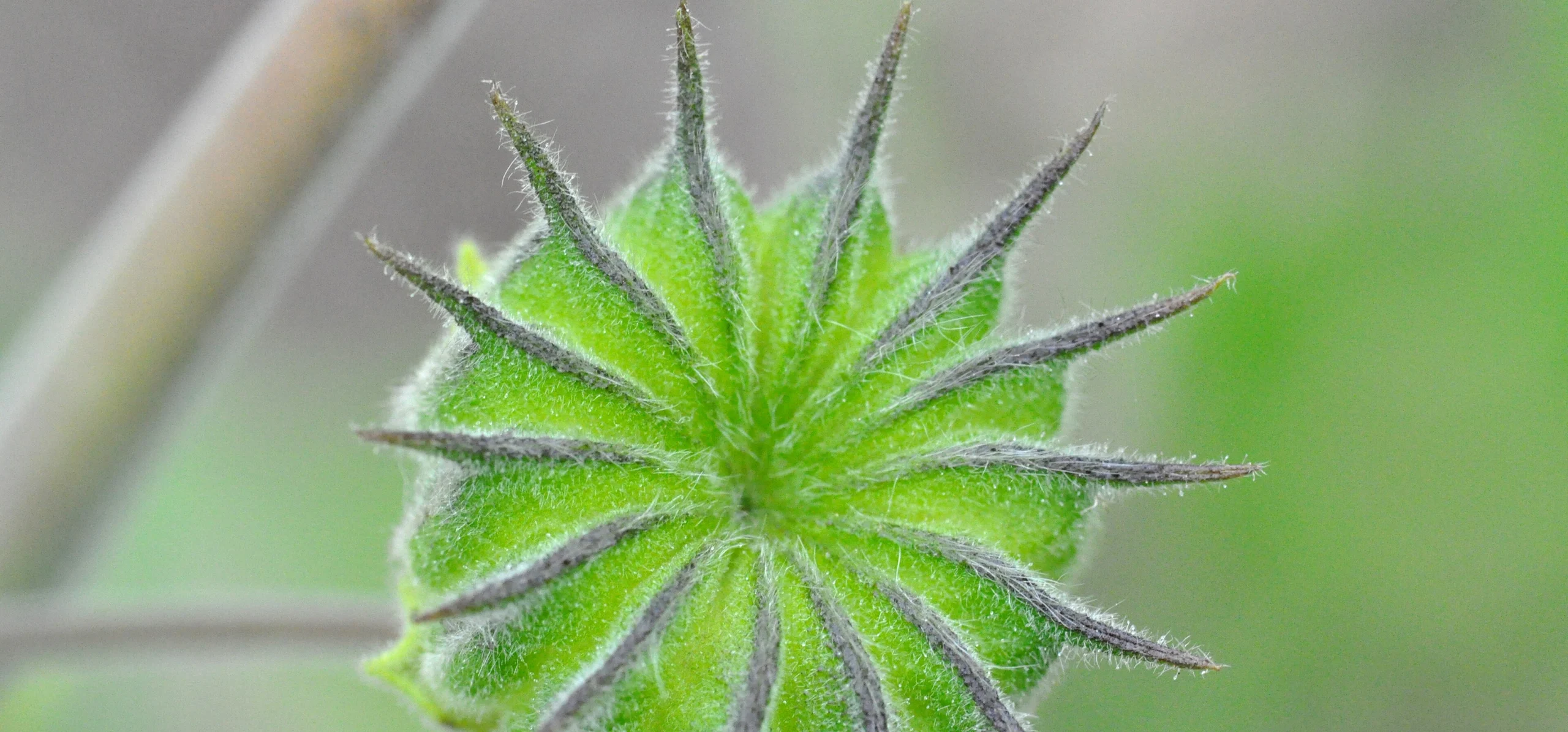
The young leaves have a long history as a foraged green across the Mediterranean and the Middle East, eaten raw in salads when small and tender or cooked like spinach once they toughen, and mallow soup remains a traditional dish in parts of the region. The plant's other historical name, cheeses, comes from the small, flat, ridged fruit that follows each flower: split into ten to twenty wedge-shaped segments arranged in a disc, it was said to resemble a miniature wheel of cheese, and children traditionally picked and ate the immature ones straight off the plant. Both uses are long-standing tradition rather than a modern recommendation, but they explain why a plant treated as a weed in one context is foraged as food in another.
Pollinators, Pet Safety and Musk Mallow Compared
The open, upward-facing flowers put pollen within easy reach, and bees, bumblebees especially, are the main visitors, working the flowers for pollen through summer and into autumn. Malva sylvestris does not appear on the ASPCA's toxic or non-toxic plant lists for cats, dogs or horses, so treat it as unassessed rather than confirmed safe if a pet grazes it. It is easy to confuse with its relative Malva moschata, musk mallow: the giveaway is scent and leaf shape, since musk mallow's more finely cut, feathery foliage and its flowers both carry a musky perfume when crushed, a trait Malva sylvestris simply does not have.
Test your plant knowledge
Tap a card to flip it and reveal the answer.
Malva sylvestris grows a single deep taproot, which is why established plants tolerate drought but rarely survive being dug up and moved. Tap to reveal ✓ True
The ASPCA lists Malva sylvestris as toxic to cats, dogs and horses. Tap to reveal ✕ False
The orange-brown pustules of mallow rust (Puccinia malvacearum) form on the underside of the leaf, with a matching yellow spot visible on top. Tap to reveal ✓ True
The RHS gives Malva sylvestris a hardiness rating of H5, hardy in most parts of the UK even in severe winters. Tap to reveal ✓ True
Malva moschata (musk mallow) has the same broad, shallowly lobed leaves and scentless flowers as Malva sylvestris. Tap to reveal ✕ False
Sources
References consulted for this guide
- Malva sylvestris L., GBIF Backbone Taxonomygbif.org
- POWO: Malva sylvestris L.powo.science.kew.org
- RHS: Malva sylvestris (common mallow)rhs.org.uk
- RHS Advice: Hollyhock rust (Puccinia malvacearum)rhs.org.uk
- Missouri Botanical Garden Plant Finder: Malva sylvestrismissouribotanicalgarden.org
- Reference entity : Wikipédiaen.wikipedia.org