Swiss Cheese Vine
Monstera adansonii
Family · Araceae
How to grow Monstera adansonii: bright indirect light, drying soil between waterings, a moss pole to climb, and why the ASPCA has no page for this species.
Monstera adansonii
Plant profile
- WateringModerateWater every 7 days
- Light exposureIndirect light
- Ideal temperature18–25 °C
- Hardiness zoneUSDA 10–12
Growth
- Family
- Araceae
- Life cycle
- Perennial
- Growth speed
- 7/10
- Mature size
- 150–250 cm
- Spread
- 50–100 cm
- Propagation
- Cutting
Time to maturity5 to 10 years to ultimate size
Soil & climate
- Soil pH
- pH 5–6
- Soil types
- Peat-free ericaceous compost with orchid bark, Well-draining aroid mix
- Drought tolerance
- No
Light & Placement
- Origin
- Tropical America
- Where to place it
- East or west window
- Bright room away from direct sun
- Shaded patio in summer (H1B)
- Pot with drainage and moss pole
- Hanging basket for trailing
Safety
- Toxicity
- Irritant; not individually ASPCA-listed
- Pet safe
- No
Data fromMonstera adansonii Schott, GBIF BackboneMonstera adansonii Schott, Plants of theMonstera adansonii, RHS plant detailsHow to grow Swiss cheese plants, RHS GroMonstera adansonii, NC State Extension G
Where it grows
World distribution
Swiss Cheese Vine is native to 16 countries: Antigua & Barbuda, Bolivia, Brazil, Colombia, Costa Rica, Curaçao, Ecuador, and French Guiana….GBIF records 8,751 documented identifications across 50 countries, with the largest concentrations in Brazil, Colombia, and Costa Rica.
- Antigua & Barbuda
- Bolivia
- Brazil
- Colombia
- Costa Rica
- Curaçao
- Ecuador
- French Guiana
- Guyana
- Nicaragua
- Panama
- Peru
Show 4 more countriesShow fewer countries
- St. Lucia
- Suriname
- Trinidad & Tobago
- Venezuela
Yellow to orange dots: concentration of documented identifications per country. Green countries: sourced native range. Source: GBIFNative range from POWO (Kew).
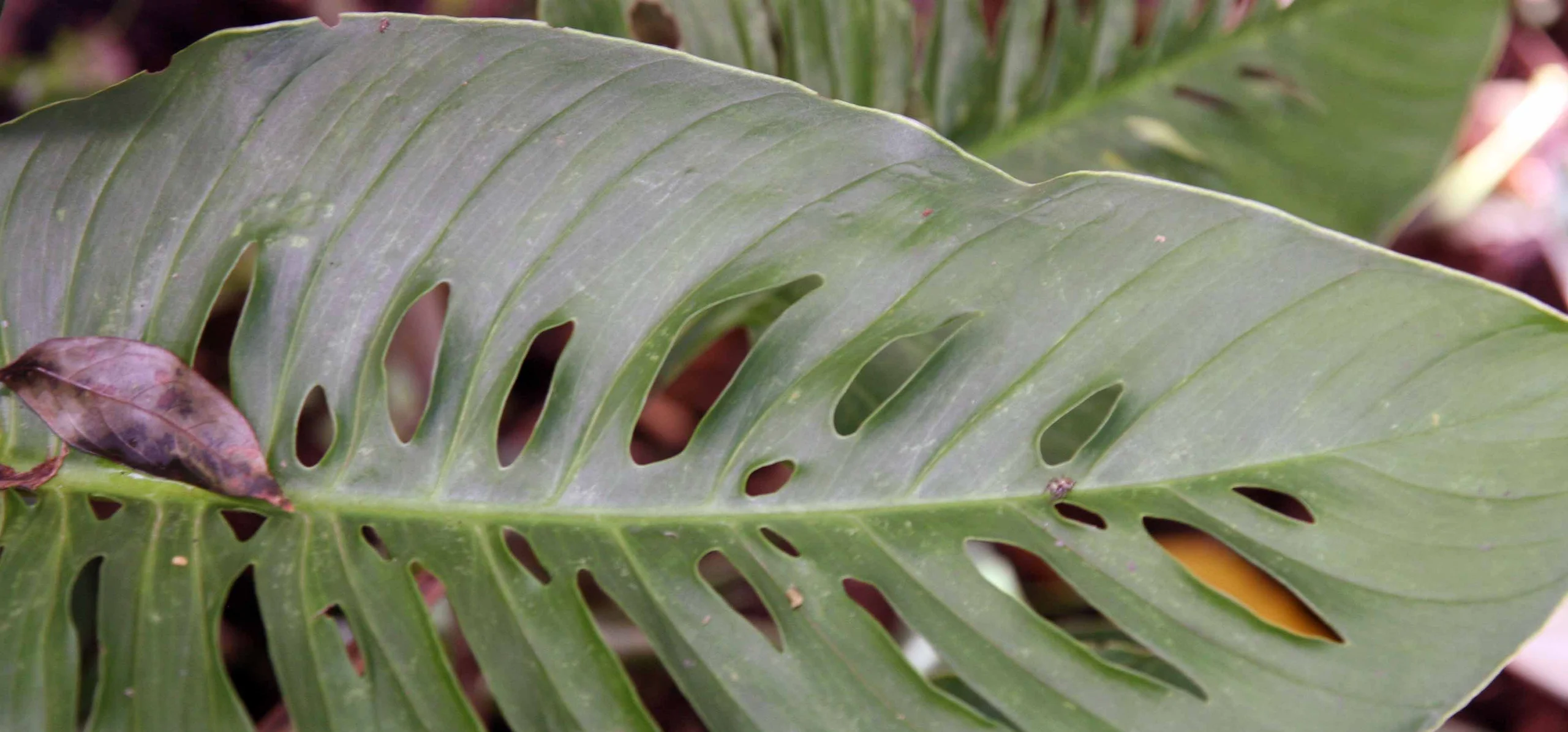
Monstera adansonii is the vining aroid sold as the Swiss cheese vine, five holes plant or Adanson's monstera: a smaller, faster climber than its well known relative Monstera deliciosa, with thinner heart shaped leaves punched through with oval fenestrations. It wants bright indirect light, soil that dries partway between waterings, and a moss pole or similar support to climb; left to trail from a hanging basket it still grows but ends up wirier, with more widely spaced leaves. The Royal Horticultural Society rates it hardiness H1B: it can spend summer outdoors in mild weather but needs to come back under glass or indoors for the rest of the year. It is native to a wide stretch of tropical America, from southern Mexico down through Central America into Bolivia, Brazil and Trinidad, where it climbs tree trunks in humid forest understory.
Light and placement
Give it bright, indirect light: an east or west facing window with the plant set back from the glass, or a brighter room away from a south facing window, is what the RHS recommends for swiss cheese plants. Direct midday sun scorches the thin leaves, turning patches pale then crisp brown; NC State Extension lists partial shade, meaning only two to six hours of direct sun a day, as the ceiling this species tolerates. A spot with bright but filtered light for most of the day suits it better than a windowsill baking in full sun. If leaves bleach out to a washed, yellowish green rather than glossy dark green, that is usually too much direct light rather than too little; move it back from the window before reaching for fertiliser.
Watering and humidity
Let the potting mix dry almost completely before watering again, then water thoroughly until it runs from the drainage holes; this is the RHS's own guidance for the species, and it lines up with NC State's warning that overwatering is the more common way to lose this plant than under watering. In winter, when growth slows, stretch the interval further rather than keeping it on the same summer schedule. Humidity matters more than most houseplant advice admits: the RHS notes that low humidity browns the leaf edges, since this plant is used to constantly moist tropical air in the wild. A pebble tray, occasional misting, or simply grouping it with other houseplants raises the humidity around the foliage; a bathroom with a window does the job without any extra equipment.


Soil, potting and feeding
A well draining, slightly acidic mix suits it best: the RHS recommends one part ericaceous, peat-free compost to two parts orchid compost, landing around pH 5 to 6, while NC State's broader range for the species runs from acid, below 6.0, to neutral, between 6.0 and 8.0. Whatever the exact blend, it needs to drain fast enough that roots are never sitting in water, since root rot from poor drainage is the first problem listed on the extension's pest and disease sheet. Feed with a balanced liquid fertiliser during the growing season, from April to September, and skip feeding in winter when the plant is barely using nutrients anyway. Repot only every few years, moving up to a pot just one size larger rather than a dramatically bigger one; an oversized pot holds wet soil too long around roots that are not yet filling it.
Training on a support or trailing
Given a moss pole or similar support, the plant climbs and roots into it as it grows, the same way it climbs tree trunks in the wild; without one it trails, which works well in a hanging basket but produces a wirier plant with less dramatic fenestration. Cut it back hard in spring to control its size and, per the RHS's own pruning notes, expect the regrowth to come in smaller at first with fewer holes in each leaf before it settles back into its normal pattern. Ultimate size varies enormously with how it is grown: the RHS lists an ultimate height of 1.5 to 2.5 metres and a spread of 0.5 to 1 metre for a plant trained indoors, taking five to ten years to get there, while NC State records specimens growing outdoors in the tropics reaching up to about 4 metres, or 13 feet, as an unsupported climbing vine.
Propagating from stem cuttings
Stem cuttings are the standard method, taken from spring through late summer according to the RHS. Cut a section with at least one node and a leaf attached, stand it in water in a bright spot out of direct sun, and wait for roots to form before potting it into fresh mix. NC State also lists stem cutting as the recorded propagation method for this species, so there is no shortcut through division or seed for a home grower. Cuttings root fastest in the warmer months, when the parent plant is actively growing.
Pests, root rot and other problems
NC State's pest and disease list for this species covers spider mites, mealybugs, aphids, whiteflies and scale insects, plus rust, powdery mildew, blight and leaf spot diseases; the RHS singles out mealybugs and, more often, root rot from overwatering or poor drainage as the two problems growers run into most. Check the undersides of leaves and the leaf axils regularly, since most of these pests are easiest to deal with before they spread across the whole plant. If lower leaves yellow and the potting mix smells sour rather than earthy, stop watering, check the roots for brown mushy sections, and repot into fresh, fast draining mix if rot has set in.
Toxicity to pets and people
The ASPCA does not carry a page specifically for Monstera adansonii. Its entry for the closely related Monstera deliciosa, sold under the same "Swiss cheese plant" common name, lists that species as toxic to cats and dogs. NC State Extension does cover adansonii directly and rates it a low severity poison containing calcium oxalate crystals, causing inflammation of the mouth, throat, eyes and digestive tract along with vomiting, drooling and loss of appetite in pets, plus contact dermatitis and irritation for people handling it; the RHS adds that it can irritate skin and eyes and recommends gloves when pruning or repotting. Treat it with the same caution as any Araceae houseplant: keep it out of reach of cats, dogs and small children, and wash hands after handling cut stems.
Test your plant knowledge
Tap a card to flip it and reveal the answer.
Direct sunlight for several hours a day keeps Monstera adansonii leaves healthiest. Tap to reveal ✕ False
The oval holes in its leaves, called fenestrations, are why it is nicknamed the Swiss cheese vine. Tap to reveal ✓ True
This plant grows best in soil that stays constantly wet and never dries out. Tap to reveal ✕ False
The ASPCA has a page specifically listing Monstera adansonii as toxic. Tap to reveal ✕ False
Stem cuttings taken in spring or summer are the standard way to propagate this plant. Tap to reveal ✓ True
Sources
References consulted for this guide
- Monstera adansonii Schott, GBIF Backbone Taxonomygbif.org
- Monstera adansonii Schott, Plants of the World Online (Kew)powo.science.kew.org
- Monstera adansonii, RHS plant detailsrhs.org.uk
- How to grow Swiss cheese plants, RHS Growing Guiderhs.org.uk
- Monstera adansonii, NC State Extension Gardener Plant Toolboxplants.ces.ncsu.edu
- Reference entity : Wikipédiaen.wikipedia.org