Olive Tree
Olea europaea
Family · Oleaceae
Olive trees need full sun, sharp drainage and far less water than instinct suggests; here is what the RHS, UF/IFAS and UC Marin actually recommend.
Olea europaea
Plant profile
- WateringLittleWater every 12 days
- Light exposureFull sun
- Ideal temperature-10–-5 °C
- Hardiness zoneUSDA 8–10
Growth
- Family
- Oleaceae
- Life cycle
- Perennial
- Growth speed
- 3/10
- Mature size
- 400–800 cm
- Spread
- 150–250 cm
- Propagation
- Seed
- Cutting
FloweringSmall flowers in late spring; fruit ripens late autumn, first crop by year 4 to 5 (UC Marin Master Gardeners)
DormancyEvergreen; no leaf drop, but growth slows through cold winters
Time to maturityFirst fruit by year 4 to 5; reaches ultimate height in 20 to 50 years (RHS; UC Marin Master Gardeners)
Soil & climate
- Soil types
- chalk, clay, loam, sand
- Drought tolerance
- Yes
Light & Placement
- Where to place it
- South-facing wall or sheltered sunny border (RHS)
- Open, sunny position away from cold wind
- Free-draining, soil-based container mix, moved outdoors for the warm months
OriginNative from Africa and the Mediterranean to south central China; the cultivated tree is a Mediterranean cultigen (POWO)
Safety
- Toxicity
- Not listed by the ASPCA for cats, dogs or horses
- Pet safe
- No
Data fromOlea europaea L., GBIF Backbone TaxonomyRHS: Olea europaea (common olive)Missouri Botanical Garden Plant Finder: UC Marin Master Gardeners: OliveUF/IFAS Gardening Solutions: Olives
Where it grows
World distribution
Olive Tree is native to 46 countries: Afghanistan, Albania, Algeria, Angola, Botswana, Burundi, China, and Congo - Kinshasa….GBIF records 410,086 documented identifications across 135 countries, with the largest concentrations in Spain, Portugal, and France.
- Afghanistan
- Albania
- Algeria
- Angola
- Botswana
- Burundi
- China
- Congo - Kinshasa
- Croatia
- Cyprus
- Djibouti
- Eritrea
Show 34 more countriesShow fewer countries
- Eswatini
- Ethiopia
- Greece
- India
- Iran
- Italy
- Kenya
- Lesotho
- Libya
- Malawi
- Mauritius
- Morocco
- Mozambique
- Namibia
- Nepal
- Niger
- Oman
- Pakistan
- Palestinian Territories
- Portugal
- Réunion
- Rwanda
- Saudi Arabia
- Somalia
- South Africa
- Spain
- Sudan
- Tanzania
- Tunisia
- Türkiye
- Uganda
- Yemen
- Zambia
- Zimbabwe
Yellow to orange dots: concentration of documented identifications per country. Green countries: sourced native range. Source: GBIFNative range from POWO (Kew).
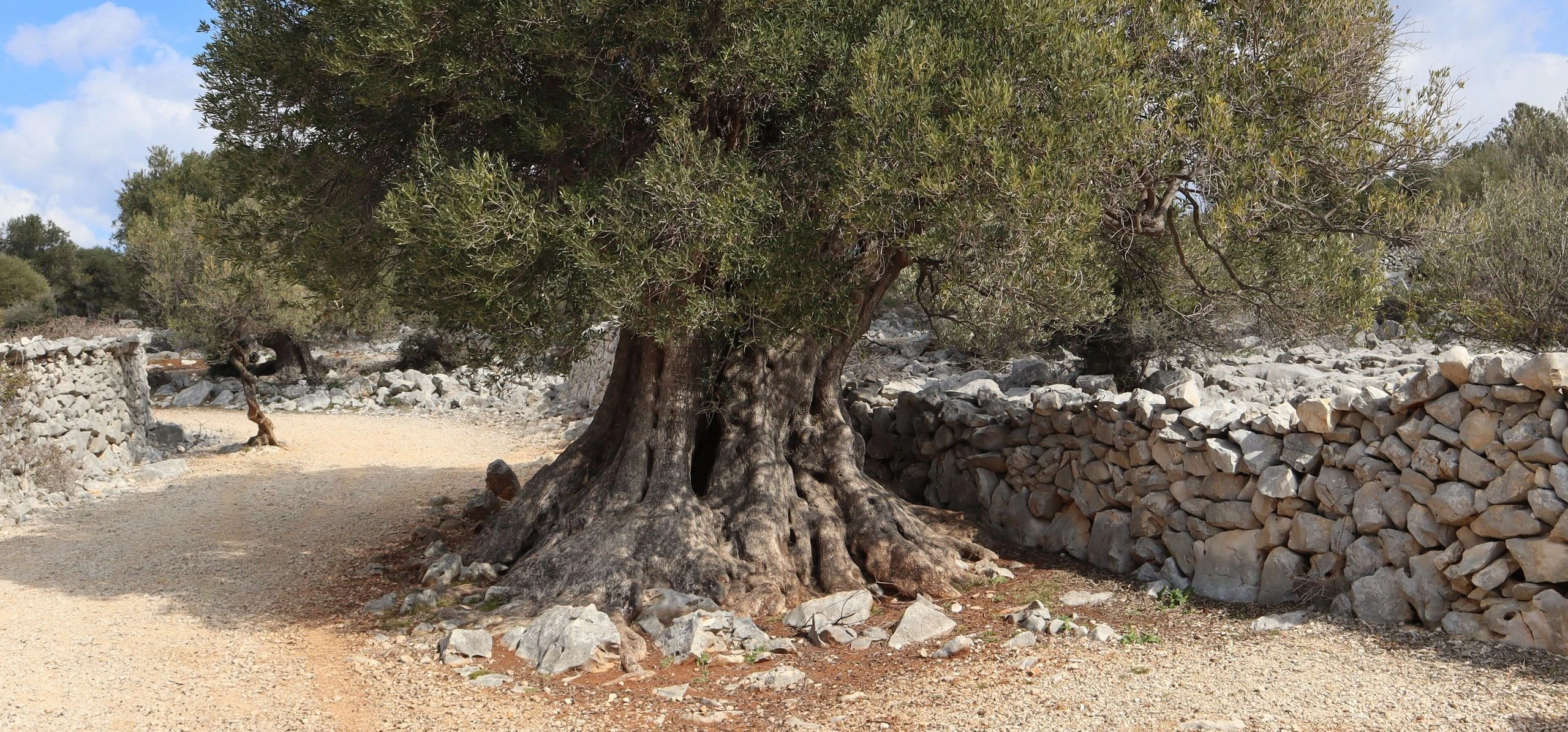
A silvery, narrow-leaved evergreen with a trunk that thickens into knots and hollows as it ages, Olea europaea asks for almost the opposite of what most new trees want: less water, poorer soil, and more direct sun than you would think reasonable. Whether it arrived as a small nursery standard in a terracotta pot or as a mature specimen already showing character in its bark, the two things that decide whether it thrives are the same everywhere: full sun and sharp drainage. Get those right and an olive tree will outlive the person who planted it.
From a Wild Shrub to a Mediterranean Icon
GBIF records the accepted name as Olea europaea L., in the olive family Oleaceae, and its native range is broader than the Mediterranean reputation suggests: POWO lists it as native from Africa and the Mediterranean basin across to south central China, a spread that reflects several wild subspecies rather than one narrow homeland. The cultivated tree familiar from groves and gardens, subspecies europaea, is treated by POWO as a cultigen of the Mediterranean itself, the form people have been selecting and grafting for millennia rather than a single wild population. The Missouri Botanical Garden dates cultivation back to around 2500 BC in Crete, among the earliest trees ever domesticated, and notes the olive branch's long life as a symbol of peace. That long cultivated history is why named varieties, not the wild species, are what nurseries actually sell.
Full Sun Is Non-Negotiable
Every authoritative source agrees on this one point: olives need a sunny spot, full stop. The RHS calls for full sun with a south-facing, sheltered aspect, and UF/IFAS Gardening Solutions is just as direct, recommending a sunny position for good growth and fruiting. This is a tree built for the long, dry, intensely lit Mediterranean summer, and shade is the fastest way to get thin, sparse foliage and little to no fruit. A potted tree kept indoors needs the single brightest window in the house; outdoors, the sunniest and most sheltered spot available, ideally against a warm wall, is the one to give it.


Soil That Drains, Not Soil That Feeds
Drainage matters more than fertility. The RHS lists chalk, clay, loam and sand as all acceptable, across acid, alkaline or neutral pH, provided the ground is well drained; the Missouri Botanical Garden similarly calls for well-drained soil and notes the tree tolerates poor conditions, performing best of all in Mediterranean-type climates with a hot, dry summer and a mild, wet winter, such as California's. UC Marin Master Gardeners make the trade-off explicit: rich soil and fertilization improve fruit yield, but the tree tolerates poor soil perfectly well. For a container, that means a gritty, open, soil-based mix rather than a moisture-retentive one, and a planting hole no deeper than the root ball but twice as wide when going into the ground.
Watering Less Than Feels Right
Overwatering, not drought, is what kills most olive trees. UC Marin Master Gardeners describe watering young trees to a depth of two feet while they establish a root system, then dropping back to monthly watering once mature; excess irrigation or rainfall is flagged as a direct cause of root rot and of flowers dropping before fruit sets. Established ground trees rarely need more than that monthly check, since rainfall alone often covers what the tree needs outside a hot, dry summer.
For a potted tree, the practical version of that rule is to let the top of the mix dry out before watering again, then water thoroughly, since a saucer left standing with water is the surest route to a soggy root ball.
Feeding and Pruning for Fruit, Not Just Foliage
UC Marin Master Gardeners recommend feeding young trees monthly with a high-nitrogen amendment such as organic urea or blood meal under each drip emitter, but say mature trees need no fertilizer at all. Pruning happens once a year, right after harvest: on a young tree that has reached about three feet, scaffold branches are reduced to three to five to keep the eventual canopy open and the fruit within reach, and any suckers from the base are removed as they appear. The RHS places olive in its pruning group for trees that need only shaping cuts in spring under glass to control size, which matches the light, restrained approach the tree rewards best.
Cold Tolerance and Overwintering in a Pot
The RHS rates common olive H4, hardy through most of the UK down to between minus 10 and minus 5 degrees Celsius, provided it has a sheltered, south-facing position. UF/IFAS Gardening Solutions gives the practical limit for Florida growers: protection is needed once temperatures fall below 20 degrees Fahrenheit, roughly minus 6.7 Celsius, which restricts reliable outdoor cultivation to central Florida and points north. Where winters run colder than either threshold, growing the tree in a container is the standard solution: move it to a cool, bright, frost-free space such as an unheated porch or greenhouse for the worst months, since the tree is evergreen and still needs light even while growth has slowed.
Flowers, Pollination and the Long Wait for Fruit
Small flowers open in late spring, and UF/IFAS Gardening Solutions notes that popular varieties including Arbequina and Mission are self-fertile, though both set a heavier crop with a second variety such as Koroneiki or Arbosana nearby for cross-pollination. Patience is part of growing an olive for fruit: UC Marin Master Gardeners record trees beginning to bear around year four or five, settling into an alternate-bearing pattern of a heavy crop followed by a lighter one, with fruit ripening in late autumn and a single mature tree capable of producing as much as 40 pounds of olives. Fresh olives straight off the tree are intensely bitter and have to be cured before they are edible, whatever the variety.
Pests, Diseases and the Mistakes That Cause Them
UF/IFAS Gardening Solutions describes the tree as relatively free of pests and disease, with scale insects, caterpillars and grasshoppers as the main things to watch for. The RHS flags scale insect as the most common problem, notes olive as a high risk host for the bacterium Xylella fastidiosa, and lists honey fungus and olive scab as occasional risks. UC Marin Master Gardeners add peacock spot, recognisable by a yellow halo around dark leaf spots, treated with a copper fungicide applied in late fall, alongside root rot and verticillium wilt as diseases to watch for where drainage or variety choice falls short. Nearly every one of these problems traces back to the same two mistakes: soil that stays wet because drainage or watering habits are off, and feeding a mature tree as though it were still a sapling, which pushes soft, sappy growth that pests and disease find easiest to attack.
Test your plant knowledge
Tap a card to flip it and reveal the answer.
Olive trees are more often killed by overwatering than by drought. Tap to reveal ✓ True
Arbequina and Mission olive varieties cannot set any fruit without a second tree nearby. Tap to reveal ✕ False
The RHS rates common olive hardy through most of the UK, down to about minus 10 degrees Celsius. Tap to reveal ✓ True
A newly planted olive tree usually produces its first olives within the first year. Tap to reveal ✕ False
The ASPCA lists the olive tree as toxic to cats and dogs. Tap to reveal ✕ False
Sources
References consulted for this guide
- Olea europaea L., GBIF Backbone Taxonomygbif.org
- RHS: Olea europaea (common olive)rhs.org.uk
- Missouri Botanical Garden Plant Finder: Olea europaeamissouribotanicalgarden.org
- UC Marin Master Gardeners: Oliveucanr.edu
- UF/IFAS Gardening Solutions: Olivesgardeningsolutions.ifas.ufl.edu
- Reference entity : Wikipédiaen.wikipedia.org