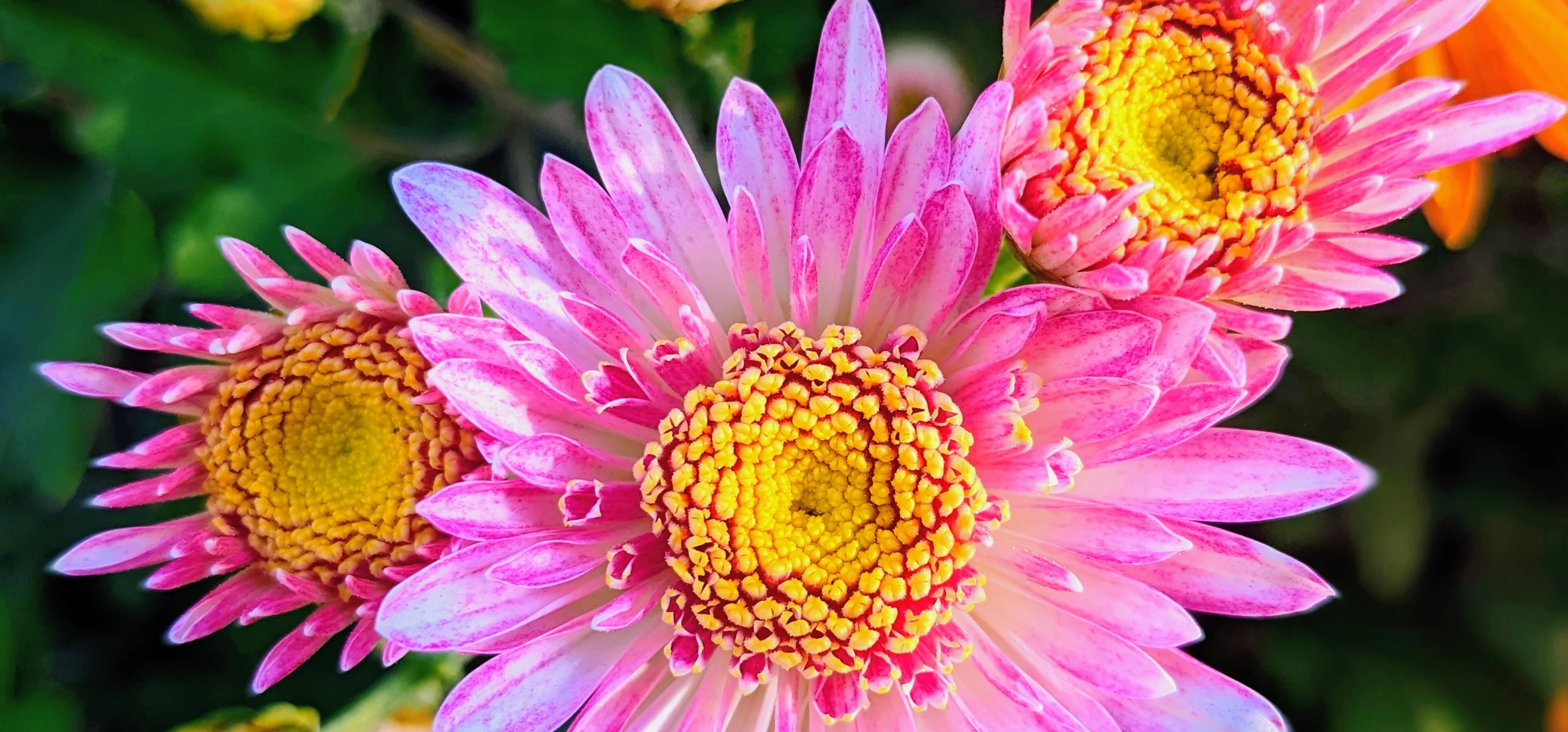
China Aster
Callistephus chinensis
Family · Asteraceae
China aster (Callistephus chinensis) is a fast annual cutting flower in single, double or pompom forms; grow in full sun with steady soil moisture.
Callistephus chinensis
Plant profile
- WateringModerateWater every 5 days
- Light exposurePartial sun
- Hardiness zoneUSDA 2–11
Growth
- Family
- Asteraceae
- Life cycle
- Annual
- Growth speed
- 7/10
- Mature size
- 20–90 cm
- Spread
- 30–45 cm
- Flowering
- Early summer until the first fall frost
- Propagation
- Seed
Dormancynone, completes its lifecycle in one growing season
Time to maturitygrown fresh from seed each year; blooms from early summer through the first fall frost
Soil & climate
- Soil pH
- pH 5.5–7.5
- Soil types
- clay, loam, sand
- Drought tolerance
- No
Light & Placement
- Origin
- China and the Russian Far East
- Where to place it
- sunny border
- cutting garden
- large container
Safety
- Toxicity
- CatsSafe
- DogsSafe
- HorsesSafe
Data fromCallistephus chinensis (L.) Nees, GBIF BPOWO: Callistephus chinensis (L.) NeesASPCA: China Aster toxicity to cats, dogNC State Extension Gardener Plant ToolboMissouri Botanical Garden Plant Finder:
Where it grows
World distribution
China Aster is native to 2 countries: China and Russia.GBIF records 5,588 documented identifications across 77 countries, with the largest concentrations in Sweden, Germany, and China.
- China
- Russia
Yellow to orange dots: concentration of documented identifications per country. Green countries: sourced native range. Source: GBIFNative range from POWO (Kew).
Callistephus chinensis, commonly sold as China aster, is a true annual, not a hardy perennial aster, so the whole plant lives and dies within one growing season. Sown from seed each spring, it comes into bloom from early summer and keeps producing flowers into fall, in colors running from white through pink, red, blue, violet, purple and yellow. It is the only species in its genus, native to China and the Russian Far East, and the huge range of forms sold today, from flat, daisy-like singles to fully double, shaggy pompoms, comes from more than two centuries of selection rather than from separate wild species. Buy a packet of mixed seed for a cutting bed or a named single-color strain for a border, and expect an easy, fast-growing plant that mainly asks for sun and steady moisture.
Choosing a Variety: Single, Double and Pompom Forms
Because Callistephus chinensis is a monotypic genus, one wild species, every China aster in a seed catalog is a cultivar of that same plant rather than a related species. Height alone spans a wide range, from compact dwarfs around 20 cm bred for edging and containers up to branching types that reach roughly 90 cm and need a cutting row of their own. Flower form varies just as much: species-type and single-flowered strains show a ring of ray florets around a flat, yellow-centered disc, much like a daisy, while double and pompom strains have been bred to hide the disc entirely under layers of shaggy or quilled petals, with blooms commonly 8 to 13 cm across. A short, bushy dwarf strain earns its keep at the front of a border or in a pot by the door; a tall, single-stemmed strain earns its keep in a dedicated cutting patch, where the long stems can be harvested without wrecking the display.
Sowing: Getting China Aster Off to a Strong Start
China aster seed is short-lived compared with many garden flowers, so buy fresh seed each year rather than trusting a packet held over from a previous season. Press the seed onto the surface of a moist, free-draining seed mix and cover it only lightly: light helps it germinate, and burying it too deep is a common reason a sowing fails to come up at all. Start seed indoors under cover several weeks before the last expected frost to gain extra weeks of bloom, or sow direct once the soil has warmed and frost danger has passed. Either way, thin or space seedlings so mature plants are not touching once they fill out, since crowding is what pushes this species toward the fungal and viral problems covered below. Grown fresh from seed every year, China aster carries none of the slow establishment a shrub or tree needs. It flowers in the same season it is sown, with bloom running from early summer through fall.
Light and Site
Give China aster full sun for the fullest, most compact flowering, though it also tolerates partial shade with as little as two hours of direct sun a day, usually at some cost to stem strength and flower count. An open, airy spot matters almost as much as sun: still, crowded air around the foliage is exactly the condition that lets the diseases below take hold, so avoid tucking plants into a sheltered corner where air barely moves. A sunny border, a dedicated cutting row, or a large container by a doorway all suit it equally well.
Soil, Watering and Feeding
China aster grows in clay, loam or sandy soil, provided it is fertile, rich in organic matter and drains freely, and it tolerates anything from mildly acid to neutral pH. What it will not forgive is inconsistency at the root: keep the soil evenly moist through germination and the whole growing season, since this is a plant that wants steady moisture rather than the dry spells a genuinely drought-tolerant annual would shrug off. Work compost into the bed before sowing or transplanting, and mulch once seedlings are established to even out soil moisture between waterings. A light, balanced feed during the main flowering months keeps the display going; there is no need for the heavy feeding a fruiting vegetable would need.
How often to water your China Aster
Pests and Diseases: Aster Yellows and Aster Wilt
Aphids and spider mites are the routine pests here, both treatable with a strong jet of water or insecticidal soap before numbers build. The more serious problems are specific to this plant and its close relatives. Leafhoppers feed on the foliage and, in doing so, can spread aster yellows, a disease that distorts growth and discolors flowers; where leafhoppers are a known local problem, controlling them is the main defence, since there is no cure once a plant is infected. Aster wilt and stem rot are the other named risks, problems that show up as sudden wilting or collapse of an otherwise healthy-looking plant. Since these diseases build up where the same susceptible plants are grown repeatedly, avoid replanting China asters in the exact same patch of ground year after year, and pull and discard any plant that collapses suddenly rather than composting it.
Deadheading and Cutting for the Vase
Snip spent flowers back to the next set of leaves or side bud, and a China aster kept from setting seed keeps opening new buds for longer than one left to go to seed. Grown specifically for cutting, the taller single-stemmed strains are the better choice: pick when the outer ring of petals has fully opened but the center is still tight, since a stem cut at this stage holds up well in water. Regular cutting doubles as deadheading, so a bed grown mainly for the vase rarely needs separate attention to spent blooms.
A Safe Choice for Pets, With Roots in China and the Russian Far East
The ASPCA lists China aster as non-toxic to cats, dogs and horses, making it one of the safer cut-flower options for a household with curious pets, unlike chrysanthemums sold around the same season. In the wild, Callistephus chinensis is native to China and the Russian Far East; every garden strain sold today, from a 20 cm dwarf to a metre-tall cutting variety, descends from that single wild species rather than from a group of related plants.


Test your plant knowledge
Tap a card to flip it and reveal the answer.
China asters need consistently moist, well-drained soil and dislike drying out. Tap to reveal ✓ True
Callistephus chinensis is a perennial that flowers reliably from the same plant for many years. Tap to reveal ✕ False
The ASPCA lists China aster as non-toxic to cats, dogs and horses. Tap to reveal ✓ True
China aster will not produce any flowers unless it gets full sun all day. Tap to reveal ✕ False
Leafhoppers feeding on China asters can spread aster yellows disease. Tap to reveal ✓ True
Sources
References consulted for this guide
- Callistephus chinensis (L.) Nees, GBIF Backbone Taxonomygbif.org
- POWO: Callistephus chinensis (L.) Neespowo.science.kew.org
- ASPCA: China Aster toxicity to cats, dogs and horsesaspca.org
- NC State Extension Gardener Plant Toolbox: Callistephus chinensisplants.ces.ncsu.edu
- Missouri Botanical Garden Plant Finder: Callistephus chinensismissouribotanicalgarden.org
- Reference entity : Wikipédiaen.wikipedia.org