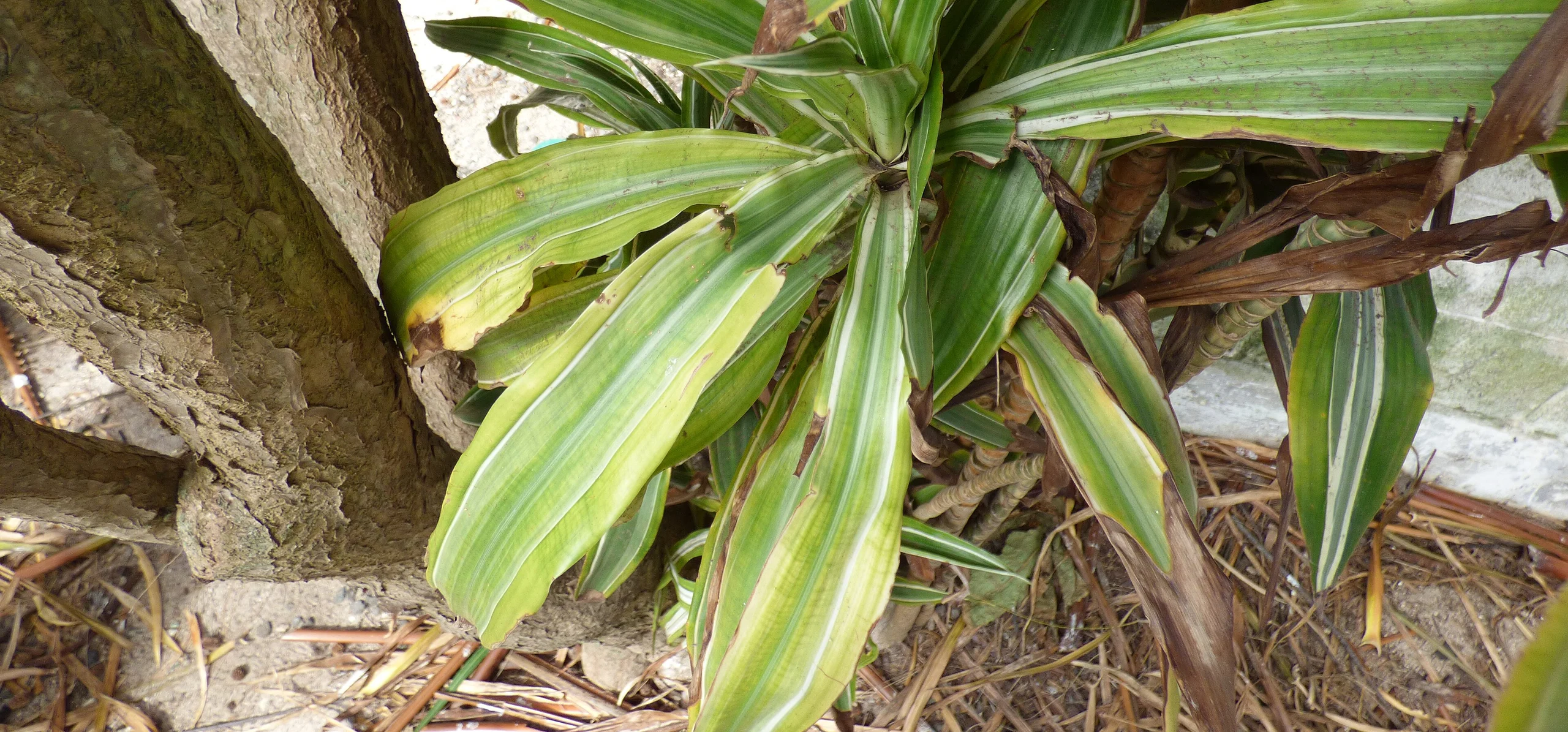
Corn Plant
Dracaena fragrans
Family · Asparagaceae
Corn plant (Dracaena fragrans) care: tolerates low light but grows slowly, water only when the mix is half dry, and fluoride in tap water causes brown tips.
Dracaena fragrans
Plant profile
- WateringModerateWater every 10 days
- Light exposurePartial shade
- Ideal temperature18–30 °C
- Hardiness zoneUSDA 10–11
Growth
- Family
- Asparagaceae
- Life cycle
- Perennial
- Growth speed
- 2/10
- Mature size
- 90–440 cm
- Spread
- 30–90 cm
- Flowering
- Rare indoors; fragrant at night
- Propagation
- Cutting
DormancyGrowth slows in low winter light
Time to maturityReaches full height over several years; cut canes resprout within weeks
Soil & climate
- Soil types
- Peat-free, loam-based potting compost, Free-draining mix with added perlite or grit
- Saline soil
- Not tolerated
- Drought tolerance
- Yes
Light & Placement
- Origin
- Tropical Africa
- Where to place it
- A few steps back from an east or west window
- Interior corner or hallway with filtered daylight
- Shaded patio in frost-free zone 10-11 climates
- Container with a drainage hole
Safety
- Toxicity
- CatsToxic
- DogsToxic
- HorsesToxic
- HumansToxic
Data fromDracaena fragrans (L.) Ker Gawl., GBIF BDracaena fragrans (L.) Ker Gawl., PlantsCorn Plant (Dracaena fragrans) toxicity,Dracaena fragrans, RHSDracaena fragrans, NC State Extension Ga
Where it grows
World distribution
Corn Plant is native to 26 countries: Angola, Benin, Cameroon, Central African Republic, Congo - Brazzaville, Congo - Kinshasa, Côte d’Ivoire, and Equatorial Guinea….GBIF records 3,272 documented identifications across 111 countries, with the largest concentrations in Brazil, United States, and Costa Rica.
- Angola
- Benin
- Cameroon
- Central African Republic
- Congo - Brazzaville
- Congo - Kinshasa
- Côte d’Ivoire
- Equatorial Guinea
- Ethiopia
- Gambia
- Ghana
- Guinea
Show 14 more countriesShow fewer countries
- Kenya
- Liberia
- Malawi
- Mozambique
- Nigeria
- Rwanda
- São Tomé & Príncipe
- Sierra Leone
- Sudan
- Tanzania
- Togo
- Uganda
- Zambia
- Zimbabwe
Yellow to orange dots: concentration of documented identifications per country. Green countries: sourced native range. Source: GBIFNative range from POWO (Kew).
A corn plant almost never starts life as a single stem you grew from a seedling. Nurseries cut leafless canes of Dracaena fragrans to a chosen length, root them, and pot two or three together at staggered heights, which is why one container often holds what looks like a single bushy plant but is really three separate trunks. The strappy, arching leaves topping each cane are solid dark green on the species and on 'Janet Craig' types, or striped down the centre in yellow or lime on the cultivars sold as 'Massangeana' and 'Lemon Lime', the stripe pattern that gave the plant its common name by resembling a ripening corn cob. It is one of the most shade tolerant plants sold as a houseplant, which is why it fills so many office lobbies and windowless corners, but that tolerance comes at the cost of speed: growth is slow, and most of what kills a corn plant is a pot that never drains or fluoridated tap water, not too little light.
Massangeana, Lemon Lime and the plain green forms
'Massangeana' is the cane sold in nearly every office supply catalogue and garden centre: a broad yellow to lime stripe runs down the centre of each arching leaf, widest at the base and tapering toward the tip. 'Lemon Lime' carries narrower, more numerous stripes in cream and green along the leaf margins rather than one central band, giving it a brighter, more evenly variegated look, and it tends to stay more compact. Plain green forms sold as 'Janet Craig' or the straight species have solid dark leaves and are, if anything, even more tolerant of dim rooms since they carry no variegated tissue to starve of light. All three want the same care; the only real difference is how much light keeps the stripe crisp, since a plant kept too dark for long eventually pushes new leaves that are plainer and less patterned than the ones it arrived with.
Light: from lobby corners to a bright room
Give it bright, indirect light if you want steady growth and clean variegation: a spot a few steps back from an east or west window works well. It will also survive, slowly, in a dim interior corner or a north-facing room, which is exactly why it turns up in hallways and reception desks that see no direct sun at all; growth simply slows further and the plant coasts rather than thrives. What it does not tolerate is hours of direct summer sun through unfiltered glass, which bleaches and scorches the leaf tips within a day or two, leaving pale, papery patches that never green back up. A curtain-filtered south window suits it better than an unshaded one.
Watering and the fluoride problem
Water once the top half of the potting mix has dried out, then soak it thoroughly and let the excess drain away rather than sitting in the saucer; cut back further once growth slows in winter. The detail that trips up more corn plants than any watering schedule is the water itself: this genus is notably sensitive to fluoride, the additive present in most municipal tap water, which travels to the leaf margins and accumulates there. The result is a band of brown, crisp, sharply defined dead tissue along the tips and edges of otherwise healthy leaves, showing up two to four weeks after exposure and never reversing once it has formed. Switching to rainwater, distilled water or water run through a fluoride-rated filter stops new damage, though leaves already marked stay marked; letting tap water sit out overnight does nothing for fluoride, only for chlorine.


Soil and potting
Pot it in a peat-free, loam-based mix loosened with perlite or coarse grit, in a container with a drainage hole, since standing water at the base of a cane is the fastest route to a soft, rotten stem. The plant tolerates soil that runs from slightly acidic to slightly alkaline, but it has poor tolerance for salt buildup, so mineral deposits from tap water or over-feeding show up as the same crispy leaf margins caused by fluoride; flushing the pot with a heavy watering every couple of months helps carry excess salts out through the drainage hole. Repot a young cane into a slightly larger pot every year or two in spring; an older, multi-cane specimen can go several years between repots and just needs a yearly top-dress of fresh compost instead.
Cutting back a tall cane and rooting the top
Left alone for years, a cane just keeps climbing and dropping its lower leaves as it goes, until the rosette on top is out of reach and the bottom half of the stem is bare. The fix is the same one nurseries used to shape the plant in the first place: cut the cane cleanly with a clean blade at the height you want, anywhere along an unbranched section. Within a few weeks, dormant buds just below the cut break and push out two or three new shoots, so a single leggy cane becomes a shorter, branched plant. The leafy top you removed is not waste: strip the lowest inch of stem, root it in water or moist, well-draining mix kept warm, and it will send out roots over several weeks to become a second plant. The bare lower cane left in the pot can also be cut into leafless sections and rooted the same way, laid horizontally and half buried, which is the commercial method used to produce the canes sold at garden centres in the first place.
Flowering: rare indoors, fragrant at night
A mature corn plant occasionally sends up a tall flower spike carrying dozens of small, star-shaped, greenish-white flowers that open at night and release a heavy, sweet scent strong enough to fill a room, followed outdoors by orange to red berries. Indoors this is uncommon: most houseplants are kept as juvenile canes and rarely reach the size or age needed to bloom, and when it does happen it tends to follow a period of stress such as a change in light or temperature. There is no reliable way to force it, and a corn plant that never flowers indoors over decades is completely normal, not a sign anything is wrong.
Pests: spider mites and scale
Dry indoor air, especially near heating vents in winter, invites spider mites, visible as fine webbing between leaves and a dull, stippled look to the foliage where they have been feeding on the underside. Scale insects show up as small, immobile brown bumps clustered along the canes and the undersides of leaves, often with a sticky residue on nearby surfaces; mealybugs, the white cottony tufts that gather in leaf joints, are the third common visitor. Wipe leaves down periodically with a damp cloth to knock back light infestations before they establish, and treat visible colonies with insecticidal soap or a cotton swab dipped in rubbing alcohol for scale and mealybugs specifically.
Toxicity to cats, dogs and people
The ASPCA lists the corn plant as toxic to cats, dogs and horses, with saponins as the toxic principle; ingestion in cats can bring on vomiting, sometimes with blood, along with depression, loss of appetite, excess drooling and dilated pupils. University extension guidance adds that the plant is also irritating if eaten by people, causing mouth and stomach irritation, and that the sap alone can irritate skin on contact. Keep it where a chewing cat, dog or small child cannot reach the lower leaves, and wash your hands after pruning or repotting.
Test your plant knowledge
Tap a card to flip it and reveal the answer.
Corn plant canes sold in stores are usually rooted stem cuttings rather than plants grown from seed. Tap to reveal ✓ True
Direct summer sun through a window keeps the yellow stripe on 'Massangeana' leaves the brightest. Tap to reveal ✕ False
You should water a corn plant once the top half of the potting mix has dried out. Tap to reveal ✓ True
Brown, crispy leaf tips on a corn plant almost always mean it needs more frequent watering. Tap to reveal ✕ False
The ASPCA lists the corn plant as toxic to cats and dogs. Tap to reveal ✓ True
Sources
References consulted for this guide
- Dracaena fragrans (L.) Ker Gawl., GBIF Backbone Taxonomygbif.org
- Dracaena fragrans (L.) Ker Gawl., Plants of the World Online (Kew)powo.science.kew.org
- Corn Plant (Dracaena fragrans) toxicity, ASPCA Animal Poison Controlaspca.org
- Dracaena fragrans, RHSrhs.org.uk
- Dracaena fragrans, NC State Extension Gardener Plant Toolboxplants.ces.ncsu.edu
- Reference entity : Wikipédiaen.wikipedia.org