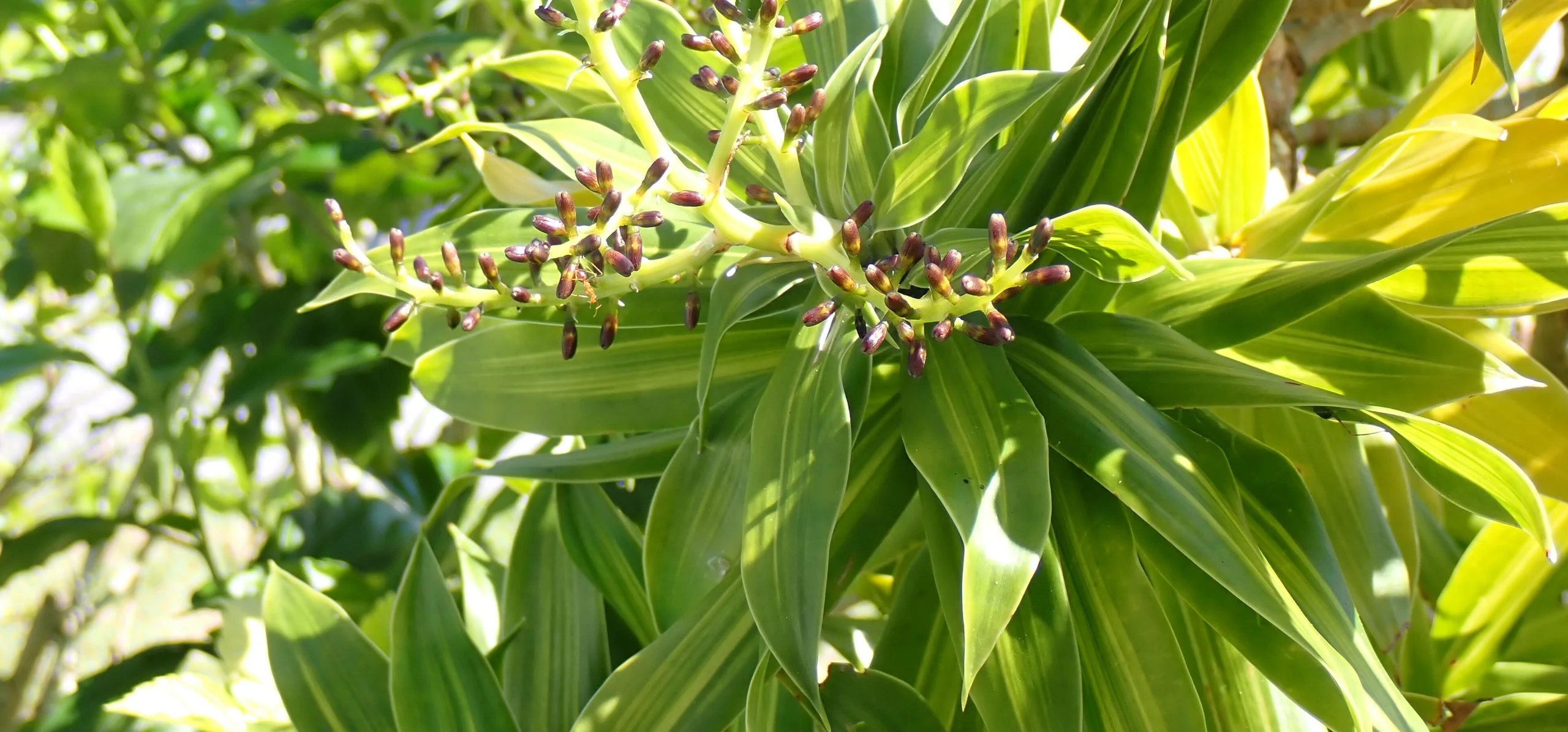
Song of India
Dracaena reflexa
Family · Asparagaceae
Song of India (Dracaena reflexa) care: bright indirect light keeps the cream stripes, fluoride-free water stops brown tips, and how to prune canes to branch.
Dracaena reflexa
Plant profile
- WateringModerateWater every 14 days
- Light exposureIndirect light
- Ideal temperature15–27 °C
- Humidity40–60 %
- Hardiness zoneUSDA 11–12
Growth
- Family
- Asparagaceae
- Life cycle
- Perennial
- Growth speed
- 4/10
- Mature size
- 100–550 cm
- Spread
- 60–150 cm
- Flowering
- Rare indoors
- Propagation
- Cutting
- Layering
DormancySlows in cool, dark winter
Time to maturityBranches after a cane is cut
Soil & climate
- Soil pH
- pH 5.5–6.5
- Soil types
- Peat-free loam-based potting compost, Well-draining mix with perlite or grit
- Saline soil
- Not tolerated
- Drought tolerance
- No
Light & Placement
- Origin
- Madagascar and the western Indian Ocean
- Where to place it
- East or north-facing window
- A few metres back from a bright south or west window
- Shaded patio in frost-free climates
- Terracotta or ceramic pot with a drainage hole
Safety
- Toxicity
- CatsToxic
- DogsToxic
- HorsesToxic
Data fromDracaena reflexa Lam., GBIF Backbone TaxDracaena reflexa Lam., Plants of the WorMalaysian Dracaena (Dracaena reflexa) toDracaena reflexa, RHSDracaena reflexa var. reflexa, NC State
Where it grows
World distribution
Song of India is native to 7 countries: British Indian Ocean Territory, Comoros, Madagascar, Mauritius, Mozambique, Réunion, and Seychelles.GBIF records 6,782 documented identifications across 92 countries, with the largest concentrations in Madagascar, United States, and Brazil.
- British Indian Ocean Territory
- Comoros
- Madagascar
- Mauritius
- Mozambique
- Réunion
- Seychelles
Yellow to orange dots: concentration of documented identifications per country. Green countries: sourced native range. Source: GBIFNative range from POWO (Kew).
Song of India arrives as one or several unbranched canes topped with a rosette of stiff, lance-shaped leaves, each striped in cream or yellow along a green margin. It is sold under three names almost interchangeably: Dracaena reflexa, Pleomele, and Song of India, all the same plant. In the wild it grows as a shrub or small tree across Madagascar, Mauritius, Reunion and the coast of northeastern Mozambique, which is why it tolerates a warm living room without complaint. The two things that trip people up are not watering or light in the abstract, but the water itself, since this genus reacts badly to fluoride, and the fact that a cane left alone just keeps getting taller instead of bushing out.
Light and keeping the variegation
Give it bright, indirect light: a spot near an east or north-facing window, or a few steps back from a south or west one. This is what keeps the cream and yellow stripes crisp on new leaves. Move a plant into a dim corner and the effect fades within a few growth cycles, new leaves emerging progressively plainer green because there is not enough light to justify the cost of the non-photosynthetic variegated tissue. The opposite mistake is just as common: a few hours of hot, direct midday sun through unfiltered glass will bleach and scorch the leaf tips within a day, leaving papery pale patches that never green back up. A curtain-filtered south window or an unfiltered east one both work well.
Watering, and why the water itself matters
Water moderately through spring and summer, letting the top few centimetres of mix dry before the next round, then cut back hard in winter when growth slows almost to a stop. What matters more than the schedule is the water quality: this genus is notably sensitive to fluoride, the additive in most municipal tap water, which travels up through the plant and accumulates at the leaf margins. The result is a band of brown, crispy, sharply defined dead tissue along the tip and edges of otherwise healthy leaves, appearing two to four weeks after exposure and never reversing once it has formed. Rainwater, distilled water or water left to sit does nothing for the fluoride itself (only chlorine dissipates that way), so if your tap water is fluoridated, switch to rainwater or distilled water and the new leaves that emerge afterward will stay clean.


Soil and potting
Pot it in a peat-free, loam-based mix loosened with perlite or coarse grit, in a container with a drainage hole so the roots never sit in standing water. Young plants in active growth appreciate being moved up a pot size every year or two in spring; older, multi-cane specimens can stay put for several years and just get a top-dress of fresh compost instead. A cane that has toppled or a base gone soft and dark almost always points back to a pot that never drains.
Feeding
Apply a balanced liquid feed roughly once a month while the plant is actively growing, and stop altogether in autumn and winter. Over-feeding is worse than under-feeding here: excess mineral salts build up in the same leaf margins already vulnerable to fluoride, so a plant fed too generously often shows tip burn that looks identical to a water-quality problem even on filtered water.
Pruning a cane to make it branch
Left alone, a single cane simply grows taller and taller, dropping its lower leaves as it goes, until you are left with a bare stem and a tuft on top. The fix nurseries use is deliberate: cut the cane cleanly at the height you want with a clean blade, anywhere along its length. Within a few weeks, two or three dormant buds below the cut break and push out new shoots, each one eventually forming its own rosette, so a single cane becomes a branched, fuller plant. The cut surface calluses over on its own and does not need sealing. It is the same trick used to stagger canes of different heights in one pot for a layered look, and it works on healthy, actively growing plants far better than on a stressed or dormant one.
Propagation
Cane cuttings root readily: cut a leafless section of stem about 10 to 15 cm long, lay it horizontally half-buried in moist, well-draining mix or stand it upright, and keep it warm. New shoots and roots form from the dormant nodes over several weeks. Tip cuttings with a few leaves attached can also be rooted in water, then potted once roots appear. Air layering works on tall, leggy canes you would rather not cut off entirely: wound the stem, wrap it in damp sphagnum moss and plastic, and once roots fill the moss, sever it below them to pot up a headstart plant.
Pests and common problems
Dry indoor air invites spider mites, visible as fine webbing and stippled, dull leaves, and mealybugs, which cluster as white cottony tufts in the leaf axils; scale insects show up as small brown bumps along the canes. Wipe leaves down periodically and treat with insecticidal soap at the first sign. Beyond pests, the two complaints that come up constantly are brown crispy tips, almost always fluoride or over-feeding rather than underwatering, and a soft, dark, collapsing base, which is root or cane rot from a pot that stays wet.
Toxicity to cats and dogs
The ASPCA lists Dracaena reflexa (under its trade name Malaysian Dracaena) as toxic to cats, dogs and horses, with saponins as the toxic principle. In cats specifically, ingestion can bring on vomiting, sometimes with blood, along with depression, loss of appetite, excess drooling and dilated pupils. Set it somewhere a chewing cat or puppy cannot reach the lower leaves, since the arching foliage of a mature plant often hangs within easy jumping distance.
Test your plant knowledge
Tap a card to flip it and reveal the answer.
Song of India should dry out completely between waterings, like a cactus. Tap to reveal ✕ False
Fluoride in tap water can cause the brown, crispy leaf tips this plant is known for. Tap to reveal ✓ True
Cutting a cane makes the plant branch lower down instead of staying a single bare stem. Tap to reveal ✓ True
It needs several hours of direct midday sun to keep its cream stripes bright. Tap to reveal ✕ False
Song of India is toxic to cats and dogs. Tap to reveal ✓ True
Sources
References consulted for this guide
- Dracaena reflexa Lam., GBIF Backbone Taxonomygbif.org
- Dracaena reflexa Lam., Plants of the World Online (Kew)powo.science.kew.org
- Malaysian Dracaena (Dracaena reflexa) toxicity, ASPCA Animal Poison Controlaspca.org
- Dracaena reflexa, RHSrhs.org.uk
- Dracaena reflexa var. reflexa, NC State Extension Plant Toolboxplants.ces.ncsu.edu
- Reference entity : Wikipédiaen.wikipedia.org