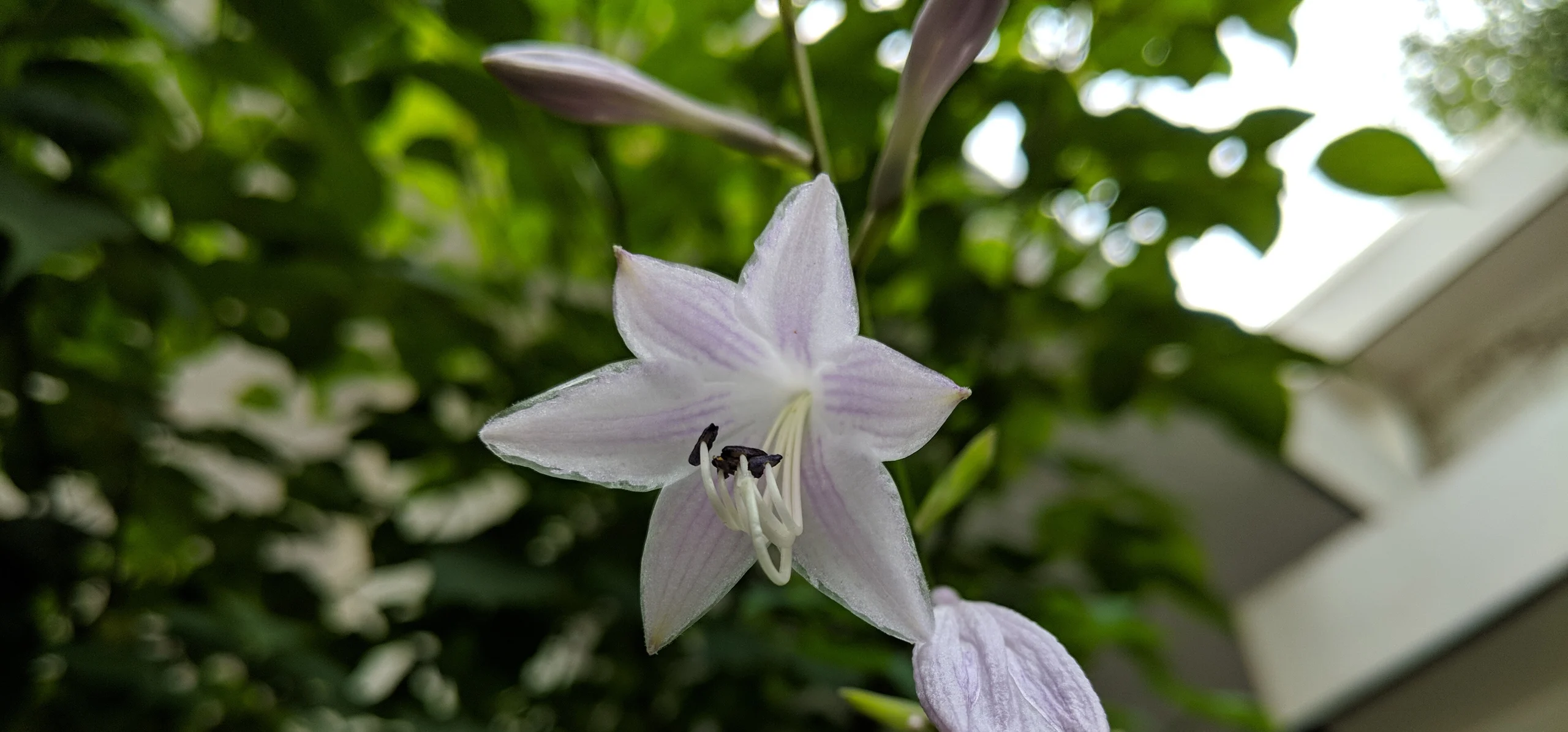
Fragrant Plantain Lily
Hosta plantaginea
Family · Asparagaceae
Hosta plantaginea is the only strongly scented hosta, with white evening flowers and more sun tolerance than most. Covers light, soil, slugs and division.
Hosta plantaginea
Plant profile
- WateringModerateWater every 6 days
- Light exposureIndirect light
- Hardiness zoneUSDA 3–9
Growth
- Family
- Asparagaceae
- Life cycle
- Perennial
- Growth speed
- 3/10
- Mature size
- 50–100 cm
- Spread
- 50–100 cm
- Propagation
- Division
- Seed
FloweringLate summer into September, white fragrant trumpet flowers 7.5-10 cm long on scapes to about 75 cm, opening at dusk
Dormancydeciduous; dies back after autumn frost, new shoots emerge in spring; does not need a long cold dormancy to rebloom, per Clemson HGIC
Time to maturity2-5 years
Soil & climate
- Soil pH
- pH 5.5–7.5
- Soil types
- loam, organic-rich soil
- Drought tolerance
- No
Light & Placement
- Origin
- China, per Plants of the World Online
- Where to place it
- partial shade border
- sunny border with reliable moisture
- woodland edge
- 30-45 cm diameter pot with drainage holes
- raised off the ground on pot feet to slow slugs
Safety
- Toxicity
- CatsToxic
- DogsToxic
- HorsesToxic
Invasive speciesnot reported as invasive
Data fromHosta plantaginea (Lam.) Asch., GBIF BacHosta plantaginea (Lam.) Asch., Plants oRHS: Hosta plantaginea, fragrant plantaiASPCA: Toxic and Non-toxic Plants, HostaNC State Extension Gardener Plant Toolbo
Where it grows
World distribution
Fragrant Plantain Lily is native to a single country: China.GBIF records 2,649 documented identifications across 36 countries, with the largest concentrations in Czechia, United States, and Slovakia.
- China
Yellow to orange dots: concentration of documented identifications per country. Green countries: sourced native range. Source: GBIFNative range from POWO (Kew).
Hosta plantaginea is the fragrant one. Its tall white trumpets open at dusk from midsummer into September and carry a scent that no other hosta species produces, which is the detail worth knowing before anything else about this plant. The leaves are glossy, pale to lime green, and rounder than the blue-grey or gold-variegated foliage typical of the hybrids sold next to it on a nursery bench, a sign that what you are holding is close to the wild species. It also takes more sun than a typical hosta, so a plant thriving in half a day of direct light in your garden is not doing anything wrong, that is this species behaving as it should when the soil stays damp. In a cool-summer climate it can sit for years without flowering, because it needs real heat to set buds, not merely to survive.
The Only Fragrant Hosta
Most hostas are grown for foliage because their flowers, lavender or white funnels on tall stems, have little or no scent. Hosta plantaginea breaks that pattern. Its flowers open in the evening and release a heavy, sweet perfume that carries across a garden after sunset, trumpet-shaped blooms about 7.5 to 10 cm long on scapes that reach roughly 75 cm, according to NC State Extension. They are also among the largest flowers in the genus, and cut stems will scent a room for a day or two once they open indoors.
The leaves match the flower for distinction: glossy, heart-shaped, a fresh lime to yellow-green rather than the blue-grey or variegated tones common in modern cultivars, with a quilted surface and parallel veining, often exceeding 15 cm in length. A plant with plain glossy green leaves and a late, fragrant white bloom is very likely this species rather than one of its many descendants.
Light and Placement: More Sun Than Most Hostas
The RHS lists full shade to partial shade for Hosta plantaginea, in a sheltered spot facing north, east or west. In practice this species goes further than that recommendation suggests: NC State Extension calls it the most heat and sun tolerant of all hosta species, capable of handling six or more hours of direct sun as long as the soil never dries out. That sun tolerance is also why it needs a genuinely warm summer to flower reliably; plants grown in cool, cloudy summers can produce healthy foliage for years without ever setting a bud.
The trade-off is water. A plant given more light needs more of it, since the same broad leaves that photosynthesize well in sun also lose moisture faster. Treat added sun as a commitment to closer watering, not a free upgrade.


Soil, Watering and Feeding
Give it a loam soil rich in organic matter, moist but free-draining. The RHS notes it tolerates acid, neutral or alkaline conditions equally well, so pH is rarely the limiting factor here. Working compost or well-rotted manure into the planting hole, then keeping a mulch layer on the surface, does more for this hosta than almost any other single step.
Clemson Cooperative Extension recommends about an inch of water a week during the growing season, more during hot spells or for plants in full sun, and more again for anything grown in a container. Feed once in early spring with a balanced, slow-release fertilizer; established clumps in good soil need little beyond that.
Slugs, Snails and Other Pests
Slugs and snails are, by a wide margin, the most common problem on this species, and glossy, plain green leaves are more attractive to them than thick or blue-grey foliage. Damage is worst in spring as new shoots push through the soil, still soft and unlignified. Copper tape around pots, a mulch of grit or crushed eggshell around crowns, and pot feet that lift containers off the ground all reduce losses without chemicals.
NC State Extension also lists foliar nematodes, vole root damage and deer browsing as recurring issues, along with leaf spot and crown rot in poorly drained soil. Watch for mottling, ring spots or unusual leaf puckering, which can signal Hosta Virus X; there is no cure, and an infected plant should be removed rather than kept as a curiosity.
Dividing in Spring
The RHS recommends dividing in late summer or early spring, and Clemson notes that early spring, before the leaves unfold, is the easiest window since the crown is still visible and the plant has not yet put energy into new foliage. Lift the whole clump and split it into sections with a spade or two forks worked back to back, keeping at least one healthy bud per division.
This species reaches flowering maturity slowly, over roughly two to five years from a small division, so a newly split piece may take a season or two to bloom again even once it looks fully established in leaf.
Parent of Fragrant Hybrids
Nearly every fragrant hosta cultivar on the market traces its scent back to this species. 'Royal Standard', one of the earliest widely grown fragrant hostas, carries Hosta plantaginea in its parentage alongside a narrow-leaved species, and gold-leaved 'Guacamole' descends from 'Fragrant Bouquet', itself bred from this plant. If a hosta cultivar is advertised as fragrant, Hosta plantaginea is almost always somewhere in its family tree, and the straight species remains the strongest-scented option of the group.
Growing in Pots
This hosta adapts well to container growing, which also makes slug control easier since the pot can be raised on feet. Use a pot at least 30 to 45 cm across with generous drainage holes, filled with a loam-based or peat-free multipurpose mix enriched with compost. Container soil dries faster than a border, so check it more often through summer, especially if the pot sits in the sunnier spot this species can tolerate.
Move potted plants to a sheltered spot for winter, against a wall or in an unheated porch, so the compost does not sit waterlogged and freeze solid around the crown.
Toxicity to Cats and Dogs
The ASPCA lists hosta as toxic to cats, dogs and horses, with saponins as the toxic principle; ingestion causes vomiting, diarrhea and depression. NC State Extension notes that all parts of the plant carry this risk, not only the leaves. The bitter taste limits how much a pet typically eats in one sitting, but a bed or patio pot within reach of a dog or cat that chews foliage is not the right spot for this hosta.
Test your plant knowledge
Tap a card to flip it and reveal the answer.
Hosta plantaginea is the only hosta species with strongly fragrant flowers. Tap to reveal ✓ True
Hosta plantaginea flowers open and release their scent during the day. Tap to reveal ✕ False
Hosta plantaginea tolerates more sun than most hosta species, provided the soil stays moist. Tap to reveal ✓ True
The ASPCA lists hosta, including Hosta plantaginea, as non-toxic to cats and dogs. Tap to reveal ✕ False
In climates with cool summers, Hosta plantaginea may go years without flowering. Tap to reveal ✓ True
Sources
References consulted for this guide
- Hosta plantaginea (Lam.) Asch., GBIF Backbone Taxonomygbif.org
- Hosta plantaginea (Lam.) Asch., Plants of the World Online (Kew)powo.science.kew.org
- RHS: Hosta plantaginea, fragrant plantain lilyrhs.org.uk
- ASPCA: Toxic and Non-toxic Plants, Hostaaspca.org
- NC State Extension Gardener Plant Toolbox: Hosta plantagineaplants.ces.ncsu.edu
- Reference entity : Wikipédiaen.wikipedia.org