Common Walnut
Juglans regia
Family · Juglandaceae
Grow Juglans regia from site choice to harvest: alkaline loam, full sun, pruning only in midsummer to stop the bleed, and what juglone rules out nearby.
Juglans regia
Plant profile
- WateringModerateWater every 10 days
- Light exposureFull sun
- Hardiness zoneUSDA 3–7
Growth
- Family
- Juglandaceae
- Life cycle
- Perennial
- Growth speed
- 6/10
- Mature size
- 1200–1800 cm
- Spread
- 1200–1800 cm
- Propagation
- Seed
- Cutting
- Layering
- Grafting
FloweringMale catkins and small female flowers in spring; nuts ripen in autumn (NC State Extension)
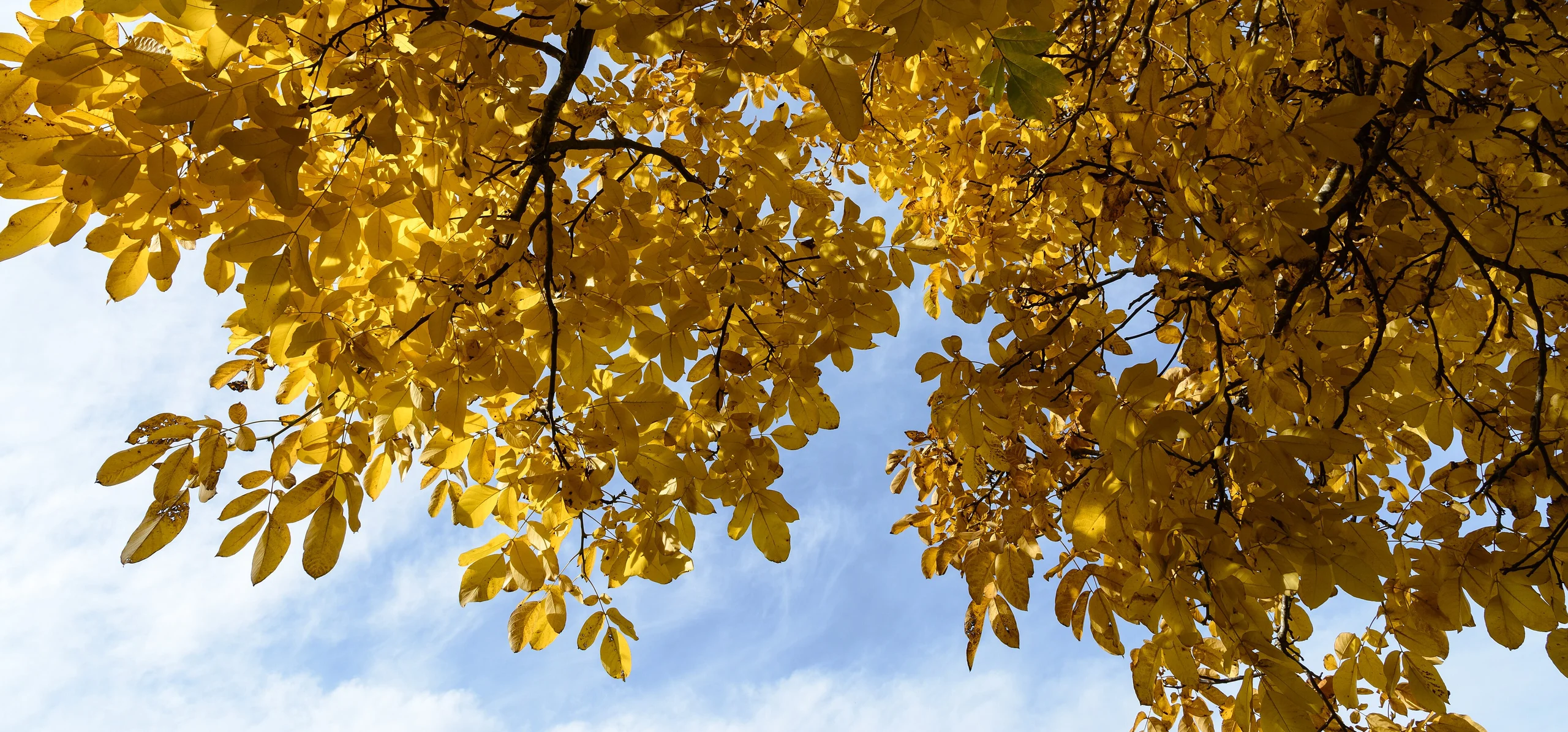
DormancyFully deciduous; bare in winter, leafing out and flowering in spring
Time to maturityFirst nuts at 4 to 6 years old; a full crop only after 15 to 20 years (NC State Extension)
Soil & climate
- Soil pH
- pH 6–8
- Soil types
- loam, clay, sand, chalk
- Drought tolerance
- Yes
Light & Placement
- Origin
- NE and E Turkey to Lebanon and the western Himalaya (POWO)
- Where to place it
- Open lawn or orchard with a 12 m or wider canopy allowance
- South or west facing slope, sheltered from spring frost pockets
Safety
- Pet safe
- No
ToxicityNot listed by the ASPCA; roots and fallen leaves release juglone, toxic to nearby tomatoes, peppers, potatoes, blueberries, azaleas and rhododendrons (NC State Extension)
Invasive speciesRoots and fallen leaves release juglone, toxic to nearby azaleas, rhododendrons, blueberries, tomatoes, peppers and potatoes (NC State Extension)
Data fromGBIF Backbone Taxonomy: Juglans regia L.POWO: Juglans regia L.RHS: Juglans regia (common walnut)RHS Advice: Walnuts, growing guideNC State Extension Gardener Plant Toolbo
Where it grows
World distribution
Common Walnut is native to 9 countries: Afghanistan, Georgia, India, Iran, Iraq, Lebanon, Pakistan, and Russia….GBIF records 261,375 documented identifications across 100 countries, with the largest concentrations in France, Germany, and Belgium.
- Afghanistan
- Georgia
- India
- Iran
- Iraq
- Lebanon
- Pakistan
- Russia
- Türkiye
Yellow to orange dots: concentration of documented identifications per country. Green countries: sourced native range. Source: GBIFNative range from POWO (Kew).
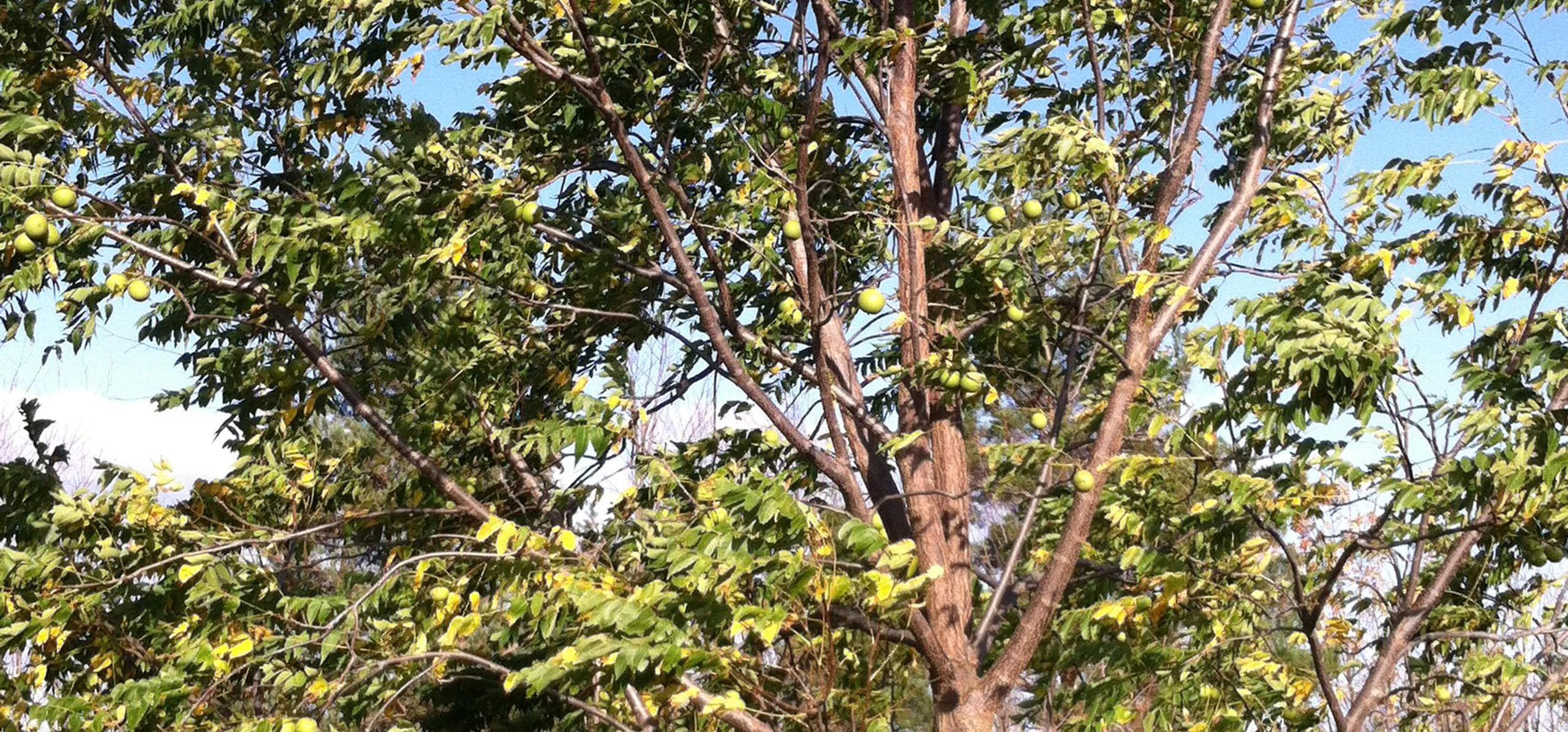
Juglans regia is the walnut sold shelled in every supermarket, a broad deciduous tree that takes four to six years to bear its first nuts and fifteen to twenty before it crops in any real quantity. It grows into a spreading, rounded canopy 12 to 18 m tall and wide, so the decision that matters most happens before planting: choose a permanent, sunny, well drained spot with room to spare, because the deep taproot that anchors a mature tree makes it a poor candidate for moving later. Get the site and the pruning calendar right and it is an undemanding tree for decades; get either wrong and you risk a bleeding wound or a stunted crop that never really gets going.
Origin and What You're Growing
GBIF's Backbone Taxonomy accepts Juglans regia L. as the correct name, in the walnut family Juglandaceae, order Fagales. Kew's Plants of the World Online gives its native range as northeastern and eastern Turkey through Lebanon to the western Himalaya, a much narrower homeland than the tree's current spread across Europe, Asia and the west coast of North America, where it has been grown for its timber and nuts for centuries under the names English walnut and Persian walnut. Cultivars sold today, such as 'Broadview', are selected for nut size, shell thinness and partial self fertility rather than for looks, since the wild species is already a handsome shade tree on its own.
Site, Soil and Spacing
The RHS recommends well drained, fertile, moisture retentive loam that leans alkaline, in full sun, with light shade tolerated only while the tree is young. Plant a tree under 3 m tall between late autumn and winter while it is dormant, spacing trees 12 to 18 m apart to give the eventual canopy room, and keep it out of frost pockets where cold air pools on still nights, since a late frost can damage the young catkins and the year's crop with them. Avoid pot bound nursery stock: a walnut's taproot dislikes any check to its growth, and a tree that has circled in its pot for too long rarely straightens out once it is in the ground.
Choosing a Tree: Pollination
Juglans regia carries both male catkins and small female flowers on the same tree, but the two rarely open in step, so a lone tree pollinates itself only partially. Partially self fertile cultivars such as 'Broadview' will crop alone, but the RHS is clear that cropping improves with a second, different tree nearby to cross pollinate. Where space allows only one tree, choose a cultivar bred for self fertility rather than relying on wind carrying pollen in from a neighbour's garden.


Watering and Feeding
Young trees need a deep, regular soak through their first two or three summers while the taproot works down to reliable moisture; a stressed young walnut checks its growth for a full season rather than pushing through a dry spell. Once established, the same taproot lets a tree draw on soil moisture other plants cannot reach, though a prolonged summer drought still thins the eventual nut set. Feed a young tree with a balanced fertiliser at around 100 g per square metre in late February, follow with a lighter dressing of sulphate of ammonia in late March, and mulch newly planted trees with well rotted compost kept clear of the trunk.
Pruning Without the Bleed
Prune between midsummer and early autumn, never in winter or early spring: cuts made while sap is rising bleed heavily, weakening the tree and leaving a wound that heals slowly. Walnuts sit in the RHS's lightest pruning group and do not tolerate hard cutting back, so limit the work to removing dead or crossing branches and encouraging well placed side shoots on a young tree, rather than reshaping an older one. Raise the lowest branches to around 1.8 to 2.5 m as the tree matures, partly for ease of mowing underneath and partly because it makes the trunk harder for squirrels to reach the crop.
Juglone: What Not to Plant Nearby
Walnut roots and fallen leaves release juglone, a compound that damages or kills a specific list of sensitive neighbours: azaleas, rhododendrons, blueberries, tomatoes, peppers and potatoes all struggle or die within a walnut's root zone. This is not a reason to avoid the tree, but it does rule out an underplanted vegetable bed or a rhododendron border beneath the canopy; grass, most shade tolerant perennials, and many other trees and shrubs are unaffected and grow within reach of an established walnut without trouble.
Pests, Diseases and Squirrels
Aphids and walnut blister mite are the routine pests; walnut leaf spot, walnut leaf blotch and anthracnose show up as leaf blemishes in wet seasons and are managed mainly by clearing fallen diseased leaves rather than spraying, while honey fungus and coral spot are the more serious wood infections to watch for on a stressed or wounded tree. Codling moth larvae occasionally damage the developing nuts. Grey squirrels are usually a bigger threat to the crop than any insect or fungus; plastic tree guards on the trunk, plus lower branches raised out of easy reach, are the RHS's main defence, alongside harvesting daily once the nuts start dropping so nothing sits on the ground overnight.
Harvest and Storage
Nuts ripen in autumn; crack a few test samples before committing to a full harvest, then pick daily once they start to drop, both to beat the squirrels and to stop windfalls sitting in wet grass. Remove every trace of the fibrous green husk with a wire brush before storage, since husk left on the shell encourages mould. Dry the cleaned nuts in a single layer in a cool oven at a maximum of 40 degrees C, or somewhere airy and dry, until the kernels rattle loosely in the shell; properly dried walnuts keep for months in a cool, dry place.
Test your plant knowledge
Tap a card to flip it and reveal the answer.
Juglans regia produces its first nuts within a year or two of planting. Tap to reveal ✕ False
Pruning a walnut tree in winter or early spring makes the cuts bleed heavily. Tap to reveal ✓ True
A single walnut tree with no other tree nearby will never produce any nuts. Tap to reveal ✕ False
Tomatoes and azaleas planted under an established walnut's canopy are likely to struggle or die. Tap to reveal ✓ True
Juglans regia is native to Great Britain. Tap to reveal ✕ False
Sources
References consulted for this guide
- GBIF Backbone Taxonomy: Juglans regia L.gbif.org
- POWO: Juglans regia L.powo.science.kew.org
- RHS: Juglans regia (common walnut)rhs.org.uk
- RHS Advice: Walnuts, growing guiderhs.org.uk
- NC State Extension Gardener Plant Toolbox: Juglans regiaplants.ces.ncsu.edu
- Reference entity : Wikipédiaen.wikipedia.org