Purple Loosestrife
Lythrum salicaria
Family · Lythraceae
Purple loosestrife wants full sun and wet soil, but it is a regulated noxious weed in much of North America. Covers siting, deadheading and legal status.
Lythrum salicaria
Plant profile
- WateringHighWater every 3 days
- Light exposureFull sun
- Hardiness zoneUSDA 3–9
Growth
- Family
- Lythraceae
- Life cycle
- Perennial
- Growth speed
- 8/10
- Mature size
- 100–150 cm
- Spread
- 10–50 cm
- Flowering
- Summer, July to September
- Propagation
- Seed
- Division
- Cutting
Dormancydies back to the ground in autumn; new stems emerge from the rootstock in spring
Time to maturity2-5 years
Soil & climate
- Soil types
- clay, loam
- Drought tolerance
- No
Light & Placement
- Origin
- Temperate Eurasia, Northwestern Africa, Ethiopia and Australia
- Where to place it
- pond margin
- rain garden
- bog garden
- wet meadow border
- large container kept standing in a water-filled saucer
Safety
- Toxicity
- Not evaluated by the ASPCA; toxicity undetermined
- Pet safe
- No
Invasive speciesregulated noxious weed in several US states, including Missouri and North Carolina; do not plant near natural wetlands
Data fromLythrum salicaria, GBIF Backbone TaxonomLythrum salicaria L., Plants of the WorlRHS: Lythrum salicaria (purple loosestriMissouri Botanical Garden: Lythrum salicNC State Extension Gardener Plant Toolbo
Where it grows
World distribution
Purple Loosestrife is native to 50 countries: Afghanistan, Albania, Algeria, Australia, Austria, Belarus, Belgium, and Bulgaria….GBIF records 832,052 documented identifications across 86 countries, with the largest concentrations in France, Netherlands, and United Kingdom.
- Afghanistan
- Albania
- Algeria
- Australia
- Austria
- Belarus
- Belgium
- Bulgaria
- China
- Croatia
- Czechia
- Denmark
Show 38 more countriesShow fewer countries
- Estonia
- Ethiopia
- Finland
- France
- Georgia
- Germany
- Greece
- Hungary
- India
- Iran
- Iraq
- Ireland
- Italy
- Japan
- Kazakhstan
- Kyrgyzstan
- Lebanon
- Mongolia
- Morocco
- Netherlands
- Norway
- Pakistan
- Palestinian Territories
- Poland
- Portugal
- Romania
- Russia
- South Korea
- Spain
- Sweden
- Switzerland
- Tajikistan
- Tunisia
- Türkiye
- Turkmenistan
- Ukraine
- United Kingdom
- Uzbekistan
Yellow to orange dots: concentration of documented identifications per country. Green countries: sourced native range. Source: GBIFNative range from POWO (Kew).
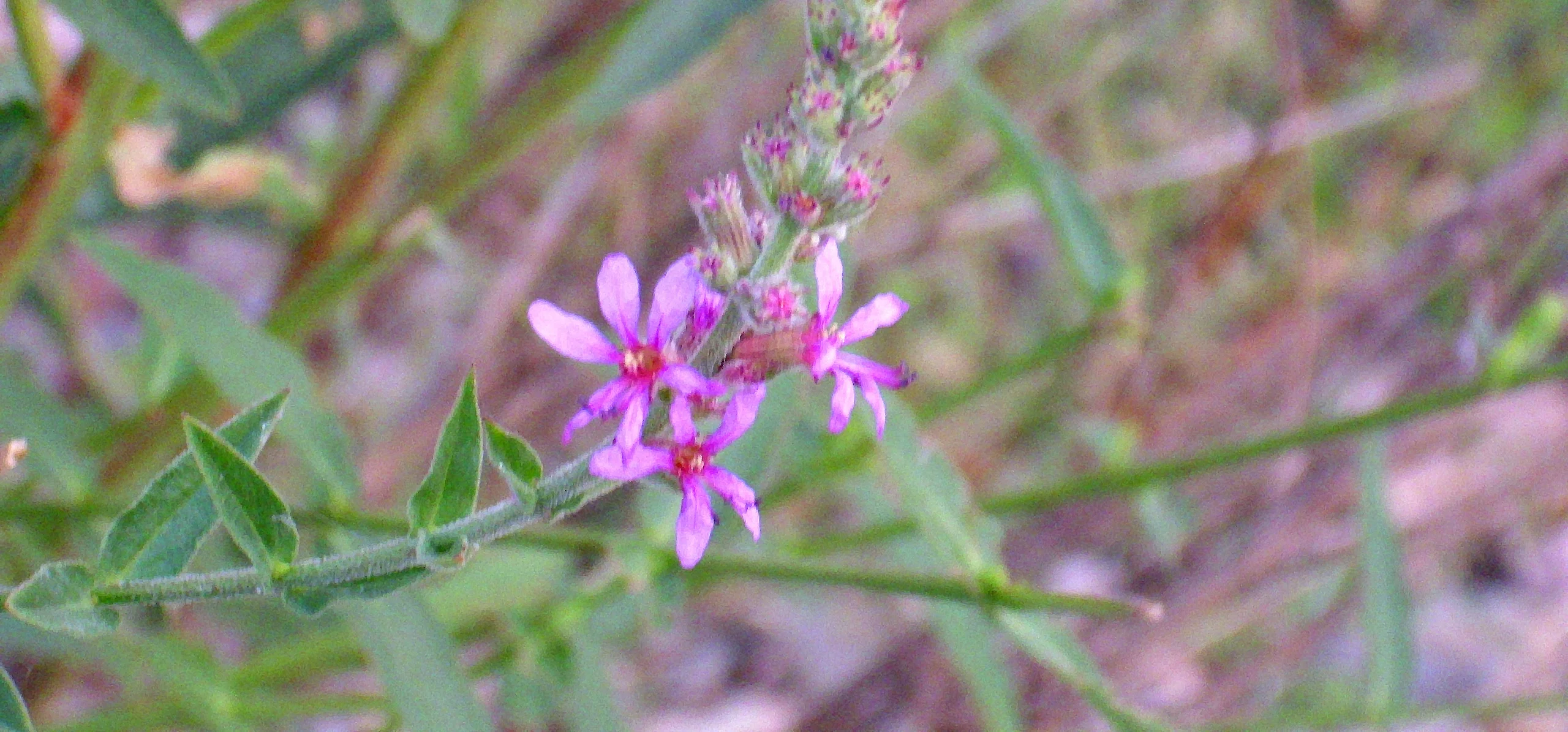
A tall spike of magenta-pink flowers in a border, pond margin or roadside ditch in midsummer is almost certainly purple loosestrife, Lythrum salicaria, a wetland perennial native to Eurasia and North Africa. In its native range it is a valued nectar plant for bees and a striking border perennial for wet ground. In North America the same plant escaped cultivation more than a century ago and is now a regulated noxious weed across much of the continent, so before you plant it, check whether it is even legal where you live.
What Purple Loosestrife Is
Lythrum salicaria belongs to the loosestrife family, Lythraceae, in the order Myrtales (GBIF Backbone Taxonomy). Plants of the World Online lists its native range as temperate Eurasia, northwestern Africa, Ethiopia and Australia. A mature clump sends up several stiff, upright stems, 1 to 1.5 m tall in a typical garden setting and up to about 1.8 m where it has naturalized in North American wetlands (RHS; NC State Extension), clothed in narrow, willow-like leaves and topped from midsummer with dense spikes of small purplish-pink, yellow-centred flowers. Below ground it builds a stout, woody rootstock with a strong taproot and spreading runners, part of why it establishes so readily outside its native range.
Is It Legal to Grow?
Check local regulations before you plant purple loosestrife, because outside its native Eurasia it is no longer treated as an ordinary garden perennial. It is on the Missouri Noxious Weed Rules list, where growing or selling it is prohibited and any plants already established must be controlled (Missouri Botanical Garden), and NC State Extension confirms it is illegal to sell in North Carolina and many other US states, listing it on the NC noxious weed list. Where it remains legal to plant, Missouri Botanical Garden recommends choosing a sterile, non-seeding cultivar rather than the wild-type species, and keeping it well away from natural streams, ponds or wetland margins, since an escaped colony spreads through both underground runners and wind-blown seed (NC State Extension).
Site, Soil and Moisture
Purple loosestrife wants full sun, at least 6 hours of direct light a day, and soil that stays reliably moist to wet (RHS; NC State Extension). Missouri Botanical Garden places it in medium to wet soils in full sun to light shade, and notes plants are at their most invasive precisely where the soil is wettest, so a boggy pond edge or rain garden low point suits it better than an average dry border. RHS lists clay and loam as its preferred soil types, tolerant of acid, neutral or alkaline pH, and happy with poor drainage, conditions that would rot the roots of most border perennials. A site that dries out for weeks at a stretch in summer will check its growth and shorten the flowering display.


Watering
Because this is fundamentally a marsh plant, the watering goal is the opposite of most garden perennials: keep the root zone constantly damp rather than letting it dry between waterings. In a border without naturally wet ground, water deeply two or three times a week through the growing season, more often in hot weather, and mulch to slow evaporation. Container-grown plants do best standing in a saucer kept topped up with water, mimicking the pond margins where the species grows wild. In a bog garden or at a pond edge with a naturally high water table, supplemental watering is rarely needed once the clump is established.
Flowering and Deadheading to Prevent Spread
Flower spikes open from early July into September, purplish-pink and roughly 2 cm wide, packed onto tall terminal spikes (RHS). Each flower left to set seed can contribute to the thousands of tiny seeds a single mature plant produces in a season, spread by wind, water and mud on animal feet (NC State Extension), which is the main reason the species has travelled so far beyond gardens. Deadhead spent spikes as soon as the flowers fade, cutting back to a healthy leaf joint, rather than waiting for the whole plant to finish blooming. Missouri Botanical Garden recommends shearing the entire clump to the ground after flowering or once the foliage looks tattered from insect damage; cut in midsummer, it regrows within about two weeks and can produce a lighter second flush of bloom in autumn.
Propagation
Division is the method to use if you are growing a named, sterile cultivar and want more plants without relying on seed. Lift and split an established clump in spring as new growth begins, replanting sections with several shoots and a portion of root attached. Stem cuttings taken from non-flowering shoots in early summer also root readily in moist compost (NC State Extension). Raising plants from seed is straightforward, almost too straightforward, which is exactly why it is discouraged where the species is regulated: seedlings vary in vigour, and a single stray, fertile seedling is how the plant escapes cultivated ground in the first place.
Pests and Disease
Purple loosestrife is remarkably trouble-free where pests and disease are concerned. RHS lists slugs and snails as the main threat to young shoots in spring, and otherwise describes the species as generally disease-free. That same vigour, a plant that shrugs off pests, thrives in wet ground and self-sows freely, is exactly why it needs the restraint covered above: regular deadheading, and in many regions, avoiding the wild-type species altogether.
Common Mistakes
The single most common mistake is letting a plant flower and set seed unchecked near a pond, stream or ditch. A neighbouring wetland does not need your whole border to escape it, a handful of viable seed carried downstream is enough to start a new colony (NC State Extension). Planting the invasive wild-type species instead of a sterile cultivar where alternatives exist is the second: Missouri Botanical Garden's advice to choose sterile selections exists precisely because named cultivars can still cross-pollinate with wild plants and produce fertile seed. The third mistake runs the other way, treating a lawful, well-behaved cultivar as though it needs no care at all. Skipping the midsummer deadhead or shear because it looks tough leads to a woodier, less floriferous clump and, wherever it is legal to grow, a larger seed set than necessary.
Test your plant knowledge
Tap a card to flip it and reveal the answer.
Purple loosestrife needs full sun and consistently moist to wet soil to thrive. Tap to reveal ✓ True
It is legal to plant purple loosestrife anywhere in the United States. Tap to reveal ✕ False
Deadheading spent flower spikes helps stop the plant seeding into nearby wetlands. Tap to reveal ✓ True
Purple loosestrife tolerates dry soil better than most garden perennials. Tap to reveal ✕ False
The ASPCA lists purple loosestrife as toxic to cats and dogs. Tap to reveal ✕ False
Sources
References consulted for this guide
- Lythrum salicaria, GBIF Backbone Taxonomygbif.org
- Lythrum salicaria L., Plants of the World Online (Kew)powo.science.kew.org
- RHS: Lythrum salicaria (purple loosestrife)rhs.org.uk
- Missouri Botanical Garden: Lythrum salicaria Plant Findermissouribotanicalgarden.org
- NC State Extension Gardener Plant Toolbox: Lythrum salicariaplants.ces.ncsu.edu
- Reference entity : Wikipédiaen.wikipedia.org