Brazilian Jasmine
Mandevilla sanderi
Family · Apocynaceae
Mandevilla sanderi, sold as Dipladenia or Mandevilla, wants full sun, compost that dries between waterings, and 10C minimum warmth over winter to rebloom.
Mandevilla sanderi
Plant profile
- WateringModerateWater every 5 days
- Light exposurePartial sun
- Ideal temperature10–35 °C
- Hardiness zoneUSDA 10–11
Growth
- Family
- Apocynaceae
- Life cycle
- Perennial
- Growth speed
- 6/10
- Mature size
- 60–300 cm
- Spread
- 60–150 cm
- Propagation
- Cutting
FloweringPink or red trumpet flowers in repeat flushes from late spring through summer, on new growth
Dormancysemi-dormant below 10°C, sheds some leaves indoors over winter
Time to maturityflowers within months of a rooted cutting; nursery plants bloom the first season
Soil & climate
- Soil types
- loam, sand
- Drought tolerance
- No
Light & Placement
- Origin
- Native to Brazil (Rio de Janeiro state)
- Where to place it
- brightest window available
- cool bright room for winter
- sunny patio or balcony
- south or west-facing wall
- fast-draining potting mix with a trellis or obelisk set in at planting
Safety
- Toxicity
- HumansToxic
Data fromMandevilla sanderi (Hemsl.) Woodson, GBIPlants of the World Online (Kew): MandevUF/IFAS Gardening Solutions: MandevillaNC State Extension Gardener Plant Toolbo
Where it grows
World distribution
Brazilian Jasmine is native to a single country: Brazil.GBIF records 70 documented identifications across 14 countries, with the largest concentrations in United States, Brazil, and Ecuador.
- Brazil
Yellow to orange dots: concentration of documented identifications per country. Green countries: sourced native range. Source: GBIFNative range from POWO (Kew).
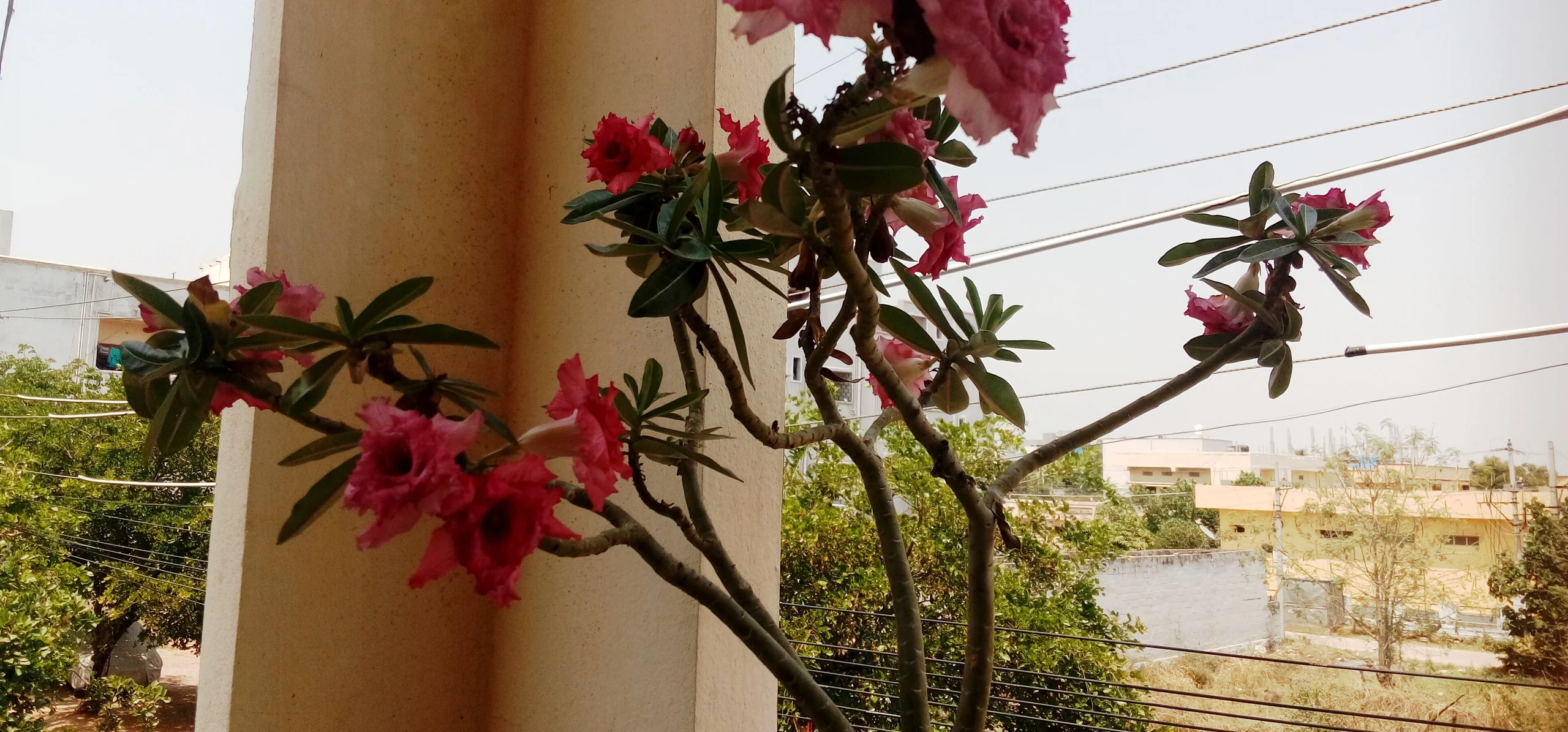
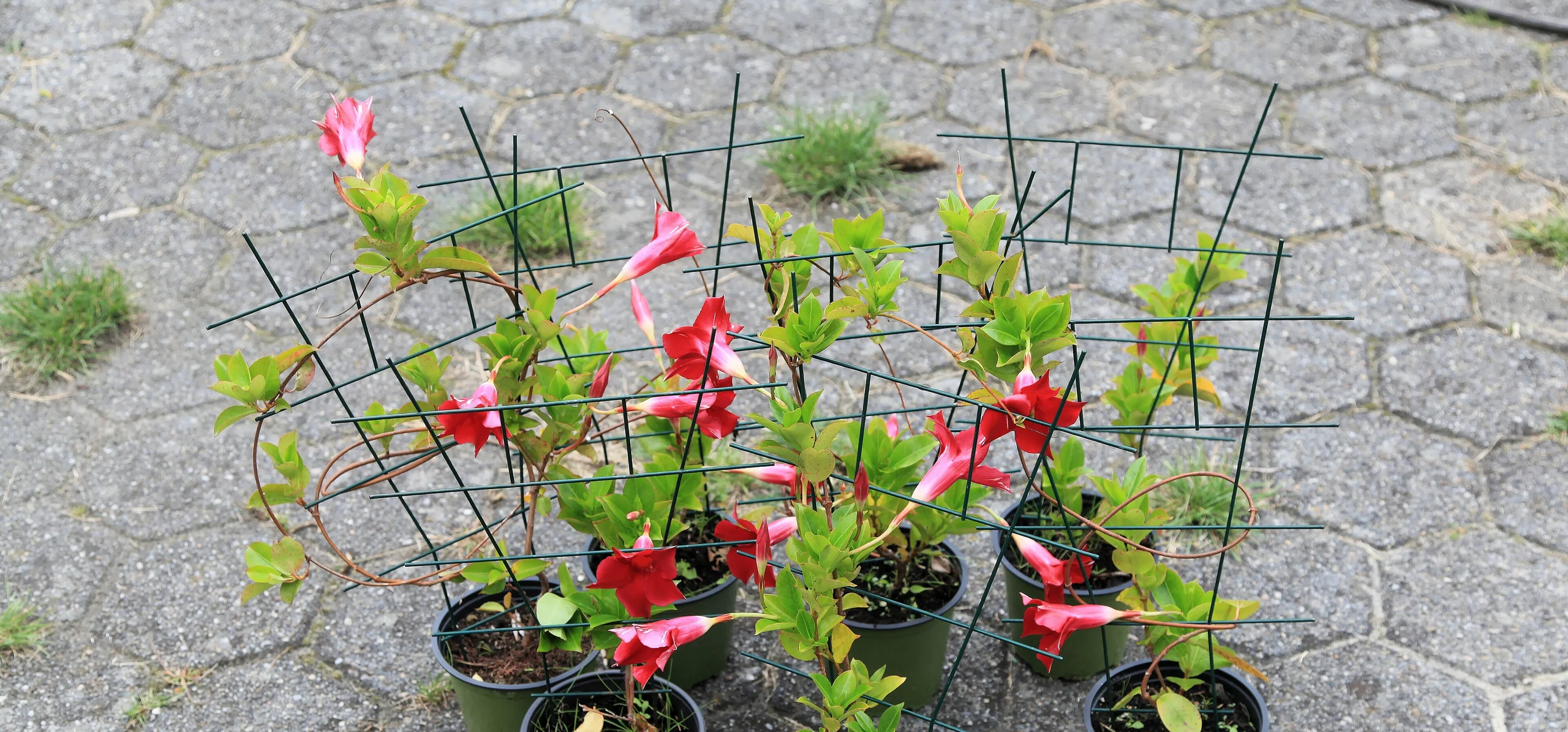
The plant sold with pink or red trumpet flowers under a tag reading either "Dipladenia" or "Mandevilla" is very often Mandevilla sanderi or one of its bred cultivars, a woody twining climber from Brazil in the family Apocynaceae. Garden centers use "Dipladenia" for the bushier, self-branching forms bred for hanging baskets and small pots, and "Mandevilla" for the taller climbing forms sold with their own trellis, but botanically these are trade names for habit, not separate species. In a temperate garden it lives as a container plant, spending late spring to early autumn on a sunny patio and coming indoors before the first frost; where winters stay frost-free it grows as a permanent climber up a wall or pergola. Get the light strong enough and the compost never soggy, and it flowers in repeat flushes for months.
Dipladenia or Mandevilla: One Plant, Two Trade Names
The confusion has old roots: William Botting Hemsley described this plant as Dipladenia sanderi in 1896, and the botanist Robert Woodson moved it into Mandevilla in 1933, where GBIF's current backbone taxonomy keeps it as Mandevilla sanderi (Hemsl.) Woodson, with Dipladenia sanderi standing as a synonym. Growers never fully dropped the old name, so a "Dipladenia" label in a garden center almost always points to a compact, self-branching Mandevilla sanderi cultivar bred to stay bushy without a support, while a "Mandevilla" label points to a vigorous climbing form sold with its own trellis or hoop. Plants of the World Online (Kew) places the species' native range in Brazil, in Rio de Janeiro state, which explains why it wants heat, strong light, and a real cool, dry signal in winter rather than a slow temperate decline.
Light and Placement
Full sun suits it best, six or more hours of direct light for the heaviest flowering; in hot inland climates give it some relief from the most intense early afternoon sun, which can scorch leaves on a plant that is also pushing out flowers. A south or west-facing patio, a balcony rail, or a spot against a warm wall are all good outdoor placements once the last frost has passed. Indoors, even a bright windowsill rarely matches outdoor sun, so treat winter indoor light as maintenance light rather than bloom light; expect fewer flowers, or none, until the plant goes back outside.


Watering: Let the Top of the Compost Dry First
Check the top two to three centimetres of compost with a finger before watering, and water only once that layer is dry, then water thoroughly until it runs from the drainage holes. Mandevilla sanderi tolerates a missed watering far better than it tolerates wet feet: a saucer left standing with water, or compost that never dries at the surface, rots the fine roots within weeks, and yellowing lower leaves that drop despite bright light are the usual warning sign. In summer heat a pot on a sunny patio can need water every two to three days; the same plant indoors over winter, with growth slowed almost to a stop, might go two weeks between waterings.
Feeding for Continuous Bloom
Feed every two weeks through the growing season, spring into early autumn, with a balanced liquid feed or one formulated for flowering plants, diluted to the label rate rather than stronger, since the fine roots scorch easily in an over-fertilized pot. Stop feeding once growth slows in autumn and resume only when new growth restarts in spring; a plant fed through winter dormancy pushes soft, pale growth that draws mealybugs and drops as soon as the plant is moved back into strong light.
Training on a Trellis or Obelisk
Left alone, the climbing stems twine around anything narrow enough to grip, a bamboo cane, an obelisk, wires strung against a wall, so give a young plant its support at potting time rather than trying to redirect long stems later: a hardened stem resists being wound the opposite way and often snaps if forced. Guide new growth onto the support by hand every few days while it is still supple; once a stem has wrapped a cane it stays put. Bushier "Dipladenia" cultivars need little training, pinching the growing tips after a flush of flowers is usually enough to keep them full rather than leggy.
Pruning in Early Spring
Flowers form on new growth, so the main cut comes in early spring, before growth restarts: cut stems back by around a third to keep the plant within its support and to force the branching that carries the season's flowers. A plant that spent winter indoors and stretched toward a window can be cut back harder at this point without losing the year's bloom. Deadheading spent flowers is optional, they drop cleanly on their own, but removing an occasional yellowed leaf keeps early pest problems visible.
Overwintering Above 10°C
Where winter temperatures drop toward freezing outdoors, bring the pot in before the first frost and keep it above 10°C in a bright room; a cool, light spot suits it better than a warm, dim living room, which encourages weak, stretched growth instead of rest. Cut watering back sharply, letting the compost dry well between the occasional watering a resting plant needs, since a plant kept as moist as it was in summer rots roots fastest in low winter light. Some leaf yellowing and drop over winter is normal even in good conditions; new growth resumes once the plant goes back outside into strong light, and a spring cut-back gets it back into shape.
Pests, Sap Safety and Propagation
Mealybugs, spider mites, whitefly and aphids are the recurring problems, mealybugs and spider mites especially on plants kept dry and dusty indoors over winter; a strong jet of water on the undersides of the leaves, followed by insecticidal soap, deals with light infestations before they build up where leaf meets stem. Every cut or torn stem weeps a milky white latex typical of the Apocynaceae family; the University of Florida's IFAS Extension notes this sap can irritate skin and may be toxic if swallowed, so wear gloves for pruning and rinse off any contact promptly. Mandevilla and Dipladenia do not currently appear on the ASPCA's toxic or non-toxic plant lists, but the sap's documented irritant effect is reason enough to keep cuttings and fallen leaves away from pets and small children. To propagate, take a 10 to 15 cm tip cutting below a node in late spring or summer, let the cut end stop weeping latex for a few minutes before dipping it in rooting hormone, and root it in a moist, free-draining mix under warmth and bright, indirect light; new roots typically form within three to four weeks.
Test your plant knowledge
Tap a card to flip it and reveal the answer.
Mandevilla sanderi flowers on new growth, so the main pruning happens in early spring before growth restarts. Tap to reveal ✓ True
It is fine to let a potted Mandevilla sanderi sit in a saucer of water between waterings. Tap to reveal ✕ False
"Dipladenia" and "Mandevilla" sold in garden centers can both be Mandevilla sanderi under different trade names. Tap to reveal ✓ True
The ASPCA lists Mandevilla as toxic to cats and dogs. Tap to reveal ✕ False
A climbing stem that has already wound itself around a support can easily be redirected to twine the other way. Tap to reveal ✕ False
Sources
References consulted for this guide
- Mandevilla sanderi (Hemsl.) Woodson, GBIF Backbone Taxonomygbif.org
- Plants of the World Online (Kew): Mandevilla sanderi (Hemsl.) Woodsonpowo.science.kew.org
- UF/IFAS Gardening Solutions: Mandevillagardeningsolutions.ifas.ufl.edu
- NC State Extension Gardener Plant Toolbox: Mandevillaplants.ces.ncsu.edu
- Reference entity : Wikipédiaen.wikipedia.org