Prayer Plant
Maranta leuconeura
Family · Marantaceae
Maranta leuconeura folds its leaves at night and burns easily on tap water. Filtered water, warmth above 15 degrees C and indirect light keep it healthy.
Maranta leuconeura
Plant profile
- WateringHighWater every 6 days
- Light exposurePartial shade
- Hardiness zoneUSDA 11
Growth
- Family
- Marantaceae
- Life cycle
- Perennial
- Growth speed
- 4/10
- Mature size
- 15–30 cm
- Spread
- 15–61 cm
- Flowering
- Small white flowers possible, rarely significant indoors
- Propagation
- Division
- Cutting
DormancySlows down in winter, water and feed less
Time to maturityReaches mature size in 2 to 5 years
Soil & climate
- Soil types
- Peat-free, moisture-retentive potting mix, Well-drained, humus-rich compost
- Saline soil
- Not tolerated
- Drought tolerance
- No
Light & Placement
- Origin
- Central and eastern Brazil
- Where to place it
- North or east window, out of direct sun
- Bright bathroom or humid room
- Frost-free, shaded greenhouse or conservatory
- Wide, shallow pot to match its shallow root system
- Plastic nursery pot to hold moisture
Safety
- Toxicity
- CatsSafe
- DogsSafe
- HorsesSafe
Data fromMaranta leuconeura E.Morren, GBIF BackboMaranta leuconeura E.Morren, Plants of tMaranta leuconeura var. kerchoveana, praPrayer Plant, Toxic and Non-Toxic PlantsMaranta leuconeura, Prayer Plant, NC Sta
Where it grows
World distribution
Prayer Plant is native to a single country: Brazil.GBIF records 798 documented identifications across 36 countries, with the largest concentrations in Brazil, United States, and Mexico.
- Brazil
Yellow to orange dots: concentration of documented identifications per country. Green countries: sourced native range. Source: GBIFNative range from POWO (Kew).
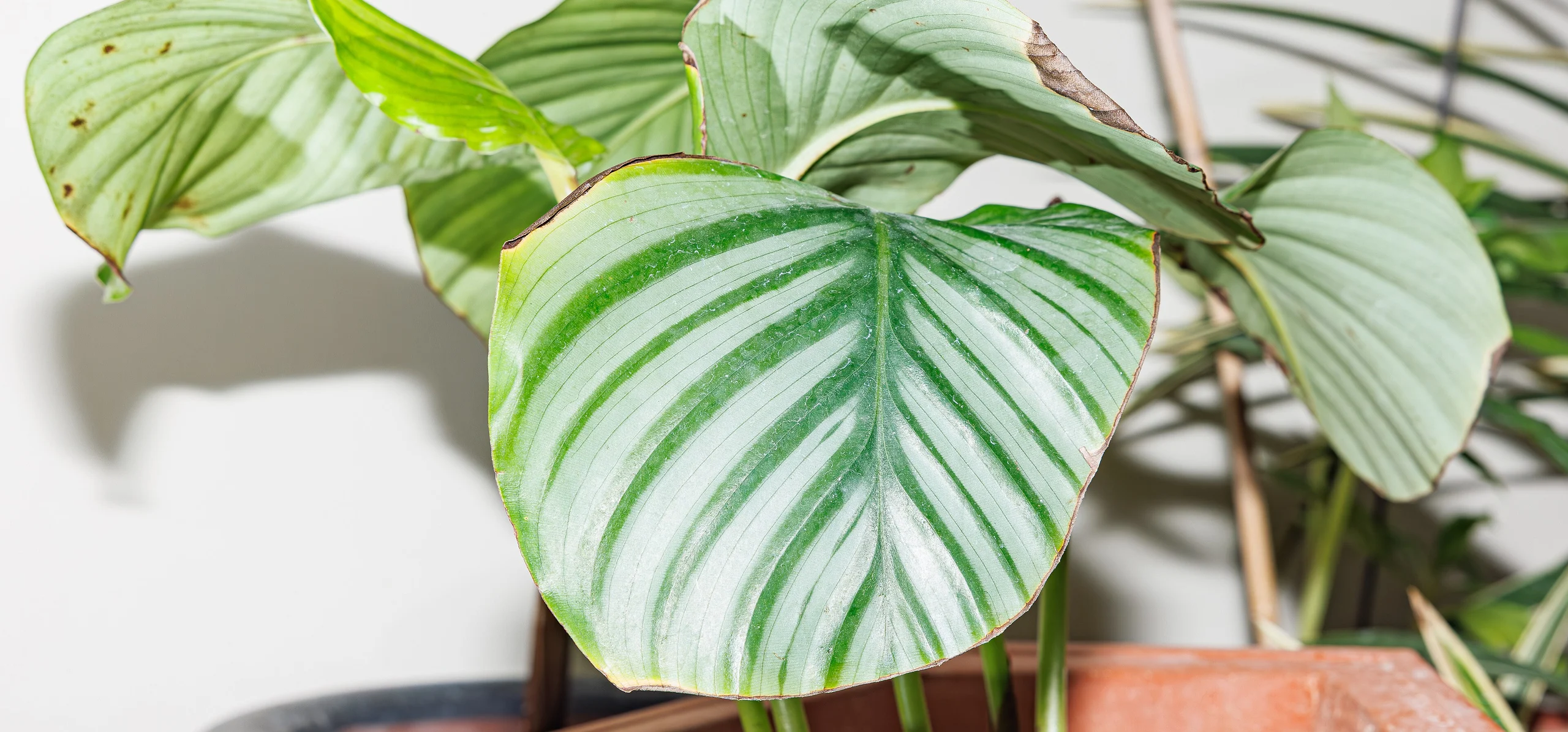
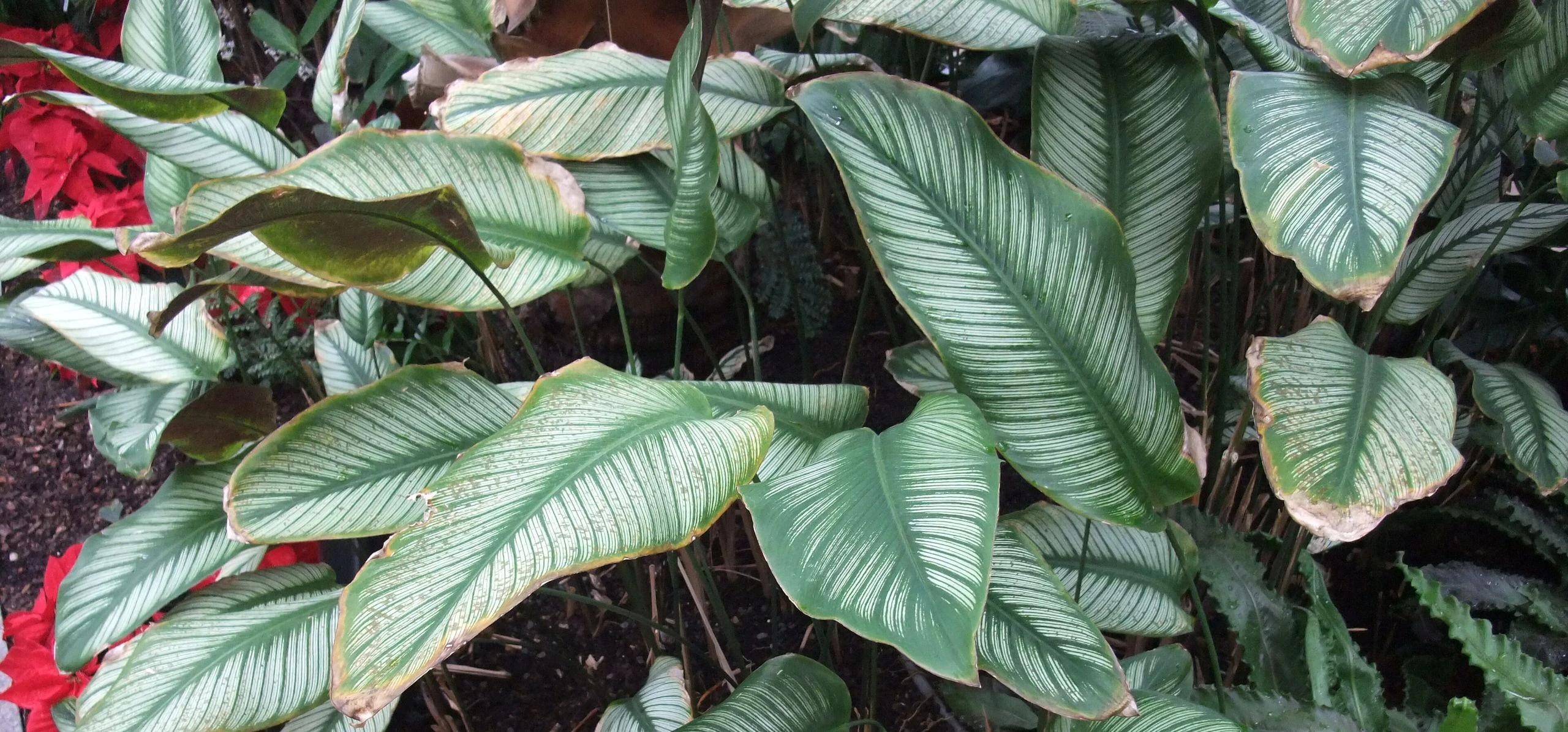
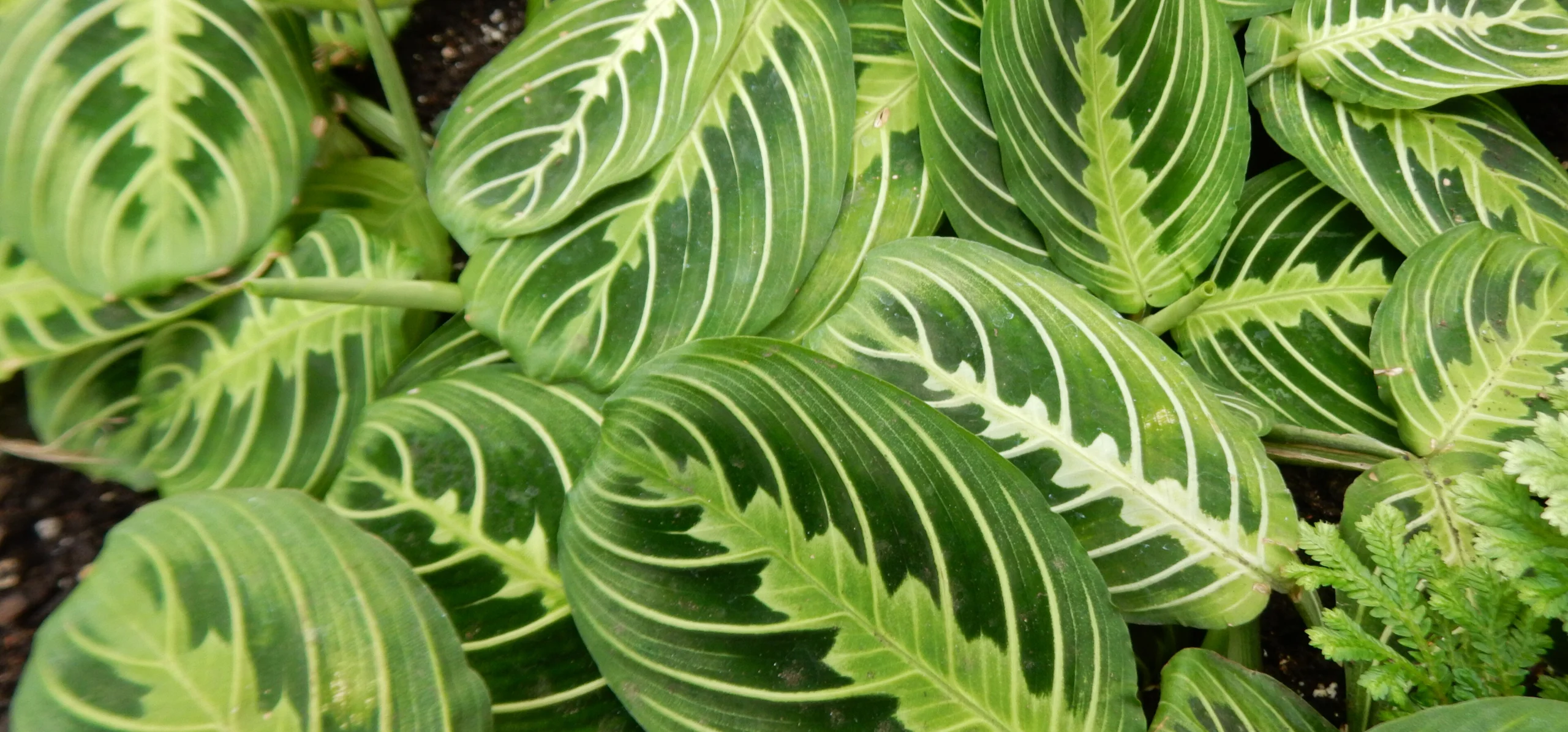
Most Maranta leuconeura sold in nurseries are one of two garden varieties: var. kerchoveana, with brown blotches marching either side of a pale midrib, or var. erythroneura, with a bright red midrib and veins against dark olive green. Either one folds its paired leaves upright at dusk and lays them flat again by mid morning, a movement that looks alarming the first time you see it but is entirely normal. What actually threatens the plant is duller: ordinary tap water. The fluoride in most municipal supplies builds up in the leaf tissue and shows as crisp brown margins that never green up again, so filtered water or rainwater matters here more than almost any other habit. Keep the mix evenly moist, the room warm and the light indirect, and a prayer plant that looked ragged at the garden centre fills out within a season.
The nightly fold, or nyctinasty
Each leaf sits on a small swollen hinge, called a pulvinus, where the blade meets the stalk. As light fades the pulvinus loses turgor pressure on one side and the leaf rotates upward until pairs of leaves stand together like hands folded in prayer, the source of the common name. Clemson University's Home and Garden Information Center notes this nightly fold among the defining traits of the Marantaceae. The movement, nyctinasty, follows the plant's own internal clock rather than light alone, so a leaf kept in a windowless room on a timer will still fold and unfold roughly on schedule for a while. A plant that has stopped folding at night is usually reacting to a bigger problem such as cold or drought, not settling into old age.
Kerchoveana and erythroneura, two faces of one species
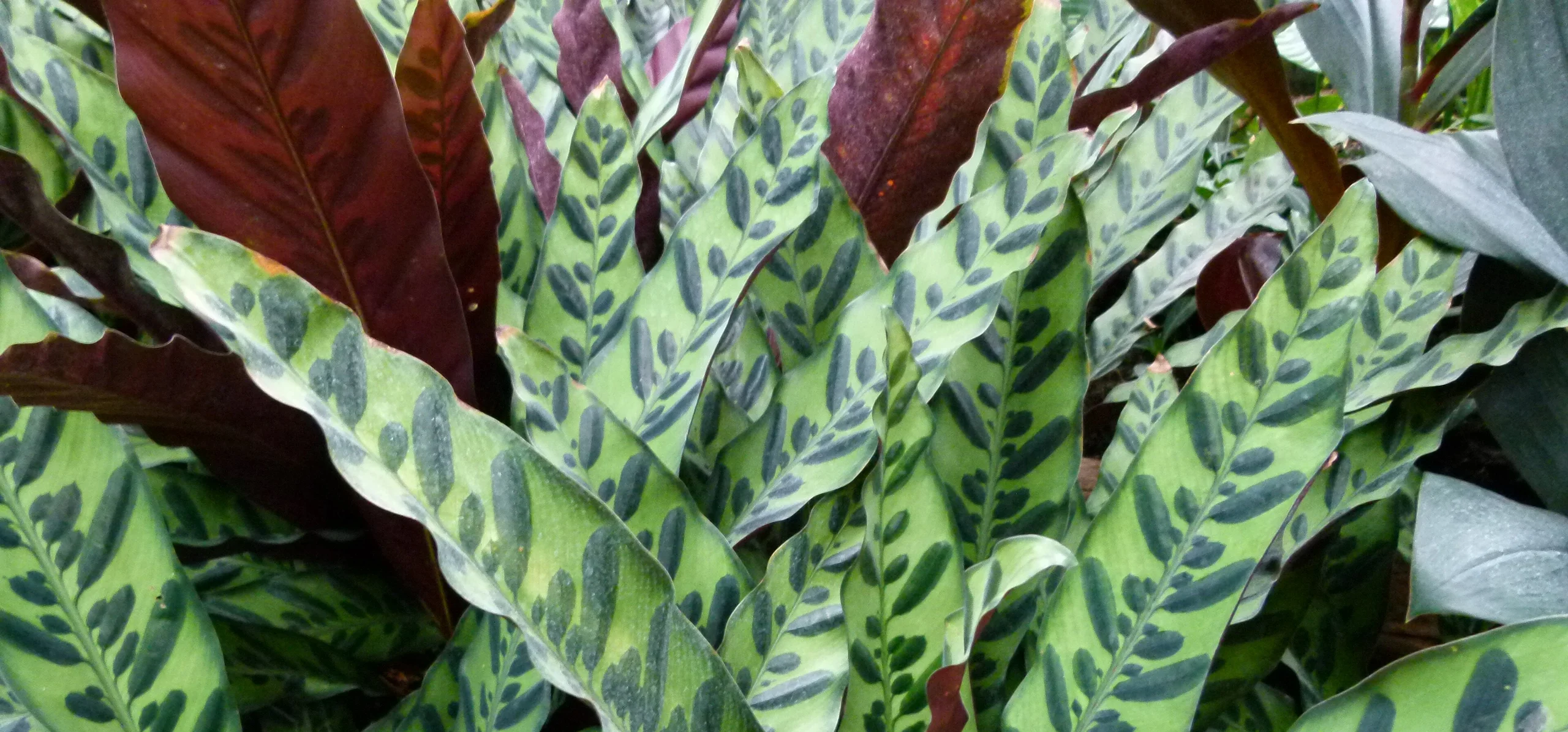
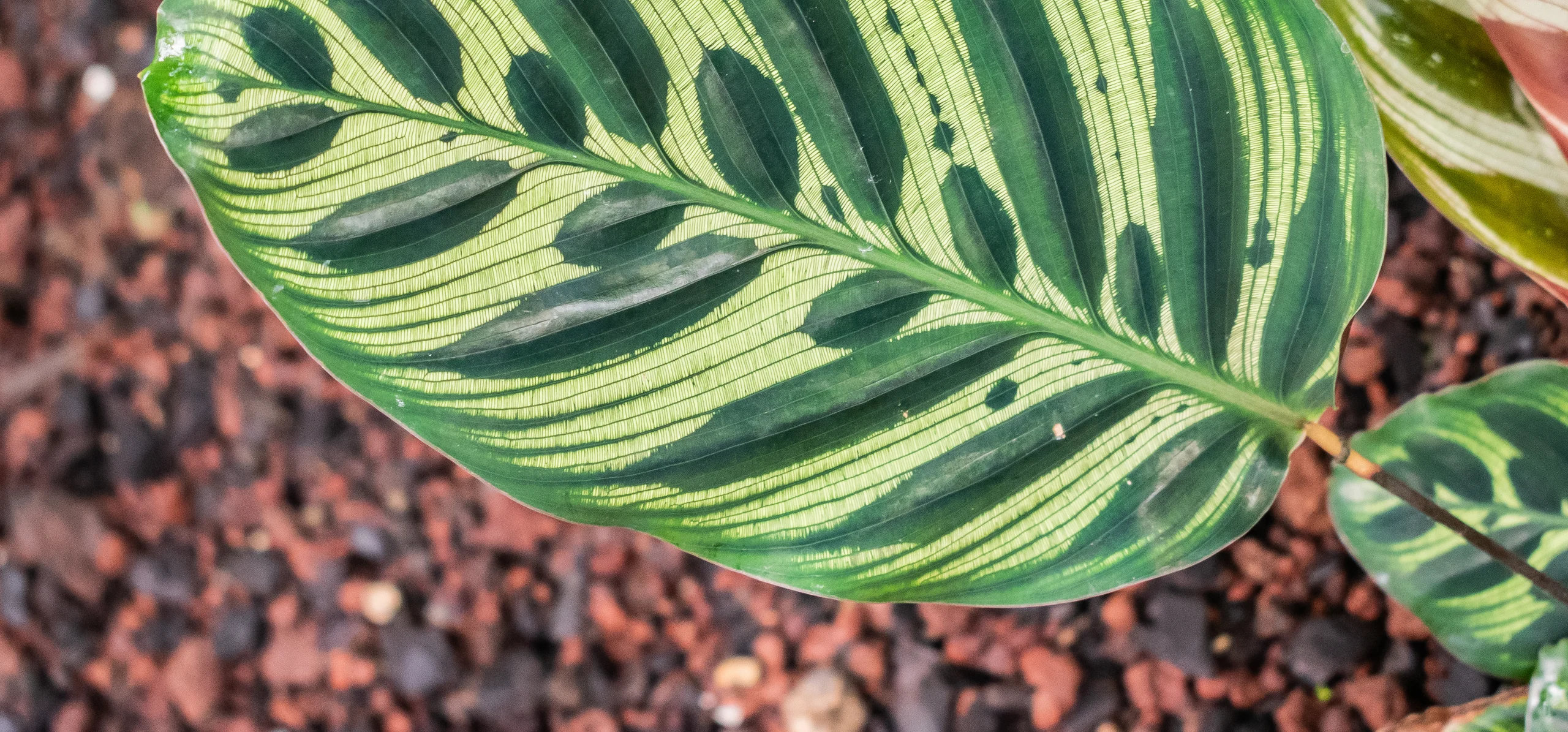
The straight species is rarely sold on its own; garden centres carry one of its cultivated varieties instead. Var. kerchoveana, sometimes called rabbit's foot or rabbit tracks, has broad oval mid green leaves with grey green markings and a row of dark brown blotches either side of the midrib, a pattern that also gives rise to the common name ten commandments plant, recorded among GBIF's vernacular names for this species. Var. erythroneura, the herringbone or red veined prayer plant, keeps the same clumping habit but trades the brown blotches for a bright red midrib and red veins arching across dark olive green leaves with a paler central zone. Both stay compact, reaching only around 30 cm tall according to the RHS, and both need the same care; the difference sits entirely in the leaf, not the culture.
Light without a sunny sill
In its native Brazilian forest this plant grows on the shaded floor, and it keeps that preference indoors. RHS guidance calls for bright, filtered or indirect light, and North Carolina State Extension warns plainly that too much sun bleaches the leaf colour rather than improving it. A spot a metre or two back from an east or north facing window suits it year round; direct midday sun through south or west glass scorches the thin leaf tissue within a day. Low light will not kill the plant, only slow it and mute the pattern, so when in doubt choose the dimmer spot over the brighter one.
Watering and the tap water problem
Keep the potting mix evenly moist from spring through summer, then ease off once growth slows in autumn so the top of the mix dries slightly between waterings in winter. What decides whether the leaves stay clean or turn crisp at the tips is not frequency but water quality: North Carolina State Extension lists high fluoride, alongside over fertilising, as a direct cause of leaf burn in this species. Rainwater, distilled or filtered water, or ordinary tap water left uncovered for a day to off gas chlorine all reduce the risk. Never let the pot sit in a saucer of standing water; the same roots that resent drought resent waterlogging just as fast.


Humidity and warmth above 15 degrees C
Humidity matters almost as much as what is in the watering can. The RHS rates the common garden varieties, kerchoveana and erythroneura, H1A, meaning they need to stay indoors or under glass year round and never drop below about 15 degrees Celsius; the straight species is rated slightly hardier at H1B, tolerating a spot outdoors in summer down to 10 degrees. A kitchen, a bathroom, or a pebble tray kept topped up with water does more for leaf health than misting, which dries too fast to raise humidity for long. Cold draughts from an opened window or an unheated hallway cause the same curling and browning as dry air, so rule out a chilly spot before assuming pests or disease.
Soil, potting and feeding
A peat-free, moisture retentive but free draining mix suits this plant best, matching RHS guidance for growing it under glass. Because its roots stay shallow, the RHS specifically recommends a wide, shallow pot rather than a tall one; a deep pot of mix the roots cannot reach stays wet for too long and invites root rot, which North Carolina State Extension flags as the main disease risk in poorly drained soil. Feed monthly with a balanced liquid fertiliser through the growing season and stop from autumn to late winter; since the leaves already burn easily from fluoride, an over strong feed produces the same crisping.
Propagation by division and stem cuttings
This plant grows as a spreading clump of rhizomes rather than a single trunk, so the most reliable way to multiply it is to lift the whole root ball in spring and pull or cut the rhizome into sections that each keep several leaves and their own roots. Pot each division into barely damp mix and keep humidity high while new growth resumes; expect a couple of weeks of stillness before a fresh leaf unfurls. A stem cutting works too, provided it includes at least one node, the small joint where a leaf stalk meets the stem, since roots and new shoots only form from that point; a cutting taken between nodes will simply rot. Either method roots best in warmth, out of direct sun, kept as humid as the parent plant.
Spider mites, common problems and pet safety
Spider mites are the pest most likely to trouble this plant, especially in the dry air of a heated room in winter; fine webbing and a dusty stippling on the upper leaf surface are the first signs, and North Carolina State Extension also lists mealybugs as an occasional visitor. Raising humidity and wiping the leaves down periodically prevents most infestations before they need a spray. Curled, browning leaf tips point first to hard tap water, low humidity or a cold draught, in roughly that order, before pests or disease. On the safety side, the ASPCA lists the prayer plant as non-toxic to cats, dogs and horses, so a curious pet nibbling a leaf risks nothing worse than mild, short lived stomach upset.
Test your plant knowledge
Tap a card to flip it and reveal the answer.
Maranta leuconeura folds its leaves upright at night, a movement called nyctinasty. Tap to reveal ✓ True
Several hours of direct sun each day makes the leaf pattern more vivid. Tap to reveal ✕ False
Ordinary tap water rarely causes any problems for this plant. Tap to reveal ✕ False
Var. erythroneura is recognised by a bright red midrib and veins, while var. kerchoveana has brown blotches instead. Tap to reveal ✓ True
This plant can only be propagated from seed, never from cuttings or division. Tap to reveal ✕ False
Sources
References consulted for this guide
- Maranta leuconeura E.Morren, GBIF Backbone Taxonomygbif.org
- Maranta leuconeura E.Morren, Plants of the World Online (Kew)powo.science.kew.org
- Maranta leuconeura var. kerchoveana, prayer plant, RHS Plantsrhs.org.uk
- Prayer Plant, Toxic and Non-Toxic Plants, ASPCA Animal Poison Controlaspca.org
- Maranta leuconeura, Prayer Plant, NC State Extension Plant Toolboxplants.ces.ncsu.edu
- Reference entity : Wikipédiaen.wikipedia.org