Elmleaf Blackberry
Rubus ulmifolius
Family · Rosaceae
Rubus ulmifolius roots wherever a cane tip touches soil and needs fruited canes cut out yearly. RHS-based siting, pruning, and containment advice.
Rubus ulmifolius
Plant profile
- WateringLittleWater every 10 days
- Light exposurePartial sun
- Hardiness zoneUSDA 6–9
Growth
- Family
- Rosaceae
- Life cycle
- Perennial
- Growth speed
- 8/10
- Mature size
- 150–250 cm
- Spread
- 150–250 cm
- Flowering
- Clusters of pink flowers in summer, fruit ripening through late summer
- Propagation
- Seed
- Cutting
- Layering
Dormancydeciduous, canes dormant through winter
Time to maturitycanes root and establish within 1 to 2 years; first flowers and fruit typically the second year
Soil & climate
- Soil pH
- pH 5.5–7.5
- Soil types
- chalk, clay, loam, sand
- Drought tolerance
- Yes
Light & Placement
- Origin
- Native to northwest and central Europe through the western and central Mediterranean
- Where to place it
- sunny hedgerow or bank
- wildlife garden margin
- trained against wires or a fence for picking
- not usually grown in containers; a deep tub with a sturdy support works only if root growth is curbed and canes are cut back hard every year
Safety
- Toxicity
- HumansSafe
Invasive speciesarching canes root wherever the tip touches soil and roots regenerate from small fragments left in the ground, so an unwanted plant needs mechanical control, cutting stems back before they root and digging out rooted tips, rather than a single removal
Data fromRubus ulmifolius Schott, GBIF Backbone TPOWO: Rubus ulmifolius SchottRHS: Rubus ulmifolius (bramble) growing RHS: Brambles and other woody weedsUniversity of Illinois Extension: Blackb
Where it grows
World distribution
Elmleaf Blackberry is native to 15 countries: Albania, Algeria, Belgium, Croatia, France, Germany, Ireland, and Italy….GBIF records 172,724 documented identifications across 82 countries, with the largest concentrations in France, Spain, and United Kingdom.
- Albania
- Algeria
- Belgium
- Croatia
- France
- Germany
- Ireland
- Italy
- Morocco
- Netherlands
- Portugal
- Spain
- Switzerland
- Tunisia
- United Kingdom
Yellow to orange dots: concentration of documented identifications per country. Green countries: sourced native range. Source: GBIFNative range from POWO (Kew).
A cane of Rubus ulmifolius that roots wherever its tip touches the ground is the plant doing exactly what it evolved to do: colonize open, sunny ground one arching stem at a time. Found it self-seeded at the back of a border, or planted it deliberately for its late summer blackberries, the two things that decide whether you end up with a manageable hedge or a spreading tangle are how hard you cut out the fruited canes each year and how quickly you stop any tip before it touches soil. Left alone for even one season, a single plant can throw canes 2 to 2.5 metres long and root a handful of new crowns around itself.
Origin and Where It Grows Today
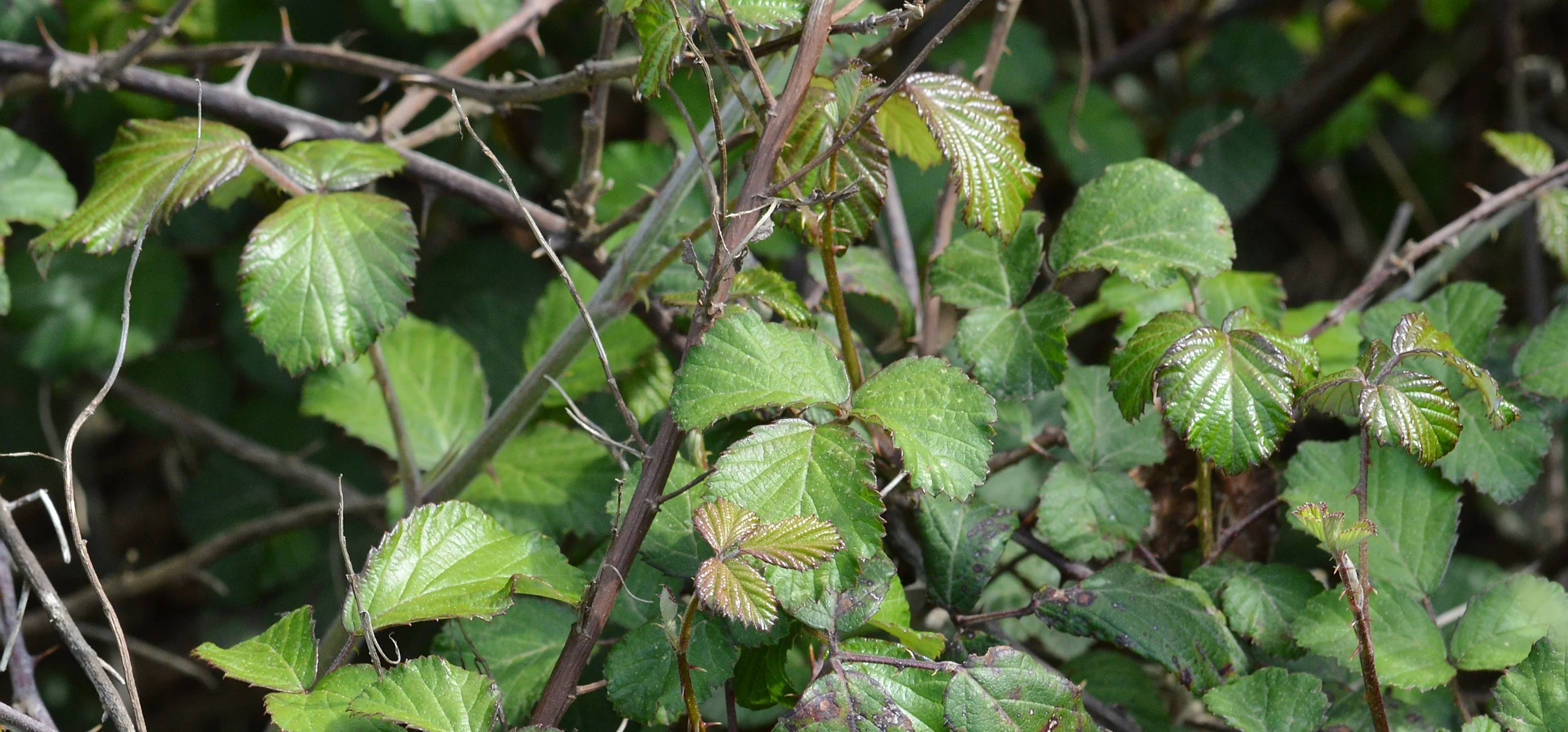
Plants of the World Online lists the native range of Rubus ulmifolius as northwest and central Europe through to the western and central Mediterranean, and GBIF's accepted classification places it in the rose family, Rosaceae, within the genus Rubus. It is one of many segregate species inside the wider Rubus fruticosus aggregate, the tangle of closely related, often hybridizing brambles that botanists have never fully untangled, and its elm shaped, doubly toothed leaflets with white felting underneath are one of the more reliable field marks for telling it apart from its relatives. Outside that native belt it has been carried into gardens and hedgerows across the temperate world, and where it escapes cultivation on open, disturbed ground it behaves like the rest of the aggregate: fast to establish, slow to remove.
A Blackberry Bramble, Not the Cultivated Kind
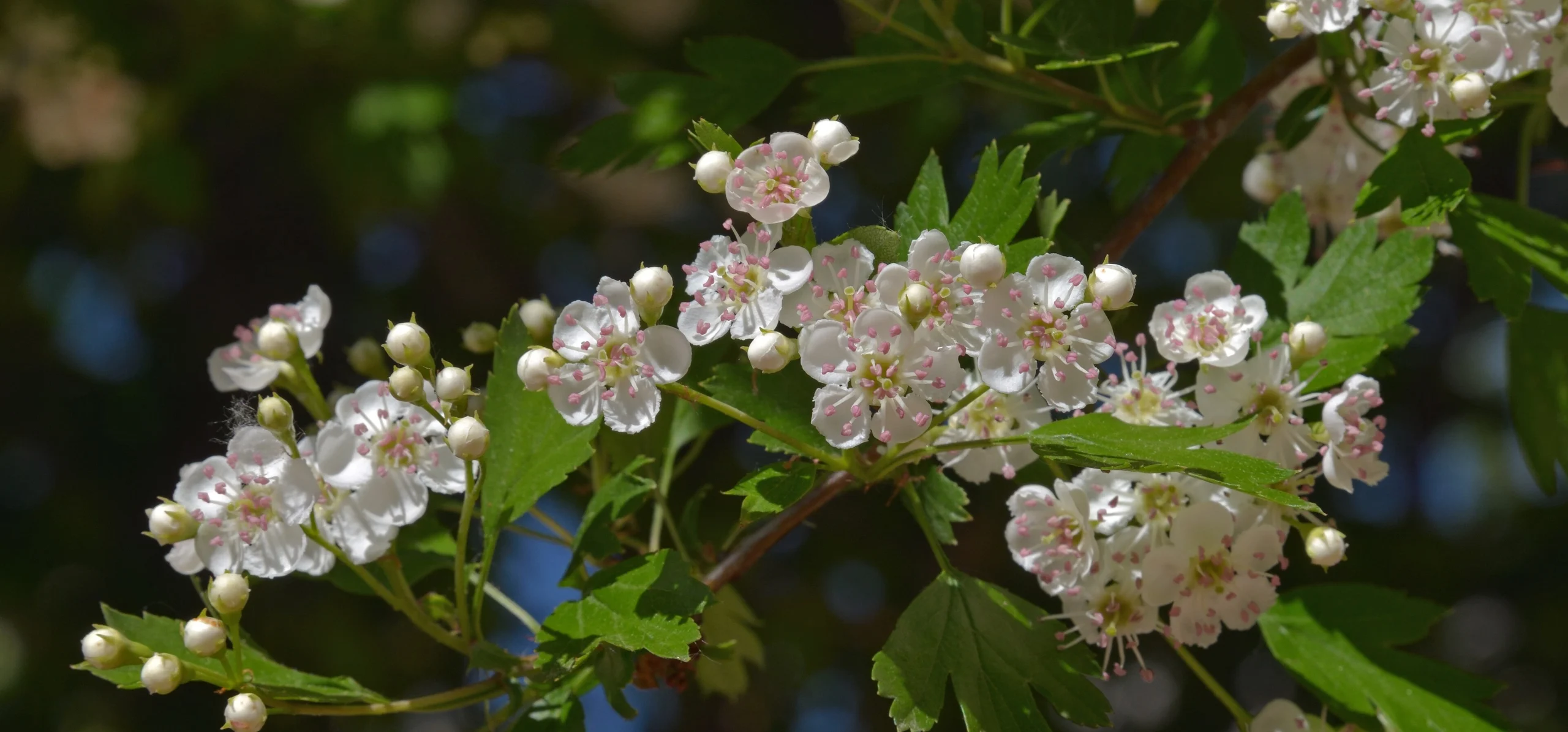
Elmleaf blackberry earns a place in a garden for two different reasons, and it helps to know which one applies before planting. As a fruiting bramble it produces the same small, sweet, dark drupelet clusters as a shop bought blackberry, ripening through late summer on canes that flowered the previous spring. As a hedgerow or wildlife plant, RHS Gardening lists it alongside the closely related Rubus rusticanus under its bramble entries, both sharing the same clusters of rounded pink flowers, arching thorny stems, and tolerance for neglect. Thornless selections exist and are worth seeking out for a garden setting: a smooth stemmed form, sold as var. inermis, keeps the same fruit and vigour without the cane length scratches that make pruning the wild type a job for thick gloves and a long sleeved shirt.


Site, Soil and Sun
RHS growing information for Rubus ulmifolius gives it a hardiness rating of H6, hardy throughout the UK and northern Europe down to about -20 to -15 degrees C, and lists it as happy in chalk, clay, loam or sand, in acid, neutral or alkaline soil, provided the ground is moist but well drained. That range sits close to what the University of Illinois Extension gives for garden blackberries generally: a pH of 5.5 to 7.0 and USDA hardiness zones 6 to 8, with full sun bringing the heaviest fruit set. Full sun or partial shade both work, but a shaded plant flowers thinly and the canes stretch further before rooting, which only adds to the pruning workload later. It tolerates exposed sites as well as sheltered ones, and once established shrugs off the kind of poor, dry soil that would stunt most garden shrubs.
Planting and Training on a Support
Give a single plant 1.5 to 2.5 metres of clear space in every direction, the ultimate spread the RHS lists for it, and plant bare root canes during winter dormancy or a potted plant whenever the ground is workable. Left unsupported it forms a low, self layering thicket; trained against wires or a post and wire fence, the same canes become a productive, pickable hedge. Tie new canes in horizontally as they extend through the first summer rather than letting them arch back to the ground, since a horizontal cane fruits along more of its length and never gets the chance to root where an untended tip touches soil.
Pruning: This Year's Canes, Then Next Year's
Brambles fruit on second year wood. A cane that grows this summer, a primocane, stays vegetative through its first season, overwinters, then flowers and fruits along its length the following year before dying, a floricane. The practical routine follows directly from that biology: cut every cane that has just fruited right down to ground level as soon as picking finishes, and thin the new season's primocanes to the strongest four or five per plant so they are not competing for light and water. The University of Illinois Extension gives the same instruction for garden blackberries generally, pinching or topping the growing tip in summer to encourage side shoots, which thickens next year's fruiting laterals.
Watering and Feeding
A newly planted cane needs regular water through its first year while roots establish; after that Rubus ulmifolius is drought tolerant, and RHS growing notes list moist but well drained soil as the target rather than consistently wet ground. Water deeply during dry spells while fruit is swelling in mid to late summer, since a plant left to dry out then drops fruit size sharply, and ease off once the crop is nearly ripe. A yearly mulch of well rotted manure or garden compost, worked in without burying the crown, covers most of its feeding needs; a hungry bramble on poor soil benefits from a balanced spring feed, but overfeeding on already reasonable ground mostly produces soft, over long canes that need extra tying in.
Keeping It From Taking Over
The same traits that make this an easy, resilient plant make it a genuine problem when it is not wanted. RHS advice on brambles as garden weeds describes the exact mechanism: long, arching stems root wherever the tip touches soil, forming an independent new plant still connected to the parent, seed is spread well beyond the original clump by birds that eat the fruit, and roots regenerate from small fragments left in the ground, so a dug out plant can return from a piece of root missed the first time, and cut or pulled roots should never go on the compost heap. Where a plant is wanted but needs limits, the fix is mechanical rather than chemical: shorten unsupported stems to about 30 cm from the ground each year before they arch far enough to touch soil, and dig out and dispose of any tip that has already rooted before it develops its own root system.
Pests, Diseases and Picking the Fruit
Rubus species share a fairly short list of recurring problems: aphids clustering on soft new growth, spider mites in hot dry spells, raspberry fruit worm on the flowers and young fruit, and anthracnose or powdery mildew where canes are crowded and airflow is poor, all flagged by the University of Illinois Extension for garden blackberries. Good air circulation, thinned primocanes, and canes tied off the ground rather than left resting in damp foliage prevent most of it before it starts. The fruit, the leaves and the rest of the plant do not appear in the ASPCA's toxic or non-toxic plant listings at all, so there is no recorded poisoning risk for cats, dogs or horses; the more immediate hazard for a curious pet or a barefoot gardener is entirely mechanical, from the thorns on any but the thornless forms. Pick the fruit as soon as it turns fully black and comes away with a light tug; like most brambles it does not ripen further once cut.
Test your plant knowledge
Tap a card to flip it and reveal the answer.
Rubus ulmifolius canes root wherever their arching tip touches the soil. Tap to reveal ✓ True
This bramble needs consistently wet, boggy soil to thrive. Tap to reveal ✕ False
A cane that has just finished fruiting should be cut out at ground level. Tap to reveal ✓ True
The ASPCA lists Rubus ulmifolius as toxic to dogs and cats. Tap to reveal ✕ False
An RHS H6 hardiness rating means the plant can survive winter lows of about -20 degrees C. Tap to reveal ✓ True
Sources
References consulted for this guide
- Rubus ulmifolius Schott, GBIF Backbone Taxonomygbif.org
- POWO: Rubus ulmifolius Schottpowo.science.kew.org
- RHS: Rubus ulmifolius (bramble) growing guiderhs.org.uk
- RHS: Brambles and other woody weedsrhs.org.uk
- University of Illinois Extension: Blackberry (Rubus species)web.extension.illinois.edu
- Reference entity : Wikipédiaen.wikipedia.org