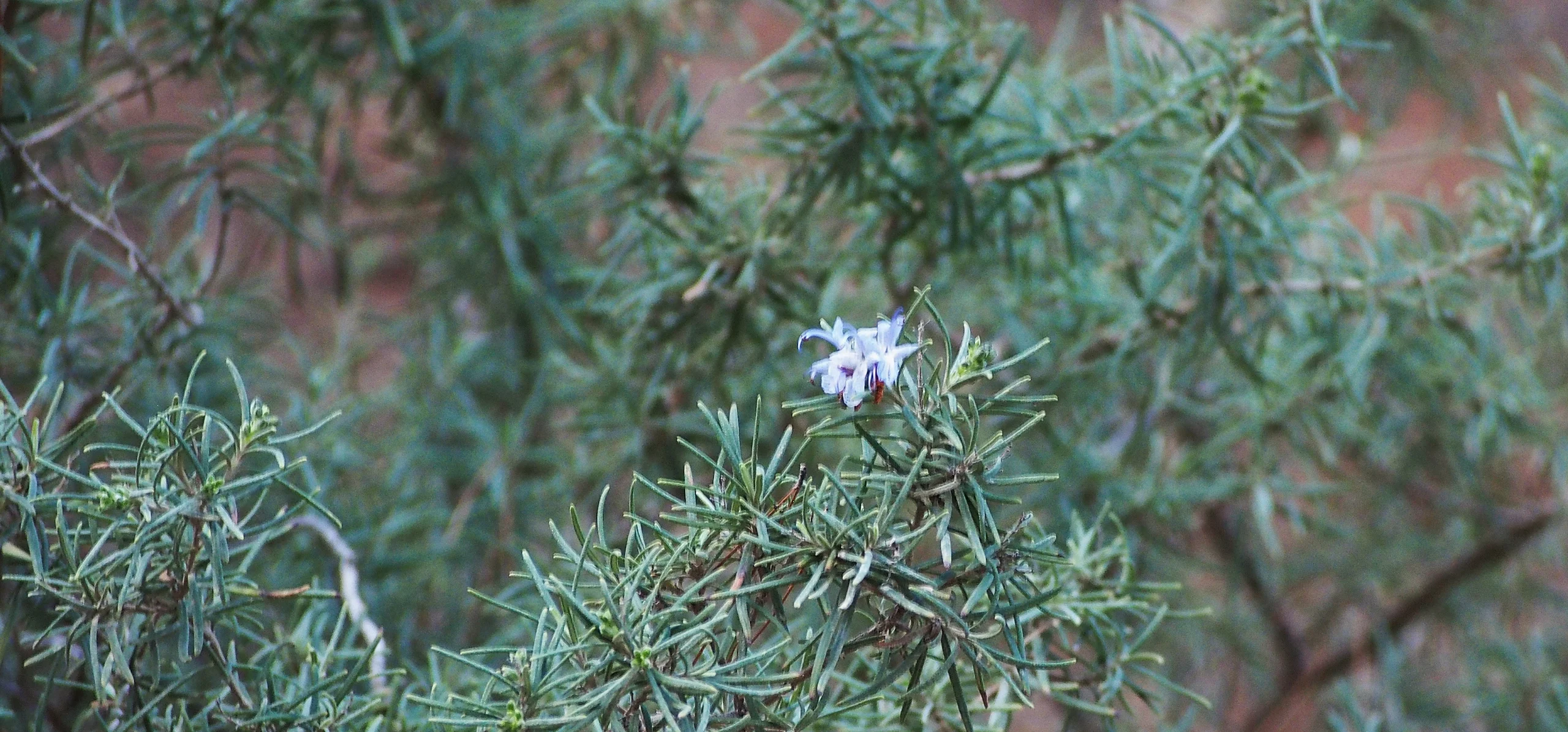
Rosemary
Salvia rosmarinus
Family · Lamiaceae
Rosemary needs full sun and sharp drainage. Covers hardiness, pruning without cutting into old wood, propagation from cuttings and overwintering in containers.
Salvia rosmarinus
Plant profile
- WateringLittleWater every 12 days
- Light exposureFull sun
- Hardiness zoneUSDA 8–10
Growth
- Family
- Lamiaceae
- Life cycle
- Perennial
- Growth speed
- 4/10
- Mature size
- 150–250 cm
- Spread
- 150–250 cm
- Flowering
- Mid-spring to summer, pale violet-blue, pink or white flowers
- Propagation
- Cutting
- Seed
Dormancyevergreen, no true winter dormancy where hardy
Time to maturity5-10 years to ultimate size
Soil & climate
- Soil types
- chalk, loam, sand
- Drought tolerance
- Yes
Light & Placement
- Origin
- Mediterranean, naturalized in parts of Europe and the Americas
- Where to place it
- sunny south-facing windowsill
- south or west-facing border
- raised bed or gravel garden
- sheltered patio
- clay pot with a drainage hole
Safety
- Toxicity
- CatsSafe
- DogsSafe
- HorsesSafe
Data fromSalvia rosmarinus Spenn., GBIF Backbone POWO: Salvia rosmarinus Spenn.ASPCA: Rosemary toxicity to pets and horRHS: Rosmarinus officinalis (rosemary)Missouri Botanical Garden: Salvia rosmar
Where it grows
World distribution
Rosemary is native to 14 countries: Albania, Algeria, Croatia, Cyprus, Egypt, France, Greece, and Italy….GBIF records 425,421 documented identifications across 120 countries, with the largest concentrations in Spain, France, and Portugal.
- Albania
- Algeria
- Croatia
- Cyprus
- Egypt
- France
- Greece
- Italy
- Libya
- Morocco
- Portugal
- Spain
- Tunisia
- Türkiye
Yellow to orange dots: concentration of documented identifications per country. Green countries: sourced native range. Source: GBIFNative range from POWO (Kew).
If the rosemary you bought or inherited already has stiff, grey-barked stems near the base, treat it as a small shrub, not a soft herb: it will outlive most perennials in the same bed but it will not forgive a hard cut into that old wood. The needle-like, grey-green leaves stay on the plant year round, so a rosemary that goes patchy or brown in one section usually has a drainage or root problem rather than a seasonal one. Give it sun, sharp drainage and restraint with the watering can, and a single plant can keep supplying the kitchen for fifteen years or more.
A Mediterranean Shrub With a New Name
The botanical name has changed more recently than most gardeners realize. What generations of growers knew as Rosmarinus officinalis was reclassified after genetic studies showed it belongs inside the much larger sage genus; Plants of the World Online at Kew now treats Rosmarinus officinalis L. as a synonym of the accepted name Salvia rosmarinus Spenn. Nursery labels, seed packets and older reference books still mostly use the old name, and both refer to exactly the same plant, so there is no need to relabel anything already growing in a border. Its native range, per Kew's Plants of the World Online, is the Mediterranean, and it has since naturalized in parts of Europe and the Americas wherever winters stay mild.
In the wild it grows as a rounded, woody evergreen shrub on dry, rocky, sun-baked slopes, which explains almost everything about how to keep it happy in a garden: lean soil, full exposure and long dry spells between rain. It belongs to the mint family, Lamiaceae, along with lavender, sage and thyme, and shares their square stems and paired, aromatic leaves.
Sun, Soil and Where to Plant It
Rosemary needs full sun; the RHS specifies a south or west-facing position as ideal, and in anything less than around six hours of direct light the plant thins out and produces far less of the aromatic oil that gives it flavor and scent. Soil matters as much as light. The RHS lists chalk, loam and sand as suitable types, in acid, neutral or alkaline conditions, but drainage has to be immediate; Missouri Botanical Garden notes it performs poorly in heavy clay and that waterlogged winter soil is usually fatal. On clay ground, plant on a raised mound or build a dedicated raised bed with coarse grit worked through the top 20 to 30 cm.
Space plants at least 60 to 90 cm apart if you are growing more than one; at 150 to 250 cm tall and wide at maturity, per the RHS, a mature rosemary takes up real space and crowds out anything planted too close.
Watering: Less Is Almost Always Right
New plants need watering every few days for the first month while roots establish. After that, established rosemary is genuinely drought tolerant, and the biggest single mistake gardeners make with it is treating it like a thirsty leafy perennial. Let the top several centimeters of soil dry out completely, then water deeply and walk away; in most summers that means once every ten days to two weeks in open ground, less in containers moved under an eave. Missouri Botanical Garden's guidance is blunt on this point: let the soil dry out between applications, and avoid overwatering, which leads to root rot. A rosemary with yellowing lower needles and a soft, mushy base almost always has wet feet, not dry ones.


Pruning Without Killing the Plant
This is where more rosemary plants die than from any pest. The RHS is explicit: tip-prune the current season's soft green growth to keep the plant compact, but do not cut back into the old, woody stems, since rosemary regenerates from hard wood very poorly if at all. A stem cut below the last green shoot often just goes brown and dies rather than resprouting. Prune lightly after the main spring flowering flush and again in late summer if the plant is getting leggy, always leaving plenty of live foliage on every stem you cut. Harvesting sprigs for the kitchen through the growing season effectively doubles as this kind of light, ongoing pruning.
Propagating Rosemary From Cuttings
Missouri Botanical Garden notes rosemary is best propagated by cuttings rather than seed, and most gardeners who have tried both agree: seed germinates slowly and unevenly, and named cultivars rarely come true from it. Take semi-ripe, non-flowering side shoots around 10 cm long in late spring or summer, strip the lower leaves, and insert them into a free-draining mix of grit and compost. Kept out of direct sun and evenly, lightly moist rather than wet, cuttings typically root within three to four weeks. Rooted cuttings are also the reliable way to replace a plant that has gone woody and sparse rather than trying to rejuvenate it by hard pruning.
Overwintering in Cold Climates
Rosemary carries an RHS hardiness rating of H4, hardy through most of the UK, and Missouri Botanical Garden lists it as reliably winter hardy only in USDA zones 8 to 10. Outside that range it is grown as a container plant: clay pots are preferred because they let excess moisture evaporate through the porous walls, and the pot is brought indoors before the first hard frost. Overwinter it in a bright, cool room with good air circulation rather than a warm, still one; Missouri Botanical Garden specifically flags poor air circulation indoors as the trigger for powdery mildew on overwintered plants. A sunny south-facing window is the minimum; without at least six hours of light a day, growth stretches and thins, and a grow light is worth adding.
Rosemary Beetle, Powdery Mildew and Other Problems
The most distinctive pest is the rosemary beetle, Chrysolina americana, a metallic green and purple-striped beetle first found breeding in the UK in the late 1990s and now widespread across England and Wales. Both adults and larvae feed on the foliage and flowers of rosemary, lavender, sage and thyme, and are most active from late summer through spring. On an established, healthy plant the RHS considers the damage tolerable as part of garden biodiversity; picking beetles off by hand, or tapping stems over paper to collect them, keeps a heavier infestation in check without spraying. Powdery mildew is the more serious indoor and greenhouse risk, appearing as a grey-white coating on foliage wherever air sits still and humid, and it is prevented with spacing and ventilation rather than treated after the fact.
Is Rosemary Safe Around Pets?
The ASPCA lists rosemary as non-toxic to dogs, cats and horses, which makes it one of the few common culinary herbs that can be planted or kept indoors without worrying about a curious cat chewing a sprig. That safety record is one reason it turns up so often in herb gardens grown within reach of pets. It remains, of course, a plant meant for cooking rather than grazing: harvest sprigs as needed through the growing season, and the woody, needle-covered stems dry and store well if a flush of new growth needs cutting back all at once.
Test your plant knowledge
Tap a card to flip it and reveal the answer.
Cutting rosemary back into the old, leafless woody stems encourages fresh growth. Tap to reveal ✕ False
Established rosemary is drought tolerant and needs infrequent watering. Tap to reveal ✓ True
Rosemary is toxic to dogs and cats if they chew on it. Tap to reveal ✕ False
Rosemary was formerly classified in its own genus, Rosmarinus. Tap to reveal ✓ True
In cold climates, rosemary is best kept as a container plant brought indoors for winter. Tap to reveal ✓ True
Sources
References consulted for this guide
- Salvia rosmarinus Spenn., GBIF Backbone Taxonomygbif.org
- POWO: Salvia rosmarinus Spenn.powo.science.kew.org
- ASPCA: Rosemary toxicity to pets and horsesaspca.org
- RHS: Rosmarinus officinalis (rosemary)rhs.org.uk
- Missouri Botanical Garden: Salvia rosmarinus Plant Findermissouribotanicalgarden.org
- Reference entity : Wikipédiaen.wikipedia.org